


As Survivor approaches its historic 50th season finale on May 20, 2026, the reality television landscape finds itself at a philosophical crossroads. For over two decades, the CBS juggernaut has defined the social strategy genre, but the "New Era"—a term designating the post-Season 40 shift in gameplay, production, and casting—has become a lightning rod for debate. Leading the charge in this critique is one of the game’s most decorated icons: Parvati Shallow.
Despite her legendary status, which includes a win in Survivor: Micronesia and a commanding victory in the 2025 crossover event Survivor Australia v the World, Shallow was notably absent from the cast of the milestone 50th season. In a candid interview with Variety, she offered a searing assessment of why the modern game feels fundamentally disconnected from the franchise’s golden age.
The Chronology of Change: From "Winners at War" to Season 50
To understand the current friction, one must look at the structural pivot that occurred after Season 40, Winners at War. For years, Survivor relied on a mix of returning legends and hungry newcomers. This created a rich, multi-generational tapestry where viewers watched players evolve over decades.
Following the 40th season, host Jeff Probst and his production team pivoted toward a "New Era" philosophy. This strategy prioritized casting superfans—players who grew up watching the show and often entered the arena with a pre-packaged understanding of the game’s mechanics. However, this shift effectively removed the "legacy" component of the show. For ten seasons, the audience was denied the chance to see beloved veterans return, creating a vacuum where new players were tasked with filling the shoes of icons without the benefit of repeat appearances.
By the time Survivor 50 arrived, the pressure to produce "instant legends" reached a boiling point. As Shallow observes, the modern gameplay loop has become performative, with players hyper-fixated on their place in the show’s pantheon before they have even secured their first victory.
The "Legacy" Paradox: Why Trying Too Hard Kills the Magic
The core of Shallow’s critique lies in the psychology of the modern contestant. She points to players like Rizo Velovic, a 26-year-old superfan who debuted in Season 49 before returning for the 50th, as a prime example of a contestant who is acutely aware of the "legend" narrative.

"We’re seeing new era players like Rizo say over and over again how much he wants to be a legacy player," Shallow noted. "He wants to make his mark. But I think it’s kind of sad for the new era players."
The Performative Trap
Shallow argues that the most memorable moments in Survivor history were never the result of a player trying to be "iconic." Instead, they were the byproduct of survival, desperation, and genuine human reaction.
"There was a time when Survivor players became legends and had legacies, and it was in the old era," she explained. "Because we kept getting invited back over decades. People recognized us through our evolutions and multiple decades of gameplay. A new era player can’t compete with that."
This creates a self-defeating cycle: by attempting to craft a "legacy" during their initial outing, contestants often come across as inauthentic. In the earlier seasons, players like Shallow were playing for survival and the prize money; they were not thinking about how their confessionals would be perceived on social media or how their "big moves" would be clipped for YouTube retrospectives. The legacy was a consequence of the gameplay, not the goal.
The Evolution of the Archetype: A Double-Edged Sword
While Shallow is critical of the modern contestant’s mindset, she is not a total detractor of the New Era’s production choices. In fact, she concedes that the show has improved in its ability to treat contestants as complex, three-dimensional human beings rather than one-dimensional archetypes.
From "The Flirt" to Nuance
In her early appearances, such as Survivor: Cook Islands, Shallow was pigeonholed into the "flirt" archetype—a reductive label that defined her gameplay for years. The production style of the early 2000s favored clear-cut "hero" and "villain" narratives, often flattening the contestants’ personal histories to fit a television trope.
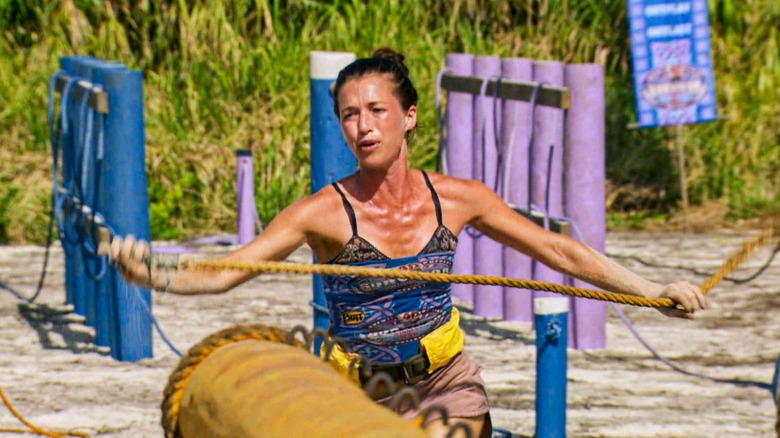
Shallow praises the current production team for moving away from this rigidity. "Now, people are less one-dimensional archetypes and more of a fuller human being," she admitted. "I grew up in a very high-control environment as a child in a commune in Florida, and producers have been like, ‘God, if you played now, we would weave that into your storyline.’ They do a more nuanced approach these days."
This shift aligns with Jeff Probst’s evolving philosophy on the show’s longevity. Probst has often stated that the show endures because it tells "generally positive" stories. As Probst noted, while the game remains inherently vicious, it has shifted away from the "villain-at-all-costs" editing style that dominated the mid-2000s. The goal, according to production, is to show that one can be cutthroat without being an antagonist, reflecting a more empathetic tone in the edit.
Implications for the Future of Reality Competition
The tension between the "old guard" and the "new era" raises significant questions about the future of the Survivor format. If the show continues to cast exclusively from the superfan pool, will it eventually exhaust the audience’s appetite for "big move" strategy?
1. The Saturation of Strategy
When every player enters the game knowing the "meta," the game becomes a simulation of itself. Strategy becomes predictable because everyone has studied the same rulebook. Shallow’s critique suggests that for the show to recapture its magic, it needs to foster a environment where players can be unpredictable, flawed, and—most importantly—unaware of their own branding.
2. The Role of the Veteran
The success of Survivor 50—and its reliance on bringing back established names—proves that the audience craves the continuity of characters who have grown. The "New Era" might be more nuanced in its editing, but it lacks the emotional stakes that come from seeing a player learn from their mistakes over fifteen years.
3. The Definition of "Legend"
Ultimately, the industry must grapple with the fact that greatness in Survivor is earned through time, not through the volume of "game-changing" maneuvers. As Shallow poignantly stated: "It was just, ‘I’m gonna play this game to win. However I have to do that is the way I do it.’ Then the moves we made became historic because we were in the moment, versus performing for some kind of award."

Conclusion: A Game at a Crossroads
As the May 20 finale of Survivor 50 looms, the outcome will likely be viewed as a referendum on the direction of the franchise. Will the winner be a legacy player who navigated the modern, high-speed game, or a "New Era" contestant who successfully proved that the modern mold can produce a true icon?
Parvati Shallow’s perspective serves as a necessary check on the show’s current trajectory. While the production team has successfully evolved the depth of the storytelling, they may have inadvertently hampered the authenticity of the gameplay. For Survivor to survive for another fifty seasons, it may need to find a way to balance its new, nuanced production style with the raw, uncalculated, and ego-free gameplay that turned a CBS social experiment into a global cultural phenomenon.
Regardless of who walks away with the $2 million grand prize, the conversation sparked by one of the game’s greatest players reminds us that, at its heart, Survivor remains a human story—one that is best told when the players stop worrying about their legacy and start focusing, simply, on survival.









No comments yet. Be the first to join the conversation!