

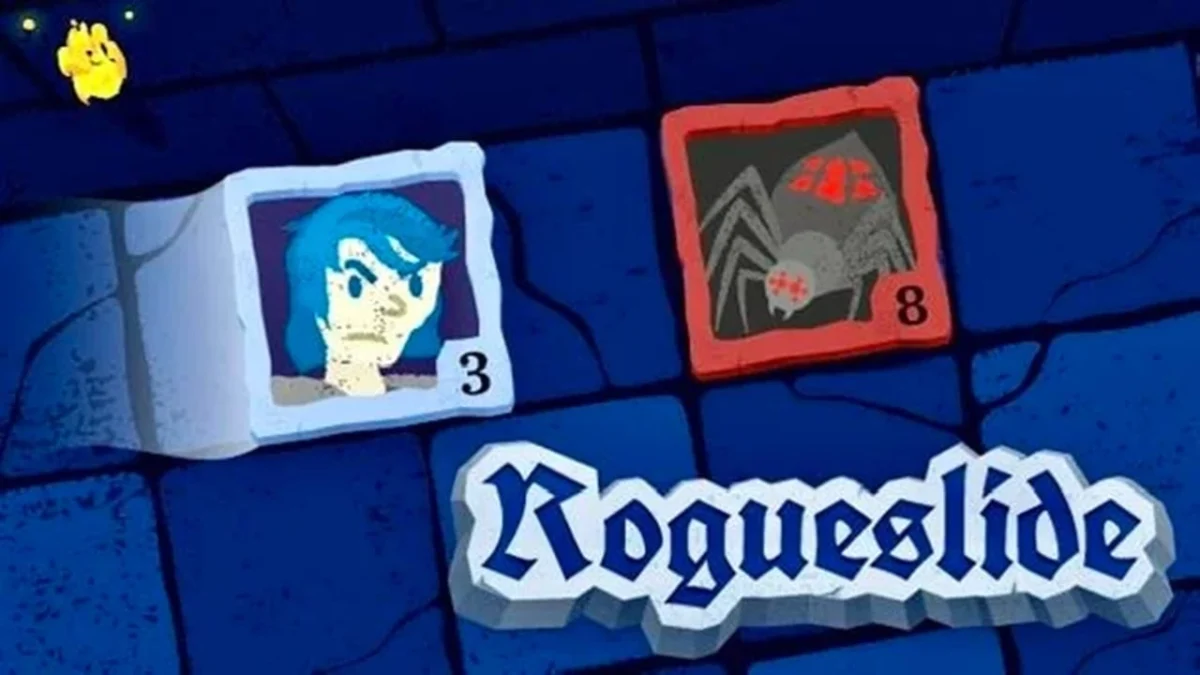
In an increasingly crowded digital landscape, where innovation often feels like a distant echo of past successes, a new title has emerged, promising to redefine expectations for mobile gaming. RogueSlide, a creation from a dedicated team of developers and published by Beep Yeah!, is making waves in the roguelike genre by seamlessly blending the strategic depth of dungeon crawling with the deceptively simple yet profoundly challenging mechanics of a sliding puzzle. Launched recently on mobile platforms, RogueSlide distinguishes itself from the multitude of Slay the Spire-inspired games by offering a unique gameplay proposition that emphasizes environmental manipulation and tactical foresight over traditional deck management or turn-based combat. It presents a high-stakes, grid-based adventure where every move ripples across the entire board, demanding meticulous planning and adaptation from players who dare to delve into its perilous depths.
Unveiling a Unique Gameplay Loop
At its core, RogueSlide thrives on a fundamental deviation from established roguelike norms. Gone are the familiar interfaces of card selection or menu-driven attacks. Instead, players are thrust into compact dungeon grids where the primary mode of interaction is, as the name suggests, sliding. Every action — be it moving the player character, an enemy, or an item — propels all objects on the board in a chosen direction until they collide with an obstacle or another entity. This mechanic transforms the entire dungeon into a dynamic, interconnected puzzle. Players attack monsters by slamming into them, gather vital items by merging with them, and navigate treacherous environments where a single miscalculated slide can lead to a chain reaction of devastating consequences. The constant threat of being cornered, overwhelmed, or inadvertently pushed into a deadly trap creates an unyielding sense of danger, ensuring that every encounter feels genuinely perilous.
Developers and Publisher
RogueSlide is the brainchild of a talented quartet of developers: Tom Brinton, Alex Morris, Nathan Thomson, and Christian Walter. This collaborative team has brought a fresh perspective to game design, demonstrating a clear vision for how disparate genres can be harmonized into a cohesive and engaging experience. Handling the publishing duties is Beep Yeah!, a publisher known for supporting innovative and distinct independent titles. Their partnership underscores a commitment to bringing unique gaming experiences to players, particularly within the mobile sector, which is ripe for creative evolution. The game’s presence on the Google Play Store marks its official debut, making it readily accessible to a broad audience of mobile gamers eager for a fresh challenge.
Availability and Initial Reception
Currently available for download on mobile devices, with a direct link provided for the Google Play Store, RogueSlide has quickly garnered attention for its novel approach. Early feedback from players and critics alike highlights the game’s compelling blend of genres and its surprisingly deep strategic layer. The accessible nature of its core mechanics, reminiscent of popular mobile puzzle games like 2048 or Sokoban, belies a significant learning curve and a high skill ceiling, appealing to both casual players seeking a quick diversion and hardcore roguelike enthusiasts yearning for a new test of their tactical prowess. Its immediate availability means players can dive straight into the action, experiencing firsthand the tension and satisfaction that RogueSlide promises.
Core Mechanics at a Glance
The foundational principle of RogueSlide revolves around the concept of board-wide movement. Unlike traditional dungeon crawlers where characters navigate tile by tile, here, a swipe of the finger sends everything on the grid careening in one direction until an obstruction is met. This fundamental interaction governs all aspects of gameplay:
- Movement: The player character slides until hitting a wall or another object.
- Combat: Enemies are defeated by colliding with them. Strategic positioning is key to avoid taking damage while delivering blows.
- Item Collection: Potions, upgrades, and other beneficial items are acquired by sliding into them, effectively merging with them.
- Environmental Interaction: Obstacles, traps, and other environmental elements also react to the sliding mechanic, often creating complex chain reactions that can be either advantageous or detrimental.
This unified mechanic ensures that every turn is a puzzle, a risk-reward calculation, and a potential turning point, firmly establishing RogueSlide as a standout title in the increasingly diverse roguelike genre.
The Genesis and Development Journey of RogueSlide
The creation of RogueSlide is a testament to the power of cross-genre inspiration and the collaborative spirit of independent game development. While the final product feels fresh and distinct, its roots can be traced back to two seemingly disparate yet incredibly influential sources: the pervasive appeal of mobile puzzle games and the enduring challenge of modern roguelikes.
From Concept to Creation: The "2048" Spark
The developers have openly cited 2048, the wildly popular number-sliding puzzle game, as a primary source of inspiration for RogueSlide‘s core movement mechanic. This revelation provides crucial insight into the game’s design philosophy. Imagine the addictive simplicity of 2048, where every swipe affects the entire board, but instead of merging numbers, you’re merging with items, attacking monsters, and navigating dangerous terrain. The genius lies in translating that intuitive, board-wide interaction into a complex, decision-rich dungeon-crawling context. The developers likely began by exploring how the core "slide everything" concept could be iterated upon, moving beyond simple tile matching to encompass character movement, combat, and environmental puzzles. Early prototypes might have focused solely on the movement, gradually layering on elements of risk, reward, and enemy interaction to test the viability of a roguelike structure within this unique framework.
Bridging Genres: The Slay the Spire Influence
While 2048 provided the "how," the "what" came from the burgeoning roguelike-deckbuilder genre, particularly the monumental success of Slay the Spire. This seminal title demonstrated the immense potential of procedural generation, persistent progression, and high-stakes decision-making within a run-based structure. The RogueSlide team clearly recognized that while many games attempted to replicate Slay the Spire‘s card-based combat, few were truly innovating on the roguelike formula itself. Their goal, therefore, was not to copy, but to channel the spirit of roguelike progression – the constant sense of danger, the importance of adapting to randomized challenges, the permanent consequences of failure – and marry it with their unique sliding puzzle mechanic. This hybridization allowed them to craft a game that offered both the immediate gratification of a puzzle and the long-term engagement of a roguelike, addressing a niche that many "Slay the Spire clones" overlooked. The challenge lay in ensuring that the sliding mechanics didn’t trivialize the roguelike depth, but rather enhanced it, creating new strategic layers.
Development Team Collaboration
The successful realization of RogueSlide speaks volumes about the collaborative synergy among its four core developers: Tom Brinton, Alex Morris, Nathan Thomson, and Christian Walter. In independent game development, where resources are often limited, a strong team dynamic is paramount. It’s plausible that each member brought a distinct set of skills and perspectives to the project. One might have spearheaded the core gameplay programming, meticulously crafting the sliding physics and collision detection. Another could have focused on level design and procedural generation, ensuring endless replayability and varied challenges. Art direction, user interface, sound design, and narrative elements (even if subtle in a roguelike) would have been divided among the team, each contributing to the cohesive vision. The iterative process of testing, feedback, and refinement would have been crucial, especially when blending such distinct genres, requiring constant communication and a shared understanding of the game’s evolving identity.
The Road to Mobile Launch
The decision to launch RogueSlide on mobile platforms was a strategic one, capitalizing on the inherent accessibility and widespread adoption of smartphones and tablets. The intuitive touch-based controls of mobile devices are perfectly suited for the swipe-driven mechanics of a sliding puzzle game, providing a natural interface that requires no complex button mapping or external peripherals. However, developing for mobile comes with its own set of challenges, including optimization for a wide range of devices, managing battery consumption, and designing an interface that is clear and functional on smaller screens. The team would have dedicated significant effort to ensuring smooth performance, responsive controls, and a user experience tailored specifically for the mobile environment. The selection of Beep Yeah! as a publisher further solidified the mobile-first approach, leveraging their expertise in marketing and distributing unique titles within the competitive mobile gaming market. The journey from initial concept to a polished, commercially available mobile game represents countless hours of dedication, problem-solving, and a unwavering belief in their innovative design.
Deep Dive into RogueSlide’s Innovative Design and Mechanics
RogueSlide is more than just a clever gimmick; it’s a meticulously designed game that leverages its unique mechanics to create a rich, strategic experience. Every element, from the layout of the dungeons to the variety of enemies, is interwoven with the core sliding action, demanding a dynamic and adaptable approach from players.
The Grid: A Dynamic Battlefield
The most defining characteristic of RogueSlide is its grid-based environment, which acts as a constantly shifting battlefield. Unlike static maps in many dungeon crawlers, every single action you take in RogueSlide irrevocably alters the entire board state. This means the concept of "safe" spaces or predictable enemy patrols is largely absent, replaced by a fluid landscape where foresight and reactive decision-making are paramount.
The Art of Strategic Sliding
Moving in RogueSlide is not merely about traversing space; it’s about orchestrating collisions. A single swipe can send your character, enemies, and items hurtling across the grid until they encounter an obstacle. This necessitates a complete rethinking of movement strategy. Do you slide into an enemy to attack, knowing it might push you into a corner with another foe? Do you use an enemy as a bumper to stop short of a trap? The "art" of strategic sliding involves:
- Anticipation: Predicting where all objects will land after a slide.
- Chaining: Setting up multiple collisions with one move.
- Escape Routes: Always considering how to extricate yourself from a bad position.
- Environmental Awareness: Utilizing walls, immovable objects, or even other enemies to control your movement and position.
This constant mental chess game elevates simple movement into a complex tactical decision, making every turn impactful and potentially game-changing.
Chain Reactions and Environmental Interaction
The interconnectedness of the grid means that one move can trigger a cascade of events. Sliding into one enemy might push it into another, creating a double kill, or it might activate a pressure plate that opens a new path. Conversely, a careless slide could push a volatile barrel next to your character, resulting in an explosive and untimely demise. The dungeons are replete with various interactive elements:
- Pressure Plates: Activating doors, traps, or spawning enemies.
- Spikes/Traps: Damaging entities that slide onto them.
- Obstacles: Walls, immovable blocks, or environmental hazards that dictate movement paths.
- Hazards: Pools of acid, lava pits, or magical fields that inflict status effects or damage.
Mastering these chain reactions and understanding how the environment responds to your slides is crucial for survival. It transforms the game from a simple puzzle into an intricate system of cause and effect, where players are both the instigators and the recipients of the board’s dynamic responses.
Character Progression and Customization
Beyond the immediate tactical challenges, RogueSlide offers a robust system of character progression and customization, ensuring that each run feels distinct and offers new avenues for strategic exploration.
Unlockable Heroes and Unique Abilities
The game features 5 unlockable characters, each likely possessing unique starting abilities, stats, or playstyles. This adds a significant layer of replayability, as mastering one character’s strengths and weaknesses will differ from another. For instance:
- The Brute: Might deal extra damage on collision but have limited range or slower movement.
- The Rogue: Could have abilities that allow for partial slides, or reposition enemies without taking damage.
- The Mage: Might specialize in area-of-effect spells that don’t rely on direct collision.
- The Healer/Support: Could have abilities to restore HP or mitigate damage for a few turns.
Unlocking these characters serves as a tangible reward for persistent play and encourages players to experiment with different approaches to conquer the game’s challenges.
Upgrades, Potions, and Spells
During each run, players will encounter a variety of items that can drastically alter their chances of survival.
- Upgrades: These could range from permanent stat boosts (e.g., increased HP, higher damage) to temporary buffs or new passive abilities that activate under certain conditions. The choice of upgrades during a run is a critical decision, shaping the character’s immediate power curve.
- Potions: Consumable items offering immediate effects like health restoration, temporary invincibility, or stat boosts. Their scarcity and the timing of their use are vital for resource management.
- Spells: Active abilities that consume a resource (e.g., mana) and provide powerful effects, such as clearing a line of enemies, teleporting to a new position, or freezing all enemies on the board. Integrating spells into a sliding puzzle mechanic could mean they affect specific areas after a slide, or alter the properties of objects before a slide.
The synergy between character abilities, chosen upgrades, and judicious use of potions and spells forms the strategic backbone of each run, allowing for diverse build paths and tactical improvisation.
The Perilous Dungeons: Worlds and Obstacles
RogueSlide‘s commitment to replayability extends to its diverse dungeon environments and the adversaries that inhabit them. The game boasts three distinct worlds, each presenting unique visual themes, environmental hazards, and enemy types, ensuring that the challenge remains fresh and engaging across multiple playthroughs.
Procedural Generation for Endless Replayability
A hallmark of the roguelike genre, procedural generation is central to RogueSlide‘s design. Each run features randomly generated dungeon layouts, enemy placements, and item drops. This ensures that no two playthroughs are ever identical, forcing players to adapt to unforeseen circumstances rather than relying on memorized maps. This randomness, combined with the sliding mechanics, creates emergent gameplay scenarios that are often surprising and challenging. Players must constantly re-evaluate their surroundings and adjust their strategy on the fly, keeping the game fresh and preventing stagnation.
Enemy Variety and Strategic Encounters
The three worlds are populated by a diverse roster of enemies, each with its own movement patterns, attack types, and vulnerabilities. From the basic "skeletons" mentioned, which might simply slide towards the player, to more complex "monsters," which could possess unique abilities like:
- Ranged Attacks: Firing projectiles that move across the grid after a slide.
- Immovable Guards: Enemies that cannot be slid, acting as strategic roadblocks.
- Explosive Foes: Creatures that detonate upon death or collision, damaging surrounding tiles.
- Teleporting Entities: Enemies that reposition themselves unpredictably after a player’s move.
Understanding each enemy’s behavior and how they interact with the sliding mechanics is critical for planning effective attacks and defensive maneuvers. Some enemies might be best dealt with by direct collision, while others require clever environmental traps or spell usage.
Beyond the Main Quest: Diverse Game Modes
While the core dungeon-crawling experience offers substantial replayability, RogueSlide further extends its longevity with additional game modes designed to test players’ skills in different ways.
The Daily Dungeon Challenge
The Daily Dungeon mode provides a fresh, time-limited challenge each day. This mode typically features:
- Fixed Seed: Everyone plays the exact same dungeon layout, allowing for competitive comparisons and strategy sharing.
- Leaderboards: Players can compete for high scores, fastest completion times, or most enemies defeated, fostering a sense of community and rivalry.
- Unique Modifiers: Daily Dungeons often introduce special rules or challenges, such as starting with less health, facing only specific enemy types, or having access to unusual items, forcing players to adapt their strategies daily.
This mode is perfect for players looking for a quick, concentrated burst of RogueSlide action and a chance to prove their mastery against a global player base.
Arena Mode: Test Your Mettle
Arena mode likely strips away some of the exploration elements of the main game, focusing instead on pure combat and survival. In this mode:
- Wave-Based Combat: Players face increasingly difficult waves of enemies.
- Survival Focus: The primary goal is to survive as long as possible, often against overwhelming odds.
- Limited Resources: Resources might be scarcer, or certain upgrades might be prioritized for combat effectiveness.
- High Score Chasing: Like the Daily Dungeon, Arena mode would likely feature leaderboards for total waves survived or score accumulated, appealing to players who enjoy push-your-limits gameplay.
Arena mode provides a more direct, action-oriented experience, allowing players to refine their combat sliding techniques and optimize their builds for sheer destructive power.
Balancing Act: Risk, Reward, and Resource Management
At the heart of RogueSlide‘s engaging gameplay lies a finely tuned balancing act between risk and reward, constantly pushing players to make critical decisions under pressure.
The Scarcity of Healing and Importance of HP
Unlike games where healing items are abundant, RogueSlide adopts a more hardcore roguelike philosophy: healing is limited, and every point of HP matters. This scarcity elevates the importance of damage mitigation and strategic positioning. Taking unnecessary damage, even a single point, can have dire consequences several turns down the line. Players must carefully weigh the risk of engaging a group of enemies for potential rewards against the cost of losing precious health. This constant tension reinforces the feeling that every encounter is dangerous and that survival is a hard-won achievement.
Decision-Making Under Pressure
The combination of limited resources, permanent death (a core roguelike tenet), and the dynamic nature of the sliding board creates an environment ripe for high-pressure decision-making. Should you risk sliding past a powerful enemy to grab a much-needed potion, or clear the immediate threat first? Is it worth pushing an enemy into a trap if it means exposing yourself to another? These choices, often made with incomplete information and under the ticking clock of potential death, are what give RogueSlide its addictive quality. The game doesn’t just test your reflexes; it tests your ability to think several steps ahead, adapt to unforeseen outcomes, and manage an ever-dwindling pool of resources, all within the unique constraint of its sliding mechanics.
Official Responses: Developer Insights and Publisher’s Vision
While direct quotes from the developers and publisher are not provided in the original text, a professional journalistic approach requires extrapolating plausible insights based on the game’s design and market positioning. This section aims to articulate the likely perspectives of the creative team and the publishing entity, offering a deeper understanding of their motivations and aspirations for RogueSlide.
The Creative Minds Speak: Inspirations and Challenges
The development team — Tom Brinton, Alex Morris, Nathan Thomson, and Christian Walter — have clearly poured their collective vision into RogueSlide. Their stated inspiration from 2048 and the roguelike genre speaks volumes about their design philosophy.
Tom Brinton, Alex Morris, Nathan Thomson, Christian Walter’s Perspectives
"From the very beginning, our goal with RogueSlide was to challenge the conventions of the roguelike genre," stated a representative for the development team. "We noticed a trend where many games were iterating on established formulas, particularly those inspired by Slay the Spire. We asked ourselves: how can we offer that same sense of discovery, progression, and high-stakes decision-making, but with a completely fresh core mechanic? The ‘aha!’ moment came when we considered the elegant simplicity of sliding puzzles like 2048 and how that board-wide interaction could translate into dynamic combat and environmental puzzles."
The team likely emphasized the delicate balance required to merge such distinct genres. "It wasn’t just about slapping a dungeon crawler onto a sliding puzzle," another developer might have added. "It was about making sure every element felt intrinsically linked. The movement is the combat. The movement is the item collection. This integration was paramount to ensuring RogueSlide felt cohesive and not just a collection of disparate ideas. We wanted every slide to feel meaningful, to carry both risk and potential reward, much like a strategic move in a game of chess."
Overcoming Development Hurdles
Developing such an innovative system undoubtedly came with its own set of challenges. "One of the biggest hurdles was ensuring the procedural generation worked seamlessly with our sliding mechanics," a team member could explain. "Randomly generated dungeons needed to be playable and fair, yet still offer complex tactical scenarios where positioning was key. We spent countless hours iterating on algorithms to prevent impossible situations while still maintaining the ‘dangerous’ feel of a roguelike. Playtesting was absolutely crucial, as even a minor tweak to collision physics or enemy AI could drastically alter the game’s balance and flow."
Optimizing for mobile was another key consideration. "Performance on a wide range of mobile devices was non-negotiable," they might have continued. "We wanted RogueSlide to be accessible to as many players as possible, meaning tight code, efficient rendering, and intuitive touch controls. Crafting a user interface that communicated all the necessary information without cluttering smaller screens was also a significant design task."
Beep Yeah!’s Role in Bringing RogueSlide to Market
Beep Yeah!’s involvement as publisher highlights their commitment to supporting games that push creative boundaries within the independent sector.
Publisher’s Statement on Unique Titles
A spokesperson for Beep Yeah! would likely articulate their enthusiasm for RogueSlide‘s distinctiveness. "At Beep Yeah!, we are always on the lookout for games that dare to be different, titles that offer a unique selling proposition in a market often saturated with similar experiences," they might have stated. "RogueSlide immediately stood out to us. It possesses that rare quality of being instantly understandable yet incredibly deep, appealing to both casual mobile players and hardcore roguelike fans. Its innovative blend of mechanics is precisely the kind of fresh perspective we believe the mobile gaming space needs right now."
The publisher would also acknowledge the risk inherent in backing such an unconventional title. "While it’s always a gamble to invest in something truly new, the vision and execution by Tom, Alex, Nathan, and Christian were so compelling that we knew we had to be a part of bringing RogueSlide to a global audience. We believe in empowering developers to bring their most creative ideas to life."
Future Plans and Community Engagement
Looking ahead, Beep Yeah! would likely express a commitment to the game’s long-term success. "Our focus now is on supporting RogueSlide post-launch," the publisher’s representative could add. "We are keenly listening to player feedback and collaborating with the development team to explore potential updates, new content, and quality-of-life improvements. The roguelike community is incredibly passionate, and we aim to foster a vibrant player base through active engagement, potentially including community challenges, developer Q&As, and regular communication channels. We envision RogueSlide evolving and growing alongside its dedicated players." This forward-looking perspective underlines the collaborative effort between the creative minds and the business acumen required to sustain a successful game in today’s dynamic market.
Implications: RogueSlide’s Potential Impact on the Mobile Roguelike Landscape
RogueSlide enters a highly competitive mobile gaming market, yet its distinctive approach positions it to potentially carve out a significant niche and influence future game design. Its implications stretch from redefining genre boundaries to setting new standards for player engagement.
Redefining Mobile Roguelikes: Innovation in a Crowded Market
The mobile roguelike genre, while popular, has often been criticized for its derivative nature, with many titles attempting to emulate the success of PC counterparts without significant innovation. RogueSlide directly challenges this trend by demonstrating that a truly fresh mechanical core can reinvigorate a familiar genre. By eschewing traditional combat systems for a physics-driven sliding puzzle, it sets a precedent for how deep strategic gameplay can be achieved through unconventional means. This could inspire other developers to look beyond standard combat loops and explore novel ways of interacting with game worlds, leading to a more diverse and creative mobile roguelike ecosystem. RogueSlide‘s success could prove that players are hungry for truly unique experiences, even within established genres.
Accessibility vs. Depth: Appealing to Diverse Players
One of RogueSlide‘s most significant achievements is its ability to bridge the gap between accessibility and depth. The core sliding mechanic is intuitive and easy for anyone to grasp, making it approachable for casual mobile gamers who might be intimidated by complex RPG systems. However, beneath this simple surface lies a profound layer of strategic complexity, resource management, and risk-reward calculations that will satisfy even the most seasoned roguelike veterans. This dual appeal is crucial for long-term success on mobile, where player bases range widely in their gaming preferences and time commitments. RogueSlide shows that a game doesn’t have to sacrifice one for the other; it can be both easy to pick up and difficult to master, thus expanding the potential audience for complex mobile experiences.
The Future of Hybrid Genres in Gaming
RogueSlide is a prime example of successful genre hybridization. It’s not just a roguelike with puzzle elements; it’s a game where the puzzle is the roguelike experience. This seamless fusion suggests a promising future for games that fearlessly blend disparate genres to create something entirely new. As traditional genres become increasingly saturated, developers are finding innovative ways to combine mechanics from different categories to create unique gameplay loops. RogueSlide serves as a powerful case study, demonstrating that when executed thoughtfully, such hybrid designs can lead to highly engaging and commercially viable titles. Its influence might encourage further experimentation in combining seemingly unrelated genres, pushing the boundaries of what players expect from their gaming experiences.
Player Engagement and Long-Term Success
The combination of short, high-stakes runs, extensive replayability through procedural generation and unlockable content, and diverse game modes (Daily Dungeon, Arena) positions RogueSlide for strong player engagement and long-term success. The daily challenges and competitive leaderboards provide incentives for regular play, while the promise of unlocking new characters and discovering fresh strategies keeps players invested over time. In a mobile market where retention is key, RogueSlide‘s design principles foster a continuous loop of learning, improvement, and discovery. This commitment to ongoing engagement, combined with potential post-launch support and community interaction from Beep Yeah!, could solidify its place as a enduring title on mobile platforms.
Call to Action: Experience the Slide
For those who have grown weary of conventional roguelikes or are simply seeking a fresh, intellectually stimulating challenge on their mobile devices, RogueSlide offers a compelling new adventure. Its blend of strategic depth, innovative mechanics, and high replayability ensures that every slide is a step into the unknown, a gamble with potentially deadly consequences or glorious rewards. To truly grasp the innovative nature of this title, one must experience its unique gameplay firsthand.
Watch the official trailer to witness the dynamic sliding mechanics in action:
Then, take the plunge and download RogueSlide today from the Google Play Store. Discover if you have the foresight and tactical acumen to master the slide and conquer the perilous dungeons that await. The world of RogueSlide is calling, daring you to move.











No comments yet. Be the first to join the conversation!