Lina Hope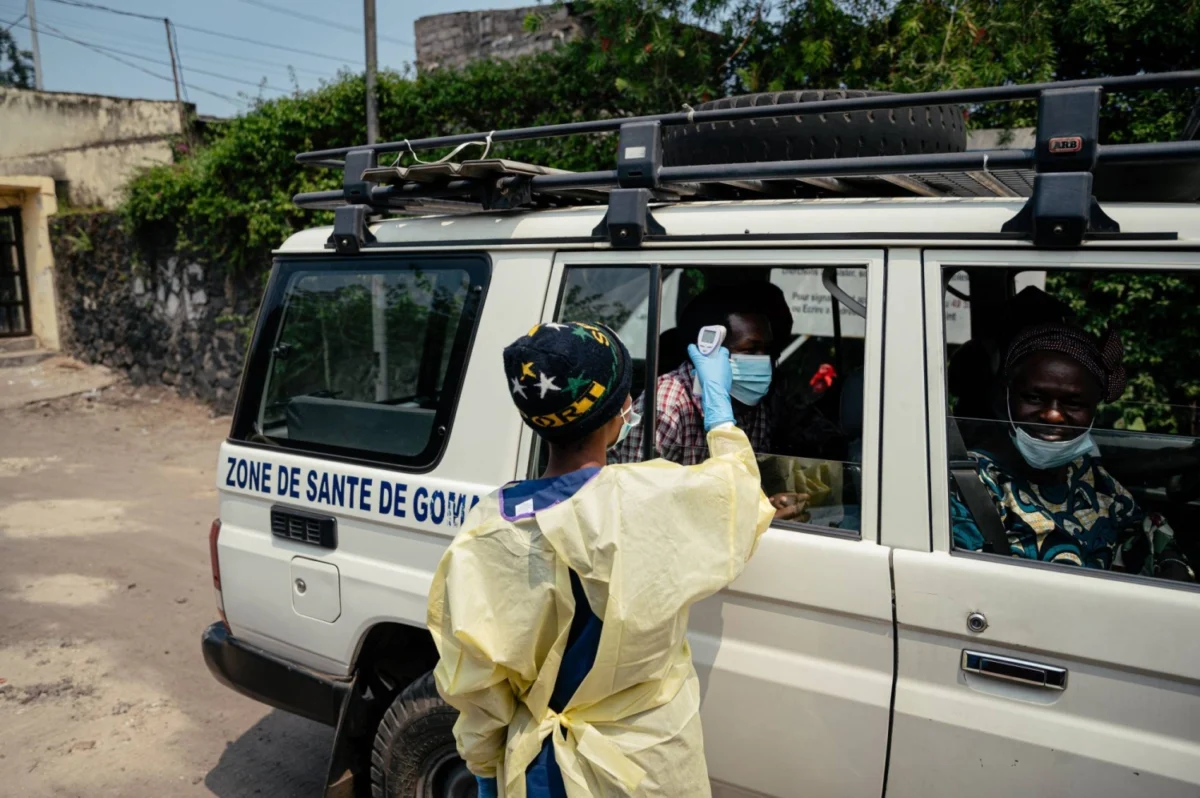
GOMA, Democratic Republic of Congo – As health workers in Goma stand guard at the entrance of Kyeshero Hospital, thermometer guns in hand, they are not merely screening for a virus. They are fighting a war on two fronts: one against a lethal pathogen, and another against the encroaching instability of a region fractured by decades of territorial conflict.
The Democratic Republic of Congo (DRC) is once again facing the specter of an Ebola outbreak, a development that has sent shockwaves through regional health authorities and international aid organizations. While the virus itself is a biological adversary of known, terrifying lethality, its current trajectory is being dangerously warped by the political vacuum and violence gripping the nation’s eastern provinces.
Main Facts: A Virus in a Volatile Landscape
The current outbreak, centered in the northeastern Ituri province, has emerged in an area already suffering from a complex humanitarian crisis. Unlike previous outbreaks, which were largely contained through rigorous contact tracing and community engagement, this resurgence is unfolding across "frontlines" held by non-state actors.
The Rwanda-backed M23 militia, which has significantly expanded its influence in the east, has established a parallel administrative structure in occupied territories. This territorial fragmentation has effectively severed the logistical arteries required for a swift medical response. Health checkpoints, like the one at Kyeshero Hospital in Goma, have become the final line of defense in a region where the central government’s reach is increasingly tenuous.
The core challenge is not just the virus, but the "security barrier." Humanitarian corridors, essential for the movement of vaccines, cold-chain storage equipment, and medical personnel, are frequently blocked or compromised by active skirmishes. Consequently, the World Health Organization (WHO) and local health ministries are struggling to reach high-risk populations, particularly those living in makeshift camps for internally displaced persons (IDPs).
A Chronology of Instability
To understand the gravity of the current situation, one must look at the historical timeline of health crises in the DRC:
- 2018–2020: The DRC endured its tenth and deadliest Ebola epidemic. Centered in North Kivu and Ituri, the outbreak resulted in over 2,200 deaths. It was characterized by extreme resistance from the local population, who were caught between state-sponsored health efforts and the influence of armed militias.
- Early 2026: Sporadic cases of Ebola began appearing in remote villages in Ituri, often far from the reach of the Congolese Ministry of Health.
- April 2026: Official confirmation of the outbreak was issued as the virus spread toward transit hubs, raising concerns about a spillover into densely populated urban centers like Goma.
- May 2026: The M23 militia consolidated its hold on critical transit routes near the Ugandan border, complicating the deployment of WHO rapid response teams and leading to a significant drop in vaccination rates.
The current trajectory mirrors the dark days of 2018, with experts warning that the failure to establish "neutral health zones" could lead to an exponential rise in cases as the rainy season approaches.
Supporting Data: The Logistics of Failure
The epidemiological data remains fluid, but the logistical constraints are quantifiable and alarming:
- Displacement Corridors: Over 1.5 million people in Ituri and North Kivu are currently displaced. These populations are highly mobile, moving frequently to escape gunfire, which creates a "moving target" for contact tracers.
- Vaccination Gaps: Current figures indicate that only 40% of the target population in high-risk zones has received the rVSV-ZEBOV vaccine. This is a direct result of supply chain disruptions caused by militia roadblocks.
- Healthcare Infrastructure: In areas under M23 control, public health clinics have reported a 70% decrease in operational capacity. Many staff members have fled, fearing abduction or being caught in the crossfire.
- Misinformation Velocity: In a region where trust in state institutions is non-existent, rumors regarding the origin of the virus—often framed as political weapons—spread faster than the disease itself, leading to the harassment of health workers.
Official Responses: A Multilateral Struggle
The response from Kinshasa and international bodies has been multifaceted, yet hampered by the reality on the ground.
The Government of the DRC
Presidential officials have characterized the outbreak as a "national security emergency." However, the government is caught in a difficult position: they must provide aid to citizens in territories held by insurgents without legitimizing the M23’s parallel administration. The current strategy involves working through local religious leaders and community elders, who are often the only figures trusted by both the rebels and the government.

International Organizations
The World Health Organization (WHO) has called for an immediate "humanitarian pause" in hostilities. The objective is to establish a safe zone where medical supplies can be delivered without military interference. "Health is a human right that transcends politics," a WHO spokesperson stated last week. However, diplomatic overtures to the M23 have been met with silence or demands for political recognition, further stalling the rollout of the response.
Regional Neighbors
Uganda and South Sudan, both sharing porous borders with the epicenter of the outbreak, have implemented heightened surveillance at border crossings. Trade has slowed significantly, threatening the economic stability of the border regions and adding another layer of desperation to an already impoverished population.
Implications: A Looming Regional Crisis
The implications of this outbreak extend far beyond the immediate threat of mortality.
1. The Erosion of Public Health Architecture
If the international community fails to contain the virus within the next three months, there is a risk of it becoming endemic in the eastern provinces. This would permanently cripple the region’s fragile health system, diverting resources from malaria, cholera, and maternal care, which already claim thousands of lives annually.
2. The Political Weaponization of Disease
The existence of the virus has provided a new tactical layer to the conflict. Armed groups are using the presence of health workers to justify their control over territory, claiming they are the ones "protecting" the people from the state’s mismanagement. This politicization makes it nearly impossible to implement standardized clinical protocols.
3. The Risk of Regional Contagion
Goma, a city of over a million people, serves as a gateway to the rest of the Great Lakes region. If the virus reaches Goma’s transport hubs, the risk of international spread—via air and road travel—increases exponentially. The memory of the 2014 West African Ebola epidemic serves as a stark warning of what happens when regional containment fails.
Conclusion: The Path Forward
The situation in the Democratic Republic of Congo is a sobering reminder that infectious diseases do not exist in a vacuum. They thrive in the spaces where governance has failed and where conflict has shattered the social contract.
To contain this outbreak, the international community must pivot from a purely clinical approach to a political-humanitarian one. This requires:
- Negotiated Neutrality: Pressure must be applied by regional bodies—specifically the East African Community—to ensure that medical teams are granted unfettered access to all territories, regardless of who holds the flag.
- Community-Led Response: Shifting the power from central government health ministries to local community health workers who have the trust of the residents.
- Investment in Conflict-Sensitive Health: Future aid must be designed with the reality of militia presence in mind, utilizing decentralized, mobile response units that do not rely on fixed, vulnerable infrastructure.
As the health worker at Kyeshero Hospital continues their vigil, they remain a symbol of the resilience of the Congolese people. But resilience alone is not a strategy. Without a concerted effort to decouple the humanitarian response from the grinding machinery of war, the eastern DRC remains on the precipice of a tragedy that will be measured not just in lives lost to a virus, but in the lost potential of an entire generation.
The world is watching, but for those in the shadow of the mountains in Ituri, observation is not enough. Action—fast, neutral, and sustained—is the only antidote to the crisis currently unfolding.


 Neng Nana
 Asro
Asro