

In the rapidly evolving landscape of American media, the traditional boundary between the gridiron and the newsroom is blurring. For years, the industry consensus was that sports fans and political junkies occupied two distinct silos. However, Fox Corp.’s nascent streaming service, Fox One, has provided empirical evidence that these audiences are not just overlapping—they are beginning to merge.
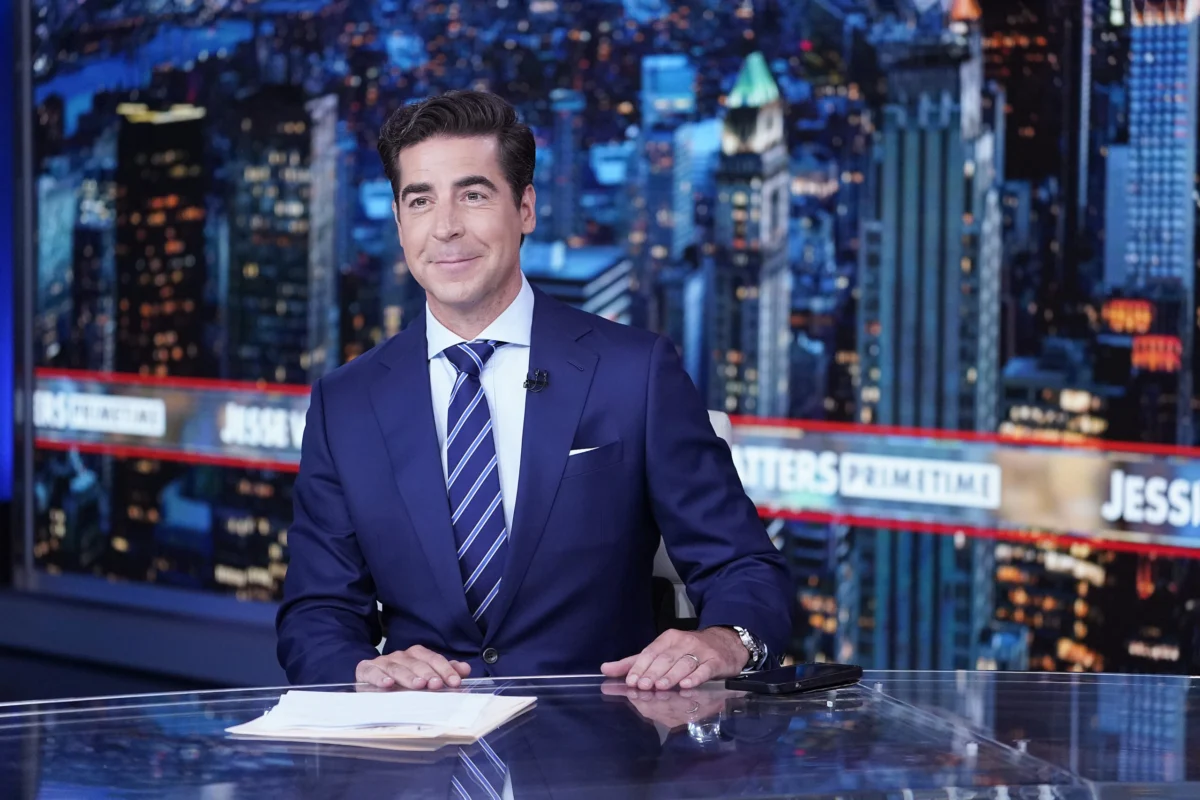
Jesse Watters, the face of Fox News’ primetime lineup, may not be a professional athlete, but he is emerging as a surprise MVP for Fox’s digital strategy. As the company navigates the existential threat of cord-cutting, it has discovered that its sports-heavy streaming offering is successfully converting football fans into habitual news consumers, challenging the long-held assumption that cable news is destined to wither alongside the linear television bundle.
The Genesis of a Hybrid Strategy: A Chronological Look
The journey began in the fall of 2024, when Fox Corp. officially pulled the trigger on Fox One. At its inception, the platform was designed as a strategic hedge against the declining fortunes of cable television. Executives at Fox anticipated a predictable, seasonal surge in subscriptions driven by the company’s lucrative NFL football package.
The internal projections were conservative: executives braced themselves for a "churn event" once the pigskin season concluded. They expected the digitally savvy audience—those who had abandoned their cable boxes for the flexibility of streaming—to cancel their subscriptions the moment the Super Bowl confetti was swept away.
However, the data told a different story. As the football season faded, subscriber retention remained unexpectedly high. Instead of migrating to other platforms, these users began exploring the library of Fox News Channel programs. Shows like Jesse Watters Primetime and The Five began to populate the watch histories of users who had initially signed up solely for the gridiron. By the fiscal third quarter, the data confirmed a sea change: over half of all viewership on the platform was being generated by news programming rather than sports.
Supporting Data: The Erosion of the Cable Bundle
The success of the Fox One model is not occurring in a vacuum. It is a direct response to the steady, structural decline of the traditional cable bundle. According to projections from Kagan, a media research firm under S&P Global Intelligence, the nation’s three largest cable news outlets are expected to see a cumulative subscriber drop of between 7% and 9% between the end of 2024 and the end of 2026.
This erosion is forcing a pivot toward younger, more fragmented audiences. The demographics of cable news have historically skewed older, but the digital transition is revealing a surprising appetite for political content among the "cord-cutting" generation.
Warner Bros. Discovery has reported that CNN’s digital users are, on average, a decade younger than their cable counterparts. Similarly, while Fox News has long been the titan of the modern media ecosystem, it faced the same hurdle as its competitors: a perception that its content was incompatible with the habits of a younger, on-demand audience. The current performance of Fox One suggests that the issue was not a lack of interest in the content itself, but rather a lack of interest in the medium of linear television.
Official Responses and Strategic Vision
Lachlan Murdoch, CEO of Fox Corp., expressed clear satisfaction with the platform’s performance during a recent earnings call. "We’re really not seeing a tremendous amount of churn within Fox One to date," Murdoch noted. "We’re very pleased with that."
Pete Distad, the CEO of Fox’s streaming operations, views this hybrid viewership as a major validation of the platform’s cross-pollination strategy. "We’ve clearly captured some of these customers that were either sports fans and now starting to watch news, or news fans who were watching sports," Distad said.
The engagement metrics are equally compelling. Distad revealed that typical news-focused subscribers are returning to the platform three and a half times per week, clocking over 10 hours of Fox News Channel content. While the platform is not yet attracting "Generation Alpha"—the mobile-social-first cohort—it is successfully capturing a demographic that is significantly younger than the traditional cable viewer.
Reimagining the User Experience: The Tech Behind the Pivot
Recognizing that the "lean-back" experience of cable is insufficient for digital natives, Fox One has deployed a suite of new product features designed to maximize retention. Amit Dudakia, Fox One’s senior vice president of product, emphasizes that modern users prioritize topics over linear schedules.
"It’s really hard for a user to come in and discover and engage with content when all you see is just endless carousels of thumbnails," Dudakia explained. To combat this, the platform has rolled out:
- Topic-Based Segmentation: Users can jump directly to specific segments of interest within a show, bypassing the need to scrub through hours of footage to find a particular interview or political analysis.
- Curated Playlists: The service is testing vertical-video playlists that group content around specific subjects, such as the U.S. economy or international conflicts, allowing users to consume news in thematic "bites."
- "Ask Fox": This AI-adjacent discovery tool allows users to input their interests and receive a tailored guide, shifting the burden of discovery from the user to the algorithm.
These tools represent a fundamental shift in news delivery. By allowing users to navigate content by "event" rather than "broadcast time," Fox is effectively treating news as a modular product.
Future Implications: The World Cup and Beyond
The next major test for the Fox One model lies in the upcoming World Cup. Distad and his team plan to leverage the massive scale of the tournament to refine their engagement technology. The goal is to build a "single view" interface that provides real-time stats, scores, and data for specific teams, creating an immersive experience that can be replicated for political events.
"You can imagine that some of that technology that we’re building around the World Cup… we intend to take that and apply it to other big events from the news perspective," Distad said. "You can imagine midterms will be a very big moment for us."
This vision of "event-driven" news consumption is being mirrored across the industry. From Trey Yingst’s TikTok dispatches for Fox News to the "Kornacki Cam" on Peacock—where Steve Kornacki provides granular polling updates during primary elections—the message is clear: the era of the static, scheduled broadcast is ending.
The Broader Media Landscape
The industry is watching these developments with intense interest. Versant’s MS NOW is preparing a new subscription offering aimed at fostering a digital "community" of users, and legacy outlets are increasingly forced to move their talent into digital-native formats.
For Fox News, the implications are profound. If they can successfully merge the high-octane engagement of sports broadcasting with the daily churn of political commentary, they may have found a sustainable path through the "cord-cutting" wilderness.
Ultimately, the data suggests that the divide between the "sports fan" and the "news fan" was never as wide as the cable industry presumed. By meeting the audience where they are—on their devices, on their schedules, and through their specific interests—Fox is betting that the future of television won’t be defined by the screen it’s viewed on, but by the relevance of the content it delivers.
As for Jesse Watters, he might not need to brush up on his NFL statistics to stay relevant, but in the new world of digital streaming, he is undeniably playing in the big leagues.











No comments yet. Be the first to join the conversation!