

The tech world’s focus converged on Mountain View this week as Google hosted its annual developer conference, Google I/O 2026. While last week’s Android-centric announcements cleared the slate, this year’s keynote was defined by a singular, relentless pursuit: the transformation of generative AI from a passive chatbot into an active, "agentic" participant in the user’s daily digital existence. From the total overhaul of the Search box to the introduction of sophisticated personal AI agents and hardware partnerships in the wearable space, Google signaled that the era of simply querying the internet is over. We are entering the era of the internet querying for us.
The Evolution of the Digital Experience: Key Announcements
The narrative of I/O 2026 was dominated by the "Gemini" ecosystem, with a specific emphasis on the transition from static LLMs to autonomous agents capable of performing complex, multi-step workflows.
1. The Search Overhaul: Beyond Autocomplete
In what the company calls the "biggest upgrade to the Search box in 25 years," Google has introduced an intelligent, AI-powered interface. Replacing the traditional text-entry field, this new box anticipates user intent by allowing inputs via images, files, videos, and active Chrome tabs. By leveraging the new Gemini 3.5 Flash model, Search can now construct custom visual UIs—graphs, tables, and simulations—on the fly, turning a static list of links into a dynamic workspace.
2. The Rise of Agentic AI: Spark and Information Agents
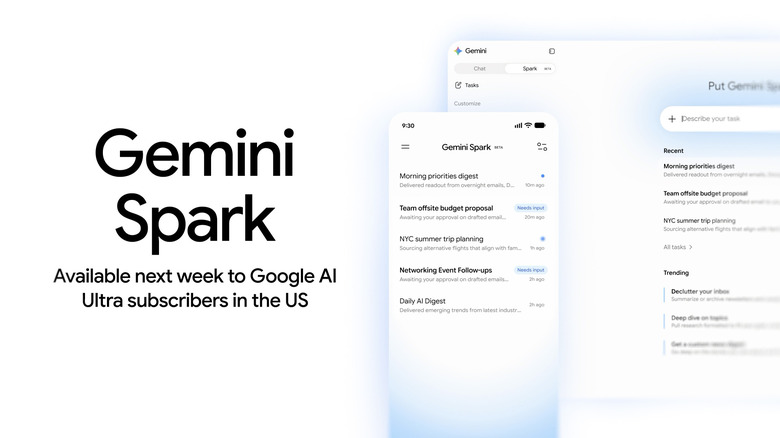
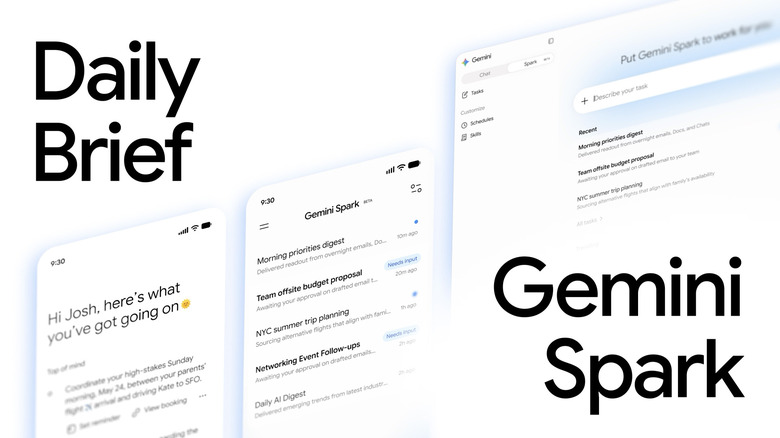
Perhaps the most disruptive announcement was Gemini Spark. Billed as a 24/7 personal agent, Spark operates in the cloud, unburdened by the need for a device to remain active. It integrates deeply with Workspace, allowing it to monitor subscription payments, parse school emails, and manage project workflows.
Simultaneously, Google introduced Information Agents within Search. These agents act as persistent background trackers, monitoring news, real estate listings, and financial data to provide users with proactive, actionable summaries.
3. Gemini Omni and Creative Generative Media
Google introduced Gemini Omni, a multimodal powerhouse designed to create content from any input. Users can now edit videos through conversational prompts, adjusting lighting, perspective, or style in a consistent, frame-aware manner. To address growing concerns regarding deepfakes and misinformation, Google has mandated the inclusion of SynthID digital watermarks on all generated content, ensuring a verifiable provenance for AI-created media.
4. The Hardware Pivot: Android XR
Providing a brief respite from the software-heavy agenda, Google and Samsung unveiled smart glasses developed in partnership with Gentle Monster and Warby Parker. These wearables integrate Gemini to provide real-time navigation, contextual snack/beverage recommendations, and live audio translations. By bringing AI to the physical world, Google is betting that the next interface will be worn, not held.
Chronology of the I/O 2026 Rollout
The deployment of these features is not a singular event but a phased rollout designed to capture different segments of the market:
- May 19, 2026 (Day of Keynote): Immediate availability of Gemini 3.5 Flash as the default model in Search, the rollout of Personal Intelligence to 98 languages, and the debut of Gemini Omni in YouTube Shorts/Create.
- Summer 2026: Broad deployment of Agentic booking features, "vibe coding" (generative UI) for all users, and the expansion of Google Pics to Pro/Ultra subscribers.
- June 2026: Launch of Gemini 3.5 Pro and integration of social features into the Play Games Sidekick overlay.
- Fall 2026: Retail release of the Android XR smart glasses.
Supporting Data and Technical Architecture
The technical backbone of these announcements rests on the Gemini 3.5 series. Google claims that Gemini 3.5 Flash is its most efficient agentic model to date, completing tasks at less than half the cost of previous frontier models.
The economic strategy supporting these advancements is equally significant. Google has restructured its AI subscription tiers to encourage deeper ecosystem integration:
- The New $100/mo Tier: Offers 5x higher usage limits of Gemini and Antigravity, 20TB of storage, and bundled services.
- The $200/mo Ultra Tier: A price reduction from the previous $250, offering 20x the usage limits and exclusive access to experimental projects like Project Genie, which now allows for the creation of 3D worlds mapped to real-world Google Street View data.
Official Responses and Strategic Rationale
Google’s leadership emphasized that these tools are built with a "human-in-the-loop" philosophy. Regarding the integration of agents into Search and Workspace, the company stressed that users maintain control, with agents requiring confirmation before executing sensitive actions like payments or email sends.
However, the industry response has been cautious. Many digital publishers, already reeling from the traffic impact of AI Overviews, viewed the introduction of "Information Agents" as a potential final blow to organic web traffic. In response, Google has doubled down on its Content Credentials (C2PA) initiative, claiming that by helping users distinguish between authentic human content and AI-generated output, they are preserving the value of the "open web."
Implications: A Shifting Digital Landscape
The implications of I/O 2026 are profound for both the consumer and the broader tech economy.
For the Consumer
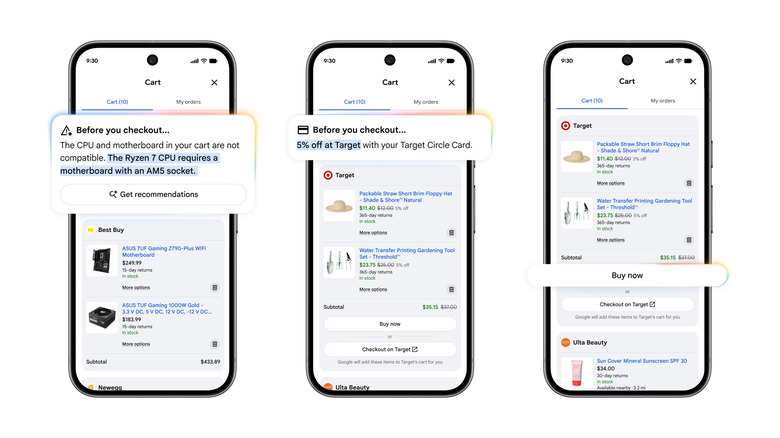
The "browser-first" era is fading. By centralizing shopping in the Universal Cart, search in Gemini, and creation in Gemini Omni, Google is positioning itself as the "operating system" for the user’s life. While this promises unprecedented convenience, it also risks creating a "walled garden" effect, where the user becomes increasingly reliant on Google’s interpretation of the world rather than the raw, unfiltered internet.
For the Developer and Creator
The rise of "vibe coding" and agentic automation democratizes development but threatens to commoditize the role of the software engineer. Furthermore, as Google introduces tools like Google Pics—which can replace or move objects in images—the market for third-party creative software will face stiff competition.
For Privacy and Ethics
The introduction of smart glasses capable of capturing photos and real-time audio translation brings privacy concerns to the forefront. Google’s reliance on SynthID and C2PA is a necessary step, but the speed at which these agentic features are being deployed leaves little time for social norms to adapt. As AI agents gain the ability to "call businesses" on behalf of users (an evolution of the 2018 Duplex project), the boundary between human interaction and automated synthesis will become increasingly porous.
Conclusion
Google I/O 2026 was a declaration of dominance in the agentic AI race. By embedding Gemini into every facet of the user experience—from the way we search for a recipe to how we edit a video or plan a wedding—Google is attempting to move beyond the role of a search engine and into the role of a personal concierge. Whether this results in a frictionless digital utopia or an overly curated, restricted experience remains to be seen. For now, one thing is certain: the internet is no longer a place you visit; it is a service that is increasingly coming to you.












No comments yet. Be the first to join the conversation!