Laily UPN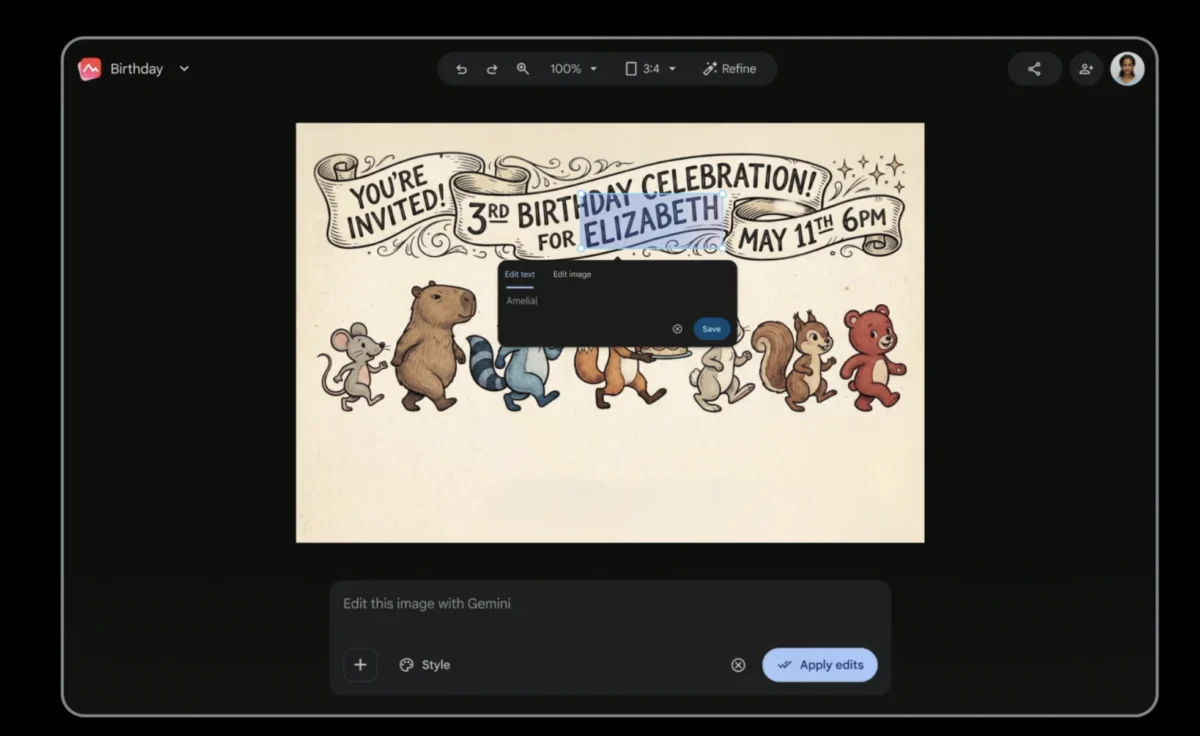
At the 2026 Google I/O developer conference, the tech giant unveiled its most aggressive move yet into the creative software market: Pics. An AI-powered design and image-generation application built directly into the Google Workspace ecosystem, Pics represents a fundamental shift in how the company envisions the intersection of generative AI and professional productivity. By moving beyond simple "text-to-image" generation, Google is positioning itself to disrupt industry stalwarts like Canva and emerging AI-native competitors such as Anthropic’s Claude Design.
The Core Offering: Accessibility Meets Power
The fundamental promise of Pics is the democratization of design. For years, professional-grade visual content—social media assets, marketing brochures, complex mock-ups, and event invitations—required either a steep learning curve with software like Adobe Creative Cloud or a subscription to template-heavy platforms like Canva.
Pics changes this dynamic by leveraging the power of Google’s Nano Banana 2 model. Unlike previous iterations of image generators that functioned as "black boxes"—where a user enters a prompt and hopes for the best—Pics is designed as an interactive environment. It bridges the gap between generative art and precise graphic design, allowing users without formal artistic training to produce professional results through natural language processing.
Chronology: From Research Lab to Workspace Integration
The development of Pics has been a closely guarded initiative within Google’s AI division, reflecting the company’s pivot toward "agentic" and collaborative AI.
- Q4 2025: Internal testing of the Nano Banana 2 model architecture began, focusing on improving text-rendering accuracy—a notorious weak point for early generative AI models.
- March 2026: Beta integration of generative design tools into private Google Workspace environments.
- May 19, 2026 (Google I/O): Public announcement of the platform. Google confirms that the tool is currently available to a select group of testers, with a broader rollout scheduled for Google AI Ultra subscribers later this summer.
- Summer 2026 (Projected): Commercial availability for Workspace users, marking the first time a major tech ecosystem has embedded a dedicated design studio directly into its core productivity suite.
The Technical Edge: Why Nano Banana 2 Matters
The engine driving Pics, Nano Banana 2, is not merely a generator; it is an interpreter. Google engineers emphasized that the model was chosen specifically for its prowess in three distinct areas:
- Precise Text Rendering: AI has historically struggled with typography, often producing "hallucinated" or garbled text within images. Nano Banana 2 utilizes a refined training set that prioritizes character-level accuracy.
- Real-World Contextual Knowledge: The model understands spatial relationships, meaning it can generate layouts that adhere to standard design principles (rule of thirds, white space, contrast) rather than just aesthetic noise.
- Detailed Visual Output: By supporting high-resolution rendering, the model allows for professional-grade assets that are print-ready and suitable for web deployment.
However, the real "secret sauce" is the editing layer. Google acknowledges that the current AI workflow is broken: if a user creates an image they like, but needs to change one specific element—like a color or a misplaced icon—they typically have to regenerate the entire image. Pics solves this by treating every element within a design as an editable object.
Collaborative Design: The "Docs" Philosophy
Perhaps the most significant differentiator for Pics is its integration into the Google Workspace fabric. Google has essentially applied the "Google Docs" collaboration philosophy to design.
Users can create a draft in Pics and share a link with colleagues. Instead of downloading a file and emailing it back and forth, stakeholders can interact with the image as if they were editing a document. A team member can leave a comment on a specific element—for example, "Change this font color to match our brand palette"—and the AI, powered by Gemini, interprets this feedback and executes the change in real-time. This creates an asynchronous, collaborative workflow that is entirely unique in the design software space.
Implications for the Competitive Landscape
The launch of Pics is a direct shot across the bow of the "design-as-a-service" industry. Canva, which has dominated the low-to-mid-market for years, now faces a competitor that is not just a standalone app, but a native utility in the tools people already use for work.
1. The Death of the "Blank Canvas" Anxiety
By allowing users to generate assets from simple prompts, Google is removing the "blank page" barrier that prevents small business owners and educators from creating content. This could lead to a massive influx of AI-generated content across the web, shifting the value of design from technical execution to creative direction and curation.
2. The War for AI-Native Productivity
Google is not alone. Anthropic’s Claude Design has already begun capturing the attention of power users who prefer a text-heavy, high-speed interface. The industry is currently witnessing a "Feature War," where every major AI player is rushing to integrate vision, generation, and editing into a single, unified interface.
3. Impact on Graphic Design Professionals
While tools like Pics are targeted at non-designers, they present a paradox for the professional design community. On one hand, they automate the "drudge work"—the repetitive resizing, color-swapping, and layout adjustments. On the other, they lower the barrier to entry so significantly that the perceived value of basic design tasks may diminish. Professional designers will likely need to pivot toward high-level brand strategy, complex creative direction, and bespoke artistry that AI cannot yet replicate.
Official Responses and Strategic Outlook
At the I/O event, Google executives were careful to position Pics as a "co-pilot" rather than a replacement for human creativity. "The goal isn’t to replace the designer," one lead developer noted during a breakout session. "The goal is to eliminate the friction between a thought and a finished visual."
Google’s strategy is clearly tied to its broader AI-first ecosystem. By bundling Pics with Google AI Ultra, the company is incentivizing a move toward its premium subscription tiers. If Pics proves as effective as promised, it could become a "sticky" feature, making it difficult for businesses to migrate away from Google Workspace once their internal design workflows become inextricably linked to the platform.
Looking Ahead: The Future of Visual Communication
As we look toward the remainder of 2026, the success of Pics will hinge on user adoption and the platform’s ability to handle complex, multi-layered projects. If the AI can successfully maintain consistency across a brand’s visual identity—ensuring that all marketing materials, social posts, and internal slides look like they come from the same source—it will become an indispensable tool.
The launch of Pics is not just about a new app; it is a signal that the era of manual, pixel-perfect design is evolving into an era of prompt-based, collaborative creation. As Google integrates this technology into Gmail, Drive, and Slides, the line between "doing work" and "designing assets" will continue to blur, eventually vanishing altogether.
For the small business owner in Ohio or the teacher in Tokyo, the tools of high-end visual communication are now as accessible as typing a sentence. The competitive arena has shifted, the stakes have been raised, and the creative industry is entering a new, AI-augmented chapter.
Disclaimer: This report covers events announced during Google I/O 2026. As with all early-access software, features and availability are subject to change based on developer feedback and platform updates.

 Lina Irawan
 Asep Darmawan