Lina Hope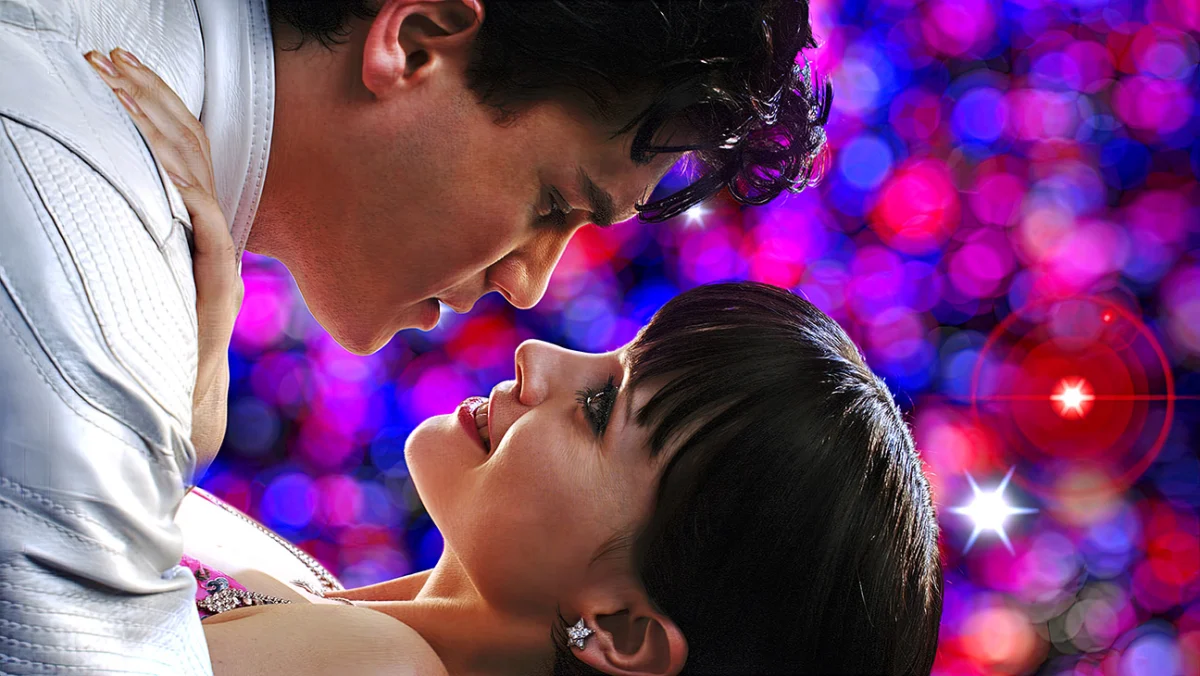
Eighteen years ago, the cinematic landscape was a very different place. When Lana and Lilly Wachowski—the visionary siblings who redefined science fiction with The Matrix trilogy—returned to the director’s chair with the hyper-kinetic, candy-colored live-action adaptation of Speed Racer, the industry expected a revolution. Instead, they received a commercial casualty.
Today, the film is experiencing an extraordinary renaissance. With a new 4K restoration hitting the market, the film’s lead, Emile Hirsch, is reflecting on the journey of a project that was once considered a career-defining "turkey" but has since ascended to the status of a misunderstood masterpiece.
The Weight of Expectation: A High-Stakes Failure
In 2008, the pressure surrounding Speed Racer was immense. Following the global phenomenon of the Matrix films, the Wachowskis were given a massive $120 million budget to bring the classic anime to life. When the film grossed only $94 million worldwide, it was categorized as a catastrophic financial failure.
For a young Emile Hirsch, who was riding the wave of critical acclaim from Into the Wild (2007) and Milk (2008), the film’s failure felt like a crushing blow. At the time, Hirsch occupied a coveted spot on the A-list shortlists for major studio leads. Speed Racer threatened to derail that momentum entirely.
"We were really devastated," Hirsch admits in an exclusive interview with The Hollywood Reporter. "We were disheartened that we weren’t going to make any sequels and continue the world in the film that we loved so much. The idea of the public rejecting the movie—I was almost disappointed in humanity. Speed has these pure intentions and this family love. He was fighting for his art like we were, and then corporate capitalism just crushed us both."

Chronology of a Cult Classic
The road to re-evaluation was not instantaneous; it was a slow, organic crawl that mirrored the journeys of genre-defining classics like Blade Runner and The Thing.
- 2008: Speed Racer premieres to widespread critical panning and poor box office returns. It is largely overshadowed by the cultural juggernaut that was The Dark Knight.
- 2010s: The film begins to find a second life on home video and through online forums, where "film nerds" and cinephiles begin to champion its unique, pop-art visual aesthetic.
- 2020s: The film’s themes—specifically its critique of unchecked corporate consolidation—begin to resonate more deeply with a world that has seen a decade of massive media mergers.
- 2026: A 4K restoration brings the film to a new generation, solidifying its place as a misunderstood precursor to the modern, maximalist blockbuster.
Hirsch recalls the moment he knew the tide had turned. About six years ago, he attended a midnight screening at the New Beverly Cinema, owned by Quentin Tarantino. "During the Grand Prix at the end of the film, I could audibly hear the entire audience crying," he recalls. "There’s a catharsis and a sincerity and a purity of intention to Speed Racer, and those were some of the things it was knocked for at the time of its release."
Supporting Data: Why It Works Now
The visual language of Speed Racer was, in many ways, ahead of its time. While 2008 audiences were acclimated to the desaturated, "gritty" realism popularized by the post-9/11 era of cinema, Speed Racer opted for a radical, hyper-saturated aesthetic.
Director of Photography David Tattersall’s use of color and the Wachowskis’ innovative digital compositing created a look that defied the era’s conventions. As Hirsch notes, "After 15 years of blockbusters offering very little color on screen—to the point where many look perpetually overcast—it’s no surprise why the pop-art aesthetic strikes a chord now."
Furthermore, the film’s narrative—centered on the Racer family’s refusal to sell their independent company to the predatory Royalton Industries—has taken on new life. In an era where corporate giants have consolidated power across nearly every sector, the film’s message of fighting for one’s art against the monolith of "corporate capitalism" feels more relevant than ever.

Behind the Scenes: The Crucible of Production
The production of Speed Racer was a grueling, high-pressure environment that served as a training ground for future industry titans. Notably, the stunt team included Chad Stahelski and Dave Leitch—the duo who would eventually go on to direct the John Wick franchise.
"I remember seeing their stunt pre-vis and saying, ‘These guys know how to shoot really, really well,’" Hirsch says. "So when they became these super-duper successful directors, it was no surprise at all."
Hirsch also notes the stark contrast between the grounded, tactile experience of filming Into the Wild and the green-screen maze of Studio Babelsberg in Germany. Despite the "green-screen maze" label often used by critics, the production utilized revolutionary techniques, incorporating real-world photography into its digital collages to achieve a unique, "hyper-realistic" texture.
Official Perspectives: The Wachowskis’ Vision
Hirsch maintains a close connection to the creative pulse of the film. He recently texted Lana Wachowski, expressing his love for the project and his relief that the audience has finally "caught up."
The consensus among fans—and increasingly, critics—is that the Wachowskis were punished for being visionaries. Audiences who arrived expecting the bleak, philosophical tone of The Matrix were met with a vibrant, earnest adventure that refused to be cynical. As Hirsch observes, modern audiences have become more accustomed to the intense, imaginative visuals seen in works like James Gunn’s Superman. What was "too much" in 2008 has become the standard for visual storytelling today.

Implications: The Legacy of "Speed Racer"
The resurgence of Speed Racer serves as a poignant lesson in the fragility of critical consensus. It highlights how time can strip away the baggage of marketing, release dates, and box office charts, leaving only the work itself to be judged on its own merits.
For Hirsch, the irony of the film’s failure is not lost on him. "Speed has these pure intentions and this family love," he says. "He was fighting for his art like we were, and then corporate capitalism just crushed us both. So this resurgence is weirdly befitting for the movie in a way. It’s almost perfect."
While a sequel remains a "what-if" scenario, the film’s arrival on 4K marks a milestone in its journey from a commercial dud to a piece of protected art. It is a testament to the idea that, in the world of cinema, sometimes the most important work is the kind that takes a generation to truly be seen.
Speed Racer is currently available on 4K, inviting both nostalgic fans and new viewers to witness the vibrant, earnest, and technically brilliant vision of the Wachowskis once more.


 Iffa Jayyana
 Nila Kartika Wati