Sagoh
Sagoh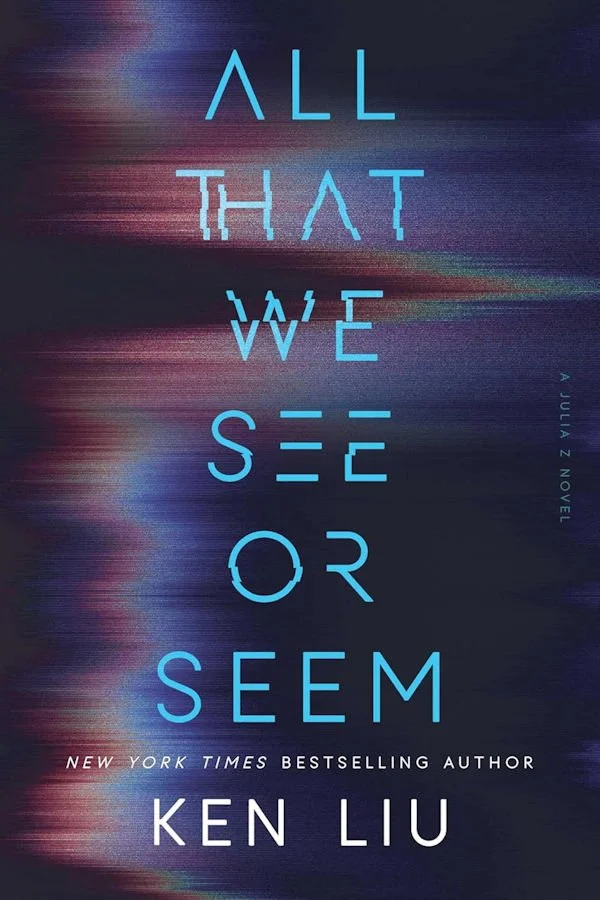
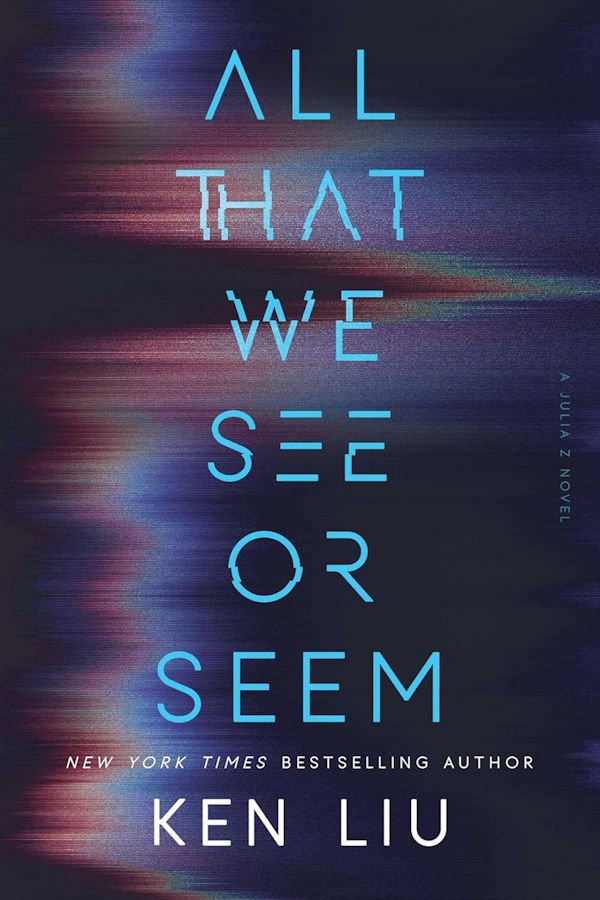
In the rapidly evolving landscape of speculative fiction, few authors bridge the gap between hard science and human emotion as deftly as Ken Liu. With his latest release, All That We See or Seem—the inaugural entry in the Julia Z series—Liu invites readers into a near-future Boston that feels hauntingly plausible. It is a world where the friction between technological convenience and the erosion of personal privacy has reached a breaking point, serving as the backdrop for a high-stakes mystery that is as much about the human psyche as it is about digital intrigue.
The Premise: A Digital Recluse Entangled in an Unreal Web
The narrative centers on Julia Z, a woman whose name once echoed through the halls of internet notoriety. Known during her teenage years as the “orphan hacker,” Julia has spent her adulthood cultivating a life of total digital obscurity in a quiet Boston suburb. Her existence is defined by a meticulous, self-imposed isolation—a sanctuary built to keep the ghosts of her past at bay.
However, the equilibrium of her life is shattered by the arrival of Piers, a desperate man whose world has collapsed. His wife, Elli, is a renowned “onierofex”—a dream artist capable of weaving the subconscious experiences of an audience into a shared, live virtual landscape. When Elli is kidnapped by a ruthless criminal syndicate, Piers turns to the only person with the technical acumen to track her: Julia.
Forced to choose between the safety of her self-imposed exile and the moral imperative of saving a life, Julia is drawn into a labyrinthine digital puzzle. As she peels back the layers of the kidnapping, she discovers that Elli’s professional life was far more dangerous than the public realized. The artist had been providing exclusive, one-on-one dream experiences for the head of an international criminal enterprise—a man who now demands access to his own customized, subconscious narratives in exchange for his captive’s freedom.
Chronology of a Disruption
The events of the novel unfold as a slow-burn descent into the shadows of both the physical world and the human psyche.
- The Status Quo: The narrative opens by establishing a world where personal AI assistants are ubiquitous. Liu presents this not as a dystopian nightmare, but as an alluring, helpful reality that makes the loss of privacy feel like a reasonable trade-off.
- The Catalyst: The introduction of Piers and the disappearance of Elli serves as the inciting incident. The early chapters focus on Julia’s reluctance to engage with the outside world, effectively establishing the stakes of her character arc.
- The Investigation: As Julia begins her digital sleuthing, the pacing is deliberate, favoring atmospheric world-building over action-oriented beats. Readers follow her across the country, tracking the breadcrumbs left behind by the criminals.
- The Tonal Shift: Mid-way through the story, the narrative experiences a distinct, abrupt gear change. The light, breezy banter of the first half is replaced by stark, visceral violence. A brutal, calculated murder serves to raise the stakes, signaling that the antagonist is no longer playing a game of digital cat-and-mouse.
- The Climax and Resolution: The final act pushes the story into the realm of a high-stakes confrontation. While the resolution brings the immediate conflict to a close, it notably shifts toward a more traditional "movie-script" style finale, which contrasts sharply with the nuanced, investigative tone of the earlier chapters.
Supporting Data: Examining the "Onierofex" Concept
At the core of the novel is the concept of the onierofex. Liu explores the mechanics of this profession with the precision of a seasoned world-builder. In this future, the boundaries between waking reality and the dream state are permeable.
The Economics of Dreams
The onierofex industry represents a new frontier in the gig economy. By tapping into the neuro-data of attendees, dream artists synthesize collective experiences that are emotionally resonant. The data suggests a societal craving for shared experience in a world that is increasingly fragmented by digital isolation. Yet, as the story reveals, this technology is ripe for exploitation. When the head of an international criminal organization demands proprietary dream access, the story exposes the dark side of a society where even one’s most intimate subconscious thoughts can be commodified and used as leverage.
The Critical Consensus: Thriller or Philosophical Mystery?
One of the most important aspects of the reader experience—and perhaps the most contentious—is the marketing of the novel as a "thriller." Critics have noted that while the book contains the structural elements of the genre, it defies the pacing expectations typically associated with it.
Genre Expectations vs. Execution
- Pacing: All That We See or Seem is a slow-burn. It prioritizes character studies and the exploration of the "near-future" setting over high-octane chase sequences.
- Character Depth: While the marketing might suggest a standard procedural, the book shines brightest when focusing on the internal lives of its cast. Julia Z is a complex protagonist whose layers are revealed with deliberate, satisfying patience. Even secondary characters, initially appearing as archetypes—the "shallow influencer" wife or the "naive husband"—are subverted through Liu’s writing.
- The Villain Problem: The most significant critique leveled against the novel is the construction of its antagonist. After a narrative filled with nuance, the villain feels jarringly one-dimensional. He is characterized by an almost cartoonish "evil for evil’s sake" motivation, making his eventual defeat feel somewhat anticlimactic compared to the intellectual hurdles Julia faces throughout the rest of the book.
Implications: A Reflection of Our Near Future
Beyond the plot, the implications of Ken Liu’s work are profound. By depicting a world where personal AI is both a savior and a surveillance tool, Liu forces the reader to confront their own relationship with technology. The book suggests that our digital footprints are not just data points—they are reflections of our desires, our fears, and our dreams.
The transition from a breezy, light-hearted tone in the first half to a dark, cynical reality in the second is a masterstroke of thematic storytelling. It mirrors the transition of modern technology: what begins as an innocent tool for convenience eventually reveals the darker, more exploitative power dynamics beneath the surface.
Final Assessment: A Confident Series Starter
All That We See or Seem is, at its core, a testament to the power of thoughtful speculative fiction. While it may falter in the final act with a somewhat conventional resolution and a less-than-compelling antagonist, these flaws do not diminish the strength of the world-building or the strength of the protagonist.
Julia Z is a character worth following. Her journey from the fringes of the digital world back into the fray provides a compelling anchor for what promises to be a complex, multi-volume exploration of identity in the digital age. For readers looking for a fast-paced thriller, the book may require a recalibration of expectations. However, for those seeking a layered, atmospheric, and highly intelligent mystery that asks difficult questions about the future of humanity, Liu’s latest work is an essential read.
As the industry looks toward the next installment of the Julia Z series, the hope is that Liu will continue to peel back the layers of his protagonist’s psyche, further refining the balance between the philosophical depth and the high-stakes action that this world demands. All That We See or Seem is not just a book about hackers and dreamers; it is a reflection of the digital architecture we are currently building, piece by piece, every day.

 Laily UPN
 Evan Lee Salim