

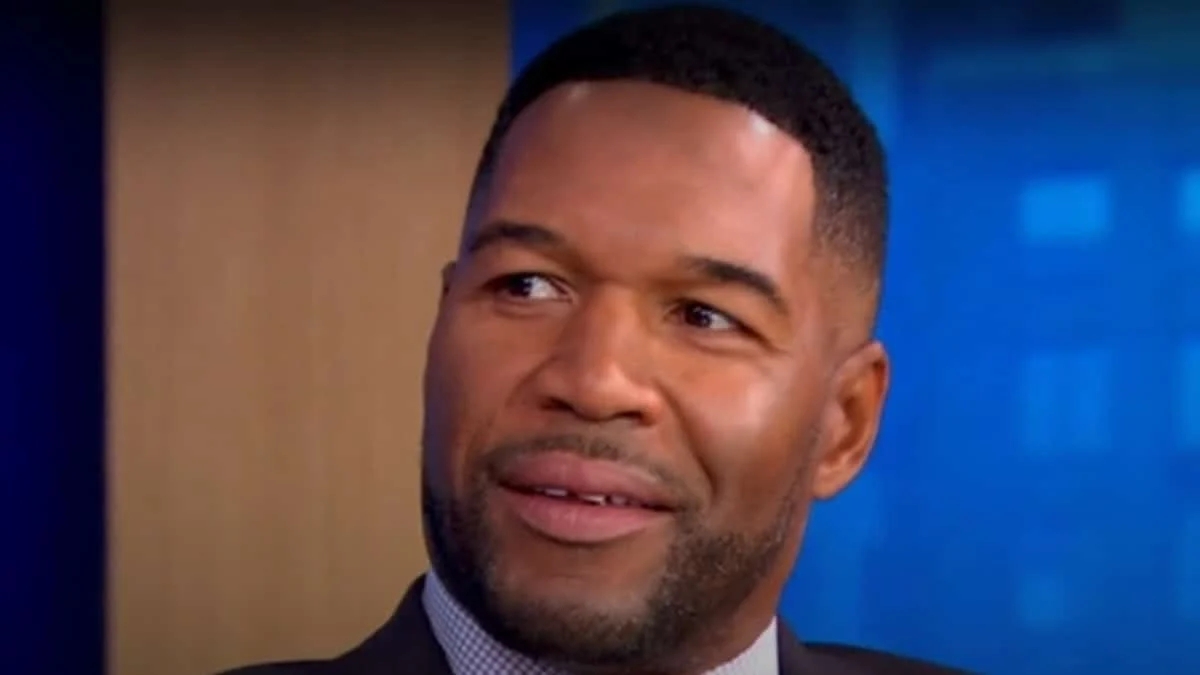
In the high-stakes theater of the NFL Draft, where million-dollar futures are decided by stopwatches, game tape, and closed-door interviews, the narrative surrounding a player can shift in an instant. This year, no story was more polarizing than the draft-day trajectory of Shedeur Sanders, the standout Colorado Buffaloes quarterback and son of NFL Hall of Famer Deion "Coach Prime" Sanders.
The drama reached a boiling point on a recent episode of Good Morning America (GMA), where former New York Giants legend and Pro Football Hall of Famer Michael Strahan took a firm stand against what he termed "cowardly" anonymous reporting. Strahan’s impassioned defense of the young quarterback followed a surprising slide that saw Sanders fall to the fifth round, accompanied by scathing remarks from an unnamed NFL source.
The Core Conflict: Talent vs. Perception
The central facts of the Shedeur Sanders draft story represent a stark contrast between statistical prowess and scouting "intangibles." Heading into the draft season, Sanders was frequently discussed as a potential top-ten pick, with some analysts projecting him as high as the No. 2 overall selection. His tenure at Colorado, while a lightning rod for media attention, showcased a quarterback with elite accuracy, poise under pressure, and a high football IQ.
However, when the draft commenced, Sanders’ name remained uncalled through the first four rounds. He was eventually selected in the fifth round by the Cleveland Browns. While a fifth-round selection provides a clear path to an NFL roster, the "slide" prompted immediate speculation regarding his interviews and off-field reputation.
The firestorm was ignited when Lara Spencer, during a GMA "Pop News" segment, cited a report featuring an "unnamed" NFL assistant coach. The source claimed Sanders had "the worst formal interview" they had ever conducted, further labeling the young athlete as "entitled" and, perhaps most damagingly, stating that "he’s not that great" on the field.
Chronology of a Draft-Day Descent
To understand Strahan’s frustration, one must look at the timeline of Sanders’ transition from college star to NFL prospect:
- The "Prime" Era at Colorado: Under his father’s tutelage, Shedeur Sanders became the face of a rejuvenated Colorado program. Despite a porous offensive line that saw him sacked more than almost any other FBS quarterback, Sanders maintained elite passing efficiency.
- Pre-Draft Buzz: Early mock drafts placed Sanders in the upper echelon of the 2025 class, alongside other elite signal-callers.
- The Scouting Combine and Interviews: This is where the narrative began to fracture. While his physical metrics remained solid, whispers began to circulate in the "scouting grapevine" regarding his personality and the perceived "baggage" of the Sanders brand.
- The Draft-Day Prank: Adding insult to injury, a cruel video surfaced on social media during the draft. A group of youths recorded themselves prank-calling Sanders, pretending to be the General Manager of the New Orleans Saints. They led the hopeful athlete to believe he was about to be selected before hanging up and mocking him.
- The Fifth-Round Selection: The Cleveland Browns eventually stopped the slide, drafting Sanders with a fifth-round pick, intended to provide depth and potential competition for the quarterback room.
- The GMA Fallout: Shortly after the draft concluded, the GMA team discussed the results, leading to Strahan’s viral defense of the player.
Supporting Data: The Statistics of a "Fifth-Rounder"
Scouting reports are subjective, but the data on Shedeur Sanders suggests a player whose production often outweighed his draft position. During his time at Colorado, Sanders consistently posted a completion percentage north of 65%, often while under extreme duress.
Critics point to his tendency to hold the ball too long, leading to excessive sacks. However, supporters—including Strahan—argue that this is a coachable trait and that his ability to remain accurate while being hit is a rare NFL-caliber skill.
The "entitlement" narrative often cited by anonymous sources frequently clashes with the testimony of his teammates. In the Coach Prime docuseries (produced by Strahan’s SMAC Entertainment), Sanders is often depicted as the first one in the building and a meticulous student of the game. This disconnect between public perception and internal reality is what drove Strahan to speak out.
Official Responses: Strahan and the "Brady Blueprint"
When Lara Spencer concluded her report by noting that the Giants and Browns received high draft grades, Strahan immediately pivoted the conversation back to the character assassination of Sanders.
"I hate when you have unnamed sources," Strahan said, his voice rising with professional indignation. "If you’re going to say something that bad to disparage a kid, put your name on it."
Strahan’s critique strikes at a long-standing tension in sports journalism: the use of anonymous scouts and coaches to "trash" prospects. Strahan argued that such comments can have devastating economic impacts on a young player’s first contract, yet the person making the comments faces no accountability for their accuracy.

To bolster his point, Strahan referenced his friend and legendary quarterback Tom Brady. Strahan noted that he had recently watched the draft with Brady, who famously fell to the 199th pick in the sixth round of the 2000 NFL Draft.
"As Tom said, ‘Doesn’t matter where you’re picked,’" Strahan recounted. "Economically, this may have hurt Shedeur Sanders, but opportunity-wise, it didn’t."
Strahan’s defense was not merely a gesture of friendship toward Deion Sanders; it was a critique of the NFL’s "evaluative industrial complex." By invoking Brady—a man with seven Super Bowl rings who was once deemed "too slow" and "unathletic" by anonymous scouts—Strahan reminded viewers that the draft is a guessing game, not a definitive judgment of a human being’s worth.
Implications for the Cleveland Browns and the NFL
The fallout of this draft-day drama has several long-term implications for the league and the media:
1. The Cleveland Browns’ High-Reward Gamble
By selecting Sanders in the fifth round, the Browns have acquired a player with first-round talent and a massive "chip on his shoulder." If Sanders develops into a starter, it will be viewed as one of the greatest steals in franchise history. Furthermore, the presence of the Sanders family brings a level of media scrutiny and "star power" to Cleveland that the franchise hasn’t seen in years.
2. The Ethics of Anonymous Scouting
Strahan’s rant has reignited a debate among sports journalists regarding the ethics of "blind" quotes. While anonymity allows scouts to speak freely without fearing professional repercussions, it also opens the door for personal biases and "character hits" that a player has no way to defend against. Strahan’s demand for accountability—"put your name on it"—is a call for a more transparent scouting process.
3. The "Sanders Brand" vs. The NFL Establishment
The slide of Shedeur Sanders is seen by many as a "message" from the NFL establishment to Deion Sanders. The "Prime Effect" has disrupted traditional college football and recruiting; some analysts believe the NFL’s old guard was eager to "humble" the family by letting Shedeur fall in the draft. Strahan, who has successfully navigated both the locker room and the corporate boardroom, clearly views this as an unfair penalization of a young athlete for his father’s personality.
4. The Power of Media Advocacy
The reaction from GMA viewers was overwhelmingly positive. Fans praised Strahan for using his platform to defend a young athlete who was being mocked by both "pranksters" and "unnamed" professionals. It highlights a shift in sports media where former players like Strahan, Ryan Clark, and Shannon Sharpe are increasingly willing to call out the "anonymous source" culture that they themselves likely endured during their playing days.
Conclusion: Beyond the Fifth Round
Michael Strahan’s career itself serves as a testament to the fallacy of draft-day projections. A second-round pick out of Texas Southern, Strahan was not a "guaranteed" superstar. He built a Hall of Fame career through work ethic and resilience—qualities he sees in Shedeur Sanders.
As the dust settles on the draft, the focus shifts from what was said about Sanders to what he will do on the field in Cleveland. Whether he becomes the next Tom Brady or a career backup, the conversation sparked by Strahan on Good Morning America serves as a necessary reminder: a draft pick is a starting line, not a finish line, and the words of an "unnamed source" rarely have the final say in a player’s legacy.
In an era where social media pranks and anonymous critiques can dominate the news cycle, Strahan’s call for integrity and accountability stands as a rare moment of veteran leadership in the public eye. For Shedeur Sanders, the road to NFL success just got longer, but with advocates like Strahan and the blueprint of Tom Brady, the fifth round might just be the beginning of a legendary story.










No comments yet. Be the first to join the conversation!