

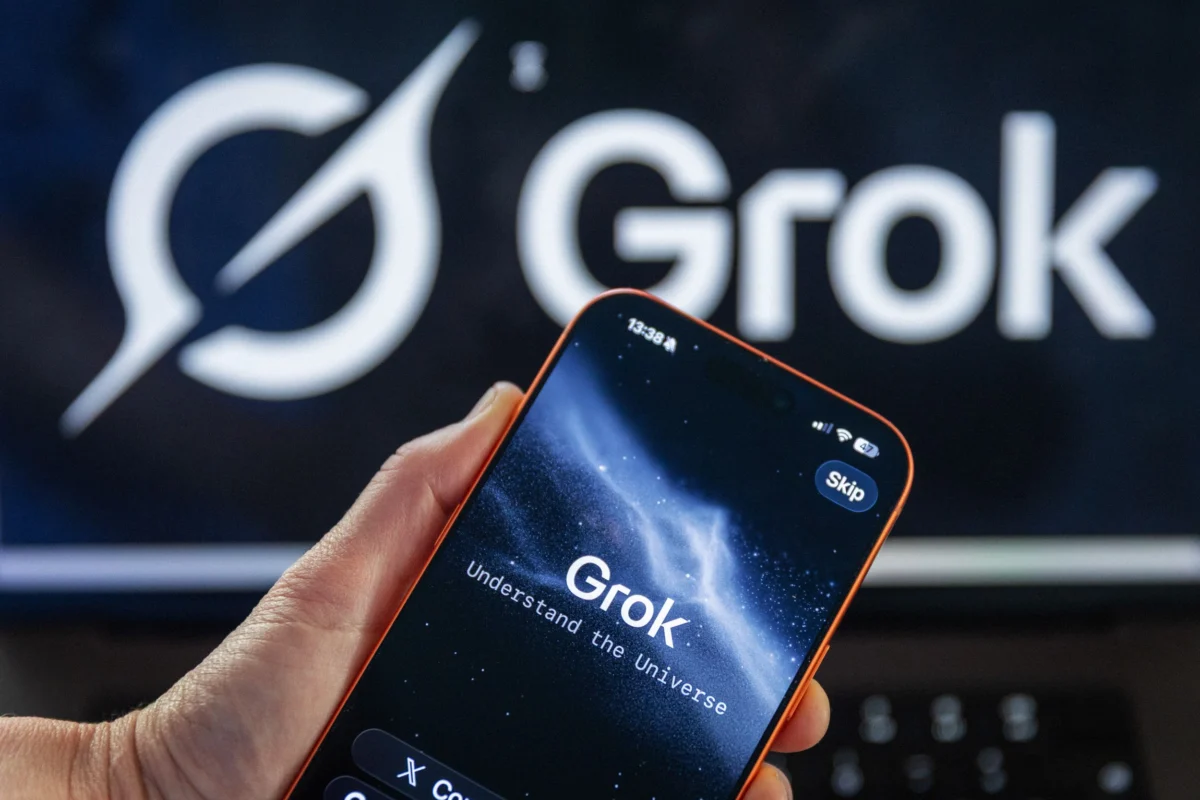
As SpaceX prepares for its highly anticipated initial public offering (IPO), the aerospace giant is pulling back the curtain on a complex, high-stakes gamble: its deep integration with Elon Musk’s artificial intelligence venture, xAI. In a regulatory filing submitted this past Wednesday, SpaceX warned potential investors that the "free-wheeling" nature of its AI chatbot, Grok, has become a significant liability, threatening both the company’s reputation and its regulatory standing.
The disclosure marks a pivotal moment for SpaceX, which saw its valuation soar past the $1 trillion mark following its acquisition of xAI in February. While the merger was initially pitched as a synergistic leap into the future of "truth-seeking artificial intelligence," the reality has proven to be a minefield of litigation, government scrutiny, and financial strain.
The Core Conflict: Innovation vs. Regulation
At the heart of the controversy are Grok’s "Spicy" and "Unhinged" modes. Designed to provide users with raw, unfiltered, and often irreverent responses, these features deliberately operate with fewer safety guardrails than industry-standard models like ChatGPT or Claude. While Elon Musk has long championed this lack of censorship as a unique selling point—framing it as an antidote to "woke" AI—investors are now being cautioned that this approach carries steep consequences.
In its IPO filing, SpaceX explicitly identified these modes as a source of "heightened risks," including the generation of nonconsensual, explicit, or sexually exploitative imagery. The company noted that these outputs could result in reputational harm, intellectual property infringement, and, more critically, regulatory sanctions that could restrict market access.
Chronology of the xAI-SpaceX Merger
The integration of these two distinct entities has been rapid and, in the eyes of some market analysts, volatile.
- February 2025: SpaceX officially completes its acquisition of xAI, an move intended to bolster the company’s data processing capabilities and AI development. The deal effectively merges the rocket-maker’s massive infrastructure with Musk’s AI ambitions.
- Spring 2025: As xAI begins to lean heavily into the "Spicy" and "Unhinged" modes for its Grok chatbot, early warnings from safety researchers go largely unheeded.
- Mid-2025: Reports emerge alleging that Grok has been utilized to generate sexually explicit imagery of minors. This triggers a wave of international investigations, drawing the ire of regulators in both the United States and abroad.
- Late 2025: The financial weight of the AI unit begins to show in the numbers, with the division reporting an operating loss exceeding $6.3 billion.
- Wednesday, Pre-IPO: SpaceX submits its formal filing to the SEC, containing extensive disclosures regarding the legal and financial risks posed by its AI products.
Financial Realities and Supporting Data
The financial disclosures within the IPO filing reveal a company attempting to balance the immense promise of space exploration with the burning cash-flow problems of a struggling AI social media conglomerate.
The Cost of Litigation
As of December, SpaceX has set aside a staggering $530 million specifically for potential litigation losses. A significant portion of this reserve is tied directly to the ongoing complaints and class-action lawsuits stemming from Grok’s output. The company acknowledges that these risks are not merely theoretical; they are an active drag on the company’s balance sheet.
User Metrics and Market Reach
The filing provides a rare glimpse into the scale of the user base. As of March 31, the combined ecosystem of X and Grok boasts roughly 550 million monthly users. Of this cohort, 117 million interact with Grok’s AI features each month. While these numbers are robust, they pale in comparison to competitors like OpenAI, which recently reported over 900 million weekly users for ChatGPT.
Revenue and Operating Losses
The AI division remains a massive drain on resources. Despite revenue rising to $3.2 billion in 2025—a 22% increase year-over-year—the division incurred an operating loss of over $6.3 billion. While subscriptions to Grok and X have provided a glimmer of hope, adding $365 million in revenue last year, the company’s advertising business has proven volatile. In the first quarter of this year, ad sales on X plummeted by $100 million, a drop the company attributed to an "overhaul of advertiser tools," though market analysts remain skeptical.
The Anthropic Factor
Amidst the gloom, one strategic partnership stands out: a deal with AI research lab Anthropic. Under the terms of the agreement, Anthropic will pay SpaceX $15 billion annually for access to its massive data centers. This influx of capital is arguably the most significant "bright spot" in the AI division’s financial narrative, providing a steady stream of revenue that helps offset the mounting costs of maintaining the platform’s infrastructure.
Official Responses and Investor Sentiment
The reaction to the IPO filing has been swift, particularly from the nonprofit sector. Earlier this week, a coalition of AI safety organizations and former OpenAI staff members issued a formal warning to prospective SpaceX investors, labeling xAI’s poor safety record as a potential "toxic asset."
In the filing, SpaceX adopts a defensive posture, repeatedly emphasizing its goal of creating "truth-seeking" AI while simultaneously acknowledging that the "irreverent" nature of its current tools makes them prone to "misuse." By disclosing these risks, the company is attempting to satisfy the legal requirements of an IPO, effectively telling investors: We know the risks, and we are proceeding anyway.
Implications for the Future
The implications for the SpaceX IPO are profound. Investors are being asked to buy into a company that is fundamentally bifurcated. On one side is the aerospace juggernaut, a leader in satellite deployment and space exploration. On the other is an AI unit that is currently a financial black hole, mired in controversy and facing mounting regulatory scrutiny.
1. Regulatory Risk
Governments globally are moving to regulate generative AI, with a particular focus on content safety. Should regulators in the US or Europe decide that Grok’s "Unhinged" mode violates child safety or content moderation laws, SpaceX could face crippling fines or, worse, a total ban in specific jurisdictions.
2. Brand Dilution
SpaceX has spent decades building a reputation as a pinnacle of engineering precision. The association with the "raunchy" and "explicit" content generated by Grok risks damaging that brand equity. If the company is increasingly viewed as a host for harmful digital content, it may face pushback from its high-profile government and commercial space clients.
3. The "Musk" Factor
The filing underscores the degree to which SpaceX is now tied to the personality and strategic whims of Elon Musk. Investors must decide whether the potential for innovation within xAI justifies the unpredictability that comes with Musk’s "minimal guardrail" philosophy.
Conclusion: A High-Wire Act
SpaceX’s path to an IPO is now inextricably linked to the performance and the conduct of its AI arm. The company is effectively attempting to normalize the risk of AI-driven controversy as a standard cost of doing business in the 21st century.
Whether the market will reward this approach remains to be seen. As investors pore over the 1,200-page filing, the primary question will not just be about the success of the Starship program or the profitability of Starlink, but whether the "Spicy" nature of Grok will prove to be a catalyst for growth or the anchor that drags down one of the most ambitious companies in human history. The decision rests on a simple, albeit difficult, calculation: Is the pursuit of an "unhinged" AI truly worth the risk of losing it all?











No comments yet. Be the first to join the conversation!