

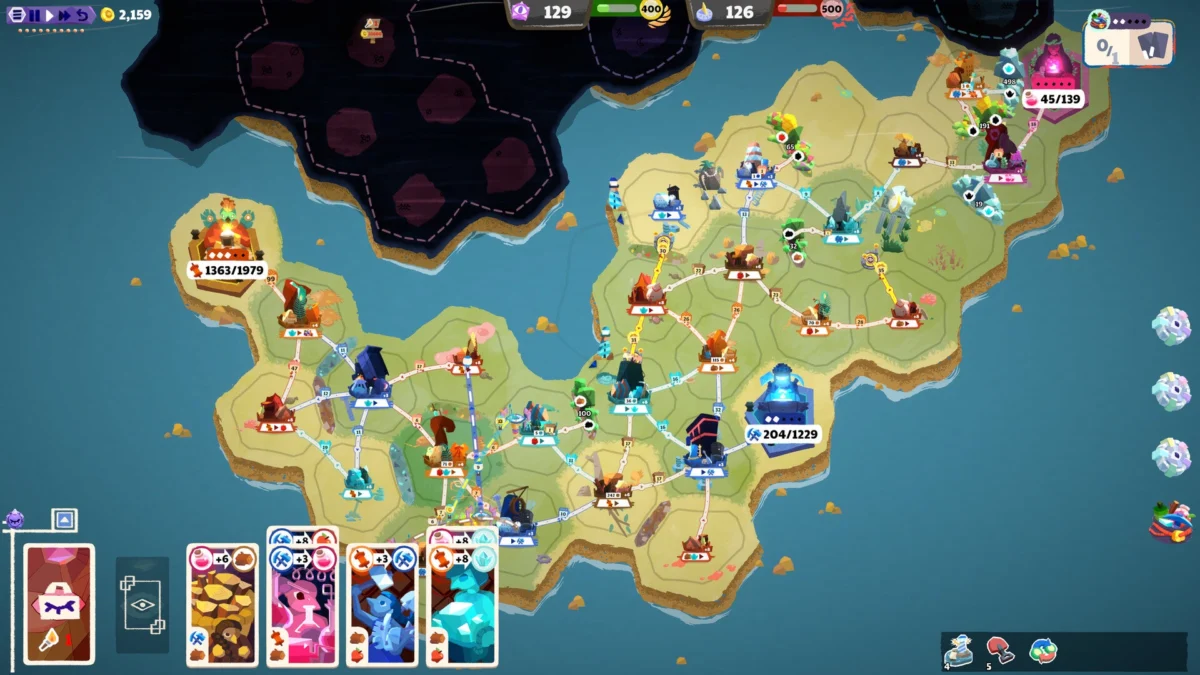
In the sprawling, often overwhelming landscape of modern resource-management simulations, developers frequently lean on the tropes of industrial expansion or colonial conquest. However, Stellar Cartography Interactive UG is carving out a more ethereal niche with their upcoming title, Prophet Margin. At its core, the game challenges players to act as the ultimate middleman in a divine economy, where the primary consumer isn’t a starving population or a growing empire, but a pantheon of demanding, whimsical, and occasionally hyper-specific deities.
The premise is deceptively simple: The gods hunger for tribute. To sate them, players must weave complex, interconnected trade routes across a vibrant, hand-drawn map, ensuring that the right resources arrive at the right altars at the right time. While it may lack the grim, sacrificial undertones of some darker strategy titles, Prophet Margin promises a deep, meditative experience that marries the rigorous logic of board games with the satisfying, real-time-with-pause complexity of classics like Anno or The Settlers.
The Core Concept: Logistics for the Heavens
Prophet Margin operates on a simple feedback loop: identify the specific resource a god demands, establish a supply chain to produce or acquire that resource, and deliver it to their temple. As the game progresses, however, the "divine gifts" received in return alter the landscape of the map, shifting the requirements of your settlements and necessitating constant adaptation.
Unlike many city builders where the goal is survival or growth for its own sake, here, the city serves only to facilitate the god’s aesthetic or material desires. Whether it is a deity with a penchant for high-quality wool or an entity requiring a specific type of metal, the player must orchestrate a dance of production and logistics. The developer notes that the game is designed to be "relaxing," emphasizing a "real-time with pause" mechanic that allows players to undo mistakes and experiment with different supply chains without the crushing pressure of impending failure or divine smiting.
Chronology of Development
The project, which has been steadily gaining traction in the indie strategy circuit, follows the studio’s previous work on the quirky, emoji-driven planet-gobbling simulator To The Stars.
- Initial Concept Phase: The studio focused on the intersection of "board-game logic" and deep resource management. The goal was to create a game where the "why" of the logistics—the god’s demands—served as a satisfying narrative layer atop the mechanical complexity of trade.
- A MAZE. / Berlin 2026 Reveal: The game received significant exposure during the A MAZE. / Berlin 2026 event, where the developers showcased the "Open Screens" presentation. This event provided the first real look at the game’s fluid, map-based interface and the dynamic way settlements evolve.
- Steam Page Launch: With the official Steam page going live (App ID: 3624110), the community received confirmation that the title is nearing completion.
- Demo Phase: The developers have indicated that a public demo is arriving "soon," allowing players to experience the early-game loops before the full release.
Supporting Data: The Mechanics of Trade
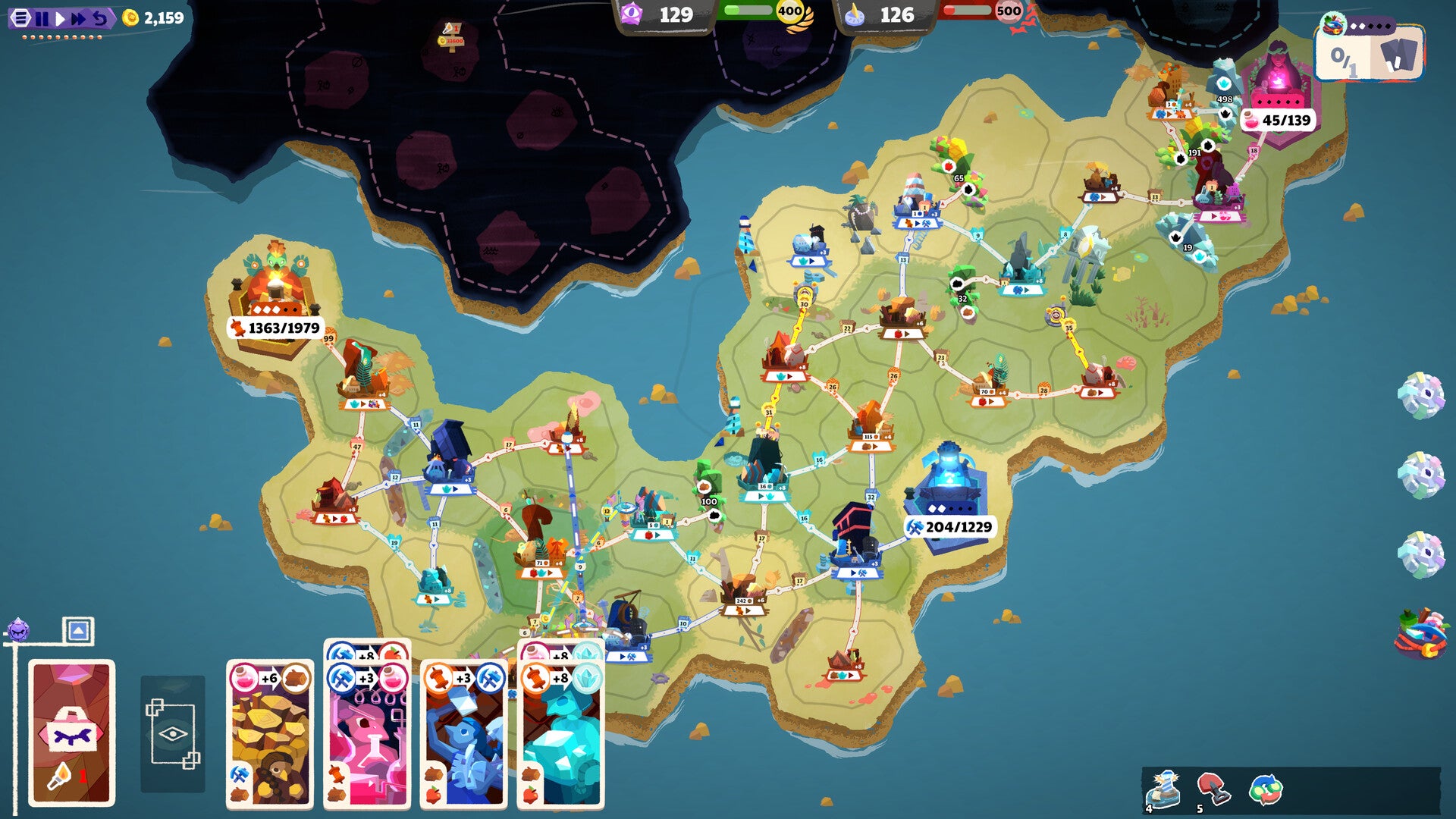
The depth of Prophet Margin lies in its tiered settlement system. Every trade route serves a dual purpose: it feeds the gods and upgrades the involved settlements. As a settlement levels up, its production capabilities increase, but so do its consumption requirements. This introduces a cascading level of complexity that forces the player to constantly reassess their supply chain.
Resource Interdependency
To understand the logistical pressure, one must consider the "commodity chain." For example:
- Input: A coastal village produces fish.
- Middle-tier: An inland furnace produces steel wire.
- The Goal: The god demands a finished product—perhaps a specific tool or ornamental item—that requires both fish and steel.
- The Bottleneck: If the coastal village runs out of fish, the inland village loses its trade partner, and the entire production line grinds to a halt.
Unlike Nova Roma or other titles where failure results in catastrophe, Prophet Margin treats these supply chain failures as puzzles to be solved. If you cannot fulfill a demand, the god remains hungry, but your civilization doesn’t necessarily collapse. This design choice shifts the player’s focus from "surviving the gods" to "mastering the flow."
Developer Perspective: Design Philosophy
In communication via their official channels, the team at Stellar Cartography Interactive UG has emphasized that Prophet Margin is not meant to be a high-stress simulator. Instead, they position it as a "meditative city builder."
"Each temple demands a single sacred resource," the developers state. "Your job is to weave long, efficient trade routes… then watch divine gifts reshape your possibilities."
The developers explicitly cite Captain of Industry as a spiritual touchstone, acknowledging that while the game is relaxing, it does not skimp on depth. The inclusion of an "undo" feature is a direct response to player feedback regarding the frustration of long-term logistical errors in similar games. By removing the fear of permanent failure, the game encourages players to view their trade networks as organic systems that can be pruned, rerouted, and optimized.
Implications for the Strategy Genre
Prophet Margin enters a market currently saturated with "survival-city-builders." Games like Frostpunk or Against the Storm have conditioned players to expect constant crisis management. By pivoting away from the "survival" aspect and leaning into the "logistical" aspect, Prophet Margin stands out as a unique entry in the genre.
The "Divine" Aesthetic
The theme—appeasing deities with commodities—serves as a clever abstraction for what is ultimately a complex math problem. Whether the nodes on the map are temples or factories, the underlying logic remains a sophisticated network-optimization challenge. However, the aesthetic choice provides a sense of whimsy that keeps the game from feeling like a mere spreadsheet simulation.
Accessibility vs. Depth
The game’s accessibility—represented by the "real-time with pause" mechanic—suggests that the developers are targeting a broader audience than the hardcore simulation crowd. By removing the "punishment" phase of the genre (the smiting, the famine, the bankruptcy), the game creates a sandbox where the reward is simply the satisfaction of a well-oiled machine.
Conclusion: What to Expect
As Prophet Margin prepares for its launch, the gaming community is looking closely at how well it balances the meditative nature of its design with the deep, puzzle-like requirements of its logistics engine. The upcoming demo will be the ultimate test of whether the "board-game logic" holds up under player scrutiny.
While we wait for a specific release date, the promise remains: a world where you aren’t just building a city; you are building a tribute. Whether those gods are satisfied with your offering of wool, steel, or fish, the true reward for the player will be the sight of a perfectly functioning, automated, and divine trade network. For those who find joy in the clean lines of a perfectly optimized production chain, Prophet Margin promises to be a welcome addition to the library.












No comments yet. Be the first to join the conversation!