Nana
Nana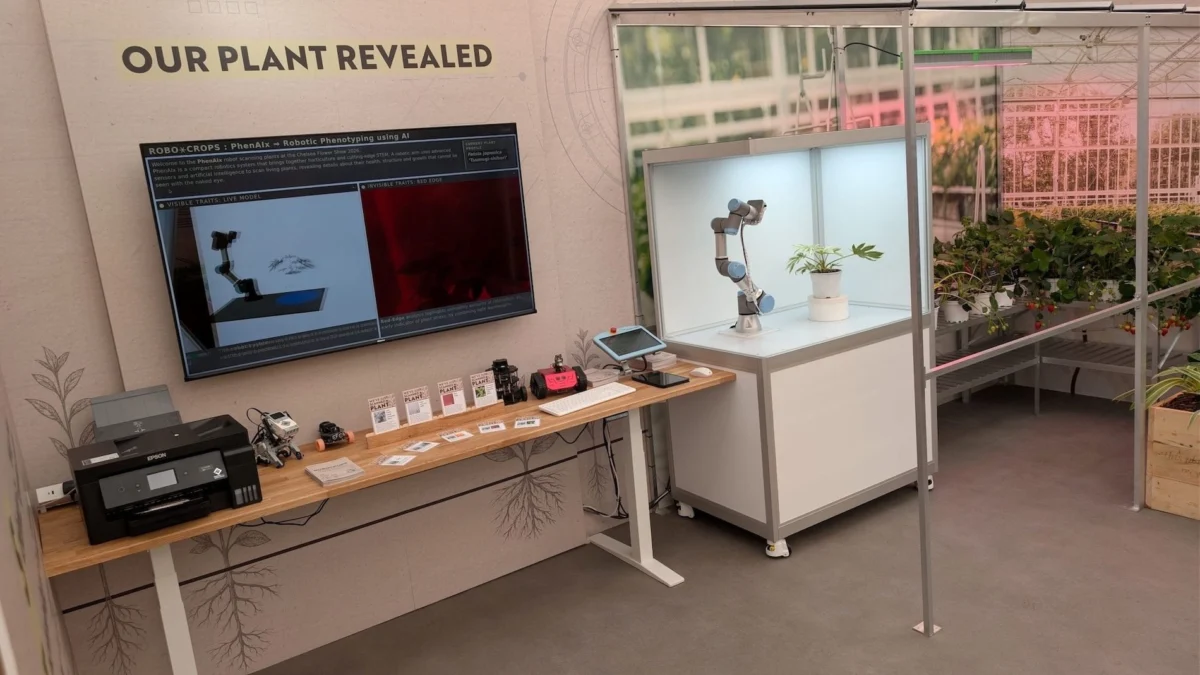
When the gates of the Royal Hospital Chelsea opened for the world-renowned Chelsea Flower Show this May, visitors expected the traditional sensory overload of manicured roses, avant-garde landscaping, and the latest trends in botanical architecture. What they likely did not expect was a masterclass in high-stakes artificial intelligence. Yet, nestled within the show’s GreenSTEM zone, a team from the University of Lincoln defied convention, securing a prestigious Silver Gilt medal for an exhibit that proves the future of horticulture is as much about code as it is about compost.
The exhibit, titled RoboCrops: Plant Selection, Beyond the Visible, served as a high-tech bridge between the agrarian traditions of the past and the data-driven imperatives of the future. By placing robotic precision at the heart of the world’s most prestigious garden show, the Lincoln Institute for Agri-Food Technology (LIAT) has signaled a paradigm shift in how we perceive, cultivate, and protect the lifeblood of our food supply.
The Intersection of Horticulture and High-Tech: A Chronology of Success
The journey to the Chelsea podium was not an overnight endeavor, but rather the culmination of years of rigorous interdisciplinary research at the University of Lincoln.

Phase I: The Research Foundation
For several years, LIAT has been at the forefront of agricultural automation. The development of PhenAIx, the star of the Chelsea exhibit, began as an attempt to solve the "phenotyping bottleneck"—the slow, manual, and often subjective process of assessing plant health in breeding programs. By integrating high-resolution multispectral imaging with machine learning algorithms, the team sought to create a system that could "see" physiological stress long before it became apparent to the human eye.
Phase II: The "GreenSTEM" Integration
The Royal Horticultural Society (RHS) created the GreenSTEM zone specifically to highlight how scientific and technological advancements can solve modern environmental challenges. The Lincoln team saw this as the perfect venue to demystify robotics for a general audience. The exhibit was designed not just as a static display, but as an interactive laboratory, demonstrating how artificial intelligence can analyze plant performance in real-time.
Phase III: The Chelsea Debut
Throughout the week-long event, the exhibit became a focal point for both industry professionals and the general public. The culmination of this presence was the awarding of the Silver Gilt medal—a testament to the project’s success in balancing scientific complexity with educational engagement. The presence of high-profile figures, including the Mayor of London, Sadiq Khan, underscored the national importance of this technology in the context of urban and rural food security.

Inside the PhenAIx: How a Robot Performs a "Plant Physical"
At the heart of the exhibit was the PhenAIx system, an advanced robotic platform that effectively acts as an X-ray or MRI machine for flora. In traditional agriculture, identifying a plant’s resistance to disease or drought involves waiting for physical symptoms—wilting, discoloration, or stunted growth—to appear. By the time these signs are visible to a human breeder, the plant may already be beyond recovery or the crop cycle may have been severely compromised.
PhenAIx changes this dynamic entirely. The robot utilizes a suite of sensors to capture data across the electromagnetic spectrum, including wavelengths invisible to the human eye. The onboard AI processes this data to identify:
- Early-stage physiological stress: Detecting changes in water content or nutrient uptake before wilting occurs.
- Disease markers: Identifying pathogen signatures through changes in leaf reflectance.
- Performance metrics: Quantifying growth rates and biomass accumulation with millimeter-level precision.
This data allows plant breeders to accelerate the selection process. By identifying "super-plants"—those that are naturally more resilient to heat, drought, or pests—scientists can selectively breed for these traits at a speed previously thought impossible.

Educational Impact: Cultivating the Next Generation of Ag-Tech Talent
One of the most profound aspects of the Lincoln exhibit was its outreach strategy. Professor Simon Pearson, Founding Director of LIAT, emphasized that the goal was to "plant a seed" in the minds of young visitors.
For many students, especially those from rural backgrounds, "technology" is often conflated with urban software development or corporate IT. The RoboCrops exhibit reframed robotics as an essential tool for the next generation of farmers, botanists, and environmental scientists. By showing that AI can be used to protect the environment and secure our food future, the team effectively rebranded agricultural labor as a high-tech, mission-driven career path.
"The curiosity from young visitors was one of the most rewarding parts of the whole week," Professor Pearson noted. "When a child sees a robot analyzing a plant, they stop thinking of farming as just ‘dirty work’ and start seeing it as a puzzle that needs to be solved with the best tools available."

Official Perspectives: Bridging the Policy and Science Gap
The visit from Mayor Sadiq Khan was not merely ceremonial; it highlighted the growing recognition that food security is an urban issue as much as it is a rural one. As climate change continues to disrupt global supply chains, the ability to grow more food with fewer resources—specifically water and fertilizers—is becoming a top-tier policy priority.
The LIAT exhibit provided a tangible demonstration of how "Precision Agriculture" could be scaled. By integrating AI-driven monitoring, farmers can transition from broad-spectrum resource application (spraying an entire field) to targeted, data-backed intervention (treating a specific cluster of plants). This reduces chemical runoff, saves water, and maximizes yields, aligning perfectly with the sustainability goals of modern urban planning and environmental policy.
The Broader Implications: Food Security in a Warming World
The climate crisis is arguably the greatest challenge facing global agriculture in the 21st century. The implications of the technology showcased at Chelsea extend far beyond the exhibit hall.

1. Resilience Through Speed
Climate change is moving faster than traditional breeding cycles. By using AI to identify resilient plant varieties in months rather than years, we can adapt our food systems to cope with extreme weather events, such as the prolonged heatwaves and unpredictable rainfall patterns that are becoming the new global norm.
2. Resource Efficiency
Water scarcity is a growing concern for both arid regions and traditionally fertile breadbaskets. Technologies like PhenAIx allow for the development of crops that require significantly less irrigation. When scaled, this could save billions of gallons of water annually, preserving local aquifers and reducing the environmental footprint of industrial farming.
3. Democratizing Data
Perhaps the most exciting implication is the potential for these systems to become more accessible. As hardware costs decrease and AI models become more efficient, the same "health scan" technology used at the Chelsea Flower Show could eventually be deployed by smallholder farmers in developing nations. This would empower them to protect their crops from local pests and climate variability, leveling the playing field in the global food market.

Conclusion: A Garden of the Future
The success of the University of Lincoln at the Chelsea Flower Show serves as a symbolic marker of a wider cultural and economic shift. We are moving away from an era where technology and nature were viewed as opposing forces, toward a new reality where they are deeply, inextricably linked.
The Silver Gilt medal awarded to RoboCrops is more than a design award; it is a recognition that the tools to solve our most pressing environmental crises are already here. They are being built in laboratories, tested in university greenhouses, and now, being showcased among the most beautiful flowers in the world. As we look toward an uncertain future, the integration of AI into our horticultural practices provides a necessary, data-backed sense of optimism. If a robot can learn to care for a flower, perhaps it can help us learn to care for the planet.


 Nana Wu
 Reynand Wu