

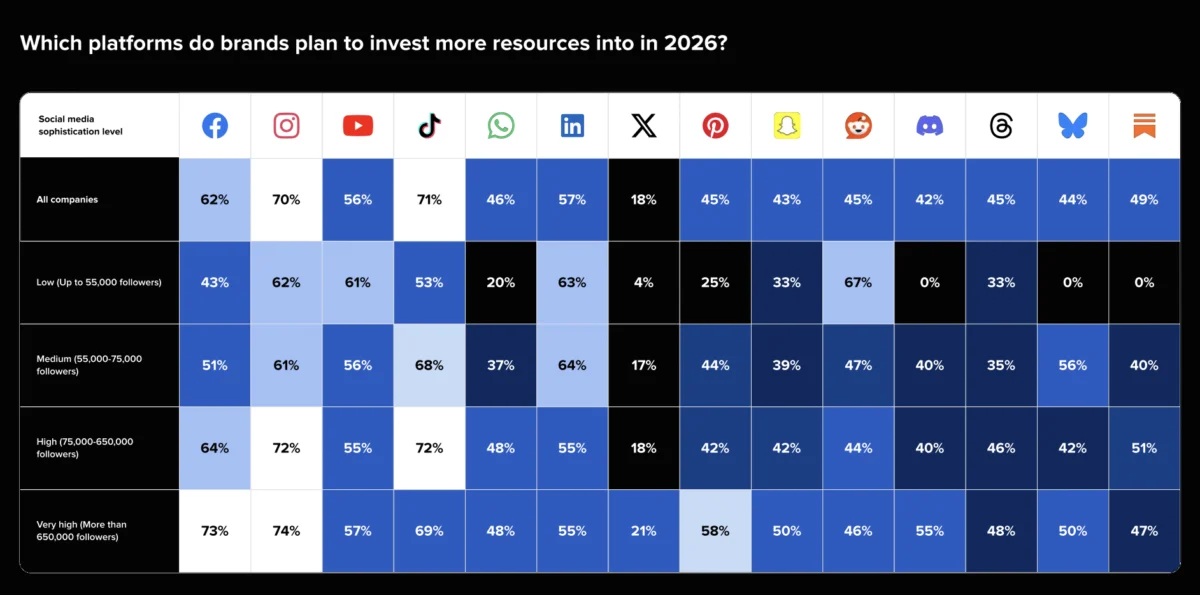
In the modern digital ecosystem, top-tier marketers no longer rely on intuition; they operate on the cold, hard reality of analytics. As the digital landscape becomes increasingly saturated, the ability to parse user demographics, decode content consumption trends, and leverage actionable insights has become the primary differentiator between brands that thrive and those that fade into obscurity.
YouTube remains the undisputed titan of this landscape. With its massive reach, sophisticated recommendation engine, and unique ability to blend long-form education with short-form entertainment, it is no longer just a video repository—it is the primary search engine for the next generation. To future-proof your marketing strategy, one must look beyond the surface and into the granular data that defines the platform today.
The State of the Platform: Key Pillars of YouTube’s Dominance
YouTube’s influence is not merely anecdotal; it is structural. As of mid-2026, the platform continues to distance itself from its competitors in terms of both reach and depth of engagement.

1. The Undisputed King of Online Video
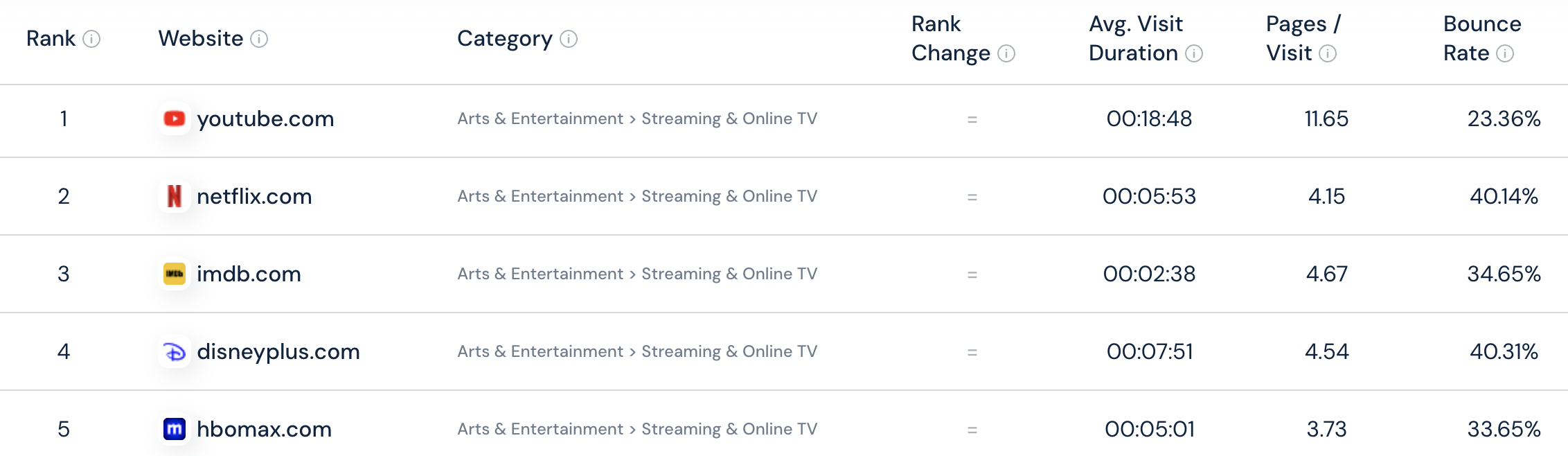
According to the Digital 2026: Global Overview Report by DataReportal, YouTube is the most utilized application for video-centric entertainment and streaming media. Similarweb data confirms this, recording over 28 billion visits in April 2026 alone. This volume establishes YouTube as the mandatory storefront for any brand serious about visual storytelling.
2. Massive Scale: 2.58 Billion Active Users
The potential advertising reach of YouTube stands at 2.58 billion users. When viewed against the global social media population of 5.66 billion, it is clear that YouTube serves nearly half of the world’s connected social audience. This scale is not just about quantity; it is about the quality of the time spent.
3. Time Spent and Engagement Density
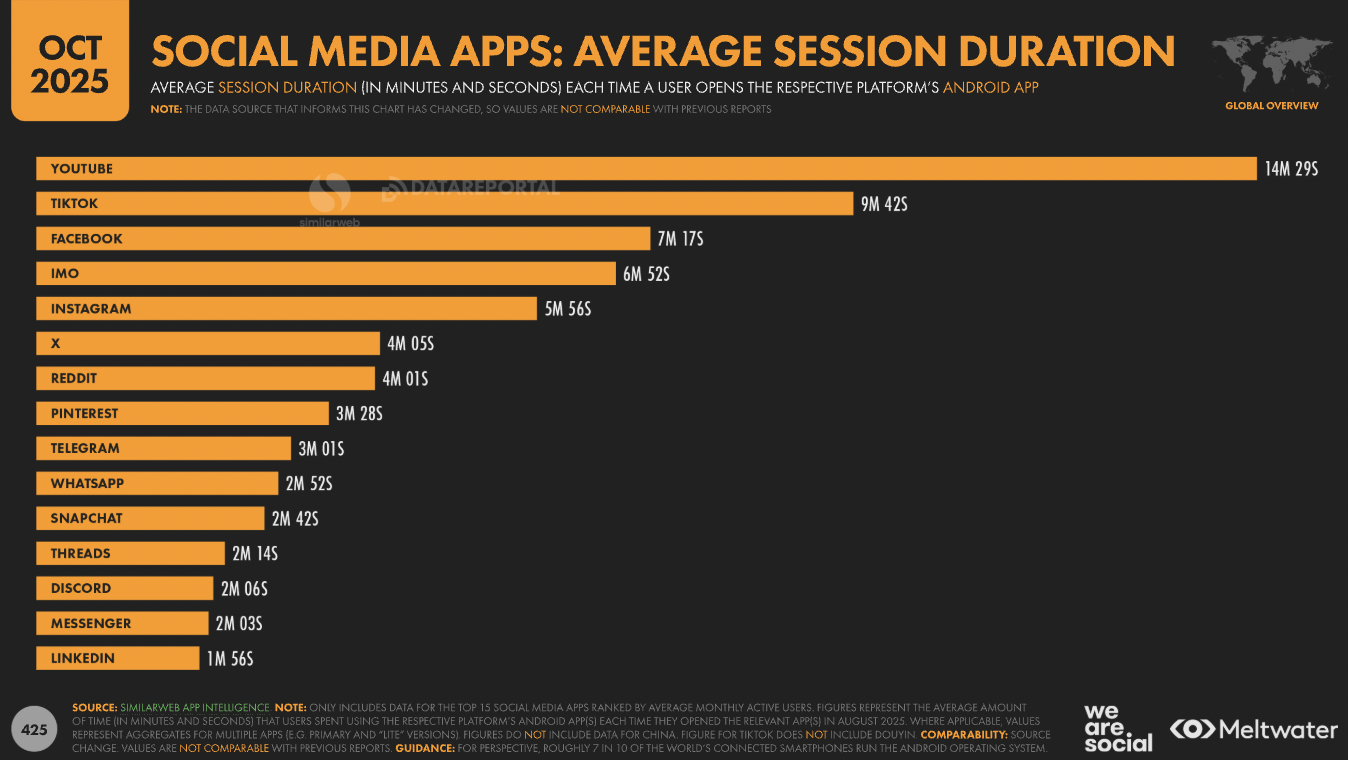
Perhaps the most telling metric is total user time. When indexed against other major platforms (using YouTube as a baseline of 100), the gap is staggering. WhatsApp and Facebook trail with index scores of 63.7 and 62.3, respectively. Most notably, the cumulative time Android users spend on YouTube is nearly double the time they dedicate to TikTok. With an average session duration of 14 minutes and 29 seconds, YouTube provides a captive audience that is far more willing to engage with complex, long-form narratives than the fleeting, short-form-focused ecosystems of rival apps.
A Chronological Evolution: From Archive to Ecosystem
The trajectory of YouTube has been defined by its ability to pivot.
- The Early Years: Founded as a simple video-sharing repository, YouTube’s initial value proposition was user-generated archival.
- The Monetization Era: The introduction of the Partner Program transformed creators into entrepreneurs, shifting the platform toward high-production value content.
- The Short-Form Pivot (2020-Present): In response to the rise of competitors like TikTok, YouTube launched "Shorts." This was a pivotal moment. By 2023, Shorts reached 2 billion monthly active users, and today, they account for 200 billion daily views.
- The Current Landscape: We are now in the "Integrated Era," where long-form and short-form content coexist in a sophisticated funnel. Brands are using Shorts as top-of-funnel awareness tools that drive traffic into deeper, long-form product education and brand storytelling.
The Demographic Blueprint: Who is Watching?
Understanding the YouTube audience is the first step toward effective targeting. The platform’s demographic spread is surprisingly balanced, yet it holds specific power for certain cohorts.
Gen Z and the Shift in Discovery
The 2025 Sprout Social Index™ highlights that 84% of Gen Z users have an active YouTube account. Contrary to the narrative that younger generations only consume 15-second clips, Gen Z treats YouTube as a research hub. They are 67% more likely to discover new products via YouTube ads than on other social networks.
Global Reach
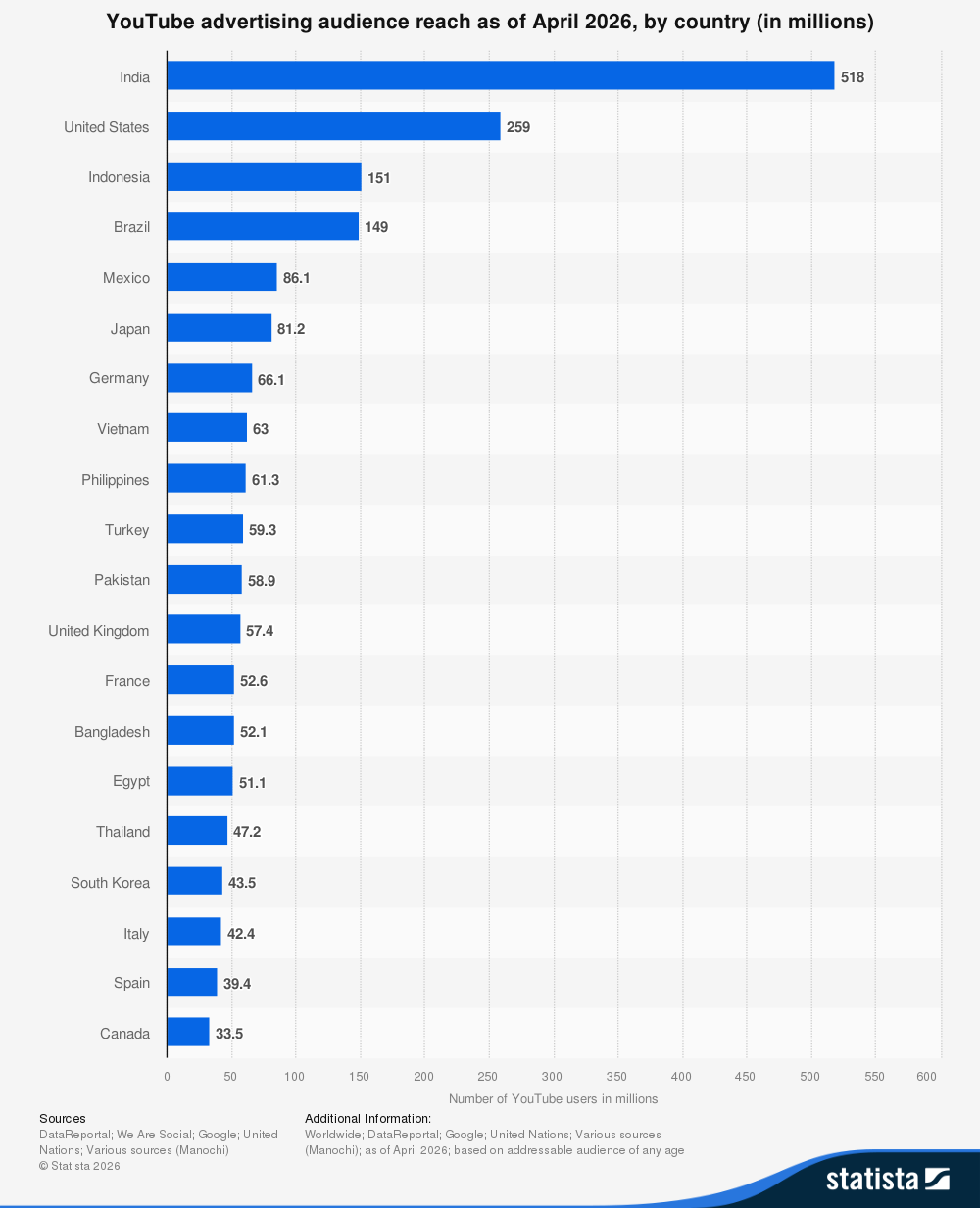
While the United States remains the primary driver of traffic (contributing 21.07% of global site traffic), the international footprint is massive. India leads in raw user counts with 518 million users, followed by the U.S. (259 million) and Indonesia (151 million). For brands looking to scale globally, YouTube provides the most robust infrastructure for localized, multi-language content delivery.
Strategic Implications for Marketers
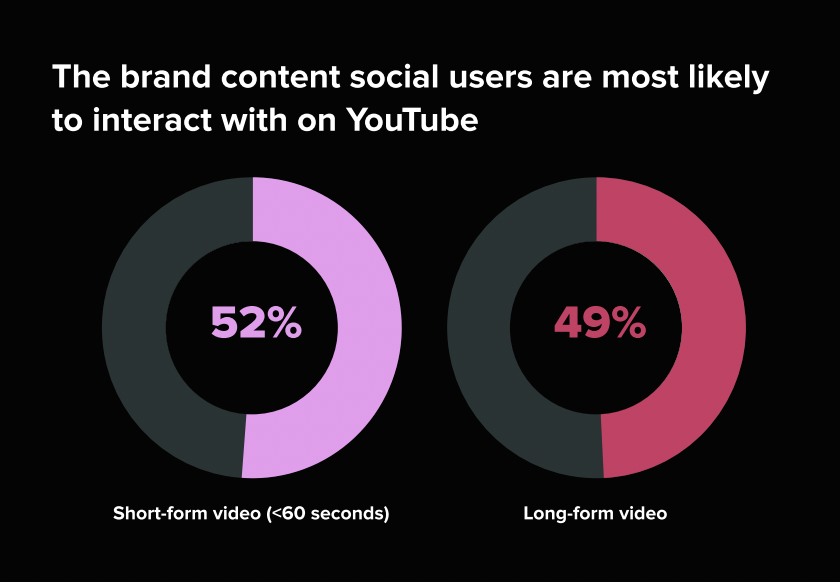
The shift in consumer behavior is clear: viewers want to be informed and entertained. The 2026 Social Media Content Strategy Report notes that 52% of consumers now prefer short-form video interaction, while 48% lean toward long-form. This narrow margin dictates a "hybrid strategy."
The Advertising Performance Gap
Data from Store Growers and Precise TV show that in-feed (Discovery) ads consistently outperform in-stream ads, yielding a click-through rate (CTR) between 1.0% and 3.0%. For brands, this suggests that users prefer choosing to watch an ad via a thumbnail rather than having it forced upon them.
Furthermore, seasonality plays a massive role in cost-efficiency. Advertising costs (CPM) fluctuate wildly, with the Q4 holiday rush (October–December) seeing CPMs as high as $7+, while the post-holiday lull in January and February offers bargain entry points for brands at $1.98–$2.50.
The Rise of Influencer Integration
Over 50% of U.S. marketers now prioritize YouTube for influencer campaigns. The reason is longevity. A YouTube influencer video acts as an "evergreen" asset—unlike a transient Instagram Story or a TikTok that loses relevance in 48 hours, a well-optimized YouTube video can continue to drive traffic, search engine visibility, and sales conversions for months or even years after publication.
Essential Metrics for Future-Proofing
To move from passive viewing of statistics to active strategy, brands must track specific KPIs:
- Average View Duration (AVD): This is the "North Star." If viewers drop off early, the content is failing. If they stay, the algorithm will promote the video organically.
- Click-Through Rate (CTR): Your title and thumbnail are your "digital handshake." If your CTR is below 0.65%, your packaging is not communicating the value of the video effectively.
- Subscriber Growth Rate: A healthy baseline is 0.03%. If you are below this, your content may be entertaining, but it isn’t building a loyal community.
- Audience Retention Curves: By identifying exactly where viewers drop off in your videos, you can identify patterns—such as overly long intros or slow-paced segments—that need to be pruned in future edits.
The Bottom Line: Moving Beyond Trivia
Data is merely noise without an application. The statistics gathered here paint a definitive picture: YouTube is no longer just a place to host videos; it is a search engine, an education platform, and a purchase driver.
Brands that win in 2026 and beyond will be those that embrace the duality of the platform. They will use the 200 billion daily views of Shorts to cast a wide net for discovery, and they will use long-form content to convert that interest into deep-rooted customer loyalty.
As we look toward the remainder of the decade, the advice remains the same: stop guessing, start testing, and let the data dictate your creative direction. The audience is there—they are spending 14 minutes per session looking for information and entertainment. The only question left is whether your brand will be the one providing it.











No comments yet. Be the first to join the conversation!