

By Crystal Bell
April 13, 2026
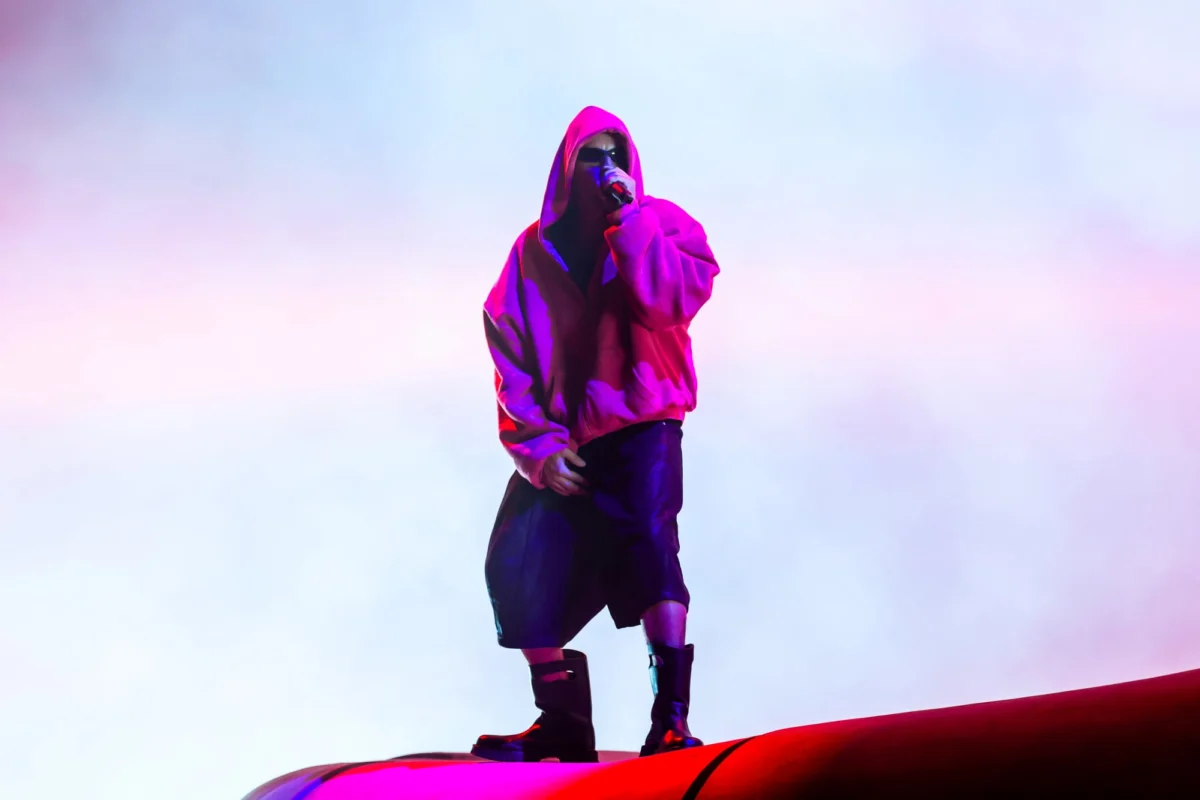
When the desert sun dipped below the horizon at the 2026 Coachella Valley Music and Arts Festival, the expectations for a Saturday night headliner were, as always, gargantuan. Fans anticipated the pyrotechnics, the choreographed dance troupes, and the high-concept, multi-million dollar stage production that have defined the Coachella aesthetic for a decade. Instead, Justin Bieber walked onto the main stage wearing a simple hoodie, sat down with a laptop, and began a performance that felt less like a global concert and more like an intimate, unfiltered deep-dive into his own browser history.
In a move that defied the industry’s obsession with "more is more," Bieber’s 90-minute set turned the Indio stage into a digital living room. By live-streaming his own YouTube watch history and duetting with the younger, floppy-haired iterations of himself, the 32-year-old superstar didn’t just perform his greatest hits; he interrogated the very nature of celebrity in the internet age.
The Chronology of a Digital Life
The performance unfolded in a series of chronological vignettes. Bieber didn’t just play recordings; he interacted with them. Midway through the set, the screens behind him flickered with grainy, low-resolution uploads from 2007—the era of bedroom webcams and pre-algorithmic YouTube.
"I feel like we gotta take you guys on a bit of a journey," Bieber teased, peering into the camera with the casual intimacy of a FaceTime call. "How far back do you guys go? Do you guys really go back, though? Like for real, for real?"

The set moved through the milestones of his career: the viral covers of Ne-Yo’s "So Sick," the meteoric rise of "Baby," the transition into the "Never Say Never" era, and the dance-pop dominance of "Beauty and a Beat." Each clip served as a tether to a specific moment in digital history. For those who grew up alongside Bieber, the performance was a jarring but cathartic reminder of how the internet has preserved, and occasionally fossilized, our formative years.
Supporting Data: The Anatomy of a Modern Pop Star
Justin Bieber represents the last, and perhaps most definitive, example of the "YouTube Star" archetype. Unlike contemporary artists who emerge from the fragmented, niche-driven ecosystems of TikTok or highly curated influencer labs, Bieber’s origin story is rooted in the early, democratized days of the internet.
- The Archive Effect: Bieber’s decision to perform alongside 20-year-old footage highlights a phenomenon psychologists call "digital memory." In 2026, the internet functions as a living archive where every celebrity’s mistake, triumph, and awkward haircut is searchable in seconds.
- The Aesthetic of "Under-Production": While contemporaries like Sabrina Carpenter utilized elaborate, Hollywood-inspired sets and rapid-fire costume changes earlier that weekend, Bieber’s sparse stage setup—featuring only a laptop, a camera feed, and a rotation of collaborators like The Kid LAROI, Dijon, Tems, and Wizkid—challenged the current festival paradigm.
- Audience Engagement: Analytics from the live-stream indicate a massive surge in engagement during the "meta" moments, particularly when Bieber began reacting to his own viral paparazzi rants and niche internet memes like "Deez Nuts."
Official Responses and Cultural Reception
The reception to the set was as polarized as it was passionate. On one hand, traditionalists accustomed to the visual excess of Coachella’s main stage found the minimalism "underwhelming." Critics pointed to the sharp contrast between the high-octane performances of other headliners and Bieber’s lounge-like demeanor.
However, the consensus among digital culture experts is that Bieber succeeded in creating a "devotional" atmosphere. By stripping away the spectacle, he placed the focus entirely on the voice—which, it must be noted, has never sounded more technically proficient—and the emotional weight of his evolution.
"He wasn’t performing for the crowd in the back of the field," noted one industry analyst. "He was performing for the kid he used to be. It was a refusal to participate in the ‘pop star as a product’ machine."

The Implications of the "Living Archive"
Bieber’s Coachella set was, at its core, a meditation on what it means to be a person of interest in an age where the internet never forgets. For most of us, our "embarrassing phase" is hidden in a shoebox of physical photos. For a celebrity of Bieber’s magnitude, every iteration of his personality exists in digital amber, easily accessible and constantly re-circulated by fans and detractors alike.
The Death of the "New" Celebrity
The implications of this performance are broad. We are witnessing a shift in how pop stars navigate their own backstories. In the past, artists would "rebrand" or "reinvent" themselves by burying the past. Bieber’s approach is the inverse: he is claiming ownership of his digital history. By leaning into the "cringe," the memes, and the childhood footage, he is removing the power of the internet to define him through those artifacts. He is the one choosing which memories to surface, which songs to harmonize with, and which versions of himself are worthy of the spotlight.
Is This the Future of Festival Headlining?
Bieber’s refusal to rely on pyrotechnics raises a difficult question for future festival planners: Is the audience still interested in "spectacle," or are we reaching a point of sensory overload where intimacy becomes the ultimate luxury?
If a 32-year-old pop icon can command 100,000 people in the desert with nothing but a laptop and a sense of irony, it signals a move toward a more "extremely online" performance style. Future headliners may find that the most "viral" moment isn’t a complex set piece, but a moment of genuine, un-staged vulnerability—a "gay guy music video night" energy, as some have described it, where the barrier between the star and the fan is collapsed entirely.
A Final Reconciliation
Ultimately, the Coachella performance was not a "greatest hits" concert; it was an act of reconciliation. When Bieber smiled at his 12-year-old self on the big screen, it wasn’t a cynical brand move. It was the public manifestation of a man who has finally made peace with the digital footprint that built his life.

In 2026, being a global superstar means living with multiple, conflicting versions of yourself floating in the digital ether. Bieber’s Coachella set proved that you don’t have to choose one version of yourself to be. You can be the kid in the hoodie, the global icon, the meme, and the adult, all at the same time. By logging into his own history, Bieber didn’t just entertain the crowd—he showed us how to exist in a world that never lets us forget who we were.
As the final notes faded and the screen returned to a standard browser interface, the message was clear: The internet is no longer just a place where we consume content. It is the place where we house our identities. And for Justin Bieber, that house has finally become a home.











No comments yet. Be the first to join the conversation!