Basiran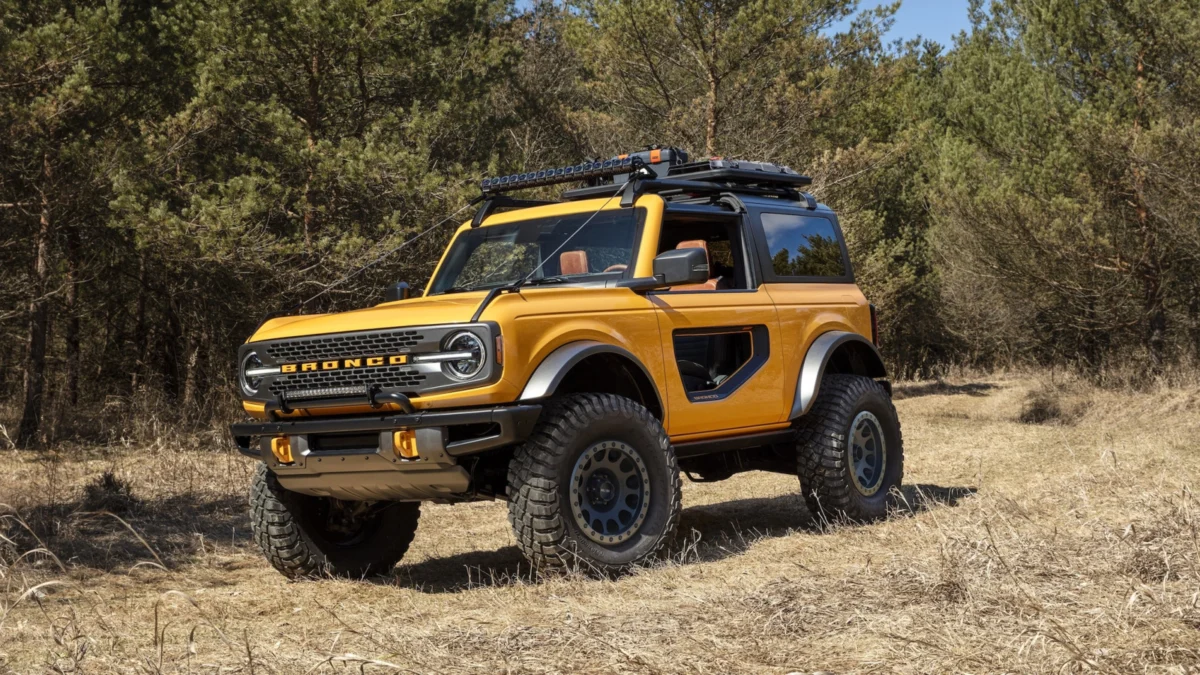
The automotive industry is currently watching a concerning trend unfold within the halls of the Ford Motor Company. As 2026 progresses, the automaker is grappling with an unprecedented volume of safety recalls, casting a shadow over its manufacturing operations and long-term quality control reputation. Following a record-breaking 2025—a year in which Ford issued 153 separate recalls impacting over 13 million vehicles—the company is once again on a trajectory to potentially shatter its own dubious industry record.
As of May 2026, the company has already issued 35 distinct recalls, affecting more than 9 million vehicles in just five months. The latest entry in this mounting list is a safety-critical issue involving the Ford Bronco, a vehicle designed for rugged exploration that is now facing a threat from within: its own roof.
The Core Issue: When the Bronco’s Roof Becomes a Hazard
The most recent recall, filed with the National Highway Traffic Safety Administration (NHTSA), centers on the 2021–2022 Ford Bronco. Approximately 16,200 units are being pulled back to dealerships due to a defect in the Molded-In-Color (MIC) hardtop roof panels.
The Anatomy of the Failure
According to engineering reports submitted to the NHTSA, the issue lies in the manufacturing process of the roof panels. These panels were found to be improperly constructed, rendering their external skin highly susceptible to environmental degradation. Specifically, prolonged exposure to extreme weather conditions—including intense UV radiation and fluctuating temperatures—causes the outer skin of the roof to develop stress fractures.
These cracks are not merely cosmetic. Over time, the structural integrity of the panel is compromised, which can lead to sections of the outer roof detaching from the vehicle while in motion. The safety implications of such a failure are severe; if a panel component were to dislodge while a vehicle is traveling at highway speeds, it could strike following vehicles or cause a sudden distraction for the driver, leading to a high-speed collision.
Scope of the Recall
The recall affects both the 3-door and 5-door variants of the 2021 and 2022 model-year Broncos. Of the 16,200 affected units, the vast majority (15,045) were manufactured during the 2021 production cycle, with an additional 1,155 units identified from the 2022 model year.
Chronology of a Mounting Crisis
To understand the severity of Ford’s current position, one must look at the timeline of its recent performance.
- 2025: The Annus Horribilis: Ford concluded 2025 as the leader in U.S. automotive recalls, surpassing General Motors. The sheer scale—153 campaigns—highlighted systemic issues in supply chain oversight and assembly line quality checks.
- January–March 2026: The year began with immediate pressure. By the end of the first quarter, Ford had already initiated 19 recalls involving 7 million vehicles.
- April–May 2026: The frequency of recalls accelerated. In just eight weeks, the number of vehicles impacted grew by 2 million, bringing the total to 9 million. The Bronco hardtop recall was officially finalized during this window.
- December 2021 – December 2025: Throughout this period, the internal alarm bells were ringing quietly. Ford documented 25 warranty claims, two field reports, and two formal customer complaints regarding the Bronco roof. Despite these signals, it took until May 2026 for a full-scale safety recall to be mandated.
Supporting Data: By the Numbers
The metrics behind Ford’s recall activity serve as a barometer for the company’s internal challenges.
| Metric | 2025 (Annual) | 2026 (YTD – May) |
|---|---|---|
| Total Recalls Issued | 153 | 35 |
| Total Vehicles Affected | 13 Million | 9 Million |
| Primary Defect Categories | Electronics, Brakes, Powertrain | Structural, Software, Safety Systems |
The data indicates that while the raw number of recalls may be trending slightly lower than last year’s pace, the volume of vehicles per recall is significantly higher. This suggests that the issues Ford is currently facing are deeply embedded in core platform architectures, affecting larger production batches than the niche component failures of years past.
Official Responses and Remediation
Ford Motor Company has moved to manage the narrative, focusing on transparency and methodical repair. Regarding the Bronco, the company has communicated directly with its dealer network, which was officially briefed on the recall on May 12, 2026.
What Owners Should Do
For owners of the 2021–2022 Ford Bronco, the waiting game has begun. Ford has advised that owners do not need to take immediate action. Notification letters are scheduled to be mailed toward the end of May 2026. However, the actual repair process—which will likely involve the replacement of the faulty roof panel—is not expected to begin until November 5, 2026.
Steps for concerned owners:
- VIN Check: Owners should visit the Ford Recall Portal and enter their Vehicle Identification Number (VIN) to confirm if their specific Bronco is included in the campaign.
- Monitor Communication: Watch for the official notification letter, which will provide specific instructions on scheduling an appointment with a local dealer.
- Report Issues: If an owner notices cracking or peeling on their hardtop, they are encouraged to contact their local dealership service department immediately, regardless of the official recall repair start date.
Implications for the Ford Brand
The recurring nature of these safety recalls has significant implications for Ford, both financially and from a brand-equity perspective.
Financial Burden
The cost of a recall extends far beyond the price of parts. It includes dealer labor reimbursements, logistics, administrative costs, and the inevitable legal scrutiny that follows high-volume recalls. Furthermore, the warranty claims and field reports leading up to these recalls suggest that Ford is spending a significant portion of its operating budget on reactive fixes rather than proactive quality assurance.
Brand Reputation
For a brand like Ford, which relies heavily on the "Built Ford Tough" marketing mantra, these recalls strike at the core of the company’s identity. The Bronco, a vehicle marketed as a "lifestyle" SUV capable of handling extreme off-road conditions, suffers particularly when its fundamental build quality is questioned. When the roof—a basic component of a vehicle’s exterior—fails, it causes consumers to lose faith in the engineering team’s attention to detail.
A Pivot Toward Quality?
Ford leadership has acknowledged the need for a "quality reset." In recent earnings calls, executives have emphasized a shift toward rigorous testing cycles and supply chain accountability. However, the lag between the identification of the Bronco roof issue (late 2021) and the initiation of the recall (mid-2026) suggests that the company’s internal reporting and validation processes remain sluggish.
Conclusion: The Road Ahead
As the industry looks toward the second half of 2026, the question remains whether Ford can stabilize its manufacturing output. The Bronco hardtop recall is, in isolation, a manageable issue for a company of Ford’s scale. Yet, when viewed as part of the broader 9-million-vehicle tapestry of 2026, it represents a significant challenge to the automaker’s operational efficiency.
The success of Ford’s future models, including its aggressive transition to electric vehicles and updated truck platforms, depends heavily on its ability to turn the tide. For now, owners of the 2021–2022 Bronco will have to wait for the November repair window, serving as a reminder that even the most celebrated vehicles are subject to the complexities and pitfalls of modern mass production. Ford is currently in a race—not just for market share, but to prove that it can maintain the standards of quality that its long history demands.


 Suro Senen
 Nana Wu