

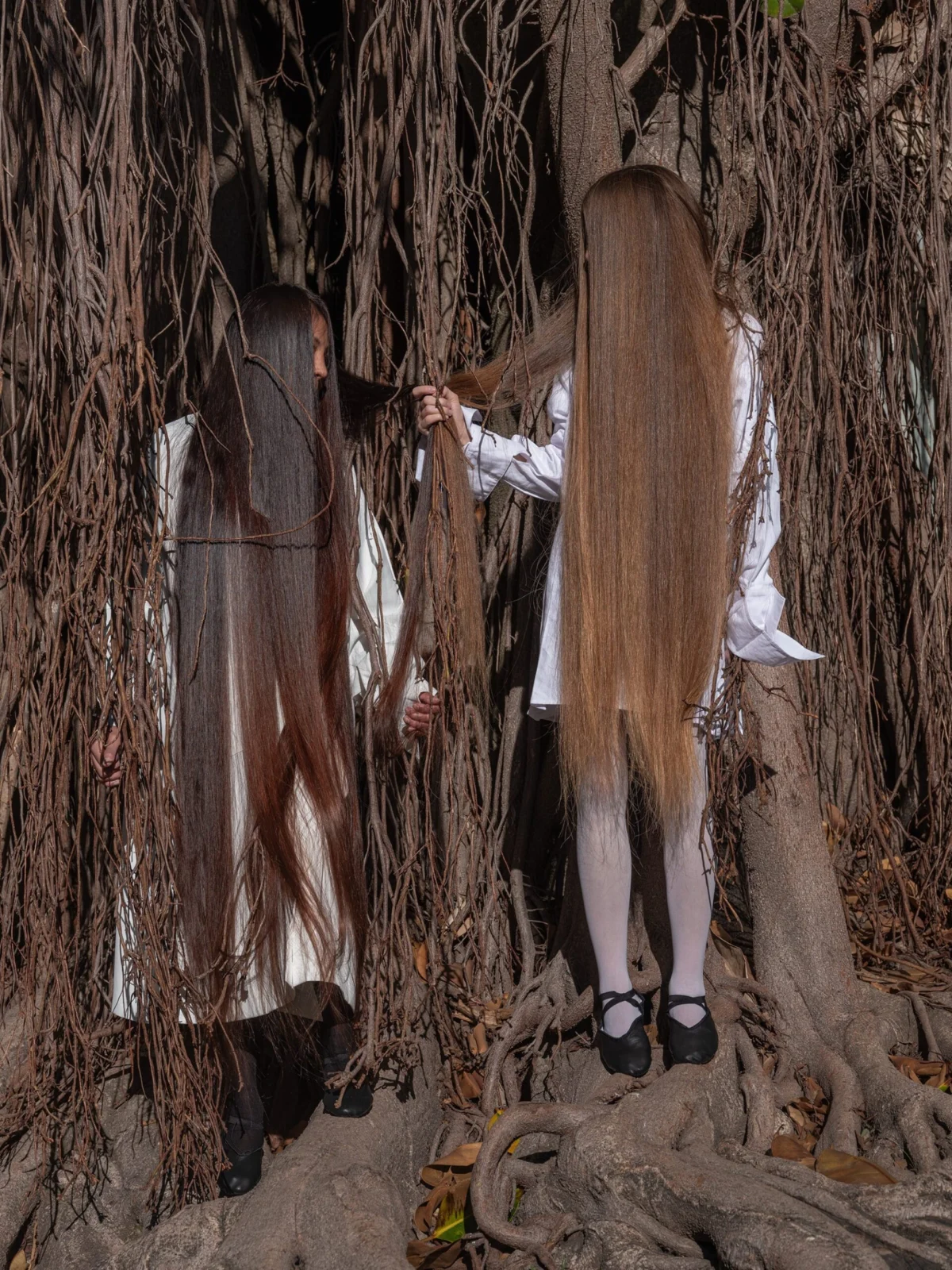
For nearly two decades, photographer Irina Werning has embarked on an artistic odyssey across the vast, rugged, and culturally rich landscapes of Latin America. Her mission was singular and poetic: to find and document the “Pelilargas”—the long-haired ones. The result of this exhaustive, eighteen-year commitment is a new, profound collection of imagery and narrative, published by GOST Books, which serves as a visual testament to a tradition that transcends mere aesthetics.
Werning’s work is not simply a study of hair; it is an anthropological investigation into patience, cultural resilience, and the deeply held Indigenous belief systems that have weathered the storms of modernity. By capturing the stories of women whose hair reaches their waists, knees, and beyond, Werning has curated a powerful archive that bridges the gap between ancestral wisdom and the evolving identity of contemporary Latin American youth.

Main Facts: The Essence of the Project
At its core, Las Pelilargas is a celebration of the physical manifestation of the human spirit. While the casual observer might view these women’s decision to maintain floor-length hair as a stylistic choice, Werning’s photography reveals a much deeper, more complex reality.
The project encompasses nearly 90 distinct portraits and vignettes, each meticulously composed to highlight the tactile quality of the hair and the environment in which these women thrive. Werning notes that when she first began asking young women about their motivations, the answers were often deceptively simple: "Because I like it." However, beneath this surface-level explanation lies a profound, often unspoken, cultural philosophy.

As Werning explains, the act of growing one’s hair is a manifestation of an ancient connection to the land and the self. "The true reason is invisible and passes from generation to generation," she states. "It’s the culture of Latin America, where our ancestors believed that cutting hair was cutting life, that hair is the physical manifestation of our thoughts and our souls and our connection to the land."
A Chronology of Connection: 18 Years in the Making
The genesis of Las Pelilargas dates back to 2006, amidst the stark, breathtaking vistas of Argentina. While photographing the Indigenous Kolla community, Werning was struck by the visual power of the long hair she encountered. It was not merely a feature; it was a defining characteristic that demanded further exploration.

The Formative Years (2006–2010)
Following her initial encounter, Werning felt a compelling, intuitive pull to expand her scope. She began traversing remote mountain towns, far removed from the urban centers of South America. This period was marked by a grassroots approach to discovery. To find her subjects, Werning engaged directly with the communities, placing signs in schools, local marketplaces, and community hospitals. She even organized hair competitions—a lighthearted yet effective way to bring together women who shared this common, unspoken bond.
Evolution and Expansion (2011–2020)
As the project progressed into its second decade, the scope grew. Werning began to observe that the tradition was not a static relic of the past, but a living, breathing practice. She documented girls growing up, their hair lengthening in tandem with their life transitions. During this era, the photography moved from being a simple documentation of a trait to a study of how tradition survives in an era of rapid digitalization and Western cultural homogenization.

The Final Synthesis (2021–2024)
The final years of the project saw Werning reflecting on the totality of her work. She observed that while the world around these women was changing—technology was infiltrating even the most remote villages—the act of maintaining long hair remained a point of continuity. By 2024, the collection was complete, offering a longitudinal look at a tradition that serves as both a source of pride and a subtle, daily act of rebellion against the pressure to conform to modern beauty standards.
Supporting Data: The Anatomy of a Tradition
While Las Pelilargas is an art book, it functions as a piece of ethnographic record-keeping. The images provide a rare, intimate look at the daily lives of Indigenous women in Latin America.

- Geographic Diversity: The project spans multiple regions, reflecting the diverse climates and cultural nuances of Latin American territories, from the high-altitude Andes to the lush, verdant valleys of the interior.
- Generational Continuity: A significant portion of the book focuses on the transmission of this tradition. The photographs capture mothers braiding their daughters’ hair, a ritual that acts as a silent language of love and cultural inheritance.
- The Medium of the Book: With 90 images published by GOST Books, the volume provides a tactile experience that mirrors the texture of the hair being photographed. The sequencing of the images allows the reader to trace the evolution of the hair alongside the personal growth of the subjects.
Official Responses and Curatorial Perspectives
The artistic and cultural community has responded to Las Pelilargas with significant acclaim. GOST Books, in their statement regarding the project, highlights the persistent nature of the photographer’s curiosity. "Guided by her intuition, she went on to spend months in remote mountain towns… She found that traditions were not just surviving, but evolving with long hair symbolizing both continuity and subtle rebellion."
Critics have pointed out that Werning’s work succeeds where many anthropological studies fail: it avoids exoticizing the subjects. Instead, it places them in domestic, relatable settings—in their homes, on their beds, and against the stone walls of their villages. The imagery is respectful, intimate, and deeply human.

By comparing this series to works like Celia D. Luna’s Cholitas Bravas, experts suggest that there is a burgeoning movement in contemporary photography to reclaim and celebrate the aesthetics of Indigenous identity. These works argue that the “traditional” is not in opposition to the “modern,” but rather a distinct, valid way of existing within the current global landscape.
The Implications: Why Hair Matters
The implications of Werning’s work extend far beyond the beauty industry or the world of photography. At a time when many Indigenous languages and customs are under threat of disappearing, Las Pelilargas serves as a poignant reminder of the power of physical symbols in maintaining cultural identity.

Resistance Through Preservation
In many of the regions where Werning traveled, the pressure to cut hair to appear “professional” or “modern” is significant. By choosing to keep their hair long, these women are making a conscious decision to reject a singular definition of beauty. This is a form of soft, persistent resistance. It asserts that one’s culture is not something that needs to be discarded to participate in the broader world.
The Soul and the Soil
Perhaps the most striking implication of the project is the philosophical link between the individual and the environment. The belief that "hair is the physical manifestation of our thoughts and our souls and our connection to the land" offers a stark contrast to Western perspectives that often view the human body as separate from nature. For the women in these photographs, the hair is an extension of their roots—a living, growing link to the soil that sustains them.

A Legacy for the Future
By documenting these women over an eighteen-year span, Werning has ensured that a piece of cultural history is preserved for future generations. For a young girl in a remote mountain town looking at these pages, the book validates her identity and her choices. It tells her that her hair is not just a physical attribute; it is a storied, powerful link to her ancestors and her community.
Conclusion: A Portrait of Persistence
Irina Werning’s Las Pelilargas is more than a photography book; it is a mirror held up to a tradition that refuses to be silenced. Through her patience and her lens, she has captured a beautiful, enduring truth: that identity is a living, growing thing.

As we move further into a century defined by rapid change and global homogenization, works like this become essential. They remind us that there is beauty in the things we choose to keep, in the traditions we choose to nurture, and in the quiet ways we honor the land and our ancestors. Whether viewed as an artistic endeavor or a cultural archive, Las Pelilargas stands as a definitive tribute to the strength, spirit, and, quite literally, the long-standing pride of the women of Latin America.
For those interested in exploring this visual journey further, the book is available through various independent retailers, including Bookshop. It stands as a testament to the idea that some things—like the bond between a person and their heritage—only grow stronger with time.










No comments yet. Be the first to join the conversation!