

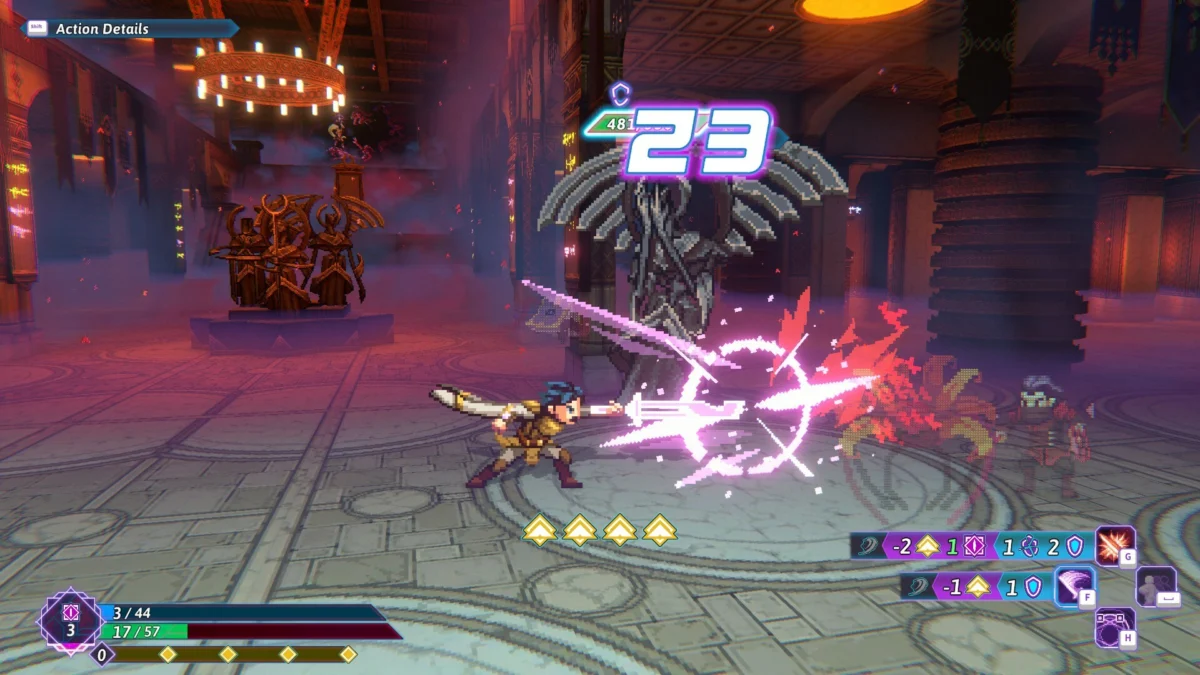
After a protracted development cycle that has tested the patience of the role-playing game community, SacriFire is finally emerging from the shadows. The highly anticipated project from developer Pixelated Milk made a triumphant return during the recent Six One Indie Showcase, offering a refreshed, polished look at a title that seeks to bridge the gap between 90s-era nostalgia and modern design sensibilities. As the industry shifts toward increasingly complex graphical fidelity, SacriFire stands as a testament to the enduring power of stylized pixel art and hybrid gameplay mechanics.
The Evolution of a Vision: Main Facts
SacriFire is an ambitious RPG that attempts to synthesize the best elements of classic Japanese role-playing games (JRPGs) with contemporary action-oriented systems. At its core, the game centers on a narrative-driven journey through a world defined by the collision of magic and technology.
The core appeal of the project lies in its presentation. Pixelated Milk has leaned heavily into a "2.5D" aesthetic—a sophisticated blend of high-fidelity pixel art sprites placed within three-dimensional, dynamic environments. This marriage of classic character designs and modern lighting, depth-of-field effects, and camera movement creates a cinematic experience that feels both comfortably familiar and distinctly fresh.
The gameplay, however, is where the title truly aims to distinguish itself. Moving away from the rigid, static menus of traditional turn-based combat, SacriFire implements a hybrid system. Players are tasked with managing strategic commands—the bedrock of the genre—while simultaneously navigating a real-time field. This requires players to manage positioning, timing, and environmental interaction, effectively raising the skill ceiling for encounters that would otherwise be standard fare.
A Chronicle of Development: The Road to 2026
The journey of SacriFire has been one of transparency, iteration, and steady growth. Since its initial announcement, the development team at Pixelated Milk has been vocal about the challenges of balancing a retro-inspired aesthetic with the expectations of a modern gaming audience.
Early Concepts and Kickstarter Origins
The project found its initial footing through community support, garnering significant interest during its early crowdfunding phases. Backers were drawn to the promise of a "spiritual successor" style experience that captured the golden age of 16-bit and 32-bit RPGs without sacrificing the fluidity expected of 21st-century software.
The Pivot and Polish
Over the last few years, the development team underwent several internal pivots to refine the combat mechanics. Early prototypes were criticized for being too reliant on conventional turn-based tropes; however, the feedback loop from the community—and the team’s commitment to iteration—led to the current, more fluid iteration seen in the latest trailer. The Six One Indie Showcase appearance represents the most "release-ready" version of the game to date, signaling that the project has moved past its experimental phase and into final production.
Supporting Data: The Pillars of Design
To understand why SacriFire carries such weight in the indie scene, one must look at the technical and creative pillars supporting the project.
The Sakuraba Factor
Perhaps the most significant indicator of SacriFire’s quality is the involvement of legendary composer Motoi Sakuraba. For the uninitiated, Sakuraba is the sonic architect behind some of the most influential RPG soundtracks in history. His work on the Tales of series, the Star Ocean franchise, and the atmospheric, melancholic soundscapes of Dark Souls has set a high bar for orchestral and electronic fusion in gaming.
Securing Sakuraba is more than just a marketing coup; it provides the game with an immediate sense of gravity. His ability to craft melodies that evoke both high-stakes adventure and intimate, character-driven moments is expected to provide the emotional backbone for SacriFire‘s sprawling narrative.

Technical Synthesis
The "2.5D" approach is not merely a stylistic choice; it is a technical challenge. By integrating pixel art characters into 3D environments, Pixelated Milk must account for dynamic shadows, particle effects, and perspective shifts that could potentially clash with the sprite-based art. The latest footage confirms that the team has mastered this balance, utilizing modern engine features to make the sprites pop against the depth of the backgrounds, preventing the "flat" look that often plagues lesser retro-inspired titles.
Official Responses and Developer Insight
In communications following the Six One Indie Showcase, representatives from Pixelated Milk emphasized that the extended development time was a necessity of ambition. "We wanted to ensure that the combat felt as good as it looked," the team noted in a recent update. "Building a hybrid system where real-time movement and menu-based strategy coexist is inherently difficult. If the movement feels sluggish, the strategy feels pointless. If the strategy is too slow, the movement becomes a distraction. We believe we’ve finally found the equilibrium."
The team also acknowledged the patience of their community, noting that the feedback provided during previous showcases and demo releases directly influenced the current state of the game’s "Tactical Action" system. This dialogue between developer and player remains a cornerstone of the project’s identity.
Implications for the Indie RPG Market
The release of SacriFire, currently slated for a 2026 window on PC (via Steam and GOG) with console ports to follow, holds significant implications for the wider indie market.
The "Retro-Revival" Saturation
The RPG genre is currently experiencing a renaissance, with titles like Sea of Stars and Chained Echoes proving that there is a massive, underserved market for classic-style experiences. However, the market is also becoming saturated. SacriFire’s success will likely depend on its ability to distinguish itself through its hybrid combat. If it succeeds, it will set a new standard for how indie developers can modernize classic formulas.
The Long-Term Viability of 2.5D
Should SacriFire perform well, it will likely validate the investment in 2.5D aesthetics for future indie projects. The visual style is significantly more expensive and time-consuming to produce than traditional 2D or 3D, and its success could encourage publishers to back more projects that prioritize artistic, hand-crafted visuals over raw photorealism.
A Template for Future Releases
The development cycle of SacriFire—one characterized by long delays, community-led adjustments, and a focus on high-profile talent—could serve as a blueprint for other indie studios. It demonstrates that taking the time to "get it right" is often a more sustainable path than rushing to market with an unfinished product.
Looking Ahead
As 2026 approaches, all eyes will be on Pixelated Milk. The transition from a promising concept to a tangible release is the final, and often most treacherous, hurdle for any indie studio. With the core mechanics now stabilized, a legendary score in place, and a visual identity that stands out in a crowded marketplace, SacriFire is positioned to be one of the defining indie RPGs of its year.
Whether it manages to capture the same magic that made the classics of the 90s so memorable remains to be seen. However, based on its showing at the Six One Indie Showcase, the project is well on its way to fulfilling its promise. For fans of turn-based tactics and those who still hold a torch for the era of high-fantasy, screen-filling spells, and epic character arcs, SacriFire is a title that should remain firmly on the radar.
The wait is nearing its end, and if the current trajectory holds, the result will be a finely tuned, aurally stunning, and deeply engaging experience that honors its inspirations while carving out a distinct legacy of its own.









No comments yet. Be the first to join the conversation!