Nana Wu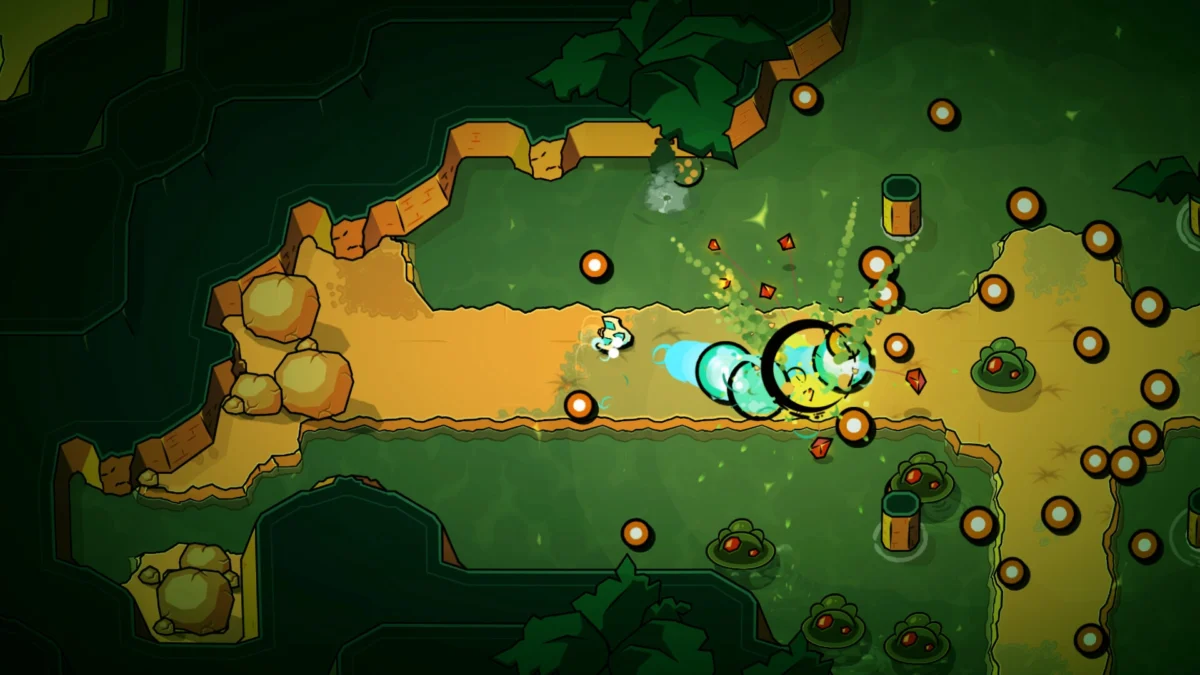
In the modern gaming landscape, where the market is often saturated with sequels, remakes, and live-service behemoths, indie developers continue to be the primary source of innovation. Occasionally, a title emerges that defies conventional classification, stitching together disparate genres to create something entirely unique. Minishoot’ Adventures is precisely that—a masterclass in design that marries the open-ended exploration of classic top-down adventure games with the kinetic, high-octane thrill of twin-stick shooters.
While the concept of blending these two genres may sound counterintuitive on paper, the execution is nothing short of transcendent. It manages to capture the nostalgic wonder of early Zelda titles while providing the mechanical depth required for a modern "bullet hell" experience.
The Core Concept: A New Take on Familiar Foundations
At its heart, Minishoot’ Adventures is a story of liberation. The premise is refreshingly understated: a peaceful world inhabited by sentient ships is suddenly besieged by a mysterious, encroaching darkness. Your companions have been trapped within crystals, and it falls upon you, the protagonist, to navigate the world and secure their release.
Unlike many modern titles that bog players down in sprawling, expository lore dumps or cinematic cutscenes, Minishoot’ Adventures trusts the player’s intelligence. The narrative is conveyed through environmental storytelling, character animation, and a pervasive sense of warmth. The world itself feels lived-in, reacting to your presence as you traverse its vibrant, interconnected map. By stripping away the bloat of a traditional narrative, the game allows the core loop of exploration and combat to take center stage, proving that sometimes, a simple premise is the most effective vessel for a great game.

Chronology of Gameplay Progression: From Peashooter to Powerhouse
The journey in Minishoot’ Adventures is marked by a steady, well-paced growth curve. The experience can be broken down into three distinct phases of development:
- The Initiation (Hours 1–3): The game begins with a gentle introduction. Players start with a standard "peashooter" and limited mobility. During this phase, the focus is on mastering the fundamental twin-stick controls. Movement is silky smooth, and the game encourages the player to experiment with navigation before layering on more complex combat encounters.
- The Expansion (Hours 4–8): As players rescue their first few companions, the world begins to open up. This is where the "Metroidvania" DNA takes hold. You gain abilities that allow you to traverse previously inaccessible terrain—leaping across gaps, navigating hazardous water, and shattering barriers. This phase is defined by the "Aha!" moments of realizing how a new ability can be applied to an old, mysterious location.
- The Ascendance (Hours 9+): By the final act, the game shifts from a simple adventure into a full-blown bullet-hell spectacle. With your ship’s stats—damage, range, fire rate, and movement speed—fully augmented, you become an engine of destruction. The late-game boss fights are designed to test the player’s mastery, filling the screen with intricate, readable bullet patterns that demand both precision and nerve.
Supporting Data: Why the Mechanics Work
The success of Minishoot’ Adventures lies in its mechanical harmony. The control scheme is the linchpin of the experience; by mapping movement to the left stick and firing to the right, the game creates a fluid, intuitive dance.
- Combat Density: The game features a dynamic difficulty scaling system. While early encounters are forgiving, the late-game encounters are mathematically rigorous. Players are forced to balance offensive output with defensive positioning. The "short respawn" loop ensures that even the most difficult boss encounters remain engaging rather than punishing.
- Exploration Metrics: The world design is dense. Every screen contains potential secrets—hidden caves, heart pieces, and map fragments. This encourages a "completionist" mindset that is rarely exhausting because the world is interconnected in a way that feels intentional and tight.
- Audio-Visual Synergy: The art style is crisp, clean, and vibrant. This is a critical design choice; in a game where you must dodge hundreds of projectiles at once, readability is paramount. The electronic, atmospheric soundtrack complements this, grounding the player in the game’s world without ever becoming intrusive or repetitive.
Implications for the Indie Gaming Industry
Minishoot’ Adventures serves as a case study for the "less is more" philosophy in game design. In an era where many developers feel pressured to include massive open worlds or complex RPG skill trees, Minishoot’ Adventures succeeds by refining a small number of systems to near-perfection.
The implication for the industry is clear: players are starved for titles that respect their time. By avoiding the pitfalls of "feature creep," the developers have created a game that never overstays its welcome. It is a lean, mean, and polished experience that stands as a testament to the power of focus. Furthermore, it highlights the viability of genre-mashing. It proves that developers do not need to reinvent the wheel to innovate; they simply need to find the right intersection between existing mechanics to create a "new" feeling within a familiar framework.

Addressing the Minor Shortcomings
No game is without its flaws, and Minishoot’ Adventures is no exception. Some players may find the initial upgrade path to be somewhat incremental; the early game, while charming, lacks the explosive power-ups that define the late-game experience. Additionally, those who are not accustomed to non-linear exploration might occasionally feel disoriented. The lack of heavy hand-holding—which is a strength for many—can lead to brief moments of "where do I go next?" syndrome.
However, these are minor grievances in the context of a title that hits so many highs. They do not detract from the overall polish or the joy of discovery that permeates the experience.
Conclusion: Who Should Play?
Minishoot’ Adventures is a rare gem that bridges the gap between different player demographics.
- For the Zelda Fan: You will find the same joy in discovery, secret-hunting, and dungeon-crawling that defined your childhood favorites.
- For the Bullet-Hell Enthusiast: You will appreciate the tightness of the controls and the escalating intensity of the boss encounters.
- For the Casual Indie Fan: You will fall in love with the art, the atmosphere, and the "just one more area" addictive loop.
With a well-deserved score of 8.5, Minishoot’ Adventures is more than just a successful experiment; it is a landmark title that should be on every gamer’s radar. It finds a perfect middle ground between accessibility and mastery, proving that even in a crowded market, there is always room for a game built with heart, precision, and a genuine love for the craft. Whether you are looking for a relaxing afternoon of exploration or a high-octane test of your reflexes, this game delivers in spades. It is a shining example of what indie developers can achieve when they dare to be both strange and perfect.


 Sagoh
Sagoh
 Ammar Sabilarrohman