

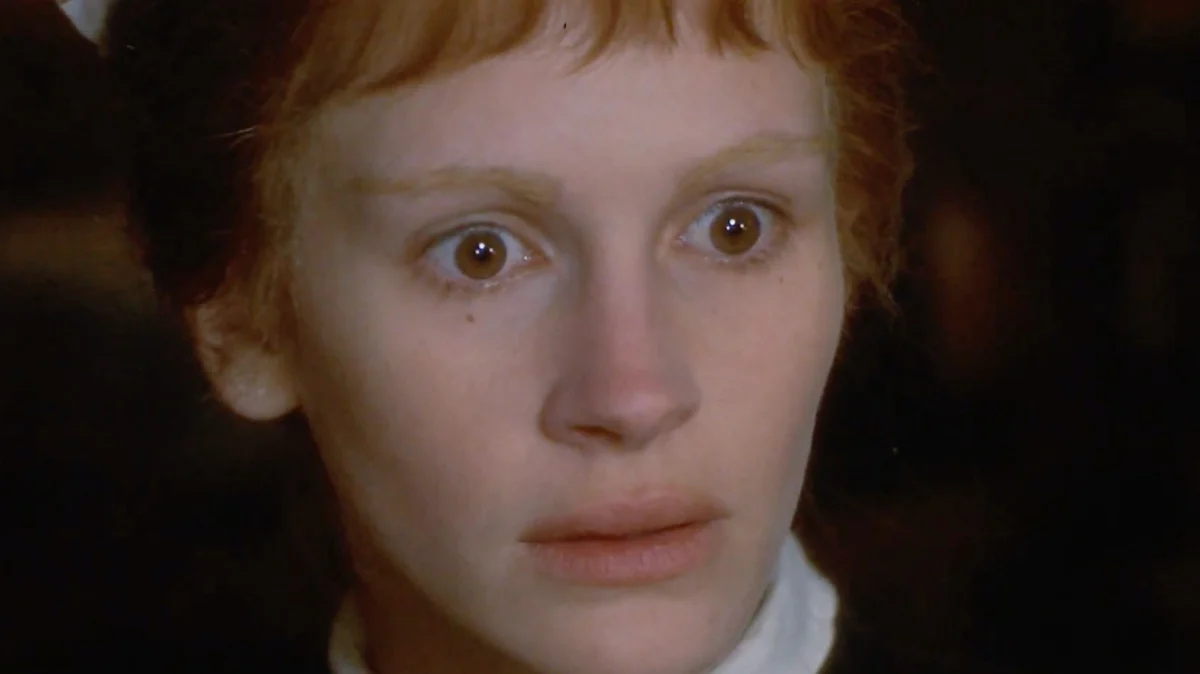
In the ecosystem of Hollywood, there is a recurring phenomenon: the "pre-determined failure." Sometimes, before a frame of film is even projected, the industry press and the critical establishment have already drafted the obituary for a motion picture. When a film suffers from budget overruns, production delays, or the weight of massive expectations, it often enters the screening room with a target on its back. Critics, human and therefore prone to bias, sometimes find themselves reviewing the chaotic production narrative rather than the work itself.
Few films exemplify this phenomenon as poignantly as Stephen Frears’ 1996 gothic horror drama, Mary Reilly. Released nearly 30 years ago, the film arrived with the kind of pedigree that should have signaled a masterpiece: an A-list star in Julia Roberts, a prestigious director in Frears, and a source material rooted in the bedrock of classic literature. Instead, it was met with a critical bloodbath. Yet, among the cacophony of negative reviews, one voice stood out for its refusal to join the pack: Roger Ebert.
The Anatomy of a Production Nightmare
To understand why Mary Reilly was destined for a difficult reception, one must look at the climate of mid-90s Hollywood. The film, an adaptation of Valerie Martin’s 1990 novel, was a subversion of Robert Louis Stevenson’s Strange Case of Dr. Jekyll and Mr. Hyde. By shifting the focus from the scientist to his housemaid, the story promised a psychological exploration of class, repression, and the duality of human nature.
However, the path to the screen was paved with "development hell." The project had been tossed around like a hot potato for years. At various stages, visionary directors like Tim Burton were attached, and heavyweights like Daniel Day-Lewis and Uma Thurman were rumored to be in the running for the lead roles. When the production finally settled on Julia Roberts—at the time arguably the most bankable movie star on the planet—and John Malkovich, the industry buzz became deafening.
The budget ballooned, and the release date was shifted multiple times. In the studio system, these are the flashing red lights that warn critics to prepare their sharpest pens. By the time the film was bumped out of the prestigious awards season and relegated to a February 1996 release—often referred to as a "dump month" for films the studio has lost faith in—the die was cast.
A Chronology of Critical Disdain
The reception of Mary Reilly serves as a textbook example of the "pack mentality" in film criticism. Upon its release, the overwhelming consensus was that the film was a vanity project that lacked the visceral thrills audiences expected from a Jekyll and Hyde adaptation.
Critics took aim at everything. Julia Roberts’ performance was a primary target, specifically her attempts at a working-class Irish-Victorian accent. The pacing was labeled "lethargic," and the atmospheric, gloomy cinematography was dismissed as "drab." Even John Malkovich, an actor rarely accused of being uninteresting, was criticized for a performance that many deemed too restrained.
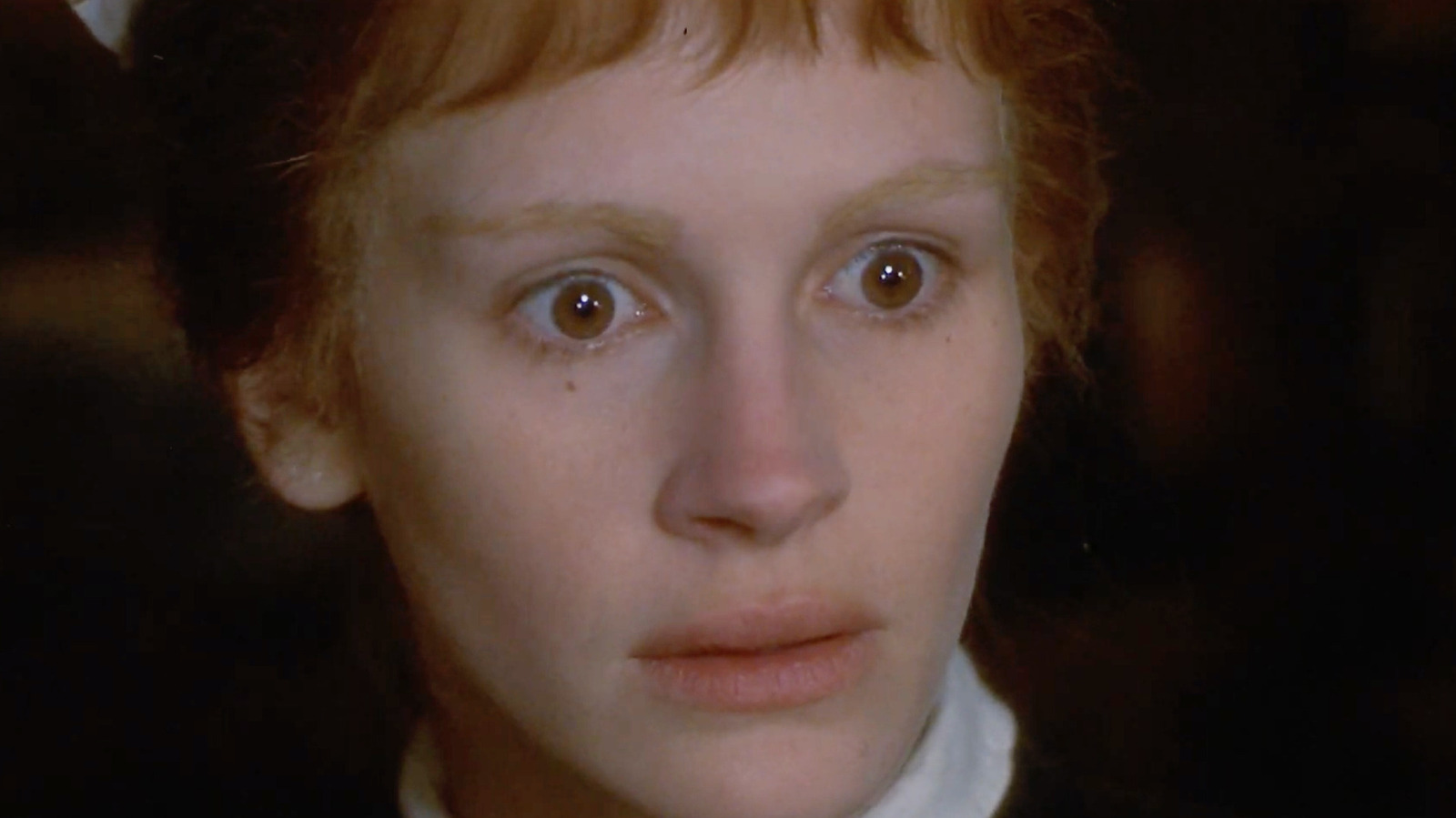
However, this narrative of failure ignored the structural ambition of the film. Mary Reilly was never intended to be a creature-feature blockbuster. It was a chamber piece, a psychological horror film that prioritized internal decay over external shocks. By judging it against the standard tropes of horror cinema—the jump scares, the prosthetics, and the high-energy transformation sequences—critics failed to see what Stephen Frears was actually building: a suffocating, intimate portrait of a woman trapped in a house of secrets.
Supporting Data: The Case for the Defense
Roger Ebert’s review for the Chicago Sun-Times remains the most significant defense of the film. Ebert, a critic known for his ability to isolate the intent of a director from the surrounding hype, saw something in Mary Reilly that his peers missed. He awarded the film three stars, arguing that it was perhaps the most faithful adaptation of the spirit of Stevenson’s novel ever committed to film.
In his analysis, Ebert noted:
"’Mary Reilly’ is in some ways more faithful to the spirit of Robert Louis Stevenson’s original story than any of the earlier films based on it, because it’s true to the underlying horror. This film is not about makeup or special effects, or Hyde turning into the Wolf Man. It’s about a powerless young woman who feels sympathy for one side of a man’s nature, and horror of the other."
Ebert’s observation highlights the fundamental disconnect between the audience’s expectations and the film’s execution. The "horror" in Mary Reilly is not in the monster; it is in the domestic servitude, the silence, and the realization that the man one serves is a vessel for profound evil. Ebert’s partner, Gene Siskel, shared this sentiment, acknowledging that the film’s somber, oppressive mood was a deliberate stylistic choice, not a technical failure.
Official Responses and Industry Context
In the years since its release, the reputation of Mary Reilly has undergone a slow, quiet rehabilitation. While it never achieved the status of a "lost classic," it has been recognized as an anomaly—a big-budget, star-driven project that dared to be small, dark, and uncomfortable.
The film serves as a cautionary tale for studios regarding the dangers of "pre-selling" a film’s narrative. When a studio allows the story of a production’s struggles to leak into the press, they lose control over the audience’s initial reception. The audience walks into the theater already carrying the baggage of the budget overruns, the casting rumors, and the delays.
Furthermore, the film highlights the limitations of the star system in the 1990s. Julia Roberts was a global icon of light, romance, and charm; placing her in a role defined by repression and gloom was a radical casting decision that challenged the audience’s relationship with the star. While her performance was polarizing, it was undeniably a brave departure from her usual archetype—a fact that is more easily appreciated from the distance of three decades.
Implications: The Lessons for Modern Cinema
The legacy of Mary Reilly provides several lessons for contemporary film criticism and production. First, it reminds us that "flop" is a financial term, not necessarily an artistic one. A film can fail at the box office for a myriad of reasons—marketing, timing, poor distribution—that have nothing to do with the quality of the filmmaking.
Second, it challenges the "pack mentality" that still plagues modern film criticism. In the era of Rotten Tomatoes and social media discourse, the rush to label a film "good" or "bad" within hours of its premiere often ignores the nuances of the work. Mary Reilly asks the viewer to sit with discomfort, to appreciate the craft of production design and the subtlety of a performance that isn’t designed to be "likable."
Today, the film is frequently cited in retrospectives of 90s horror, often appearing on lists of "movies that deserve a second look." It is now viewed as a sophisticated attempt to blend the gothic tradition with a feminist critique of the Victorian era. The very things that critics hated in 1996—the slow pacing, the heavy atmosphere, the lack of traditional monster movie beats—are the same things that make it a compelling watch today.
Conclusion
Looking back at Mary Reilly, one is struck by how much it serves as a testament to the courage of its director and star. They attempted to make a serious, introspective gothic horror film at a time when the industry was pivoting toward the irony and slickness of the late 90s. While it may have been a "flop" in the traditional sense, it stands as a reminder that the best art often arrives at the wrong time, or to an audience not yet ready to see what is hidden in the shadows.
As we re-evaluate the cinematic landscape of the last thirty years, Mary Reilly invites us to be better viewers. It asks us to leave our preconceptions at the door, to ignore the "buzz" of the industry, and to engage with the film on its own terms. Sometimes, the most interesting movies are the ones that were deemed failures by the very people who were supposed to understand them best.











No comments yet. Be the first to join the conversation!