Lina Hope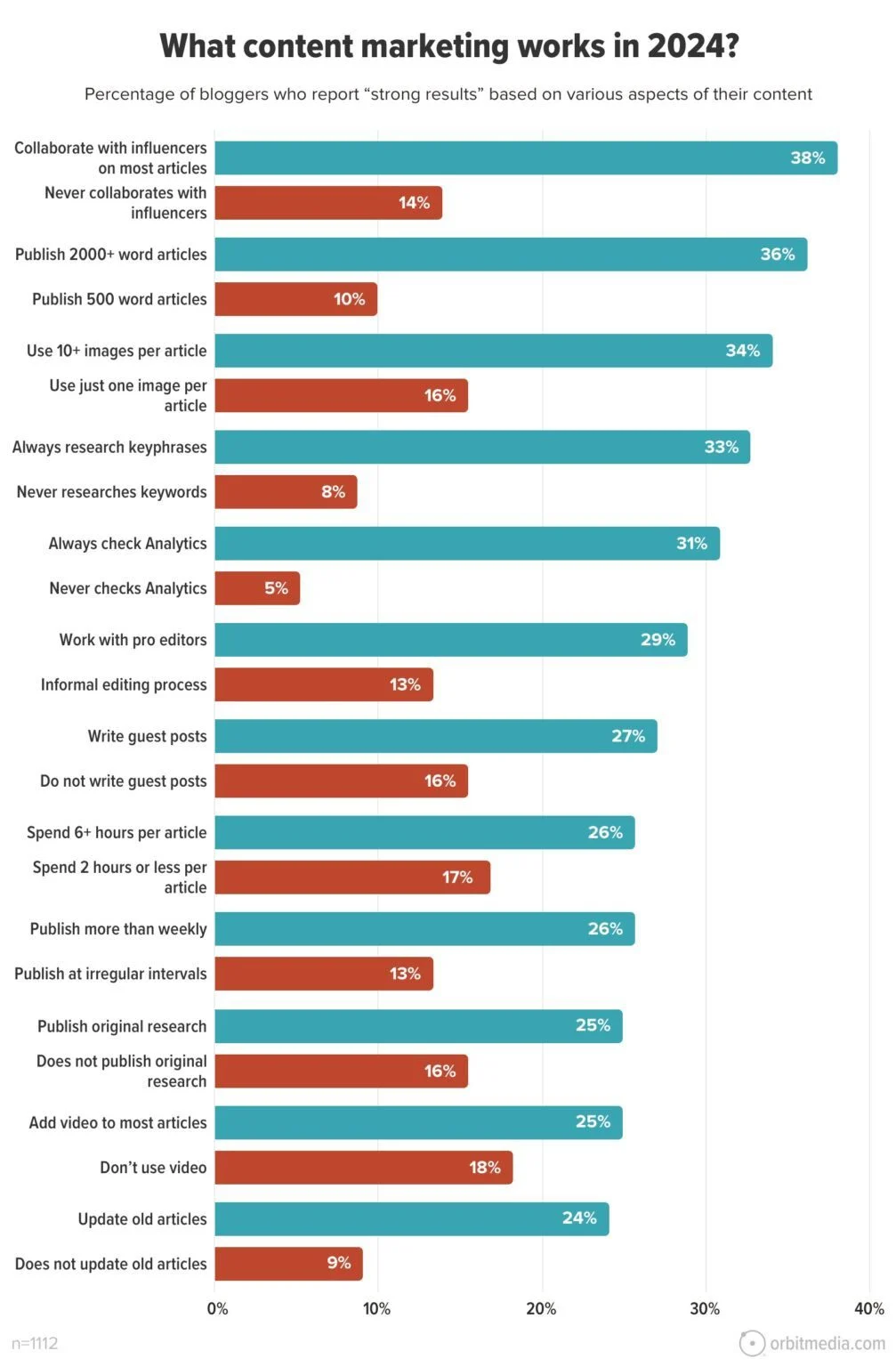
For over a decade, the business blog has served as the digital cornerstone for brands across every industry. From driving SEO visibility to establishing corporate thought leadership and nurturing customer relationships, the value of a well-maintained blog is rarely debated. However, the landscape of content marketing is in a state of flux. As algorithms shift, user behavior evolves, and generative AI floods the internet with automated content, the strategies that worked five years ago are yielding diminishing returns.
To navigate this volatility, marketing leaders are increasingly turning to the 11th Annual Blogger Survey by Orbit Media. This comprehensive, decade-long longitudinal study has become an industry benchmark for assessing how blogging efforts stack up against modern challenges. By analyzing the habits, workflows, and performance metrics of over 1,000 bloggers, the report provides a roadmap for those looking to reclaim their ROI in an increasingly crowded digital ecosystem.
The Reality of Production: Why "Speed" Is a Myth
One of the most persistent questions facing content teams today is, "How long does it take to write a high-quality blog post?" With the rapid adoption of generative AI tools—which promised to revolutionize content speed—many industry experts expected to see a significant drop in production time.

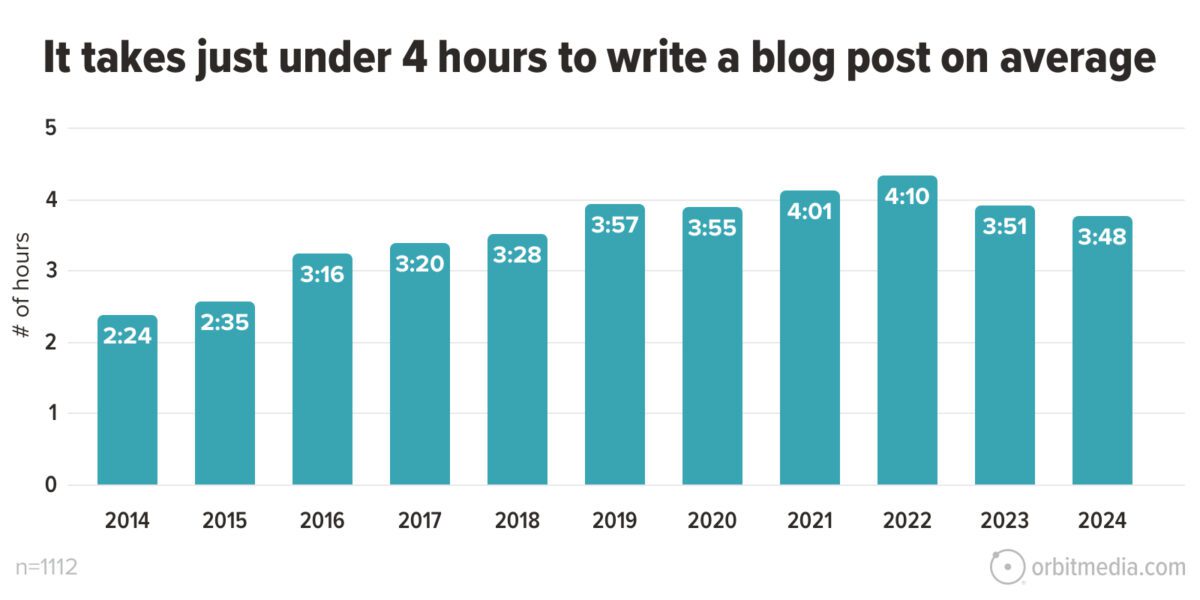
The data, however, tells a different story. The average time spent writing a single blog post is currently three hours and forty-eight minutes. This figure is a mere three minutes less than what was reported the previous year. Despite the proliferation of sophisticated AI, the "writing time" needle has barely moved.
This stagnation suggests a fundamental truth: AI tools may assist with brainstorming, outlining, or drafting, but they do not replace the human labor required for strategy, fact-checking, editorial nuance, and the infusion of unique brand storytelling. The "work" of content creation has simply shifted from the physical act of typing to the higher-order tasks of editing, verifying, and refining content to ensure it actually resonates with human readers.
Key Performance Indicators: High Effort Yields High Results
The survey highlights a clear correlation between the intensity of effort and the quality of outcomes. Bloggers who consistently invest four or more hours per post and produce long-form articles (2,000+ words) are significantly more likely to report "strong results" compared to those who prioritize brevity and speed.
The "Bi-Weekly" Minimum
Quality is not an excuse for inconsistency. The research suggests that a bi-weekly cadence is the minimum requirement for maintaining steady performance. Audiences today have high expectations; they are increasingly intolerant of subpar content and have little patience for brands that go dark for weeks at a time. The data underscores a reality that many marketing departments struggle to accept: in the current landscape, you cannot sacrifice frequency for quality, nor can you sacrifice quality for frequency. You must achieve both.
Thinking Like a Social Feed
Perhaps the most transformative takeaway from the latest research is the need to treat your blog feed with the same strategic rigor as a social media stream. Social platforms spend millions of dollars on user testing to optimize engagement—content marketers would be wise to adopt these same psychological triggers. This involves:
- Visual engagement: Using high-quality imagery and layout to break up text.
- Active community management: Treating comment sections and feedback loops as primary channels for engagement.
- Platform-native thinking: Understanding how users consume content in "streams" rather than as isolated documents.
The AI Paradox: Adoption vs. Impact
While AI adoption among bloggers has skyrocketed—growing from near-zero in 2022 to a staggering 80% in 2024—the data reveals a surprising disconnect. There is currently no strong correlation between the frequency of AI usage and improved performance.

This is not to say that AI is useless; rather, it indicates that AI is a commodity. When everyone has access to the same tools to generate the same level of "average" content, the competitive advantage is neutralized. Success today requires a "human-in-the-loop" approach where AI handles the heavy lifting, while human experts provide the strategic direction, accuracy, and creative spark that distinguish brand content from the sea of machine-generated noise.
Expert Insight: A Q&A with Andy Crestodina
To understand the real-world implications of these findings, we spoke with Andy Crestodina, CMO and Co-Founder of Orbit Media Studios.
Q: What research findings were the most surprising to you personally?
Crestodina: "The data is telling us, year after year, that big efforts drive big outcomes. It’s not surprising, but the disparity is stark. When you see the side-by-side performance of low-effort versus high-effort programs, it’s clear. What is surprising is that so many brands continue to stick with the same low-effort, short-form, monthly cadence. They don’t do research, they don’t collaborate with experts, and they don’t use rich media. What do they expect? The data tells us they should set their expectations low."

Q: The data suggests podcasters are the most likely to report strong results. Why?
Crestodina: "It’s about the ‘extra’ work. Podcasters aren’t just typing; they are collaborating, recording, and creating multi-format assets. They are doing the hard things that others avoid. If you only rely on a keyboard, you are limiting your reach. Hitting the record button and working with others are two factors that significantly amplify ROI."
Q: How should bloggers define success if traffic is declining?
Crestodina: "Most marketers fixate on traffic because it’s the easiest number in Google Analytics to read. But the most visible metrics are often the least important. We are seeing a decline in search traffic across the web, which means we have to look deeper. We should be measuring word-of-mouth, top-of-mind awareness, and bottom-of-funnel conversions. The most important outcomes from marketing are the ones hardest to track."
Strategic Implications for 2025
For marketing leaders, the path forward requires a shift in philosophy. The "traffic-first" era of blogging is waning, replaced by a "value-first" era.

1. Re-evaluate Your Metrics
Stop obsessing over total page views. Instead, track metrics that signal intent: newsletter sign-ups, time-on-page for high-value content, internal search usage, and direct conversions. As "zero-click" searches become the norm, your blog should function less like a billboard and more like a library of authority.
2. Embrace "Rented" Land
Crestodina notes that while the old rule was "don’t build on rented land," the reality of modern distribution has changed. "We have less traffic to our site than four years ago, but much more visibility," he explains. By publishing content directly to platforms like LinkedIn via newsletters, brands can leverage the algorithmic reach of these platforms rather than fighting against them.
3. The Power of Repurposing
Every long-form article should be a master file for a dozen other assets. A single, high-effort, 2,000-word piece should be broken down into:

- A series of LinkedIn posts.
- An audio or video summary for social channels.
- Data visualizations for internal newsletters.
- Supporting points for sales enablement decks.
Conclusion: Quality is the New Currency
The 11th Annual Blogger Survey confirms what many have suspected: the "easy" days of blogging are over. You can no longer rely on low-effort, high-frequency posts to generate business results.
The successful content programs of 2025 will be those that lean into the human element. They will be the ones that invest the time to create original research, foster expert collaborations, and distribute content where their audience actually lives. If you are struggling with your blogging ROI, the solution is not to find a faster AI tool—it is to raise the bar on your strategy. As Crestodina suggests, the data is clear: if you want stronger results, you must be willing to do the work that others are choosing to skip.


 Ammar Sabilarrohman
 Raul Delapena Setiawan