

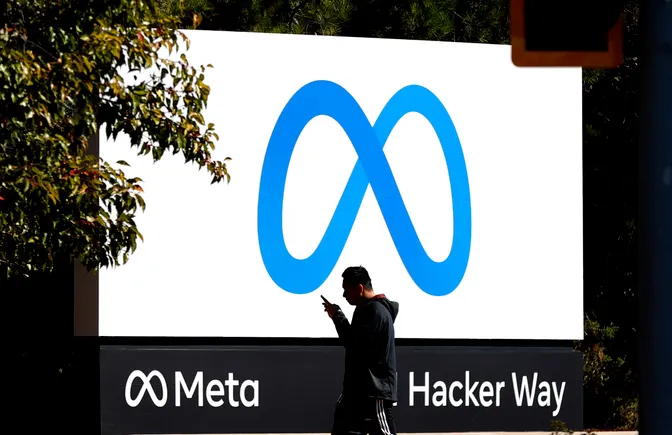
Meta Platforms, the parent company of Facebook and Instagram, finds itself staring down a legal abyss that could redefine the future of the internet. A coalition of four U.S. states—California, Colorado, Kentucky, and New Jersey—is currently pursuing a combined $1.4 trillion in penalties against the social media giant. This astronomical figure, revealed in recent court filings, stems from allegations that Meta intentionally engineered its platforms to exploit psychological vulnerabilities in young users, subsequently misleading the public regarding the inherent risks of its digital ecosystems.
The magnitude of this potential liability cannot be overstated. With Meta’s total market capitalization hovering around $1.5 trillion, the proposed penalties represent a sum nearly equivalent to the entire value of the company. As the litigation advances toward an August youth safety trial, the tech industry is bracing for a ruling that could either validate the most aggressive regulatory crackdown on Big Tech in history or establish a new standard for corporate accountability in the digital age.
The Genesis of the Crisis: A Chronology of Escalation
The current legal firestorm did not emerge in a vacuum; it is the culmination of years of mounting public, legislative, and judicial scrutiny regarding the impact of social media on adolescent mental health.
- Pre-2023: The Foundation of Distrust: Public sentiment shifted following a series of high-profile whistleblower disclosures and investigative reports, most notably the "Facebook Files," which suggested internal researchers at Meta were aware of the negative mental health impacts Instagram had on teenage girls.
- March 2025: The Precedent-Setting Verdict: A pivotal moment occurred when a Los Angeles jury returned a verdict finding that social media platforms—including Meta and YouTube—could be held liable for creating addictive experiences that lead to significant health consequences. While the initial damages awarded to a single plaintiff were a modest $6 million, the verdict shattered the legal shield platforms had long relied upon, effectively opening the floodgates for mass litigation.
- June 2025: The Calculation of Harm: During a pre-trial hearing, attorneys general from the four plaintiff states unveiled their methodology for calculating damages. By multiplying the estimated number of impacted teenage and young adult users by state-mandated fine amounts per violation, the states arrived at the staggering $1.4 trillion figure.
- July 2026: The Disclosure: Reuters reported that Meta disclosed this potential penalty exposure for the first time, signaling to investors and the public the gravity of the upcoming August trial.
Supporting Data: The Arithmetic of Alleged Violations
The $1.4 trillion figure is not a random selection; it is a function of aggressive legal math. Attorneys general are leveraging state consumer protection laws that allow for significant fines per individual violation. If the courts accept the premise that every teen or young adult user impacted by the platform’s "addictive" design represents a distinct violation of law, the numbers scale exponentially.
The core of the prosecution’s argument rests on the claim that Meta’s engagement-driven algorithms are not merely neutral delivery systems, but behavioral engineering tools. By maximizing “time spent” through features like infinite scroll, push notifications, and intermittent variable rewards—a concept borrowed from casino gambling—the company allegedly created a product that is inherently harmful to the developing brains of minors.
Meta, conversely, argues that the states’ calculations are fundamentally flawed. The company asserts that the attorneys general lack empirical evidence to support the claim that Meta "misled" the public. Their primary defense centers on the assertion that "social media addiction" is not currently recognized as a formal clinical diagnosis in the DSM-5 (Diagnostic and Statistical Manual of Mental Disorders). If the state cannot prove the existence of the addiction as a medical condition caused by the product, the foundational premise of the lawsuits begins to crumble.
Meta’s Counter-Strategy: Legal Defenses and Lobbying
Meta is not standing idly by. The company is employing a multi-pronged defense strategy aimed at both the courtroom and the halls of Congress.
Judicial Maneuvers
In court, Meta’s legal team is focusing on narrowing the scope of liability. By challenging the definition of "addiction" and demanding a high burden of proof for the "misleading public" claims, the company aims to have the cases dismissed or, at the very least, drastically reduced in scale. They contend that parents, not corporations, bear the primary responsibility for managing the digital consumption of their children.
Legislative Lobbying
Simultaneously, Meta is engaging in a sophisticated lobbying effort. The company is pressing lawmakers to include "carve-outs" in pending state and federal legislation—exemptions that would shield it from the specific types of legal penalties currently being sought in child-harm cases. By seeking to define the boundaries of corporate liability through statute, Meta hopes to pre-empt the judicial outcomes that currently threaten its financial stability.
The Billion-Dollar Pivot: AI and Economic Risk
Adding to the complexity is Meta’s massive capital expenditure shift. The company has publicly committed hundreds of billions of dollars toward the development of AI infrastructure, betting its future on generative AI and the "metaverse."
The combination of a $1.4 trillion legal threat and these immense, non-recoverable sunk costs in R&D creates a precarious financial environment. If Meta is forced to pay out even a fraction of the requested penalties, the impact on its balance sheet would likely necessitate a radical contraction. This could involve shuttering experimental divisions, halting AI infrastructure build-outs, or divesting from key assets. For investors, this is the ultimate "black swan" event, creating a level of volatility that has already begun to influence Meta’s stock performance.
Implications: A New Era for Social Media
The outcome of this litigation will likely reverberate far beyond Meta. Companies like Snap, TikTok (ByteDance), and Alphabet (YouTube) are monitoring these proceedings with intense anxiety, as they face similar lawsuits.
Potential Outcomes
- The "Stricter Conditions" Scenario: It is highly improbable that the U.S. government will allow one of its largest economic engines to be liquidated by lawsuits. A more likely scenario is a settlement involving massive fines, combined with court-mandated structural changes. These might include mandatory age-gating, the removal of specific engagement-driving algorithms for minors, and the implementation of "hard" screen-time limits.
- The Parental Responsibility Paradigm: Courts may pivot to emphasize parental control, shifting the burden of safety away from the platform and toward the end-user/guardian. This would likely be accompanied by increased federal requirements for "digital literacy" and parental management tools provided by tech firms.
- The Regulatory Shift: If the states prevail, it could trigger a new federal regulatory framework—a "GDPR for Youth Mental Health"—that would force a total redesign of how social media functions, potentially ending the era of the "infinite feed."
Conclusion: The Final Reckoning
The looming trial in August is more than just a dispute over damages; it is a moral and legal debate regarding the role of technology in the human experience. As the court weighs the balance between corporate innovation and the protection of vulnerable populations, the tech industry is watching closely.
Whether the result is a historic bankruptcy, a landmark settlement, or a total vindication for Meta, the status quo has irrevocably changed. The era of unchecked platform growth is ending, replaced by a period where every line of code, every algorithm, and every design choice will be subject to the cold, hard scrutiny of the courtroom. The question remains: can Meta evolve into a responsible digital citizen, or is its business model fundamentally incompatible with the safety of the next generation? The answer will be determined not just in the boardroom, but in the halls of justice.











