Basiran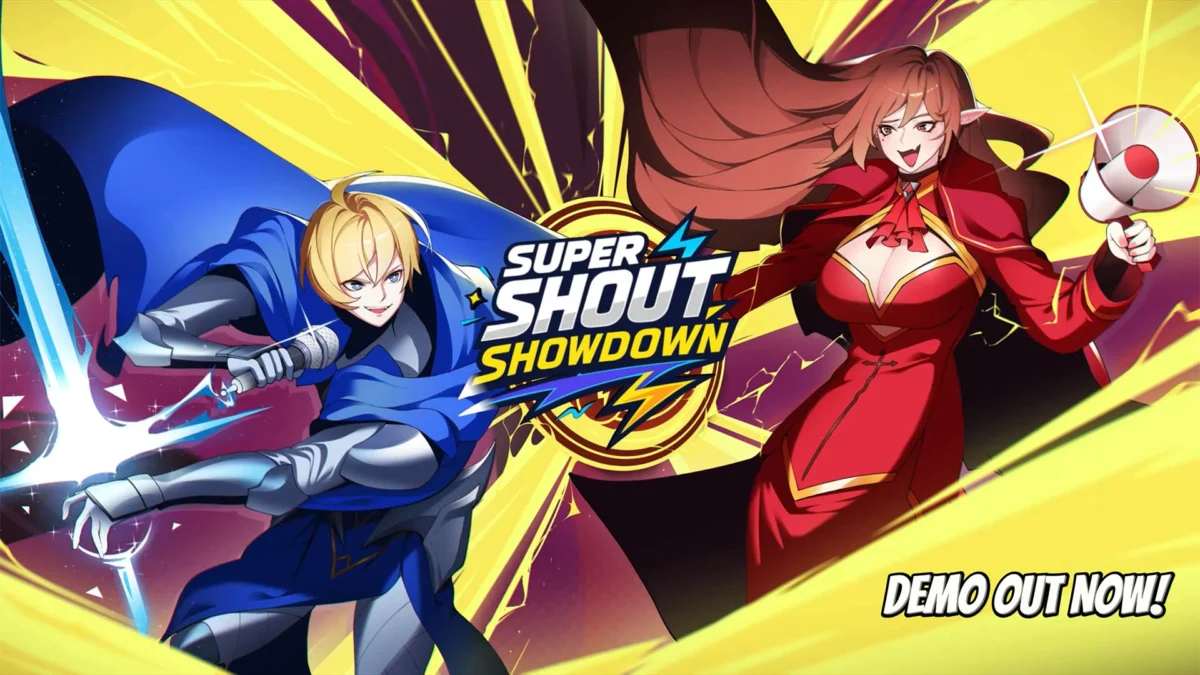
In an industry saturated with pre-defined skill trees and rigid combat systems, indie developer Rezero Studio is looking to disrupt the status quo with its latest project, Super Shout Showdown. This innovative anime-style battle game, which officially released its first public demo this week, invites players to move beyond the controller and use their own voice to manifest power on the battlefield. By allowing users to physically shout—or type—their own incantations, Rezero Studio is bridging the gap between anime fantasy and interactive gaming.
The Core Concept: Voice-Activated Arcane Combat
Most modern fighting games rely on a static set of inputs: press ‘X’ for a fireball, press ‘Y’ for a heavy strike. Super Shout Showdown flips this paradigm on its head. In this title, the "magic" is as personal as the player’s own vocal cords. Whether a player chooses to scream classic tropes like "Dragon Breath" or opts for modern internet-slang-infused attacks like "Emotional Damage" or the meme-famous "Testicular Torsion," the game recognizes and processes these inputs as active combat commands.
This level of customization transforms the typical combat encounter into a performance. The game essentially asks, "What would your ultimate move be called?" and then empowers the player to make it a reality. By removing the barrier between predefined ability names and player creativity, Rezero Studio has tapped into the quintessential "power fantasy" that defines the anime genre, where the naming of an attack is often just as significant as the destruction it causes.
Chronology of Development and Public Reception
The journey toward Super Shout Showdown began as an experimental project aimed at testing the boundaries of voice-recognition technology within a 3D environment. Rezero Studio, a boutique development team, initially teased the project via social media and niche gaming forums, quickly garnering attention for its unique "shout-to-cast" mechanic.
Key Milestones:
- Early Concept Phase: Rezero Studio focuses on the integration of speech-to-text (STT) and voice analysis libraries to map vocal input to game events.
- Technical Alpha: Internal testing proves that players respond more positively when allowed to name their own spells, shifting the game’s design philosophy from "pre-set skills" to "fully customizable incantations."
- Public Demo Launch (May 2026): The first playable demo hits Steam, providing potential players with their first hands-on experience with the title’s unique combat flow, VRoid integration, and multi-language support.
The response to the demo has been largely positive, with early adopters praising the "chaotic" nature of the gameplay. As players engage in online duels and free-for-all matches, the absurdity of the custom spell names has created a viral buzz, particularly within communities that appreciate the intersection of high-octane anime aesthetics and meme culture.
Technical Foundations and Supporting Data
While the concept sounds simple, the underlying architecture required to make Super Shout Showdown work is deceptively complex. To achieve seamless performance across various languages, Rezero Studio has implemented an extensive localization framework. The game currently supports English, Indonesian, French, Italian, German, Spanish, Japanese, Portuguese, and both Simplified and Traditional Chinese.
Gameplay Metrics and Mechanics
- Spell Variety: The game features over 25 base spells that can be modified through incantations.
- Combat Archetypes: Players can master fire, ice, darkness, and energy-based attacks, allowing for a rock-paper-scissors dynamic that rewards tactical experimentation.
- Avatar Integration: A standout feature is the full integration of VRoid Hub. Players can design highly detailed 3D anime-style avatars in VRoid Studio and import them directly into the game. This creates a deeply personalized experience where the character on screen is a direct reflection of the player’s creative output, both in appearance and in the "chants" they use to command the battlefield.
The technical requirement for the VRoid integration—which allows other players to see your custom model provided they have linked their own VRoid accounts—showcases the developer’s commitment to community-driven character design. This feature effectively turns the game into a social hub as much as a competitive arena.
Official Responses and Developer Philosophy
In their official rundown of the game, the team at Rezero Studio emphasized that the primary goal was to remove the "judgment" often found in competitive gaming. Their statement, "Go full anime or full nonsense. We won’t judge," serves as the guiding principle for the project. By encouraging both serious, thematic roleplay and comedic, ironic spell-naming, the developers have successfully cultivated an environment where the player’s personality is the primary weapon.

"We wanted to capture the feeling of watching your favorite anime, where the hero screams their ultimate move and the world changes around them," a spokesperson for Rezero Studio noted. "By giving the player the microphone, we aren’t just giving them a game; we’re giving them a platform for expression."
The inclusion of multiple languages is not merely a translation effort but a cultural one. By supporting diverse regional dialects, Rezero Studio ensures that the "shout" component remains authentic to the player, regardless of where they are in the world.
Implications for the Fighting Game Genre
Super Shout Showdown sits at an interesting crossroads of game design. By utilizing voice as a primary input, it challenges the traditional reliance on high-APM (actions per minute) controller inputs. This could have significant implications for accessibility and the evolution of "gimmick" genres.
Impact on Accessibility
For players with physical limitations who may struggle with complex controller combinations, a voice-activated system offers a new way to engage with competitive titles. While the game still requires spatial awareness and movement, the ability to trigger abilities via speech lowers the barrier to entry for performing complex combos.
The "Meme-ification" of Combat
The game also highlights a growing trend in the gaming industry: the gamification of internet culture. By allowing players to name their attacks "Testicular Torsion" or "Emotional Damage," Rezero Studio is leaning into the viral nature of modern social media. This encourages streamers and content creators to pick up the game, as the emergent, often hilarious, gameplay moments are inherently "shareable."
The Future of Customization
If Super Shout Showdown succeeds, it may encourage larger studios to explore more "open" input systems. The success of VRoid integration also suggests that players are increasingly looking for ways to bring their own digital identities into the games they play. The future of competitive gaming may not just be about who has the best reflexes, but who has the most creative arsenal.
Conclusion: A New Frontier for Anime-Inspired Gaming
As the demo continues to circulate, Super Shout Showdown stands as a testament to the power of indie innovation. By taking a simple, daring idea—letting players shout their own spells—and surrounding it with robust technical features like VRoid integration and expansive language support, Rezero Studio has crafted a title that is as much a social experiment as it is a battle arena.
For those interested in experiencing the chaos firsthand, the demo is currently available on the official Steam store page. Whether you choose to play the hero with noble incantations or the jester with absolute nonsense, the battlefield is open, and your voice is the ultimate authority. As the community continues to grow, it will be fascinating to see how the "meta" of this game evolves—not through balance patches alone, but through the collective creativity of a player base that finally has the power to define its own destiny, one shout at a time.


 Asro
Asro
 Muslim