

By Arts & Culture Correspondent
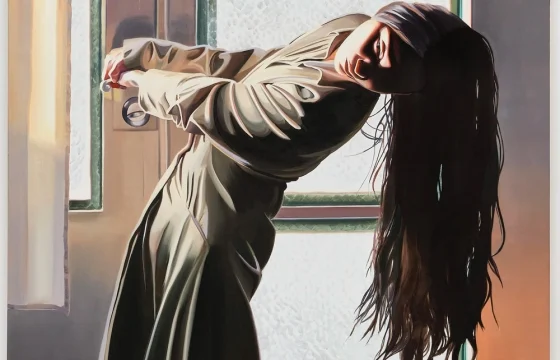
In the ephemeral space where the sun retreats and the shadows lengthen, Los Angeles-based artist Molly Bounds finds the subject of her most ambitious body of work to date. The Light That Loses, The Night That Wins, currently on view at Mrs. gallery in Maspeth, Queens, marks a significant milestone in the artist’s career: her debut solo exhibition in New York City. Following a well-received presentation at The Armory Show in September 2025, this collection of paintings cements Bounds’ status as a formidable voice in contemporary figurative painting, navigating the delicate intersections of psychological tension, the passage of time, and the human condition.
The Architecture of the Exhibition: Main Facts
The Light That Loses, The Night That Wins occupies the gallery’s expansive 6040 56th Drive location. The exhibition, which opened on the vernal equinox—a date chosen for its symbolic equilibrium between light and dark—will remain open to the public through May 2, 2026.
Bounds’ work serves as a meditation on the "liminal," those transitional spaces in time and geography where the reality of the present moment feels suspended. The paintings are not merely depictions of figures; they are psychological landscapes. By utilizing light as a primary protagonist, Bounds explores how illumination can simultaneously serve as a tool for revelation and a shroud for concealment. The exhibition is a study in binaries: interior versus exterior, stillness versus urgency, and the cold, blue detachment of the evening versus the warm, flickering hope of the hearth.
A Chronological Progression: From Armory to Maspeth
The path to this solo exhibition has been one of deliberate cultivation. Bounds’ rise in the New York art circuit was catalyzed by her appearance at The Armory Show in late 2025, where her specific brand of figurative intensity caught the attention of collectors and critics alike. That initial presentation functioned as a prelude, a distillation of themes that she has now expanded into a comprehensive narrative at Mrs. gallery.
The decision to open the show on the vernal equinox is central to understanding the artist’s intent. The equinox represents a rare, fleeting moment of perfect symmetry. For Bounds, this serves as a metaphor for the human experience of transition. As the exhibition progresses from the early, darker canvases to the later, more vibrant landscapes, the viewer is guided through a metaphorical journey from the stasis of winter introspection to the burgeoning optimism of a seasonal awakening.
Supporting Data: The Psychological Landscape
The exhibition is divided into two distinct emotional registers: the claustrophobic tension of the interior and the expansive, dreamlike quality of the exterior.
The Interior: Anatomy of Repose and Unease
In works such as The Armchair, Bounds masterfully employs a Chiaroscuro-adjacent technique to manipulate the viewer’s emotional response. The painting depicts a solitary figure bathed in the glow of a fireplace. While the initial impression is one of domestic comfort, closer inspection reveals a creeping sense of agitation. The upholstery of the chair appears to be fraying—a subtle nod to the unraveling of the subject’s own internal state. The contrast between the lush, warm interior and the cold, indifferent blue sky visible through the window highlights the tension between the physical body and the wandering mind.
Similarly, in Privacy Glass, Bounds invokes the tradition of 17th-century painter Georges de La Tour. By utilizing a strong, artificial light source that obscures the subject’s face while highlighting the texture of her draped clothing, Bounds touches upon the "vanitas" tradition—the classic memento mori. The light, here, is not just illumination; it is an agent of time, reminding the viewer of the inevitability of darkness. The figure’s face, hidden by the diffusion of the glass, forces the viewer to confront the internal "scheming" or "planning" that the artist suggests persists behind even the most dormant, tired eyes.
The Exterior: The Fantasy of Renewal
In stark contrast to the interior scenes, works such as It Sings in Me and Among of Green, Again offer a radical shift in tone. Here, the figures are no longer slumped in rest; they are active, moving through rolling, sun-drenched landscapes. These paintings feel almost hallucinatory in their vibrancy.
Bounds poses a critical question through these works: Does it matter if this idyllic nature is real or imagined? For the artist, the authenticity of the landscape is secondary to its function. These works serve as a psychological counterweight to the tension of the indoor scenes, representing the human capacity for hope, renewal, and the belief that, eventually, spring must win.
Official Perspectives and Artistic Intent
While the gallery has maintained a focused, contemplative approach to the exhibition’s promotion, the curatorial statement provided by Mrs. emphasizes that Bounds is not interested in providing answers, but in articulating the "unrelenting forward movement of time."
In discussions regarding her process, Bounds has alluded to the concept of "candid movement." She is fascinated by the body in moments of unconsciousness—the way a person holds themselves when they believe they are unobserved. By painting these moments of solitude, she strips away the performative layers of the human subject, leaving behind a raw, psychological residue.
The gallery notes, "Bounds captures her subjects in solitude, signaling rest and repose that slowly gives way to unease. These are psychological portraits, capturing something that persists behind dormant states and tired eyes." This framing suggests that the exhibition is less about the figures themselves and more about the "mood" that exists in the air surrounding them—a mood shaped by the urgency of life and the stillness of the threshold.
Implications: The Future of Figurative Painting
The reception of The Light That Loses, The Night That Wins carries implications for the broader trajectory of contemporary painting. In an art world often dominated by digital experimentation and conceptual abstraction, Bounds’ commitment to the figurative tradition—deeply rooted in the history of oil painting yet distinctly modern in its psychological urgency—is notable.
Her work suggests a return to the "slow look." The paintings require the viewer to sit with the ambiguity of the subjects. The implications of this are twofold:
- Technological Counter-Movement: In an age of instant gratification and rapid content consumption, Bounds’ work acts as an anchor, demanding a level of focus that is increasingly rare.
- The Evolution of the Portrait: Bounds is moving the genre of portraiture away from likeness and toward "state-of-mind" mapping. She is not documenting how people look; she is documenting how it feels to exist in the threshold between states of being.
As the exhibition continues its run through the spring of 2026, it serves as a litmus test for the enduring power of narrative painting. The show is not merely an aesthetic experience; it is an invitation to examine one’s own relationship with time, darkness, and the recurring cycle of renewal.
Conclusion: The Triumph of the Cycle
Molly Bounds has succeeded in creating a cohesive, haunting, and ultimately hopeful body of work. By framing the human condition within the celestial rhythm of the equinox, she elevates personal, quiet moments into something universal. Whether one is drawn to the tense, internal shadows of her interior scenes or the expansive, light-filled potential of her landscapes, the exhibition provides a profound look at what it means to be human in the face of an ever-changing light.
The Light That Loses, The Night That Wins will remain on view at Mrs. through May 2, 2026. For those looking to engage with a body of work that is as intellectually rigorous as it is visually arresting, this debut is an essential stop in the New York cultural calendar. It is a reminder that while the light may lose to the night, the cycle—the rebirth of spring, the return of the sun—is an inevitability that defines our existence.









No comments yet. Be the first to join the conversation!