Jia Lissa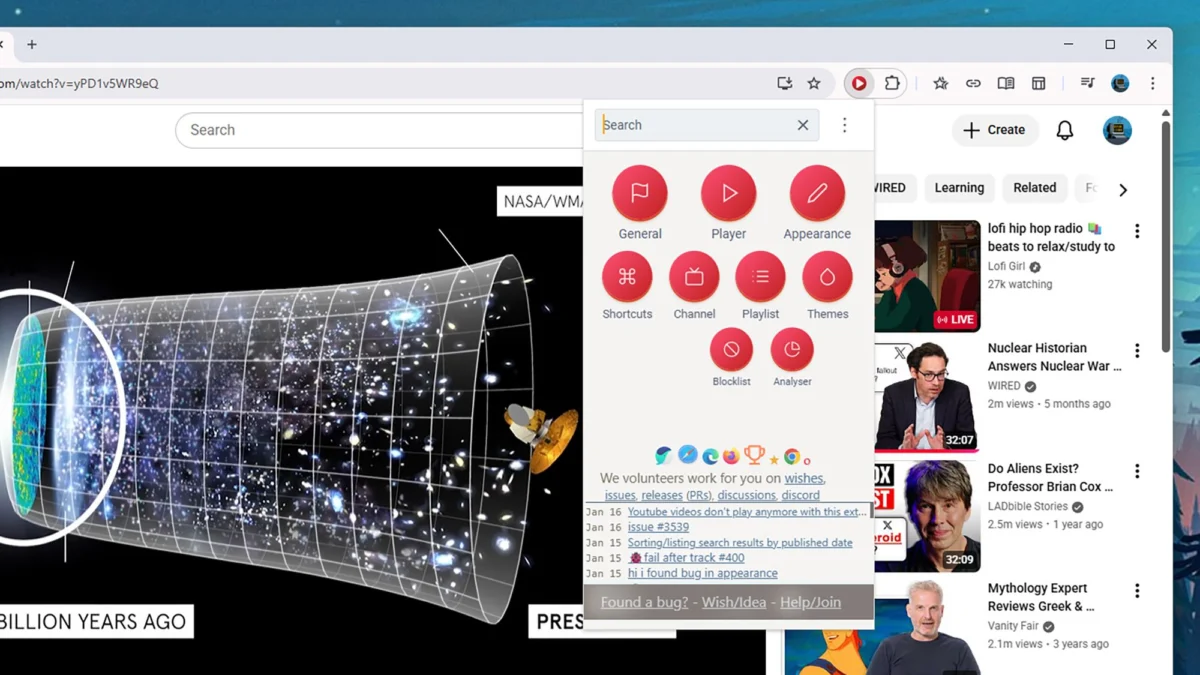
YouTube has evolved from a repository for niche home videos into the world’s most dominant video-sharing platform. With over 20 million videos uploaded daily, the site serves as the global town square for everything from wedding speeches and DIY tutorials to high-end cinematography and breaking news. However, as the platform has scaled, its interface has become increasingly cluttered, driven by an aggressive recommendation algorithm designed to maximize engagement rather than user convenience.
For the power user, the default YouTube experience often feels like a compromise. Fortunately, the browser extension ecosystem offers a sophisticated toolkit to reclaim control over the platform. Whether you are looking to declutter your interface, organize your subscription feeds, or bypass the "clickbait" era of thumbnails, there is a specialized tool to refine your viewing habits. This analysis explores the essential browser extensions for Chromium-based browsers—such as Google Chrome, Microsoft Edge, and Vivaldi—that elevate the YouTube experience while respecting the creator economy by focusing on UI customization rather than ad-blocking.
The Evolution of the YouTube UI: A Brief Chronology
To understand the necessity of these extensions, one must look at the trajectory of YouTube’s design. In its infancy, the platform was minimalist, serving a simple function: video playback. As it was integrated into the Google ecosystem, the design philosophy shifted toward "discovery."

- 2005–2010 (The Discovery Era): The interface was functional but bare. Users had to manually search for content; recommendations were secondary.
- 2011–2016 (The Algorithmic Shift): YouTube introduced more aggressive sidebars, auto-play features, and “Watch Next” queues. The focus moved from the video to the retention of the viewer.
- 2017–2020 (The Monetization & Shorts Era): With the introduction of YouTube Shorts and a heavier reliance on engagement-based thumbnails, the interface became saturated with "noise"—comments, algorithmic suggestions, and vertical video integration.
- 2021–Present (The Power-User Response): As the platform became more intrusive, a vibrant developer community emerged, creating open-source extensions that allow users to toggle features on and off, effectively "de-coding" the YouTube experience to suit individual preferences.
Supporting Data: Why Customization Matters
The demand for these extensions is not merely a preference for aesthetics; it is a response to the psychological friction caused by modern web design. According to industry metrics, the average YouTube user spends significant time navigating through irrelevant content before settling on a video.
- Attention Span & Clutter: A 2023 study on UI/UX design noted that users exposed to "cluttered" interfaces—those with sidebar recommendations and infinite-scroll comment sections—exhibit higher rates of "decision fatigue."
- The "Clickbait" Effect: YouTube’s own creator tools incentivize high-contrast, sensationalized thumbnails. Data suggests that these elements significantly increase CTR (Click-Through Rate), yet they often degrade the user experience by obscuring the true content of the video.
- Extension Adoption: Chrome Web Store data indicates that accessibility and customization tools for YouTube are consistently among the most downloaded, signaling a massive user base dissatisfied with the "one-size-fits-all" approach of the platform.
Essential Tools for the Discerning Viewer
The following extensions represent the pinnacle of UI enhancement, offering granular control without violating the platform’s core service model.
1. Improve YouTube: The All-in-One Suite
If you only install one extension, Improve YouTube is arguably the most robust choice. It acts as a master control panel for the platform.

- Interface Sanitization: Users can hide the sidebar, remove video thumbnails that clutter the home page, or change the color of the progress bar to suit a dark-themed desktop.
- Workflow Enhancements: The extension introduces "search tabs," allowing you to keep a video open while exploring new search results in a separate tab. It also provides the ability to force-pause videos when switching tabs, preventing background audio accidents.
- Shorts Control: Perhaps most notably, it offers a "Kill Switch" for YouTube Shorts, allowing users who prefer long-form content to remove the vertical-video distraction entirely.
2. Enhancer for YouTube: Precision Playback
While the standard YouTube player is adequate, Enhancer for YouTube provides the granular control professionals require.
- Playback Mastery: Beyond the standard 0.25x to 2x speed settings, this extension allows for custom increments, volume normalization, and advanced hardware acceleration tweaks.
- Bespoke Themes: The extension offers dozens of variations on "Dark Mode," allowing users to customize the CSS of the player to reduce eye strain.
- Custom Scripting: For the tech-savvy, the extension provides a console to inject custom JavaScript, allowing for near-infinite extensibility.
3. PocketTube: Reclaiming Your Subscriptions
The default "Subscriptions" feed is often a mess of chronological updates, making it difficult to keep track of favorite creators.
- Subscription Management: PocketTube allows you to create groups and subgroups (e.g., "Tech," "Cooking," "Gaming"). You can even assign custom icons to these folders.
- Deck Mode: Borrowing from social media management tools like TweetDeck, this extension can arrange your subscriptions into columns, allowing you to scan new uploads at a glance.
4. Turn Off the Lights: Focus and Immersion
Sometimes the best enhancement is simply removing distractions. Turn Off the Lights is designed for those who treat YouTube as a cinema.

- Ambient Dimming: With a single click, the extension dims the entire browser window except for the video player, highlighting the content and fading out comments and sidebars.
- Visual Effects: It adds a "soft glow" around the video frame, which creates a high-end, immersive aesthetic. It also offers advanced features like volume control via the mouse scroll wheel—a small but transformative UX change.
5. DeArrow: Combating the Clickbait Culture
DeArrow is perhaps the most socially significant extension in this list. It addresses the "bait-and-switch" nature of modern YouTube titles and thumbnails.
- Crowdsourced Correction: The extension replaces hyperbolic titles and misleading thumbnails with user-submitted, accurate alternatives.
- Algorithm Neutralization: By removing the "gaming" elements of the platform, it allows the user to judge a video based on its content rather than its marketing. If no crowdsourced data is available, it defaults to a neutral style, stripping away excessive emojis and all-caps text.
Official Responses and Platform Implications
YouTube has historically maintained a complex relationship with third-party extensions. While the company provides an official API, it generally discourages tools that interfere with its revenue model—specifically ad-blockers. However, the extensions listed above generally operate within the "UI/UX" category, which YouTube has largely tolerated because they do not bypass the fundamental monetization infrastructure.
In internal documentation and press briefings, YouTube representatives have emphasized that their interface is designed for "accessibility and discovery for the widest possible audience." They argue that the sidebar and recommended videos are essential for the growth of smaller creators. Critics, however, suggest that the platform’s design is increasingly skewed toward "engagement metrics" rather than user intent.

The rise of these extensions carries a significant implication for the future of web design: users are increasingly demanding a "modular" web. They no longer want to be passive recipients of a platform’s design choices. They want the agency to customize their digital environments, filtering out the noise to focus on the signal.
Conclusion: The Case for a Personalized Web
The power of browser extensions lies in their ability to democratize the user experience. By utilizing tools like Improve YouTube or DeArrow, the viewer transitions from a passive consumer into an active curator of their own digital space.
As the internet becomes more saturated with automated, algorithmically driven content, the ability to "de-clutter" and regain focus is not just a luxury—it is a necessity for mental clarity and productivity. While YouTube will continue to evolve its interface to meet its business goals, these extensions ensure that the individual user retains the final say in how they interact with the world’s largest video library. Whether you are a casual viewer looking for a cleaner look or a professional researcher trying to organize hundreds of subscriptions, these tools offer the path to a faster, smarter, and more personal YouTube.


 Suro Senen
 Nana Wu