Sagoh
Sagoh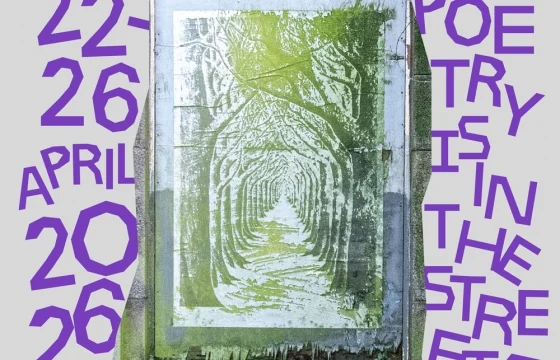
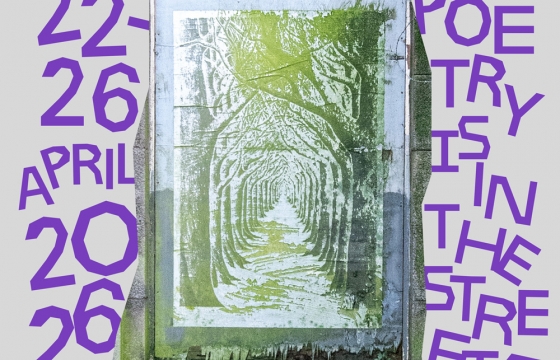
Aberdeen, Scotland — April 22–26, 2026
The grey granite facades of Aberdeen are set to undergo a radical transformation this spring. As the city prepares to host the 2026 edition of Nuart Aberdeen, the festival’s curatorial team has announced a bold pivot that challenges the established norms of contemporary street art. By shifting the focus away from the monumental, hyper-realistic murals that have come to define the global "mural festival" circuit, Nuart is staging the world’s first major street art event centered primarily on poetry and text-based interventions.
This shift is not merely aesthetic; it is a profound socio-political statement on accessibility, democracy, and the future of public expression.
The Genesis of a New Movement: From Murals to Words
For the past decade, the "large-scale mural" has dominated the urban landscape. While these towering works of art have undoubtedly beautified city centers and boosted tourism, festival organizers argue that they have also created a barrier to entry.
"As curators, researchers, and producers, we have a responsibility to not only showcase the most technically competent works of our time but to ensure the culture’s survival," says Martyn Reed, founder and curator of Nuart. "The large-scale mural, while spectacular, is arguably the least democratic form of street art. It requires significant resources, permits, and heavy machinery. It is an art form that, by its very scale, excludes the average citizen from participating."
The core objective of the 2026 festival is to democratize creativity. Reed notes that while a citizen might look at a ten-story-high mural and feel a sense of awe, they rarely feel the agency to replicate it. "No one stands in front of a tower block mural and thinks, ‘I’ll pop home and have a go myself on the gable end of Gran’s house,’" he observes.
The Power of the Accessible
The 2026 program is anchored in the belief that smaller, human-scale interventions—stencils, paste-ups, and text—are the true catalysts for artistic engagement. By stripping away the requirement for formal art school training or expensive equipment, the festival aims to return to the grassroots origins of the movement.
The inspiration for this shift came from two pivotal historical moments. The first was the 1968 student uprising in Paris, where the phrase "La poésie est dans la rue" (Poetry is in the streets) defined a generation’s creative defiance. The second was a reflection from pioneering UK graffiti writer Mode2, who famously noted that graffiti succeeded as a movement because it didn’t require the ability to paint realistically—it only required the ability to master the ABCs.
Chronology of the 2026 Festival
The festival, running from April 22 to April 26, 2026, follows a meticulously curated schedule designed to foster dialogue between artists, scholars, and the public:
- April 22: Opening Day and Conceptual Grounding. The festival kicks off with a series of public forums and keynote lectures exploring the intersection of linguistics, urban planning, and public art.
- April 23–24: The Implementation Phase. Artists move into the city center to begin their interventions. Unlike traditional mural painting, which is often a solitary, time-intensive process, these text-based works will be applied across a wider array of surfaces, treating the entire city—rather than specific walls—as the canvas.
- April 25: Public Interaction and Workshops. A dedicated day for community-led workshops. Aspiring artists are invited to engage with the featured professionals, learning the techniques of stencil-cutting and text-based composition.
- April 26: Closing Ceremony and Legacy Planning. The final day focuses on the long-term impact of the works, with a curated walking tour of the new installations and a roundtable discussion on the future of text-based public art.
The Artists: A Diverse Collective
This year’s roster features a blend of local Scottish talent and international voices, all of whom have been selected for their ability to weave language and narrative into the urban fabric.
Featured artists include:
- Alisa Oleva (UK)
- Ciarán Glöbel (SCT)
- dr.d AKA Subvertiser (UK)
- HICKS (UK)
- James Klinge (SCT)
- KMG (SCT)
- Molly Hankinson (UK)
- Remi Rough (UK)
- Robert Montgomery (SCT)
- The Rebel Bear (SCT)
- The Writing Is On The Wall (UK)
- Trackie McLeod (SCT)
- V2k | (LT – SCT)
Supporting Data: Why Text Matters
The decision to pivot to text is supported by anecdotal and observational data gathered by the Nuart team over several years. Observations suggest that simple, text-based, or stencil-based interventions consistently see higher rates of "copycat" or inspired public participation than large-scale murals.
The ease of entry—a craft knife, a piece of cardboard, and a message—lowers the psychological barrier for non-artists. Furthermore, the festival notes that many of the professional artists featured in this year’s lineup began their careers as volunteers or assistants at previous Nuart festivals. This "internal cycle of inspiration" is what the organization hopes to accelerate in 2026.
Official Responses and Curatorial Philosophy
In his official statement, Martyn Reed acknowledged the inherent tension between the needs of sponsors and the need for artistic subversion. "It is a lofty goal," Reed admits. "It is often in conflict with the stated needs of partners, who understandably want a ‘landmark’ mural to draw tourism. But we have been fortunate to have the support of progressive partners who understand that the real value of Nuart lies in its ability to spark imagination, not just occupy space."
The city council and festival sponsors have reportedly embraced this new direction, viewing it as a way to engage with the city’s identity as a hub for both industry and intellect. By moving away from the "spectacle" of traditional muralism, the city is positioning itself as a leader in the "humanization" of urban environments.
Implications for Global Street Art
The implications of Nuart Aberdeen’s 2026 focus are significant. If this festival proves that text-based works can garner the same level of engagement—or higher—than figurative murals, it could spark a global trend.
1. The Democratization of Public Space
By removing the "gatekeeping" effect of technical hyper-realism, Nuart is essentially inviting the public to reclaim their environment. This could lead to a proliferation of amateur poetry and text-based art, fostering a more conversational city environment.
2. Scholarly Interest
The festival is attracting attention from sociologists and urban planners. A city that "speaks" to its inhabitants through text is a city that fosters communication. This shift from "viewing" (the mural) to "reading" (the text) changes the cognitive engagement between the pedestrian and the city.
3. Sustainability and Resource Management
Text-based art and stenciling are inherently more sustainable. They require less paint, fewer lifts, and shorter installation times. In an era of increased scrutiny regarding the environmental impact of large-scale festivals, Nuart’s 2026 approach offers a blueprint for how to maintain high cultural output with a reduced carbon footprint.
Conclusion: The City as a Poem
As the 2026 festival approaches, the mood in Aberdeen is one of intellectual anticipation. The city, known for its granite architecture, is preparing to become a living, breathing manuscript.
By challenging the notion that street art must be "big" to be "important," Nuart Aberdeen is making a bold assertion: that the most powerful thing you can do on a street corner is not to paint a mural, but to start a conversation. As the festival invites the public to look closer, read deeper, and perhaps even pick up a pen or a stencil, the legacy of this year’s event may well be the emergence of a new generation of urban poets—people who realize that they, too, have the power to write their own stories on the walls of their city.
For more information on the festival, public workshops, and artist profiles, visit the official Nuart Aberdeen website.

 Asro
Asro
 Nana Wu