

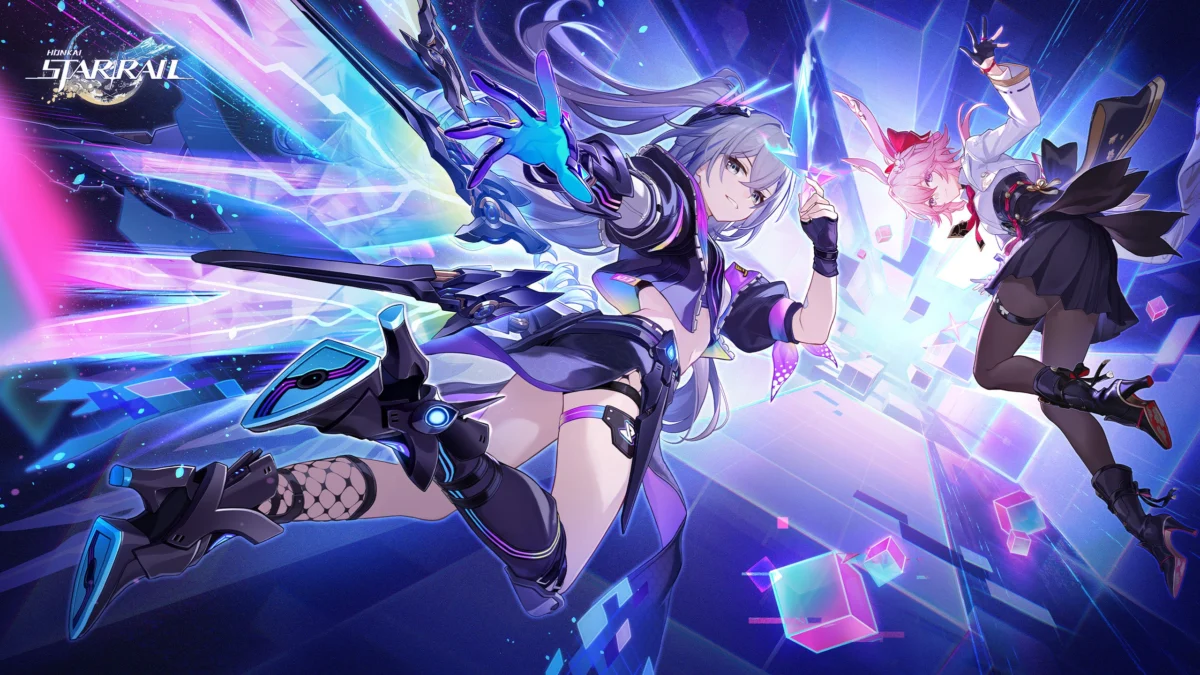
Shanghai, China – May 21, 2024 – HoYoverse, the globally acclaimed video game developer and publisher behind smash hits like Genshin Impact and Honkai: Star Rail, is reportedly poised to make an unprecedented investment of up to $14.6 billion in artificial intelligence (AI) over the next three years. This colossal commitment signals a profound strategic shift for the gaming giant, aiming to integrate advanced AI capabilities into the very fabric of its future game development and operational frameworks. The move is expected to not only revolutionize HoYoverse’s internal processes but also set a new benchmark for technological ambition within the fiercely competitive global gaming industry.
Main Facts: A Paradigm Shift in Game Development
The staggering figure of $14.6 billion earmarked for AI research and development underscores HoYoverse’s intent to become a vanguard in leveraging cutting-edge technology for interactive entertainment. This investment, spread across the next three years, positions HoYoverse at the forefront of a burgeoning trend where AI is increasingly viewed as a critical differentiator in creating more immersive, dynamic, and personalized gaming experiences.
The core of HoYoverse’s strategy, as reportedly outlined by co-founder Liu Wei, involves a decisive pivot towards in-house AI development. Rather than merely adopting existing external AI models, the company plans to cultivate a comprehensive internal AI ecosystem. This includes the establishment of proprietary GPU clusters – the computational backbone necessary for training complex AI models – alongside sophisticated training systems and bespoke application architectures tailored specifically for game development. This vertically integrated approach suggests a desire for greater control, customization, and ultimately, a unique competitive advantage in how AI is deployed across their intellectual properties.
A primary beneficiary of this monumental investment will be the enhancement of Non-Player Character (NPC) systems. HoYoverse envisions a future where NPCs are not merely static quest-givers or pre-scripted entities, but rather intelligent, adaptive, and emotionally responsive characters capable of driving emergent narratives and dynamic interactions. Beyond NPCs, AI is slated to play a central role in automating various aspects of game production, streamlining content generation processes, and enriching live-service environments with adaptive and evolving content.
The first concrete application of this ambitious AI strategy is anticipated in HoYoverse’s upcoming life simulation title, Petit Planet. This game is slated to feature "AI-powered NPCs," promising a level of immersion and interactivity previously unseen in the genre. While details about Petit Planet remain scarce, the emphasis on AI suggests a departure from traditional life simulation mechanics, potentially offering players unparalleled freedom and consequence in their virtual interactions.
This bold move by HoYoverse places it alongside other forward-thinking industry players, most notably South Korean publisher Krafton, which declared itself an "AI-first company" last year. Such announcements from major publishers underscore a growing consensus that AI is not just an auxiliary tool but a fundamental pillar for the future of game design and development.
Chronology: The Evolution of a Tech-Forward Vision
HoYoverse’s journey to this significant AI announcement is rooted in its history of technological ambition and a relentless pursuit of high-quality, visually stunning, and engaging game experiences.
Early 2010s: MiHoYo (the original name of HoYoverse for its Chinese operations) was founded in 2011 by three Shanghai Jiao Tong University students. From its inception, the company displayed a strong focus on technical prowess and a commitment to anime-style aesthetics, beginning with smaller mobile titles like FlyMe2theMoon.
Mid-2010s: Honkai Series Genesis: The release of Guns Girl Z (later Houkai Gakuen 2) in 2014 and Honkai Impact 3rd in 2016 showcased the studio’s growing capabilities in 3D action RPGs for mobile platforms. These titles were technically demanding for their time, pushing the boundaries of mobile graphics and gameplay complexity. This period saw a significant investment in internal development tools and rendering technologies, laying a foundational appreciation for sophisticated engineering.
2020: The Global Phenomenon of Genshin Impact: The launch of Genshin Impact in September 2020 marked a pivotal moment. The game’s open-world design, cross-platform compatibility, stunning visuals, and live-service model required massive infrastructural and technological investments. While not explicitly AI-focused at this stage in the way announced now, the scale of Genshin Impact‘s world, its vast cast of characters, and its continuous content updates implicitly leveraged advanced algorithms for world generation, character animation, and backend server management. The immense success of Genshin Impact provided HoYoverse with the financial resources and confidence to explore even more ambitious technological frontiers.
2023: Honkai: Star Rail’s Success and Industry AI Buzz: The release of Honkai: Star Rail in April 2023 further solidified HoYoverse’s reputation for delivering polished, engaging experiences. Concurrently, the broader tech and gaming industries witnessed an explosion of interest and investment in generative AI. Large language models (LLMs) and advanced image/asset generation tools began to capture significant attention, prompting many companies to re-evaluate their long-term strategies.
Late 2023: Krafton’s "AI-First" Declaration: In a significant industry precedent, South Korean publisher Krafton, known for PUBG: Battlegrounds, announced in late 2023 its intention to become an "AI-first company." This declaration came with a comprehensive reorganisation, a substantial $69.7 million investment in a new GPU cluster, and an additional $20.8 million allocated to integrate AI tools to enhance workforce productivity and retention. Krafton’s public commitment likely served as a bellwether for other major publishers, demonstrating the feasibility and strategic imperative of an AI-centric approach.
May 15, 2024: HoYoverse’s Private Announcement: The report of HoYoverse’s $14.6 billion AI investment emerged from a private technology and recruitment session held on May 15 for master’s and doctoral students. This setting suggests a dual purpose: to attract top-tier AI talent and to formally articulate the company’s long-term technological vision to future innovators. Co-founder Liu Wei’s detailed outline of the company’s strategy during this session underscores the seriousness and depth of HoYoverse’s commitment.
Upcoming Years (Next Three Years): The announced investment period of the next three years (roughly 2024-2027) will be crucial. During this time, HoYoverse will be actively building its internal AI infrastructure, integrating AI into its development pipelines, and preparing for the launch of Petit Planet and subsequent titles that will showcase these advancements. This timeline aligns with the rapid pace of AI development and the typical multi-year development cycles for major game releases.
This chronological overview highlights HoYoverse’s consistent trajectory towards leveraging advanced technology, culminating in what appears to be a definitive embrace of AI as its next major frontier.
Supporting Data: The Landscape of AI in Gaming and HoYoverse’s Position
HoYoverse’s massive AI investment is not occurring in a vacuum; it reflects a broader industry trend while simultaneously aiming to leapfrog competitors. Understanding the "why" behind this scale of investment requires examining the potential of AI in gaming, HoYoverse’s unique strengths, and the competitive pressures.
The Transformative Potential of AI in Gaming
Artificial intelligence is poised to redefine virtually every aspect of game development and player experience:
- Dynamic and Intelligent NPCs: This is perhaps the most immediate and tangible application. Current NPCs often suffer from repetitive dialogue, predictable pathing, and limited interaction models. AI, particularly large language models (LLMs) and advanced behavioral AI, can enable NPCs to:
- Engage in natural language conversations: Responding contextually and dynamically to player input.
- Exhibit adaptive behaviors: Learning from player actions and world events.
- Possess persistent memories: Remembering past interactions and adapting their demeanor accordingly.
- Generate emergent narratives: Creating unique mini-stories based on their interactions with the player and other NPCs. This is particularly relevant for a life simulation title like Petit Planet.
- Procedural Content Generation (PCG) 2.0: While PCG has existed for years (e.g., in Minecraft or No Man’s Sky), AI-driven PCG can generate content (textures, models, quests, even entire level layouts) that is not only vast but also contextually appropriate, aesthetically cohesive, and of higher quality, significantly reducing manual asset creation time.
- Automated Testing and Quality Assurance: AI can simulate player behavior at scale, identifying bugs, balance issues, and performance bottlenecks far more efficiently than human testers alone.
- Personalized Player Experiences: AI can analyze player data to dynamically adjust game difficulty, recommend content, tailor in-game events, and even adapt story branches to individual playstyles and preferences.
- Live-Service Evolution: For games like Genshin Impact and Honkai: Star Rail that thrive on continuous updates, AI can accelerate content creation, predict player engagement trends, and facilitate dynamic event scheduling, keeping the game fresh and engaging for years.
- Enhanced Realism and Immersion: From realistic physics simulations to lifelike character animations and environmental reactions, AI can elevate the fidelity and believability of virtual worlds.
HoYoverse’s Strategic Advantages and Motivations
HoYoverse’s current success provides a unique platform for this ambitious AI venture:
- Financial Might: The immense commercial success of Genshin Impact (which has generated billions in revenue) and Honkai: Star Rail provides HoYoverse with unparalleled financial resources to invest in long-term, high-risk, high-reward technological initiatives. A $14.6 billion investment over three years, while substantial, is a manageable percentage of their projected revenues.
- Technical Acumen: HoYoverse has consistently demonstrated a strong engineering culture, pushing graphical boundaries and developing robust backend systems for its complex live-service games. This existing technical foundation makes them well-equipped to tackle the challenges of building an internal AI ecosystem.
- Global Reach and Diverse Player Base: With millions of players worldwide, HoYoverse has access to vast amounts of player data, which is invaluable for training and refining AI models. This global appeal also means that successful AI integration could have a monumental impact on the entertainment experiences of a truly massive audience.
- A Vision for Future Games: The mention of Petit Planet and its AI-powered NPCs is crucial. It indicates that HoYoverse isn’t just retrofitting AI into existing titles but is designing new games from the ground up with AI as a core, defining feature. This proactive approach can lead to truly innovative gameplay mechanics.
- Maintaining Competitive Edge: The gaming industry is intensely competitive. With other major players like Krafton already making significant AI commitments, HoYoverse’s investment is also a strategic move to maintain and extend its technological leadership and attract top talent in a rapidly evolving landscape.
The Scale of Investment: Contextualizing $14.6 Billion
To put $14.6 billion into perspective:
- Compared to other tech investments: This figure rivals the R&D budgets of major tech companies in other sectors, emphasizing the seriousness of HoYoverse’s commitment to AI. It is not merely a department-level budget increase but a company-wide strategic imperative.
- Compared to other gaming investments: Krafton’s combined $90.5 million investment (GPU clusters + workforce AI tools) pales in comparison to HoYoverse’s reported figure. While Krafton’s move was significant, HoYoverse’s proposed investment is on an entirely different magnitude, suggesting a much deeper and broader integration of AI across its entire operations and product pipeline.
- What $14.6 Billion Buys:
- Thousands of top-tier AI researchers and engineers: Attracting and retaining the best talent globally.
- Cutting-edge GPU infrastructure: Building data centers with tens of thousands of the most powerful AI-specific GPUs (like NVIDIA’s H100s or future generations).
- Extensive R&D in core AI disciplines: Focusing on areas like reinforcement learning, natural language processing, computer vision, and generative AI specifically tailored for interactive media.
- Development of proprietary AI models and platforms: Moving beyond off-the-shelf solutions to create unique, optimized AI technologies.
- Long-term operational costs: Powering and maintaining this vast infrastructure, licensing data, and continuous innovation.
This deep dive into supporting data reveals that HoYoverse’s AI investment is a calculated, strategic move backed by significant resources, aimed at harnessing the transformative power of AI to secure its future as a leader in interactive entertainment.
Official Responses: Interpreting HoYoverse’s Strategic Silence
As the announcement reportedly emerged from a private technology and recruitment session, HoYoverse has yet to issue a public, official statement confirming the $14.6 billion investment or detailing its AI strategy in full. This lack of immediate public commentary is not uncommon for a company that often prefers to reveal its plans through carefully orchestrated announcements or game showcases. However, the reported statements from co-founder Liu Wei provide critical insight into the company’s internal thinking.
Liu Wei’s outline of a "long-term AI strategy" and a move toward "in-house AI development" speaks volumes. It signifies that this is not a short-term experiment or a superficial integration of existing AI tools. Instead, it represents a foundational shift in how HoYoverse perceives and approaches game creation. The emphasis on building an "internal AI ecosystem," including proprietary GPU clusters, training systems, and application architecture, highlights a desire for self-sufficiency and bespoke solutions. This strategy aims to avoid the limitations and potential generic nature of relying solely on third-party AI models, allowing HoYoverse to develop AI specifically optimized for its unique artistic vision and gameplay requirements.
While direct quotes are unavailable, the implications of these reported statements are clear: HoYoverse intends to exert maximum control over its AI development, viewing it as a core competency rather than an outsourced service. This approach reflects a company that is confident in its technical capabilities and willing to invest heavily to secure a distinct competitive advantage. The focus on attracting master’s and doctoral students further underscores the long-term nature of this commitment, as these individuals represent the future of AI research and application within the company.
The current "official response," or lack thereof in the public domain, suggests a strategic rollout of information. It’s plausible that HoYoverse is carefully planning a more comprehensive public announcement or a dedicated event to unveil its AI vision, possibly coinciding with game reveals or tech demonstrations in the future. For now, the reported details serve as a powerful signal of intent, reverberating throughout the industry and among its vast player base.
Implications: Reshaping the Gaming Landscape
HoYoverse’s colossal AI investment carries profound implications for the company itself, the broader gaming industry, and ultimately, for players worldwide.
For HoYoverse: A New Era of Innovation and Leadership
- Competitive Advantage: This investment immediately positions HoYoverse as a leader in AI-driven game development. By building proprietary AI capabilities, they can create unique gameplay experiences and efficiencies that competitors relying on generic solutions may struggle to replicate.
- Talent Acquisition: The promise of working on a multi-billion-dollar AI initiative at a globally recognized gaming company will undoubtedly attract top-tier AI researchers, engineers, and creative talent, further strengthening HoYoverse’s innovation pipeline.
- Risk and Reward: Such a massive investment inherently carries financial risks. The success will depend on effective execution, the ability to translate AI research into compelling gameplay, and the long-term return on investment. However, the potential rewards – groundbreaking games, increased market share, and sustained player engagement – are equally immense.
- Evolution of Game Design: HoYoverse’s future titles, starting with Petit Planet, are likely to push the boundaries of what is possible in interactive storytelling and character interaction. This could lead to a new generation of HoYoverse games defined by unparalleled dynamism and immersion.
- Operational Efficiency: Beyond game content, AI integration into development pipelines, asset creation, and live-service operations could drastically improve efficiency, accelerate content delivery, and optimize resource allocation across the company.
For the Gaming Industry: An AI Arms Race and Shifting Paradigms
- Accelerated AI Adoption: HoYoverse’s move, following Krafton’s, will likely trigger an "AI arms race" among other major publishers. Companies that have been hesitant or slower to invest might now feel compelled to accelerate their AI strategies to remain competitive.
- Higher Player Expectations: As AI-powered features become more sophisticated in games like Petit Planet, players will likely develop higher expectations for NPC intelligence, dynamic worlds, and personalized experiences across all titles.
- New Development Paradigms: The shift towards in-house AI ecosystems could redefine how games are made. Game development studios might increasingly integrate AI research labs, fostering a new breed of "AI Game Developers" who blend traditional game design with machine learning expertise.
- Standardization vs. Customization: The industry may see a split between companies leveraging off-the-shelf AI solutions and those, like HoYoverse, investing in deeply customized, proprietary AI, leading to diverse approaches and outcomes in game quality and innovation.
- Economic Impact: The demand for AI specialists in gaming will surge, potentially leading to job growth in new areas but also raising questions about the future roles of traditional artists, writers, and designers if AI takes over certain content generation tasks.
For Players: A Future of Unprecedented Immersion and Personalization
- More Dynamic and Realistic Worlds: Players can anticipate games with NPCs that feel genuinely alive, capable of engaging in meaningful conversations, adapting to player choices, and contributing to emergent narratives. This could lead to a deeper sense of connection and immersion.
- Personalized Experiences: AI can tailor game content, challenges, and even story paths to individual player preferences, making each playthrough potentially unique and highly engaging.
- Faster Content Updates: With AI assisting in content generation and live-service management, players might see more frequent and diverse updates for their favorite games.
- Ethical Considerations: The rise of advanced AI in games also brings ethical questions to the forefront. Concerns may arise regarding:
- Authenticity and "Soul": Will AI-generated content feel as meaningful or handcrafted as human-made content?
- Data Privacy: How will player data be used to train and personalize AI models?
- Bias in AI: Will AI-powered NPCs inadvertently perpetuate biases present in their training data?
- Job Displacement: While new jobs in AI are created, there are concerns about the impact on existing roles within game development.
In conclusion, HoYoverse’s reported $14.6 billion AI investment is far more than just a financial transaction; it is a declaration of intent to lead the next generation of interactive entertainment. By committing to building a comprehensive internal AI ecosystem and integrating it across its entire development pipeline, HoYoverse is poised to redefine what is possible in video games. The coming years will reveal the full extent of this ambitious vision, but one thing is clear: the future of gaming, as envisioned by HoYoverse, will be profoundly intelligent.









No comments yet. Be the first to join the conversation!