Iffa Jayyana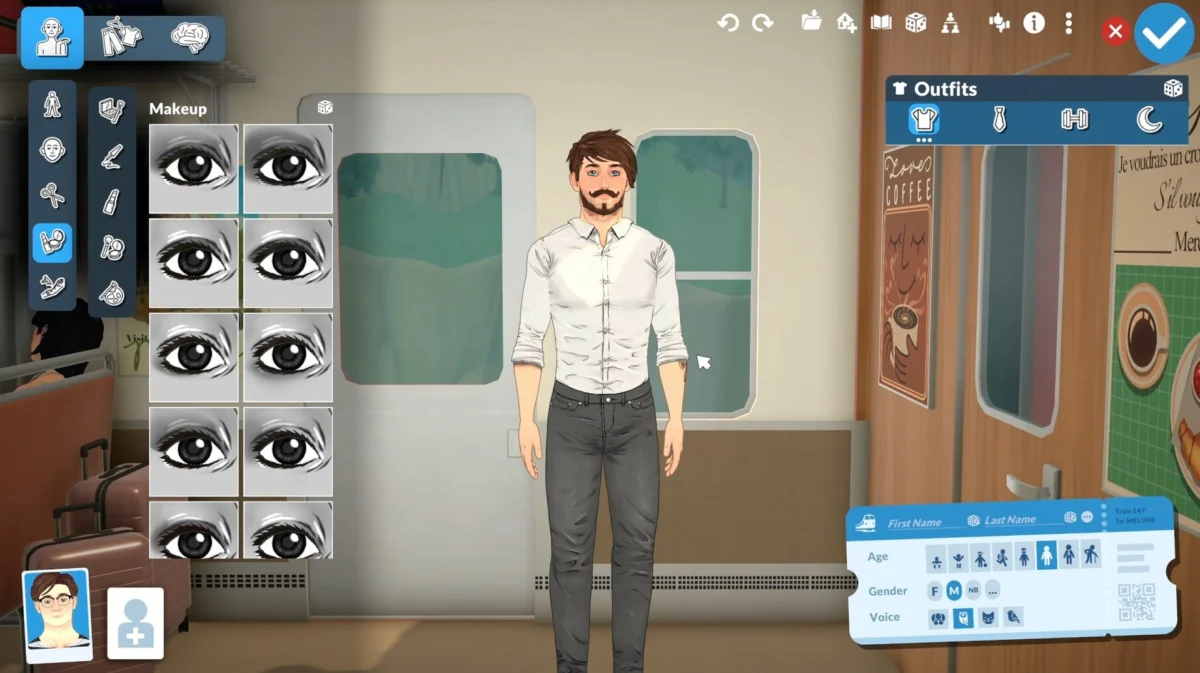
The long-awaited arrival of Paralives into early access has been heralded as a potential turning point for the stagnant life-simulation genre. As players finally get their hands on the indie title, they are encountering a world of charming aesthetics, rustic small-town vibes, and intricate mechanical depth. However, amidst the excitement of character creation, a peculiar and unforeseen obstacle has emerged: a wave of motion sickness specifically linked to the game’s "Paramaker."
In an industry where developers are constantly striving for immersion, Paralives has inadvertently proven that sometimes, "too much" movement can be a detriment to the player experience.
The Landscape: A Genre in Flux
To understand the significance of Paralives, one must look at the current state of the life-simulation market. For years, the genre has been synonymous with The Sims, a franchise that has recently faced intense scrutiny for its shift toward nebulous, live-service models. The competition has struggled to gain traction; Paradox Tectonic’s Life By You was unceremoniously cancelled following severe funding cuts, and Krafton’s Inzoi has drawn heavy criticism for an aesthetic that many players have described as a "haunted Botox catalogue."
Paralives, developed by Alex Massé and a dedicated team, offers a refreshing, throwback approach. With its focus on antique shops, stylized character design, and tangible skill progression systems, it has positioned itself as the "champion" the genre so desperately needs. Yet, as the game makes its public debut, it is facing a hurdle that few developers ever anticipate: physical discomfort in the menu screens.
Chronology of the "Paramaker" Crisis
The issue centers on the game’s introductory tutorial, which takes place on a moving train. As players enter the "Paramaker" to sculpt their characters, the game simulates the journey toward the game’s rustic setting. Outside the window, a landscape of trees and bushes passes by, creating a constant, shifting visual backdrop.
The Timeline of Discovery
- Early Access Launch: Paralives officially drops on Steam, accompanied by a roadmap promising free, substantial content updates.
- The First Reports: Within hours of the launch, players began reporting instances of nausea and dizziness during the character creation phase.
- The Steam "Known Issues" Disclosure: Recognizing the feedback, the development team updated their Steam community page, acknowledging "motion sickness in the Paramaker" as a formal issue.
- Social Media Validation: The issue migrated to platforms like Reddit, where a growing thread of players confirmed that the combination of the stationary character model and the rapidly moving landscape outside the train window was causing genuine physical distress.
Supporting Data: Why Do Games Make Us Sick?
Motion sickness in gaming—often referred to as "cybersickness"—is a well-documented phenomenon, though it is rarely associated with static menus like character creators.
The Sensory Conflict Theory
The primary cause of motion sickness in virtual environments is the "sensory conflict" between the vestibular system (the inner ear, which detects balance and movement) and the visual system. When a player’s eyes perceive movement—such as a train rushing through a landscape—but their inner ear registers no physical motion, the brain interprets this discrepancy as a sensory malfunction, often triggering a nausea response as a defense mechanism.
The "Sable" Effect
The phenomenon is not unique to Paralives. Many players find themselves unable to play specific titles due to camera behavior or animation styles. For instance, the critically acclaimed indie title Sable became unplayable for a segment of the audience due to the specific way the protagonist moved in relation to the camera. While these issues are typically reserved for high-octane action games or first-person shooters, Paralives has demonstrated that even a "cozy" life sim is not immune to the laws of human physiology.
Official Responses and Proposed Solutions
The response from the Paralives development team has been as swift as it is pragmatic. Rather than attempting a complete overhaul of the game’s engine or the train sequence, the developers have opted for a solution that addresses the root cause of the visual stimulation: curtains.
The "Curtain" Strategy
In their official communication, the developers suggested that adding window treatments to the train car would allow players to obscure the moving scenery, thereby eliminating the visual trigger for their nausea.
This approach highlights a growing trend in game development: the importance of accessibility and player comfort. By allowing the player to "close the curtains," the developers are effectively giving the user control over their own sensory input. It is a testament to the team’s willingness to listen to their community that such a seemingly minor, yet impactful, quality-of-life change was prioritized almost immediately.
Implications: The Future of Immersion
The Paralives incident serves as a vital case study for the gaming industry at large. It forces developers to reconsider the "immersion" they pack into user interface (UI) and menu design.
UI vs. UX
There is a fine line between a "highly immersive" UI and a "highly usable" one. While the moving train is a brilliant narrative touch—contextualizing the player’s arrival in the game world—it fails the test of user experience (UX) for a segment of the population. In the future, developers may need to implement "accessibility-first" design choices, such as:
- Static Background Toggles: Allowing players to freeze or blur the background during character creation.
- Movement Intensity Sliders: Providing options to reduce the speed of background elements.
- Visual Anchors: Ensuring there is a stationary, high-contrast point of focus that the brain can latch onto when the periphery is in motion.
The Community as a QA Team
The rapid identification of this issue also highlights the power of early access models. While some may view the "motion sickness" report as a flaw, it is actually a success story of the modern development cycle. A small indie team, without the massive testing departments of an EA or a Ubisoft, was able to identify, acknowledge, and propose a fix for a niche physical reaction within days of the game hitting the public market.
Conclusion
Paralives remains one of the most promising titles in the life-simulation genre. Its commitment to detail, from the mechanics of skill-building to the aesthetic charm of its characters, remains intact. The "Paramaker" controversy is, in many ways, a minor speed bump on the road to a successful release.
However, it is a necessary lesson. As games become more visually complex and simulation-heavy, the physical comfort of the player must remain the priority. By embracing feedback and implementing simple, effective solutions like the proposed "curtain" fix, the Paralives team is demonstrating exactly why they might be the ones to finally fill the void left by the genre’s giants.
For now, those who feel a bit woozy in the train car can rest easy: help is on the way, and in the world of Paralives, sometimes the most effective solution is simply knowing when to close the blinds.


 Asro
Asro
 Muslim