Nana Muazin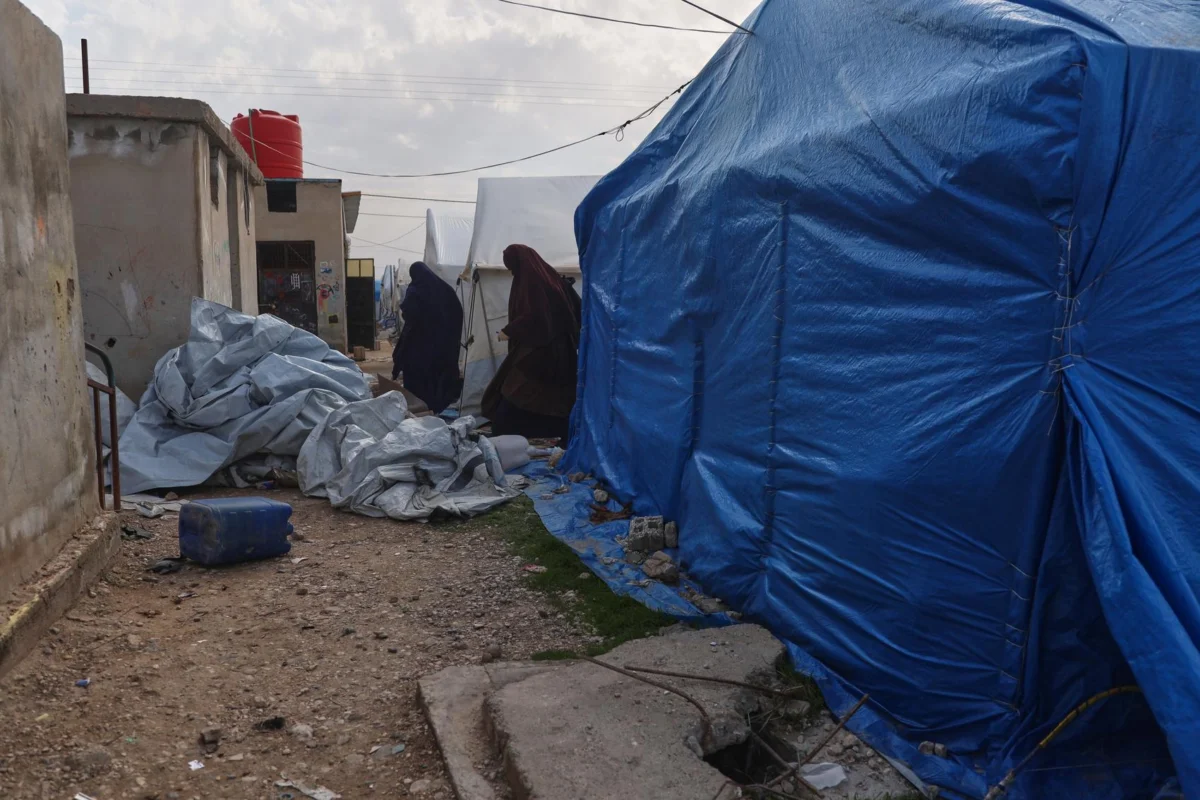
MELBOURNE — The Australian federal justice system has intensified its campaign to prosecute citizens who traveled to the Middle East to support the Islamic State (IS) caliphate, as a fresh wave of arrests follows the controversial repatriation of women and children from Syrian displacement camps.
On Thursday, Australian Federal Police (AFP) confirmed the arrest of a 34-year-old Melbourne woman, marking the latest legal action in a sweeping investigation into individuals who sought to embed themselves within the ranks of the extremist organization a decade ago. This development arrives amidst a heightened national debate regarding the security risks posed by returnees and the government’s complex humanitarian obligations.
The Latest Arrest: A Decade of Legal Fallout
The 34-year-old woman, whose identity has been withheld by authorities, was taken into custody at her Melbourne residence. According to AFP Deputy Commissioner Hilda Sirec, the arrest occurred eight months after the suspect returned to Australia via Lebanon.
The woman faces two grave charges: entering and remaining in a declared conflict zone and joining a terrorist organization. Each charge carries a potential maximum sentence of 10 years imprisonment. Authorities allege that she traveled to Syria between 2013 and 2014, eventually being captured by Kurdish forces in March 2019 following the collapse of the IS stronghold. She was subsequently held in the al-Hol displacement camp before managing a return to Australia on September 26 of last year.
This arrest is not an isolated incident but part of a broader, methodical effort by the Australian government to hold returnees accountable. Deputy Commissioner Sirec emphasized that the passage of time without an immediate arrest does not imply the termination of an investigation, signaling that further charges against other returnees currently under surveillance remain a distinct possibility.
Chronology of Repatriation and Prosecution
The legal landscape concerning IS returnees has shifted dramatically in recent months, fueled by a series of high-profile arrivals from the Roj and al-Hol camps in northern Syria.
May 2024: The Surge of Returns
The government’s strategy has been challenged by the logistics of repatriating citizens from the border region where the frontiers of Syria, Turkey, and Iraq converge.
- Early May: A group of four women and nine children arrived in Australia from the Roj camp. Upon arrival, three of the four women were immediately charged with slavery and terrorism-related offenses. They remain in custody as their legal proceedings move through the magistrate courts.
- Mid-May: Just two days prior to the arrest of the 34-year-old in Melbourne, a separate group consisting of seven women and 12 children—all linked to IS—returned to Australia. Their arrival was met with significant public scrutiny, as many of these individuals returned against the explicit wishes of the Australian government, which had previously expressed concerns regarding the logistical and security challenges of extracting citizens from the volatile region.
The Case of Janai Safar
In Sydney, the case of 32-year-old Janai Safar has served as a benchmark for the judicial approach to these returnees. Safar, who arrived in Australia on May 7 with her 9-year-old son, faces similar charges of joining a terrorist organization. Prosecutors allege she followed her partner, an IS fighter, to Syria in 2015. Following her partner’s reported death in 2017, she remained in the region until the recent repatriation efforts. Her application for bail was rejected by a Sydney magistrate, and she is currently serving a minimum two-month period in detention.
Supporting Data: The Scope of Alleged Crimes
The allegations against these individuals go beyond mere travel to a conflict zone. In a disturbing development for the Australian judicial system, investigators have uncovered evidence suggesting that some returnees participated in the systemic abuse of local populations.
On May 8, a Melbourne court heard allegations against Kawsar Ahmed and her daughter, 31-year-old Zeinab Ahmed. The two women are accused of purchasing a female Yazidi slave for $10,000 while in Syria. This case, in particular, has drawn international condemnation and highlights the profound nature of the crimes associated with the IS insurgency. Both women are currently in custody awaiting bail hearings, with the mother’s hearing scheduled for mid-June and her daughter’s legal team preparing a bail application for the coming week.
These charges underscore the Australian government’s insistence that "returning" does not equate to "immunity." The legal framework applied here—specifically the prohibition of travel to the former IS stronghold of Raqqa without legitimate reason between 2014 and 2017—serves as a primary instrument for prosecution.
Official Responses and Government Policy
The Australian government finds itself in an unenviable position, balancing human rights advocacy with national security imperatives. While the federal government has facilitated the return of children in some instances, it has frequently expressed reluctance regarding the adult returnees, citing the difficulty of gathering evidence in a war-torn country where the rule of law was nonexistent for years.
Deputy Commissioner Hilda Sirec has been the public face of the police response, consistently maintaining that the AFP’s primary objective is the safety of the Australian public. "We are working through these files with the gravity they deserve," Sirec noted during a recent press briefing. She clarified that the investigations into the women who returned in May are ongoing, and the police are committed to ensuring that those who participated in the violence of the caliphate are held to account for their actions.
The government’s stance is supported by a robust legislative framework that includes the Foreign Fighters Act and subsequent amendments aimed at curbing the radicalization and movement of citizens to extremist hubs. The AFP has utilized intelligence gathered from international partners, including Kurdish-led forces and Western intelligence agencies, to build cases that can withstand the rigors of the Australian court system.
Implications for National Security and Social Cohesion
The influx of these returnees and the subsequent court battles have profound implications for the Australian social fabric.
The Security Challenge
Intelligence analysts argue that while the physical caliphate has been defeated, the ideology remains a potent threat. Monitoring returnees who have been indoctrinated by years of living under IS rule presents a significant resource burden on domestic intelligence agencies like ASIO (Australian Security Intelligence Organisation). The primary concern is not only the potential for future violence but also the role these individuals may play in extremist networks within Australia.
The Human Rights and Humanitarian Debate
Conversely, human rights organizations have argued that the Australian government has a moral and legal duty to bring its citizens home, particularly children who were born into or taken to these camps. They contend that leaving citizens in the lawless environment of Syrian camps risks further radicalization and denies them the due process of the Australian legal system.
The Judicial Precedent
The courts are currently setting vital precedents that will define how Australia handles "foreign fighters" in the future. The rejection of bail for individuals like Janai Safar suggests that the judiciary views the risk of re-offending—or the flight risk inherent in these cases—as exceptionally high. Furthermore, the charges related to the enslavement of Yazidi women demonstrate a commitment to international humanitarian law, ensuring that crimes committed abroad are not forgotten once the perpetrator crosses the Australian border.
Conclusion: A Long Road Ahead
As the legal proceedings continue, the Australian public remains deeply divided on the issue. While there is broad consensus on the need to punish those who supported terrorism, the logistical, ethical, and legal complexities of the returnee situation ensure that this will remain a focal point of national policy for years to come.
For now, the AFP remains in the investigative phase for several of the most recent arrivals. With more bail hearings and court appearances scheduled for the coming weeks, the Australian judicial system is bracing for a protracted period of litigation. The message from the federal government is clear: the borders may have been crossed to return home, but the legal accountability for actions taken in the name of the Islamic State is only just beginning.
© Copyright 2026 The Associated Press. All rights reserved. This material may not be published, broadcast, rewritten or redistributed without permission.


 Neng Nana
 Asro
Asro