Neng Nana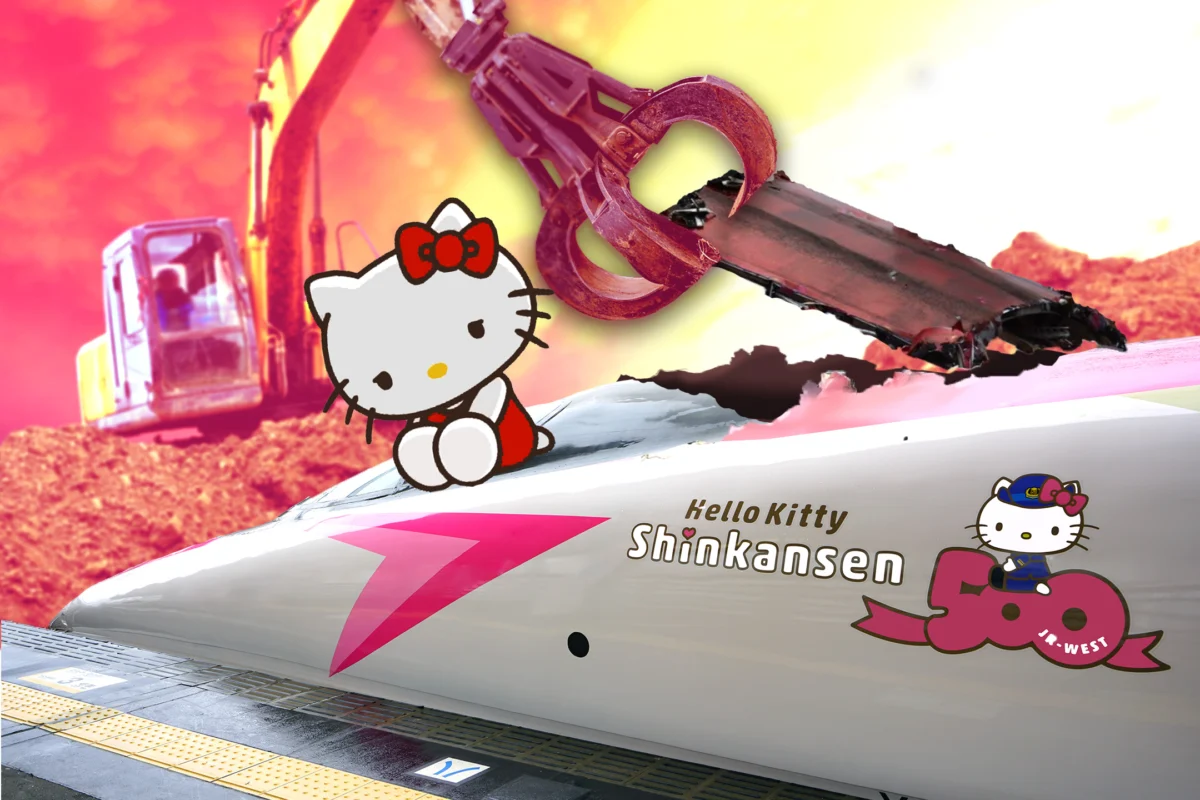
For eight years, the Sanyo Shinkansen line was home to a splash of unmistakable, vibrant pink. The Hello Kitty Shinkansen, a whimsical collaboration between West Japan Railway (JR West) and Sanrio, transformed the often-austere experience of high-speed rail travel into a global cultural phenomenon. However, the train’s journey reached a sudden and melancholic conclusion this May, culminating in a dismantling process that has left fans worldwide in mourning.
Following its final run on May 17, 2026, the train was retired with dignity, only to be reduced to scrap metal at the Hakata Shinkansen Depot just nine days later. This rapid transition from a celebrated icon to industrial debris marks not only the end of a beloved passenger experience but also the twilight of the legendary 500-Series train model.
The Legacy of the Pink Express: A Chronology of Connection
The Hello Kitty Shinkansen was far more than a marketing gimmick; it was a carefully curated experience that bridged the gap between Japanese pop culture and the nation’s world-class transportation infrastructure.
The Debut (2018)
Launched in June 2018, the project saw a refurbished 500-Series Shinkansen undergo a complete aesthetic overhaul. The exterior was adorned with a signature pink ribbon motif—a visual representation of the "connection" between regions—while the interior featured Sanrio-themed cabins, exclusive merchandise, and a highly sought-after menu of Sanrio-inspired ekiben (railway lunchboxes).
The Passenger Experience
For nearly a decade, the train operated between Shin-Osaka and Hakata, serving as a bucket-list destination for tourists from every corner of the globe. During its tenure, the train facilitated over 1 million passenger journeys. It was not merely a way to get from point A to point B; it was a destination in itself. Families, travel influencers, and die-hard rail enthusiasts booked seats months in advance, drawn by the novelty of the interior decor and the unique photo opportunities provided by the whimsical cabin design.
The Final Run (May 17, 2026)
On its final day of operation, the mood across the platform was one of somber reflection. Departing Shin-Osaka shortly before noon, the train made its way toward Hakata, with crowds of fans lining the tracks at various intervals to capture one last glimpse of the pink-ribboned bullet train. By the time it pulled into Hakata Station at approximately 4:00 PM, the train had officially completed its final revenue-generating service.
The Rapid Dismantling (May 26, 2026)
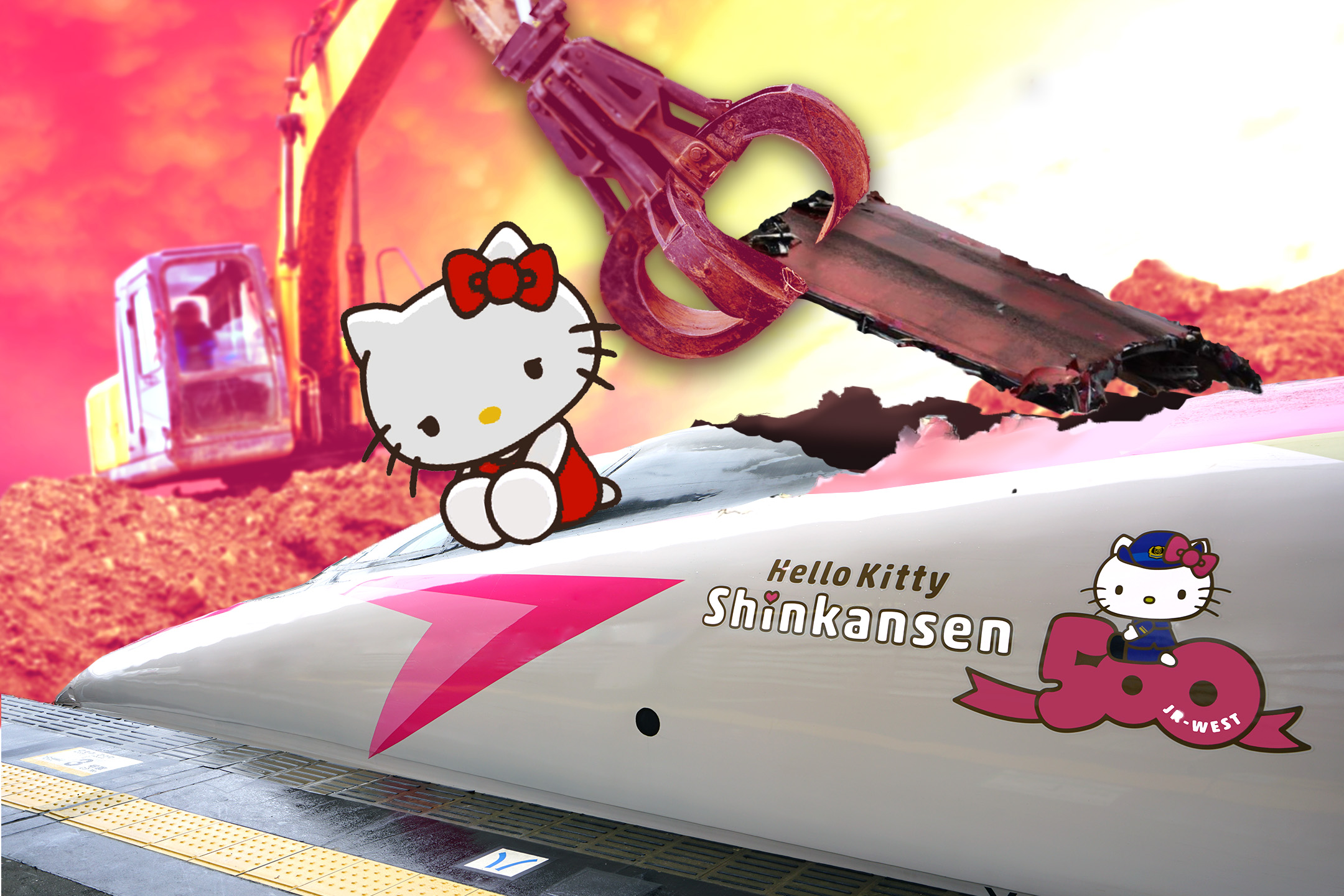
Following its retirement, the train was moved to the Hakata Shinkansen Depot for what many assumed would be a period of preservation or repurposing. Instead, reality set in on May 26, when viral footage—captured by train enthusiast @natsuko00816—revealed heavy machinery and grapplers actively dismantling the cars. Within nine days of its final trip, the icon that had carried a million dreams had been reduced to fragments, prompting a wave of shock across social media.
Supporting Data: By the Numbers
To understand the magnitude of the Hello Kitty Shinkansen’s impact, one must look at the data provided by JR West regarding the 500-Series and the specific performance of the themed train:
- Operational Duration: 8 years (2018–2026).
- Total Passengers: Over 1 million recorded journeys.
- Route: Sanyo Shinkansen (Shin-Osaka to Hakata).
- Base Model: 500-Series Shinkansen (originally introduced in 1997).
- Top Speed (of base model): 300 km/h (once the fastest in the world).
- Dismantling Timeline: 9 days from final service to industrial scrapping.
The statistics reflect a project that was remarkably successful in its goal: to boost tourism and regional interest in the Sanyo line. By leveraging one of Japan’s most recognizable cultural exports—Hello Kitty—JR West successfully incentivized travel to regions that might otherwise have been overlooked by the average international tourist.
Official Responses and Public Sentiment
The reaction to the dismantling has been a mix of professional gratitude from JR West and emotional distress from the public.
The Voice of the Passenger
For younger travelers, the loss felt personal. Yoshiharu Ikeda, a sixth-grade student who traveled all the way from Fukui Prefecture to be on one of the final rides, shared his sentiments with The Mainichi. “I’m sad that it’s retiring, but I’m glad I was able to ride it before it was gone,” he said. “I want to remember this moment forever.” This sentiment was echoed by thousands online, who viewed the rapid scrapping of the train as a callous end to a "kawaii" legend.
The Corporate Stance
JR West has maintained a standard corporate approach, framing the retirement as a necessary evolution of their fleet. While they have acknowledged the immense popularity of the Hello Kitty Shinkansen, the company remains focused on the maintenance and eventual decommissioning of the aging 500-Series platform.
The decision to dismantle the train so quickly is widely believed to be a matter of space and logistics. The Hakata Shinkansen Depot is a working facility; keeping a retired, non-operational train in a depot yard occupies valuable space needed for active maintenance of the remaining fleet. Despite the public outcry, JR West has shown no indication that they intended to preserve the train for museum display, prioritizing operational efficiency over cultural heritage.
Implications: The Twilight of the 500-Series
The dismantling of the Hello Kitty Shinkansen is not an isolated event; it is the opening act for the final retirement of the 500-Series model as a whole.
A Technological Pioneer
Introduced in 1997, the 500-Series was a revolutionary leap in Japanese rail engineering. With its sleek, needle-like nose designed to minimize the "tunnel boom" effect and a top speed of 300 km/h, it was the gold standard of speed and aesthetics for over a decade. It defined the "cool" factor of the late 90s and early 2000s in Japan.
The Looming Decommissioning (2027)
JR West has confirmed that the entirety of the 500-Series fleet will be decommissioned by 2027. The primary driver is age; the physical structure of the trains is nearing the end of its projected lifecycle. Maintaining these aging machines becomes increasingly expensive and technically difficult as spare parts become obsolete.
The implication here is a shift in the philosophy of Japanese rail travel. While the 500-Series was a symbol of innovation and speed, modern Shinkansen development (such as the N700S series) focuses on energy efficiency, seismic resilience, and passenger comfort rather than raw, record-breaking speed. The death of the Hello Kitty train is a microcosm of this shift—as we move toward a future of quieter, safer, and more efficient travel, the charismatic, record-breaking icons of the past are being quietly phased out.
Conclusion: A Memory in Motion
The Hello Kitty Shinkansen will be remembered as a unique marriage of high-speed utility and high-concept branding. It proved that a train could be more than just transit; it could be an experience that defines a traveler’s trip.
While the rapid dismantling of the train at the Hakata Depot has left a bitter taste for many, the legacy of the pink ribbon train remains firmly embedded in the travel journals of over a million passengers. As the 500-Series prepares for its final departure from the rails in 2027, the Hello Kitty Shinkansen stands as the most colorful chapter in the history of a machine that once stood as the fastest in the world.
Though the physical steel has been recycled, the cultural footprint remains. For those who rode it, the memory of cruising through the Japanese countryside in a pink-themed sanctuary remains a testament to the country’s unique ability to find joy in the details—even when moving at 300 kilometers per hour.



 Asro
Asro