Ammar Sabilarrohman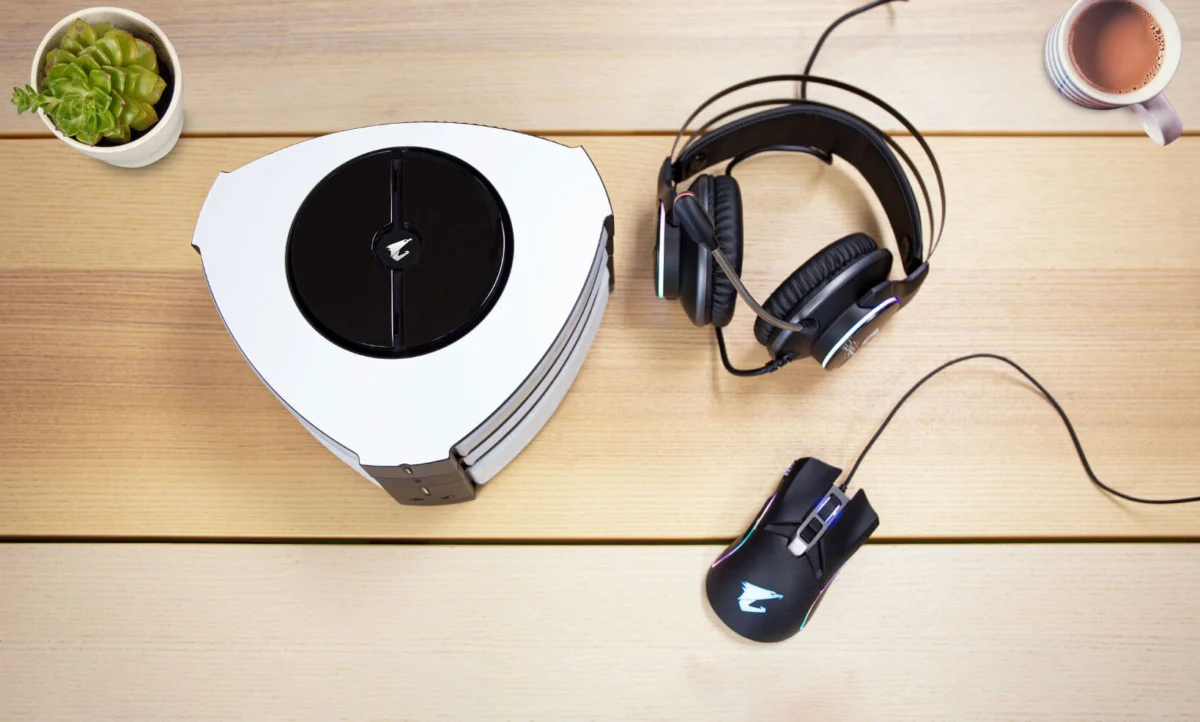
In an industry defined by the relentless pursuit of raw performance—where higher clock speeds and lower temperatures are the ultimate benchmarks—Aorus, the gaming-focused arm of Gigabyte, has pivoted toward a radically different philosophy. With the unveiling of "Project Cielo," Aorus is challenging the traditional paradigm of the desktop gaming PC, proposing a modular, triangular, and highly portable vision of the future. Yet, as the tech community examines this conceptual hardware, the industry is left with a burning question: is this a visionary step toward mobile, cloud-integrated computing, or a solution in search of a problem?
Main Facts: The Anatomy of Project Cielo
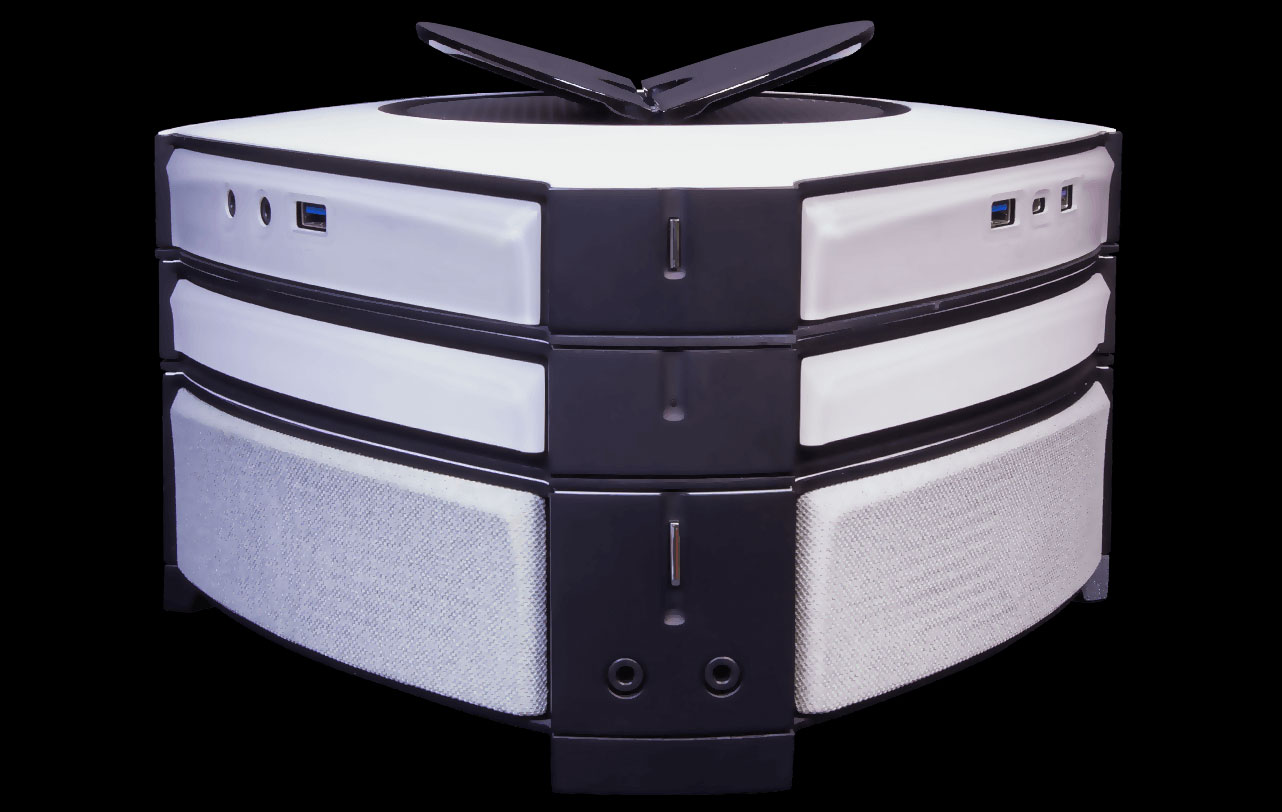
At first glance, Project Cielo is visually arresting. Abandoning the standard tower chassis that has dominated the desktop space for decades, Aorus has opted for a stacked, triangular modular structure. The aesthetic is sleek, modern, and undeniably "gamer-centric," featuring clean lines and an angular silhouette that wouldn’t look out of place in a futuristic sci-fi epic.
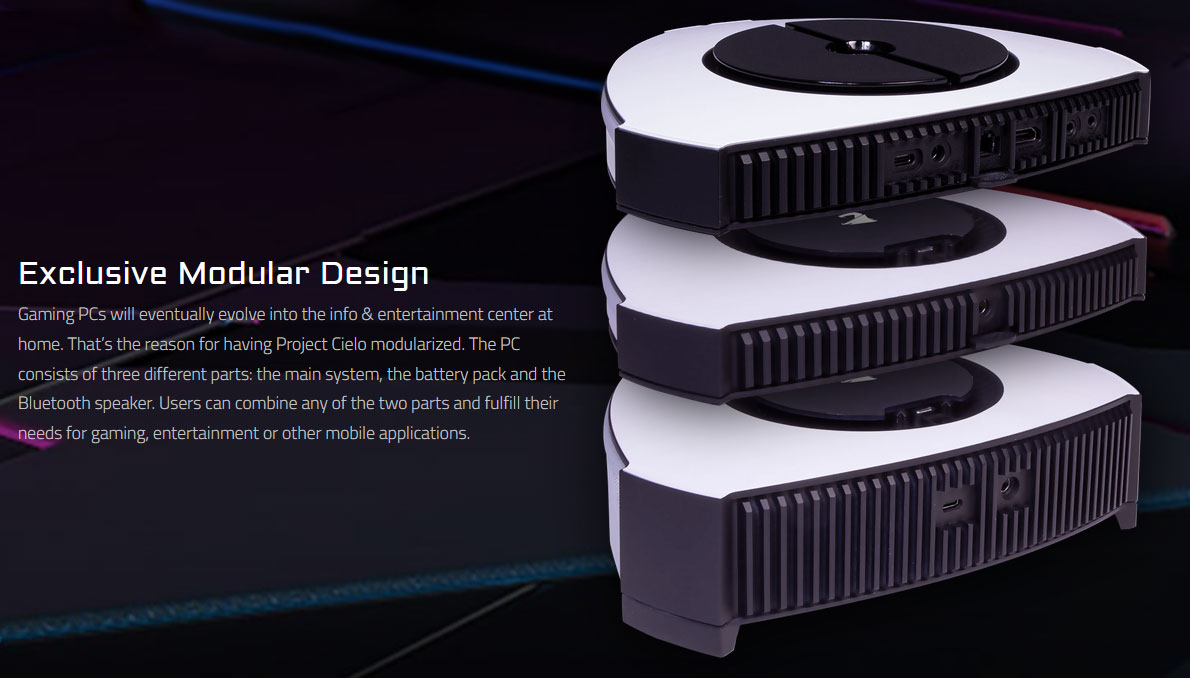
However, the departure from convention is not merely skin deep. Aorus has stripped away the traditional notion of a singular, monolithic PC component. Instead, the system is broken down into three distinct, magnetically or mechanically stackable modules:
- The Main System Module: Located at the top of the stack, this is the "brain" of the operation. It houses the core processing hardware, although Aorus has remained conspicuously quiet regarding specific internal specifications like CPU, GPU, or thermal management solutions.
- The Battery Pack: Positioned in the middle, this module aims to liberate the PC from the tether of a wall outlet.
- The Bluetooth Speaker: The base module, which serves as an integrated audio solution, emphasizing the device’s intent to act as a self-contained entertainment hub.
Adding to the intrigue is the inclusion of "angel-wing" antennas protruding from the main system unit. These are not merely decorative; they represent the heart of Aorus’ pitch: high-speed, low-latency 5G connectivity.
Chronology: From Static Towers to Modular Concepts
The trajectory of PC gaming has historically been linear: bigger, faster, and more powerful. From the beige boxes of the 90s to the tempered-glass, RGB-lit monoliths of the 2020s, the goal has remained consistent—maximize hardware throughput.
Project Cielo marks a significant shift in this timeline. Announced in late 2021, the concept arrives at a time when the lines between "gaming PC" and "cloud terminal" are beginning to blur.
- Pre-Announcement: For years, enthusiasts pushed for modularity in laptops and desktops (notably seen in projects like the Framework laptop or the now-defunct Razer Project Christine). Aorus appeared to be listening, albeit with a focus on form factor rather than repairability.
- The Reveal (October 2021): Aorus officially unveiled the concept, positioning it as a lifestyle-oriented device. The marketing imagery heavily emphasized mobility, showing the unit being carried in a sleek bag, suggesting a "take your PC anywhere" ethos.
- The Post-Announcement Discourse: Immediately following the reveal, industry analysts began dissecting the viability of a modular, 5G-enabled gaming stack. The consensus was largely one of confusion, as the device lacked a display, making the "portable" argument difficult to reconcile with the requirement of lugging a separate monitor to reach a destination.
Supporting Data: The 5G Pivot and Cloud Gaming
Aorus’ official messaging hinges almost entirely on the promise of 5G technology. In their press materials, the company asserts: "Compared to the traditional wired or 4G wireless networks, 5G makes PC gaming on the go possible by offering greater bandwidth, ultra-low latency and near-instant access to cloud gaming."
The Technical Case for 5G
The reliance on 5G is a strategic bet on the maturity of cloud gaming services like NVIDIA GeForce Now, Xbox Cloud Gaming, and Amazon Luna. By offloading the heavy computational lifting to remote server farms, the local machine only needs enough processing power to decode video streams and maintain stable connectivity.
However, the hardware realities tell a different story. If the "Main System" module is intended to be a standalone PC, it must house a CPU and GPU capable of running local applications. If it is intended only to be a cloud-gaming terminal, the inclusion of a full-fledged PC module seems redundant when compared to the existing market of ultra-portable tablets and smartphones.
The Modularity Dilemma
Aorus claims users can "combine any of the two parts and fulfill their needs for gaming, entertainment or other mobile applications." This implies a "pick-and-mix" approach. Need a mobile speaker and a battery? You have a portable sound system. Need the PC and the battery? You have a mobile workstation. While the flexibility is theoretically impressive, the physical weight of a modular stack—likely composed of high-density batteries and cooling components—raises concerns about actual portability.
Official Responses and Industry Skepticism
Aorus’ communication has been careful to categorize Project Cielo as a "concept." In the tech industry, this is a double-edged sword. It allows a company to showcase innovation without the immediate pressure of mass-market performance benchmarks or manufacturing feasibility.
However, the reception has been lukewarm. Critics have pointed out the inherent contradiction in the product’s design: it is a "portable" PC that lacks a screen, requiring the user to supply their own peripheral display. Furthermore, the decision to promote this via a brand known for high-end, enthusiast-grade hardware—Gigabyte’s Aorus—is viewed by many as a mismatch. Aorus’ core audience typically prioritizes FPS counts and thermal efficiency over the convenience of a modular Bluetooth speaker base.
Implications: Is This the Future or a Folly?
The implications of Project Cielo are significant for the future of hardware design. If Aorus pursues this path, it suggests a transition where the PC is no longer a fixed object, but a collection of swappable services.
1. The Death of the Monolith
Project Cielo implies that the future of computing might be "disaggregated." If consumers can swap modules to upgrade a GPU or add more battery life without opening a chassis, it would revolutionize PC maintenance. However, proprietary connectors and the lack of standardization remain massive hurdles.
2. The Cloud-First Transition
By leaning into 5G, Aorus is acknowledging that the local hardware bottleneck is increasingly irrelevant. If the latency of 5G can truly match the performance of a local fiber-optic connection, then the "PC" of the future might indeed be a small, portable, battery-powered brick that streams 4K gaming from the cloud.
3. The "Missing Link" Problem
Despite the ambition, the primary critique remains: why not just build this into a laptop? A high-end gaming laptop already includes the screen, the battery, the speaker, and the PC components in one cohesive unit. By breaking these apart, Aorus has created a product that is harder to transport, more prone to connection failure between modules, and potentially more expensive due to the individual housing requirements for each section.
Conclusion: A Concept in Search of an Audience
Project Cielo is a fascinating exercise in industrial design, but it remains a confusing proposition for the average consumer. It attempts to bridge the gap between a high-performance desktop and a mobile device but ends up feeling like an incomplete assembly.
While it is refreshing to see a major manufacturer like Aorus experiment with form factors, the lack of a clear use-case—beyond the nebulous promise of 5G cloud gaming—suggests that this project may be destined to remain a "concept" in the truest sense of the word. For now, gamers who value the stability of a traditional rig or the convenience of a dedicated gaming laptop will likely find little reason to wait for this modular alternative.
As we look toward CES 2022 and beyond, the industry will undoubtedly continue to chase the "future of gaming." Whether that future involves stacking triangular modules or simply continuing the evolution of the laptop, one thing is certain: consumers will continue to demand performance, reliability, and utility above all else. Aorus has certainly captured our attention with the "what if," but they have yet to answer the "why."


 Nana Wu
 Nana Muazin