Jia Lissa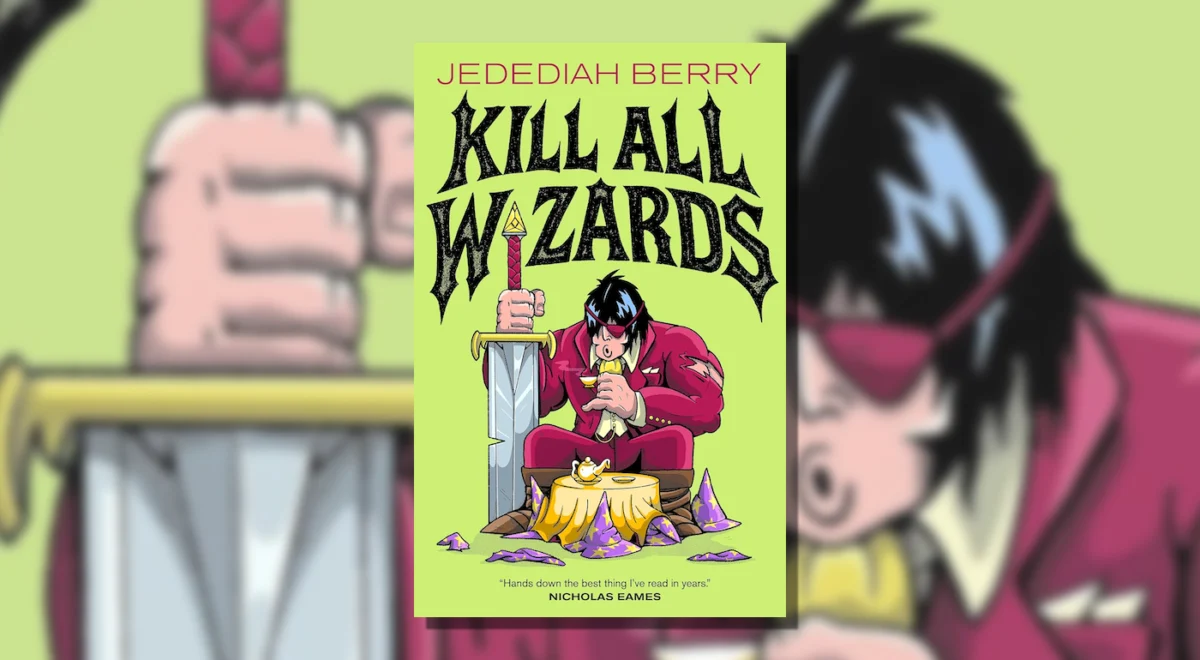
On June 16th, the literary world turns its gaze toward the dark, clockwork-laden streets of the capital as Tordotcom Publishing releases Kill All Wizards, the latest novella by critically acclaimed author Jedediah Berry. The work serves as both a gripping sword-and-sorcery narrative and a biting commentary on the fragile social fabric of an empire built on arcane privilege.
The story follows the enigmatic figure known only as "Gotchimus"—a barbarian whose reputation for violence is matched only by his unexpected, grudging commitment to high-society etiquette. As the city reels from a series of high-profile assassinations targeting the ruling magical elite, the intersection of political tension and personal vendetta creates a narrative pressure cooker that is as intellectually stimulating as it is visceral.
The Catalyst: A City of Tamed Wonders
To understand the gravity of Kill All Wizards, one must first understand the setting: a city defined by its oppressive "tameness." In this world, the trains are punctual, the calendars are full, and the ruling Fifth Committee—a cabal of powerful wizards—maintains order through a mixture of bureaucracy and lethal enforcement.
However, this order is currently under siege. The brutal slaying of the Head of Ven, a master mechanician known for his spider-legged steam platforms and intricate automata, has shattered the city’s facade of normalcy. The murder, described as "gruesome" by contemporaries, has sent shockwaves through the elite, prompting the Committee Lamentables to prowl the streets with light-knife smiles, dowsing for dissent.
Chronology of a Vendetta
The narrative structure of Berry’s novella masterfully weaves together two distinct timelines, allowing readers to piece together the origins of the barbarian’s fury.
The Autumnal Present
In the current timeline, Gotchimus maintains a tenuous alliance with Hecksley, a portly, opportunistic thief who has replaced his own hand with a brass mechanical prosthesis—a relic stolen from the very wizard whose death is now under investigation. Their meetings, held in "The Unnamable," a club fashioned from the skull of a nameless god, serve as the primary window into the city’s brewing insurrection. Gotchimus is not merely a drifter; he is a man on a singular, focused mission to locate a specific wizard—a man with bright green eyes and a voice like dark velvet—who is responsible for the permanent injury that necessitates the barbarian’s signature sable eyepatch.
The Springtime Origin
The secondary timeline tracks the barbarian’s initial attempts to petition the Fifth Committee for an audience. This period of the story highlights the absurdity of the empire’s bureaucracy. Gotchimus, a man accustomed to the raw dangers of the "stony marches," finds himself trapped in a loop of administrative failures, forced to navigate the Gracious Assessor—a six-armed, cobalt-blue construct—who weaponizes red tape to deny his requests. It is here that the reader witnesses the transformation of a desperate supplicant into an existential threat. The ordeal culminates in a bizarre, otherworldly confrontation with a "wild god" of the forest—a battle that leaves the barbarian scarred, his sword imbued with the blood of a deity, and his soul permanently hardened against the wizards who orchestrated his suffering.
Supporting Data: The Anatomy of the Conflict
The tension in the text is driven by the stark contrast between the barbarian’s savage origins and his forced integration into the city’s "civilized" life.

- The Weaponization of Etiquette: Gotchimus’s decision to blend in—dressing in perfectly tailored oxblood-and-cream worsted suits and frequenting exclusive theaters—is perhaps his most effective weapon. By adopting the habits of the wizards, he effectively masks his intent, proving that his "barbaric heart" is capable of the highest levels of strategic patience.
- The Mechanization of Labor: The use of "cogsbodies" and automata by the Fifth Committee provides a chilling subtext to the power dynamics. These beings, like the club waiter Beauchamp, are created to serve but lack the capacity for speech or true autonomy, reflecting the wizards’ tendency to treat all living things as mere extensions of their own will.
- The Symbolism of the Skull: The Unnamable club itself is a metaphor for the city’s history. Built from the remains of a god slain during the "Sundering," it represents the empire’s parasitic relationship with the old, untamed powers of the world.
Official Responses and Public Sentiment
The internal response to the string of wizard deaths is one of paranoia. While the Fifth Committee has increased its security measures, the citizenry—including the witches of the High Godsward—has resorted to occult defensive measures, such as hiding their souls in smooth stones.
Public opinion is fractured. Some see the barbarian as a harbinger of necessary change, while others view him with the suspicion reserved for those who refuse to conform to the city’s stifling order. Hecksley, representing the pragmatic viewpoint, consistently urges caution, noting that the Fifth Committee’s reach is absolute. Yet, Gotchimus remains unmoved, fueled by a hatred that transcends fear.
Implications: The End of an Era
The core implication of Kill All Wizards is the inevitable collapse of the "tame" world. Berry suggests that when a society creates institutions—be they bureaucratic, magical, or mechanical—that prioritize order over humanity, they create the very monsters destined to dismantle them.
Gotchimus is not a hero in the classical sense. He is an agent of entropy. His journey from the limestone lobby of the Thousandfold Tower to the quiet, bloody confrontation in the woods suggests that the wizards’ greatest error was not their cruelty, but their arrogance in believing that a "barbarian" could be managed or exploited indefinitely.
As the novella progresses, it becomes clear that this is not just a tale of revenge; it is a eulogy for the world as it stands. With every wizard the barbarian eliminates, the "tameness" of the land diminishes. The click and whir of the city’s machines, once a sign of technological mastery, are beginning to take on a "melancholy timbre," as if the city itself recognizes that its creators are nearing their end.
Conclusion: A Must-Read for the Season
Kill All Wizards is a masterclass in atmospheric world-building. Jedediah Berry has crafted a narrative that demands the reader consider the costs of civilization and the price of vengeance. As we approach the June 16th release date, one thing is certain: the Fifth Committee is about to face an adversary who has learned their language, studied their customs, and, most importantly, discarded the fear of their power.
For those interested in exploring the full scope of this conflict, the excerpt provided in the text offers a mere taste of the linguistic dexterity and dark, sardonic wit that characterizes Berry’s writing. Whether one sides with the cold order of the wizards or the fiery, untamed resolve of the barbarian, Kill All Wizards is poised to be one of the most talked-about releases of the year.
Readers are encouraged to secure their copies early, though they might consider leaving their own weapons, mechanical or otherwise, at the door.


 Raul Delapena Setiawan
 Nana Muazin