Muslim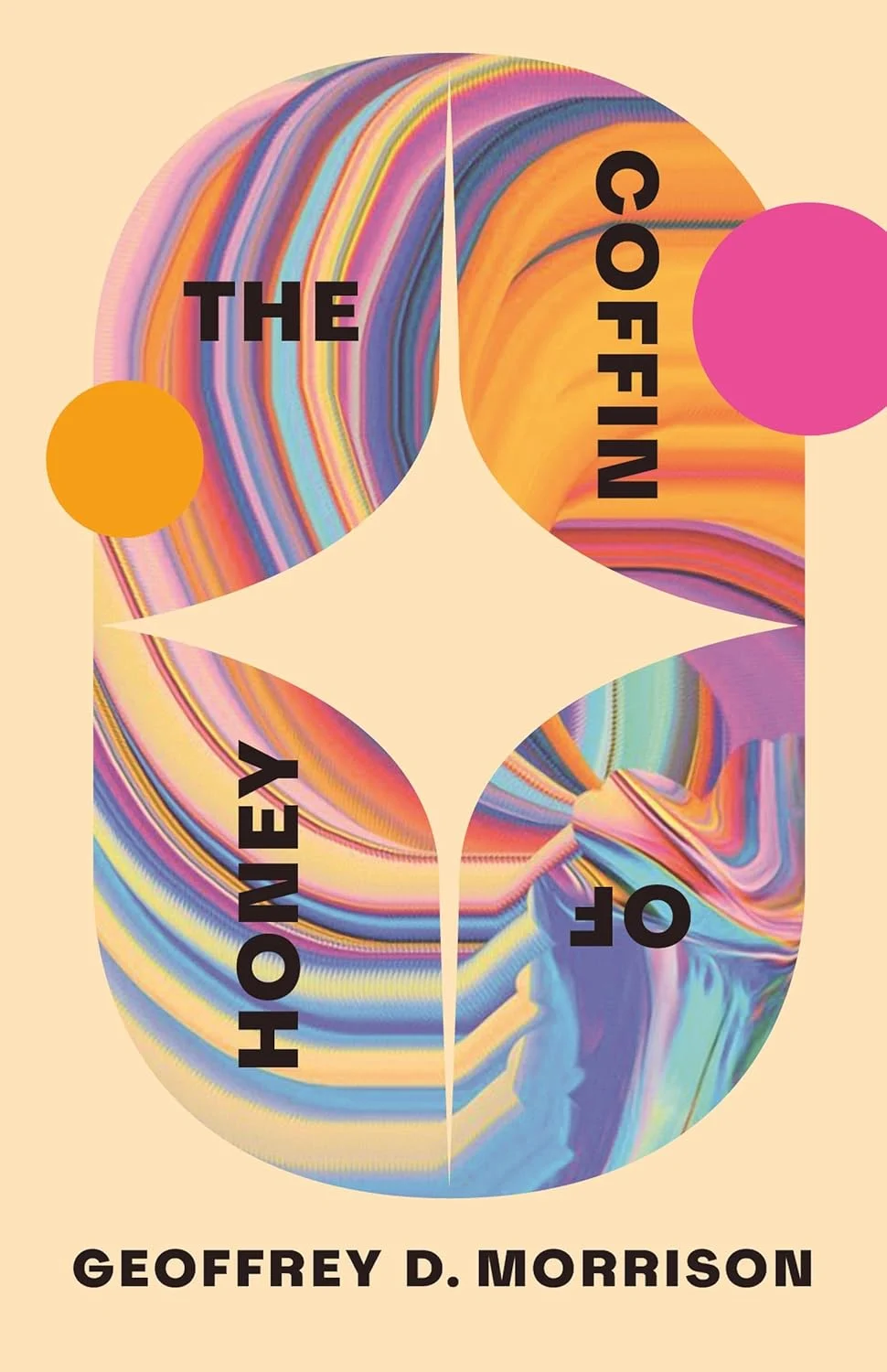
In the landscape of contemporary speculative fiction, few works arrive with the quiet, disorienting gravity of Geoffrey D. Morrison’s The Coffin of Honey. Set in a near-future that feels uncomfortably adjacent to our own, the novel presents a world recalibrated by shifting coastlines, fluctuating national boundaries, and a renewed ideological schism between capitalism and communism. Yet, beneath this geopolitical framework lies a narrative that transcends standard science fiction tropes, opting instead for a philosophical exploration of human freedom, collective memory, and the "uncommodified" nature of existence.
The World of Revolutionary Year 44
Morrison’s narrative is anchored in a time designated as "Revolutionary Year 44," a temporal marker that signals the hegemony of a new global order. In this world, the binary of the 20th century has re-emerged, pitting capitalist states against "Communards"—a subset of humanity living behind ideological walls.
The geography of this world is telling: Communard territories include Tiohtiá:ke (Montréal), Aotearoa (New Zealand), and the Isle of Skye. Conversely, states like Kerala remain outside this bloc, though they are home to significant pro-communist factions. The author, a trade unionist in his own right, crafts this world not as a utopia, but as a complex experiment in human organization. Access to the internet is curtailed, framed by the state as a "digital detox" for the sake of public wellness, though critics within the text rightly identify it as a tool of systemic censorship.
A Chronology of the Unexplained
The plot is ignited by an incident of profound, inexplicable strangeness. During a public speech on the coast of Kerala regarding the region’s eighth Coastal Management Five-Year Plan, the communist politician Varughese is interrupted. As he addresses his constituents, an object appears on the horizon.
- The Arrival: A nacreous, lozenge-shaped craft approaches in silence, moving with a fluid, alien propulsion that defies standard physics. It descends upon the beach, hovering before the podium.
- The Transition: Varughese, in an act of spontaneous, almost rhythmic compulsion, begins to sing "The Internationale" as he enters the craft.
- The Void: Inside, he finds no technological interior, but a desolate landscape of barren, desert beauty—a world characterized by two moons: one yellow, one pink.
- The Phenomenon: Varughese is returned to the beach unharmed, but he is merely the first. Soon, the "abductions" become a global, systemic occurrence.
The returnees—those who have been taken and deposited back into their own world—become the subjects of intense geopolitical scrutiny. Governments scramble to analyze the dust clinging to the returnees’ clothing, finding minerals of immense strategic and economic value. The pattern, however, remains elusive. There is no demographic consistency to the abductees, and they report vastly different experiences, ranging from solitary confinement in alien landscapes to encounters with other travelers from across the globe.
Supporting Data: Narrative Structure and Literary Allusions
The Coffin of Honey is not a linear novel; it is a mosaic. The narrative unfolds through a curated collection of artifacts: journal entries, official memoranda, and excerpts from fictitious academic texts like The Rhizomes of Credo: Lifeways of Red Hyrcania.
The "Bell Letter" Phenomenon
Central to the book’s structural audacity is a thirty-six-page manuscript known as "The Bell Letter," attributed to a figure known only as The Bell Letterist. The manuscript consists of three paragraphs, with the middle paragraph spanning a staggering thirty-two pages. This section serves as a litmus test for the reader’s commitment to the novel’s slow-burn rhythm.
A Web of Allusions
Morrison utilizes a dense intertextual framework to deepen the novel’s thematic weight:
- The Revolutionary Calendar: The use of French Revolutionary month names (e.g., Pluviôse, Germinal) reinforces the cyclical, historical weight of the characters’ struggles.
- The Myth of Alexander: The title itself references the legend that Alexander the Great was buried in a coffin filled with honey—a preservative, a golden tomb, and an image of suspended animation that mirrors the characters’ own search for meaning in a static, rigid world.
- The Sufi Connection: Characters like Forough, a poet living on a Hyrcania kolkhoz, invoke The Conference of the Birds. This poem, involving a quest for a wise king named the Simurgh, acts as a mirror to the novel’s own investigation into identity and collective purpose.
Official Responses and Geopolitical Implications
Within the novel, the response of established governments is one of predictable, bureaucratic panic. The emergence of the alien vessels—and the rare minerals they leave behind—threatens the existing capitalist-communist balance of power.
The military agent (whose name is redacted throughout the text) provides the most chilling perspective. His journals reflect a desperate attempt to maintain internal consistency in a world that is losing its grip on material reality. The tension between the "Communist" ideals of the Communards and the "capitalist" desperation of the state is not resolved through debate, but through the sheer intrusion of the "Other." The alien phenomena force a confrontation between those who see the world as a place of exchange and those who, like Varughese, find in the alien desert a "world without exchange"—a space where human beings are finally free from the burden of price.
Critical Implications: The Reader as the Final Author
Perhaps the most challenging aspect of The Coffin of Honey is its refusal to provide a tidy resolution. The reader is presented with a series of mysteries—the identity of the aliens, the mechanism of the craft, the ultimate fate of the "disappeared"—and given very few answers.
The Nabokovian Challenge
Morrison demands a high level of engagement. As the author echoes Vladimir Nabokov’s sentiment—"One cannot read a book: one can only reread it"—it becomes clear that The Coffin of Honey is designed to be parsed, analyzed, and revisited. Small, seemingly offhand details, such as the behavior of chickens being taught hànzi by a kolkhoz resident or the critique of a fancy dinner party where the guests should have cooked together, are not mere window dressing. They are the keys to the novel’s core argument: that the alienation of modern life stems from our refusal to exist collectively and authentically.
Conclusion
Is the novel a success? For those seeking a traditional spy thriller or a hard sci-fi mystery with a clear "reveal," the ending will likely be a source of frustration. However, for those willing to engage with the text as a philosophical treatise on the nature of freedom and the absurdity of human boundaries, the lack of closure is the novel’s greatest strength.
The "Coffin of Honey" is not a container for a dead body; it is a vessel for a potential future. By the time the final page is turned, the reader realizes that the mystery was never meant to be solved by the characters. The true "alien" experience is the act of reading itself—the attempt to connect with a consciousness entirely separate from our own. Whether the novel’s various threads cohere into a unified whole is left entirely to the discretion of the reader. In this, Morrison has succeeded in creating something rare: a work of fiction that remains, like the lozenge on the horizon, just out of reach, inviting us to look, to wonder, and to reconsider everything we thought we knew about the world we inhabit.


 Reynand Wu
 Iffa Jayyana