

WASHINGTON/CAIRO – In a development that could signal a pivotal cooling of tensions in the Middle East, sources close to the diplomatic process confirmed on Thursday that the United States and Iran have reached a tentative agreement to extend their current ceasefire and restore unencumbered shipping access through the Strait of Hormuz.
The breakthrough, which comes after months of volatile military posturing, seeks to stabilize one of the world’s most critical energy transit corridors. However, the path to formal implementation remains fraught with uncertainty. While the contours of the deal are reportedly settled at the working level, President Donald Trump has yet to grant final approval, and Iranian state media has maintained a cautious posture, officially stating that the agreement has not yet been finalized.
The Core Agreement: Parameters and Scope
According to four independent sources familiar with the negotiations, the proposed deal is designed as a bridge toward broader diplomatic stability. The key components include:
- A 60-Day Extension: The current ceasefire, which was established in early April, would be extended for an additional two months, providing a window of calm to prevent further escalation.
- Maritime De-escalation: The agreement mandates the immediate lifting of restrictions on commercial shipping through the Strait of Hormuz. By ensuring the free flow of tankers, the deal aims to calm global oil markets that have been jittery since the onset of the conflict.
- A Framework for High-Level Talks: Perhaps most significantly, the agreement creates a structured diplomatic pathway to address "difficult issues," specifically the status of Iran’s nuclear program, which remains the primary driver of regional friction.
If signed into law by leadership in both Washington and Tehran, the pact would represent the most significant de-escalatory move since the conflict erupted on February 28.
A Fragile Chronology: From Conflict to Coexistence
The road to this potential ceasefire has been marked by a rapid cycle of violence and high-stakes brinkmanship.
The Outbreak of Hostilities (February 2026)
The conflict began on February 28, following a series of maritime skirmishes and retaliatory cyber-attacks that pushed both nations to the brink of open warfare. The disruption of global supply chains was immediate, with shipping insurance premiums spiking as major commercial vessels were diverted away from the Persian Gulf.
The April Ceasefire
Following weeks of back-channel mediation—primarily facilitated by regional brokers in Oman and Qatar—a fragile ceasefire was declared in early April. The goal was to provide a "cooling-off" period to prevent a miscalculation that could lead to a full-scale regional war.
The Recent Flare-Ups
Despite the April agreement, the region has been far from peaceful. The "tit-for-tat" exchanges continued, with both sides accusing the other of violating the spirit of the truce. The latest incident, which occurred just days before the current announcement, involved a minor naval confrontation that served as a grim reminder of how thin the current stability really is.
The Strategic Importance of the Strait of Hormuz
The Strait of Hormuz is not merely a geographic bottleneck; it is the jugular vein of the global economy. Approximately 20% of the world’s total petroleum consumption passes through this narrow waterway. Any sustained closure or threat of military action in the Strait triggers immediate volatility in energy prices, which in turn fuels global inflation and slows economic growth.
For the United States, keeping the Strait open is a cornerstone of national security and economic policy. For Iran, the ability to control or disrupt access has long been viewed as a primary point of leverage against Western sanctions. The current agreement, if successful, would decouple the commercial viability of the Strait from the ongoing political disputes, a move welcomed by both the European Union and the Asian markets that depend on the passage.
Official Responses and Political Hurdles
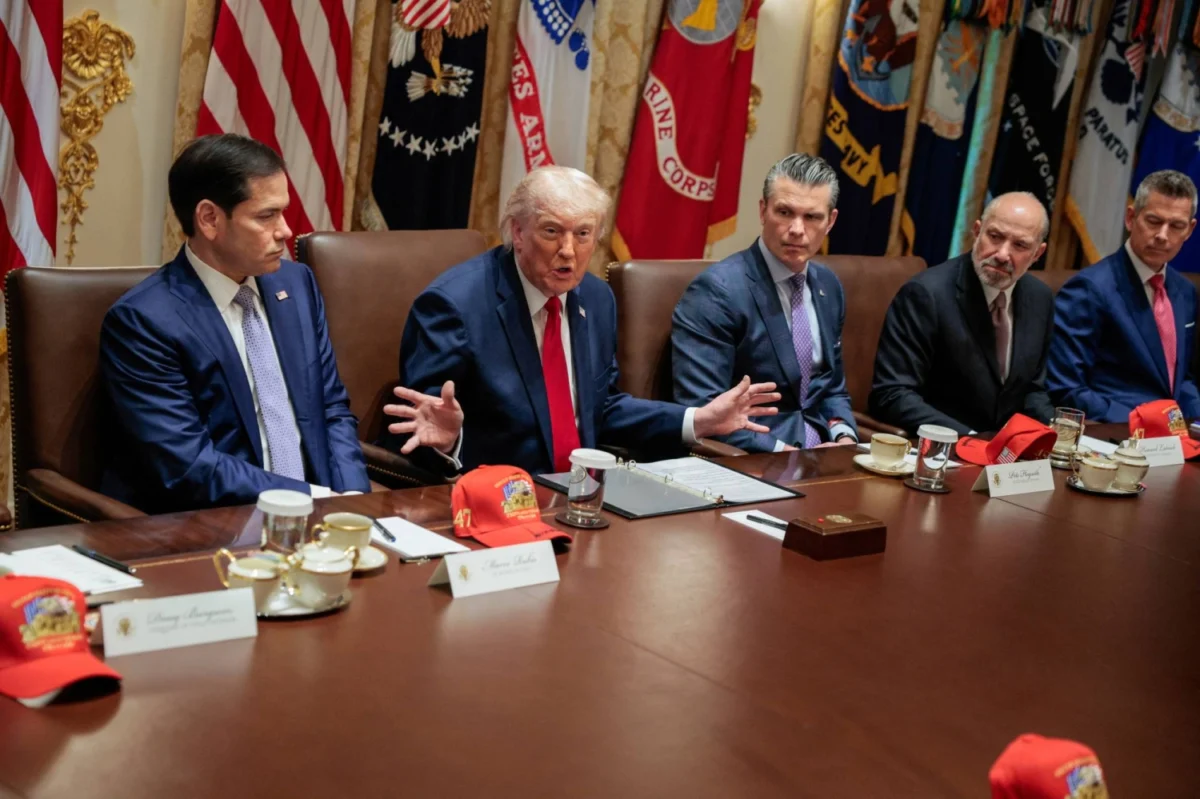
The atmosphere inside the White House on Wednesday was one of guarded optimism. President Trump, flanked by Secretary of State Marco Rubio, Defense Secretary Pete Hegseth, Commerce Secretary Howard Lutnick, and Transport Secretary Sean Duffy, held a cabinet meeting to deliberate on the merits of the agreement.

The Washington Perspective
Administration officials are reportedly divided. The more hawkish elements of the Cabinet, led by the defense and intelligence sectors, remain skeptical of Iranian intentions. They argue that any reprieve in pressure on Iran must be met with verifiable, iron-clad concessions regarding their nuclear enrichment capabilities. However, those aligned with the commerce and transport sectors emphasize the necessity of the deal to stabilize the global economy and protect American energy interests.
The Tehran Perspective
In Tehran, the response has been tempered by internal political pressures. Iranian state media, while acknowledging that negotiations are ongoing, has cautioned that the United States must prove it is acting in good faith. Hardline factions within the Iranian government remain wary of the U.S. administration, fearing that the ceasefire is merely a tactic to buy time for further diplomatic isolation or economic sabotage.
Implications for Global Security
Should the agreement hold, the implications would ripple far beyond the Persian Gulf.
1. Global Economic Stabilization
The immediate effect of a sustained ceasefire would be a stabilization of energy prices. For the U.S. economy, already grappling with fluctuating inflation, the certainty provided by open shipping lanes would be a significant boon.
2. A Pivot to Diplomacy
If the two sides successfully navigate the 60-day extension, it sets the stage for a broader "Grand Bargain." Negotiators have indicated that the next phase of talks would move beyond maritime security to address long-standing grievances, including regional proxy conflicts and the nuclear dossier.
3. Regional Alliances
The agreement forces a recalibration among regional players. Saudi Arabia, the United Arab Emirates, and Israel—all of whom have a vested interest in the outcome of U.S.-Iran relations—are watching the developments closely. A successful U.S.-Iran rapprochement would necessitate a shift in their own strategic planning, potentially reducing their reliance on direct military confrontation and encouraging more regional dialogue.
The Path Forward: A Question of Trust
The success of this initiative rests on a foundation of "distrust, but verify." Both Washington and Tehran have deep-seated histories of broken promises and failed treaties. For this 60-day window to evolve into a lasting peace, both sides must demonstrate a level of transparency that has been absent for years.
The next few weeks will be critical. Intelligence reports suggest that both nations are maintaining high alert levels, prepared to return to the status quo of open conflict should the current negotiations collapse. The presence of Secretary of State Rubio and Defense Secretary Hegseth at the recent Cabinet meeting underscores the dual-track approach of the current administration: maintaining the "maximum pressure" posture while simultaneously keeping the door to diplomacy slightly ajar.
As the world watches, the question remains: Can the U.S. and Iran overcome the momentum of conflict, or is this merely a tactical pause before the next cycle of escalation?
For now, the ships continue to pass through the Strait of Hormuz, and for a world weary of conflict, that simple fact is a victory in its own right. However, the true test lies in the days ahead—in the quiet rooms of diplomacy where the fine print of this agreement will determine whether the Middle East remains on the brink of war or takes its first hesitant steps toward a fragile, yet necessary, peace.
Quality Journalism Matters
In a time of both misinformation and an overwhelming deluge of data, the pursuit of truth is more essential than ever. Independent reporting is the bedrock of a functioning society. By supporting organizations that prioritize the facts, you contribute to a more informed public discourse. Subscribe today to ensure that the stories that shape our world are told with the accuracy, integrity, and depth they deserve.












No comments yet. Be the first to join the conversation!