

By Matthew Wilson | Tech Correspondent
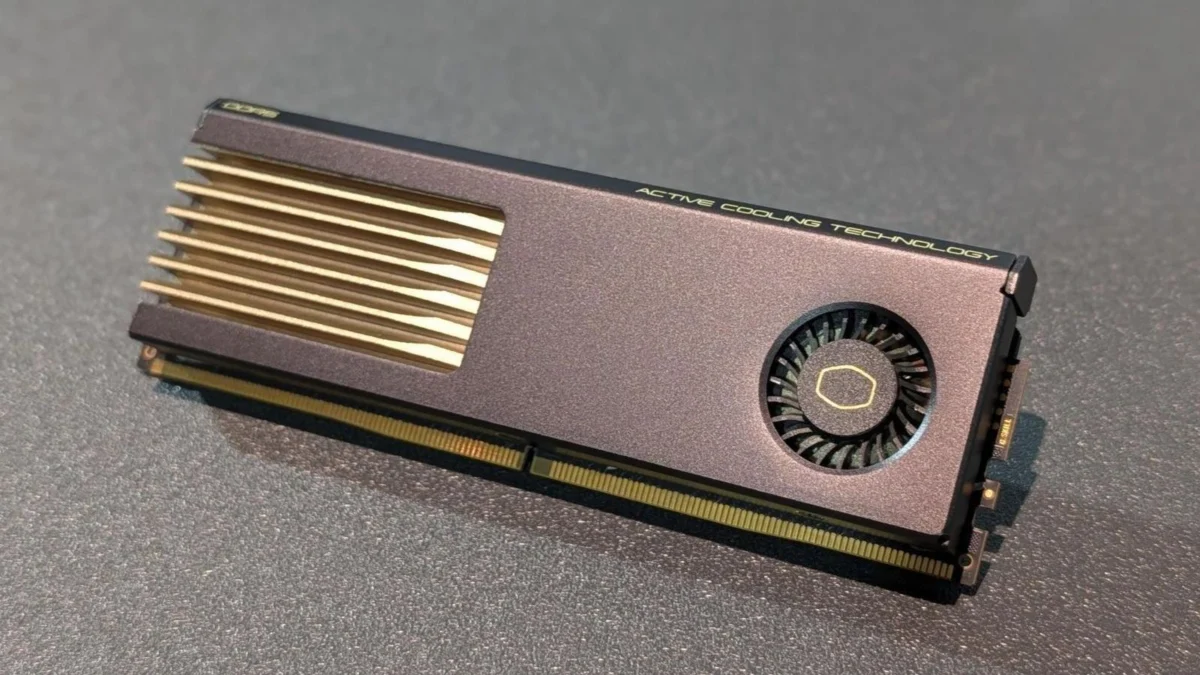
As the hardware industry converges on Taipei for Computex, the annual global showcase for innovation, the landscape of high-performance computing is shifting. While CPU and GPU manufacturers often dominate the headlines, the unsung heroes of system stability—system memory—are receiving a much-needed thermal overhaul. In a landmark collaboration, cooling giant Cooler Master and memory specialist G.Skill have unveiled "MasterDimm," an actively cooled DDR5 memory solution that promises to shatter existing thermal barriers and push overclocking limits to unprecedented heights.
The Core Innovation: Moving Beyond Passive Heatsinks
For decades, the standard for RAM cooling has been the passive heatsink. These aluminum or copper heat spreaders rely on ambient case airflow to dissipate the heat generated by DRAM modules. However, as DDR5 technology has matured, pushing frequencies well beyond the 8000MT/s mark, the heat generated by Power Management Integrated Circuits (PMICs) and memory chips has become a significant bottleneck.
The MasterDimm AC DDR5 memory system fundamentally alters this paradigm. By integrating a dedicated, blower-style fan directly onto the DIMM module, Cooler Master and G.Skill have transitioned memory cooling from a "passive hope" to an "active necessity." The modules feature a slightly thicker, high-density heatsink engineered to facilitate rapid heat transfer, which is then immediately exhausted by the onboard blower.
This design is not merely aesthetic; it is a functional response to the increased power draw required to maintain stability at extreme DDR5 voltages. By mitigating the thermal soak that typically occurs during prolonged heavy workloads or high-frequency benchmarks, MasterDimm ensures that the memory maintains peak performance without throttling.
Chronology of the Development
The path to the MasterDimm began nearly eighteen months ago as both companies sought solutions to the "thermal wall" encountered by extreme overclockers using sub-ambient cooling methods.
- Q1 2025: Initial discussions between Cooler Master’s R&D department and G.Skill’s engineering team regarding the limitations of passive thermal dissipation for DDR5-9000+ modules.
- Q3 2025: Prototype development begins. The challenge was maintaining standard DIMM height clearances while incorporating a low-profile, high-RPM blower fan.
- Q1 2026: Finalization of the thermal architecture. Cooler Master’s proprietary "Active Flow" technology is successfully integrated into G.Skill’s PCB design.
- May 2026 (Present): Official announcement ahead of Computex, showcasing the final product and confirming support for both AMD EXPO and Intel XMP 3.0 profiles.
Supporting Data: The Thermal Advantage
The most compelling aspect of the MasterDimm collaboration is the empirical data provided by the testing labs. According to internal reports from Cooler Master, the active cooler is capable of reducing memory temperatures by up to 15°C under sustained load compared to standard passive heatsinks.
Performance Breakdown by Platform
The MasterDimm kits are launching with two distinct profiles, optimized for the architecture of the two major desktop CPU manufacturers:
- AMD Systems (EXPO Optimized): The modules are tuned to reach speeds of up to DDR5-6000 at CL26. While 6000MHz is a "sweet spot" for many Ryzen processors, the tight CL26 latency is where the real performance gains are realized, providing significantly improved 1% low frame rates in gaming scenarios.
- Intel Systems (XMP Optimized): Leveraging the higher memory controller capabilities of recent Intel platforms, the MasterDimm modules can push speeds up to DDR5-8400. This frequency range was previously the domain of extreme enthusiasts using custom water-cooling loops, but MasterDimm brings it to a consumer-ready, air-cooled format.
The combination of lower temperatures and higher frequency headroom is a symbiotic relationship. When DRAM runs cooler, it requires less voltage to maintain stability at high clocks. This, in turn, generates less heat, creating a "virtuous cycle" that allows users to push their kits further than ever before.
Official Responses and Industry Context
The collaboration represents a rare "best-of-both-worlds" scenario. G.Skill is widely regarded as the industry leader in binning and high-frequency memory manufacturing, while Cooler Master has been the premier name in thermal solutions for over three decades.
In a pre-Computex briefing, a spokesperson for the project noted: "The industry has hit a point where the memory is often the most thermally sensitive component in the PC. By integrating Cooler Master’s fan technology directly onto the G.Skill PCB, we are essentially creating a dedicated thermal environment for the RAM, independent of the case airflow."
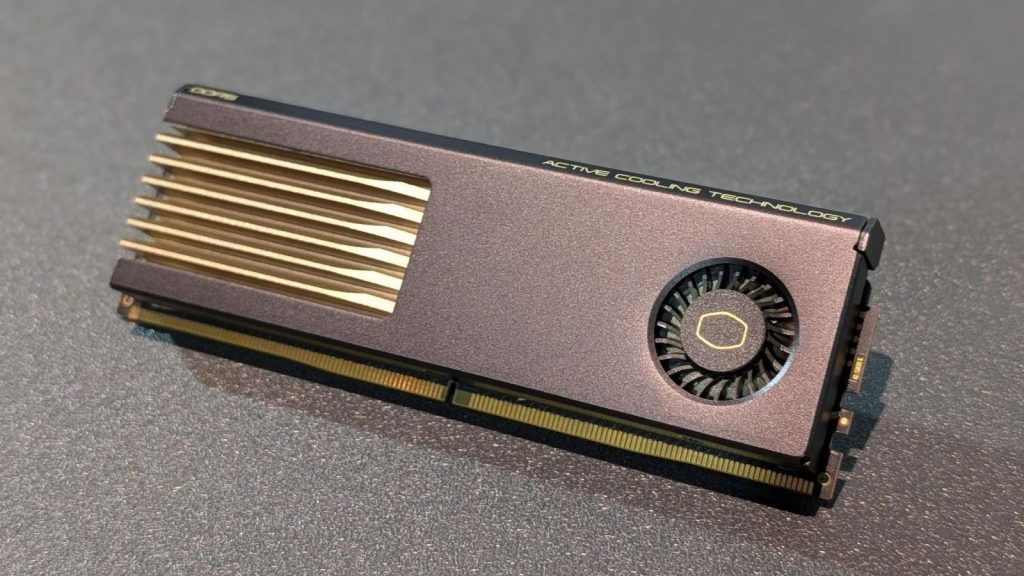
Competitors in the memory space have largely relied on thicker aesthetic heatsinks or RGB-integrated diffusers, but none have aggressively pursued active fan cooling on the DIMM itself since the early DDR3 era. The return to active cooling signals a broader industry trend toward prioritizing component longevity and consistent performance over pure cosmetic design.
Implications for the PC Enthusiast Market
The introduction of MasterDimm has significant implications for several segments of the market:
1. The Pro-Overclocker
For the extreme enthusiast, the ability to achieve DDR5-8400+ on air cooling is a game-changer. It removes the necessity of installing bulky, often obstructive custom water blocks on RAM, which can interfere with CPU cooler clearance.
2. The Content Creator
Workstations that perform long-duration tasks—such as 8K video rendering, 3D simulation, or large-scale data compilation—often see RAM temps spike, leading to system crashes or data corruption. The 15°C thermal buffer provided by MasterDimm acts as a "safety net," ensuring that 24/7 workloads remain rock-solid.
3. The Future of System Design
If MasterDimm proves successful, we may see a shift in motherboard design. Future motherboard layouts could potentially feature additional fan headers located directly adjacent to the DIMM slots, specifically powered to drive these types of active cooling modules.
Addressing Potential Challenges: Noise and Clearance
While the benefits are clear, the introduction of moving parts into a PC case brings valid concerns regarding noise levels and physical clearance. Cooler Master has addressed these by utilizing high-static-pressure, low-noise bearings in the blower fans. Given the small diameter of these fans, they are designed to operate at frequencies that are easily masked by standard case fans, though enthusiasts will be waiting for independent noise-floor testing during the upcoming Computex demonstrations.
Regarding clearance, the modules are designed to be "tall-profile" but within the standard dimensions required by most high-end air coolers like the Noctua NH-D15 or Cooler Master’s own Hyper series. However, users of Small Form Factor (SFF) builds may need to exercise caution.
KitGuru’s Outlook: Why This Matters
As we look toward our hands-on sessions at Computex next week, the excitement surrounding MasterDimm is palpable. We have spent years watching G.Skill push the frequency ceiling, and we have spent decades watching Cooler Master refine the art of heat dissipation. Seeing these two entities merge their expertise at a time when DDR5 is becoming the standard for the next generation of computing is a highlight of the season.
The MasterDimm is not just a new product; it is a statement of intent. It suggests that the "passive era" of memory cooling is coming to a close. As memory density increases and frequencies climb toward the 10,000MHz barrier, thermal management will become the primary differentiator between reliable high-performance systems and those plagued by instability.
We look forward to putting these modules through their paces in the KitGuru test labs. We will be testing not just for maximum frequency, but for thermal consistency under real-world loads, comparing the MasterDimm directly against traditional high-end passive kits to determine if this active cooling solution is indeed the new gold standard for high-speed DDR5.
Stay tuned to KitGuru for our comprehensive, on-the-ground coverage from Computex, where we will bring you the latest benchmarks, thermal analysis, and interviews with the engineers behind this ambitious project. The future of memory is looking significantly cooler—and much faster.









No comments yet. Be the first to join the conversation!