

Christopher Nolan has long occupied a singular space in modern cinema—a filmmaker who commands the creative authority of a studio head and the artistic reverence of an auteur. With a track record that spans the cerebral puzzle-box of Inception, the grounded grit of The Dark Knight trilogy, and the historical gravity of Oppenheimer, Nolan’s name alone is enough to assemble the most formidable ensembles in Hollywood.
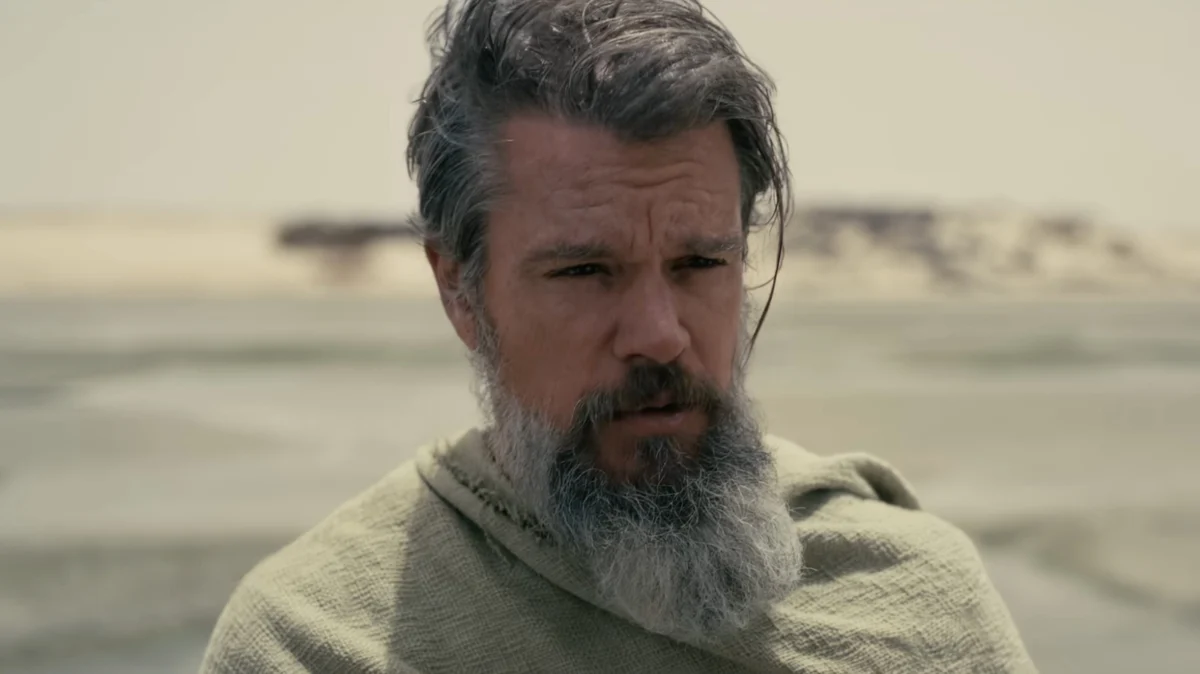
His latest undertaking, an ambitious adaptation of Homer’s foundational Greek epic, The Odyssey, has once again turned heads. Despite a brief, fleeting cycle of manufactured online skepticism regarding casting choices, the production stands as a testament to Nolan’s unparalleled ability to weave sprawling, complex narratives into accessible, high-stakes blockbusters. As the film nears its July 17, 2026, release date, its stars, including Nolan veterans Matt Damon and Anne Hathaway, are pulling back the curtain on why this particular project feels like a spiritual successor to their previous work on Oppenheimer.
The Architect of Complexity: A Proven Track Record
To understand the anticipation surrounding The Odyssey, one must first acknowledge the symbiotic relationship between Nolan and his performers. Actors do not simply sign on for a Nolan film; they commit to a rigorous process of intellectual and emotional discovery.
For Matt Damon, who reunites with the director following his roles in Interstellar and Oppenheimer, the allure lies in the structural integrity of the script. Nolan is famous for his non-linear storytelling, but his true strength, according to his collaborators, is the "connective tissue"—the ability to take seemingly disparate, minor plot points and weave them into a unified, shattering climax.
In a recent exclusive interview, Damon reflected on the experience of reading the screenplay for The Odyssey, noting that the sense of discovery mirrored his time on the set of Oppenheimer. "There’s so many storylines and so many things that [Nolan] ties together," Damon observed. "It’s a beautiful piece of writing. And again, you reread it and you go, ‘Oh my gosh, that pays off here.’ And it’s a little moment, and I missed it because it’s in the stage direction. But he ties everything back together."
Chronology of a Masterpiece: From Particle Physics to Ancient Seas
The journey to The Odyssey did not happen in a vacuum. It is the culmination of a decade-long evolution in Nolan’s career where he transitioned from high-concept sci-fi to historical portraiture.
![Matt Damon Explains What Christopher Nolan's The Odyssey Has In Common With Oppenheimer [Exclusive]](https://www.slashfilm.com/img/gallery/matt-damon-explains-what-christopher-nolans-the-odyssey-has-in-common-with-oppenheimer-exclusive/l-intro-1783360096.jpg)
- 2014: Interstellar introduces audiences to the emotional core of Nolan’s work, featuring Matt Damon in a pivotal, morally gray role that challenged the audience’s perception of heroism.
- 2023: Oppenheimer serves as the watershed moment. By adapting the dense, Pulitzer Prize-winning biography American Prometheus, Nolan proved he could handle massive source material without sacrificing the intimate, human stakes of his subjects.
- 2024–2025: Pre-production and filming for The Odyssey take place, characterized by a shroud of secrecy and intense preparation from the cast.
- July 17, 2026: The scheduled wide release of The Odyssey, marking the director’s first foray into classical mythology.
Damon emphasizes that the transition from Oppenheimer to The Odyssey felt natural because of the source material’s density. "I felt that way with Oppenheimer too," Damon added. "Which was this very dense book, and the adaptation I felt like really got the essence of the book."
Supporting Data: Why the Script Matters
In the landscape of modern blockbusters, where spectacle often supersedes substance, Nolan’s scripts act as the anchor. While CGI can dazzle, it is the script that sustains interest over a two-to-three-hour runtime.
The "data" of Nolan’s success is found in his consistent critical and commercial reception. His films are rarely "one-and-done" experiences; they are designed to be revisited, dissected, and debated. By choosing The Odyssey—a story of homecoming, hubris, and the gods—Nolan is playing on the ultimate "spoiler-heavy" source material, yet his cast insists that the director brings a unique, modern psychological depth to the ancient text.
Anne Hathaway, who plays Penelope, is no stranger to the intensity of a Nolan production, having starred in The Dark Knight Rises and Interstellar. Her perspective on the script highlights the intellectual engagement required of the cast. For Hathaway, the screenplay wasn’t just a roadmap for performance; it was a source of inspiration.
"Because I was familiar with The Odyssey, I wasn’t expecting to find so much new depth to it," Hathaway shared. "But it was [Nolan’s] interpretation of it. I kind of wound up almost getting high off the words. The more and more we got into filming, I would love this script, and I wasn’t just rereading it to learn my lines, I was reading it for the experience of having something of such richness to get to play with."
Official Perspectives: The "New Depth" of Ancient Tales
The consensus among the cast is that Nolan has managed to strip away the "stuffy" nature often associated with Greek epics, replacing it with the visceral, immediate stakes of a thriller.
![Matt Damon Explains What Christopher Nolan's The Odyssey Has In Common With Oppenheimer [Exclusive]](https://www.slashfilm.com/img/gallery/matt-damon-explains-what-christopher-nolans-the-odyssey-has-in-common-with-oppenheimer-exclusive/intro-1783360096.jpg)
Critics have often questioned whether a story as ubiquitously known as Odysseus’ journey can offer surprises. However, the production team maintains that Nolan’s focus on the humanity of the characters—the longing for home, the burden of leadership, and the isolation of power—aligns perfectly with the themes explored in his previous biopics and dramas.
For Hathaway, the role of Penelope is particularly significant. Rather than treating her as a passive figure waiting for her husband’s return, the screenplay appears to emphasize her own agency and intellectual struggle. This "new depth" is what elevates the film from a standard adaptation to a potential career-defining work for those involved.
Implications for the Future of Filmmaking
The success of The Odyssey could have profound implications for the industry. If Nolan succeeds in turning a foundational Greek epic into a cultural phenomenon on the scale of Oppenheimer, it signals a shift back toward "event cinema" that values high-brow literary adaptation over existing comic book IP.
- The "Nolan Effect": Studios may become more willing to greenlight big-budget adaptations of classic literature if they are paired with directors who possess a clear, idiosyncratic vision.
- Narrative Density: The cast’s comments suggest that audiences are hungry for "dense" films—stories that do not hold the viewer’s hand, but instead invite them to participate in the narrative puzzle.
- The A-List Standard: The fact that actors of Damon’s and Hathaway’s caliber continue to seek out Nolan’s projects suggests that for top-tier talent, the "prestige" of a project is no longer tied to genre, but to the director’s ability to provide a profound, challenging, and rewarding creative experience.
Conclusion: A Homecoming Awaits
As we look toward the summer of 2026, the buzz surrounding The Odyssey continues to grow, fueled by the genuine excitement of those who have seen the script. It is rare for a production of this size to maintain such high morale among its cast, but when the guiding force is a director who treats every frame of film with the same reverence as the source material itself, the result is almost always something special.
For Matt Damon, the return to a Nolan set is a return to a specific type of filmmaking rigor—one that demands the best from everyone involved. Whether The Odyssey will reach the same cultural zenith as Oppenheimer remains to be seen, but if the testimony of its leads is any indication, the journey is going to be well worth the wait. When homework feels like a privilege rather than a chore, you know you are working with one of the greats. And in the world of Christopher Nolan, the audience is always the final collaborator, invited to witness a master at work.










