

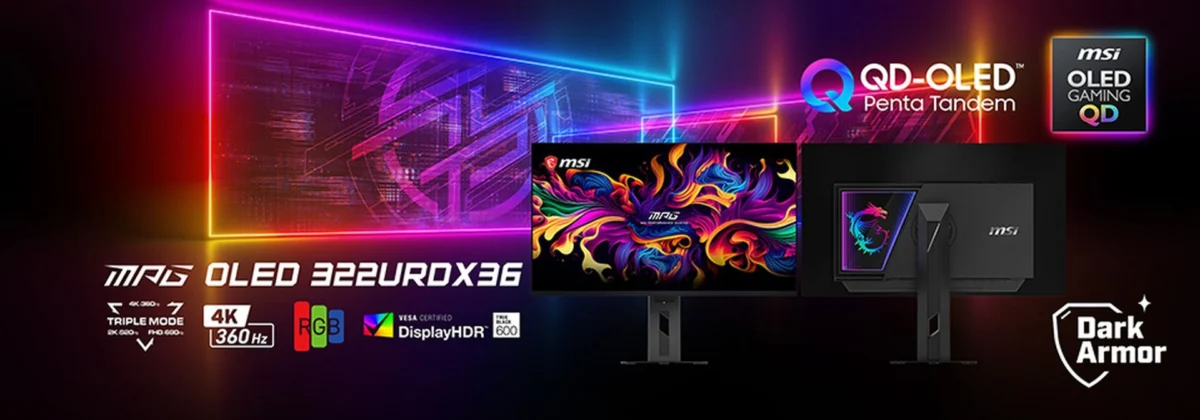
The gaming monitor industry is currently undergoing a paradigm shift. For years, the gold standard for high-end displays was defined by a static resolution and refresh rate. Then came the "Dual-Mode" revolution, which allowed users to toggle between high-fidelity 4K and high-refresh-rate 1080p modes. Now, MSI is pushing the boundaries of display technology even further with the announcement of the MPG OLED 322URDX36. This groundbreaking 31.5-inch monitor is the first to introduce "Triple-Mode" functionality, effectively providing three distinct visual profiles in one device.
Core Specifications and the Triple-Mode Breakthrough
At the heart of the MSI MPG OLED 322URDX36 is a sophisticated ability to adapt to the user’s immediate needs, whether they are playing a cinematic AAA title or a competitive, high-octane esports shooter. The Triple-Mode architecture offers the following configurations:
- Nativ 4K UHD (3,840 × 2,160) at 360 Hz: Designed for breathtaking visual fidelity in slow-paced, atmospheric, or graphical-heavy titles.
- 2K (WQHD) at 520 Hz: The "middle ground," providing a significant jump in fluidity for fast-paced gaming without sacrificing as much sharpness as the FHD mode.
- FHD (1,920 × 1,080) at 680 Hz: The ultimate setting for professional-grade competitive gaming, where every millisecond of latency reduction is critical.
This unprecedented flexibility is made possible by the latest generation of Samsung’s QD-OLED panel technology. By allowing the monitor to reconfigure its internal processing to handle these drastically different refresh rates and pixel counts, MSI is catering to the "hybrid gamer"—someone who demands the best of both the cinematic world and the competitive arena.
The Technological Foundation: Samsung’s 5th Generation QD-OLED
The MSI MPG OLED 322URDX36 does not merely rely on software flexibility; it is built upon the cutting-edge 5th Generation QD-OLED panel from Samsung. This panel represents a significant leap forward in display science, addressing several of the historic limitations associated with earlier OLED technologies.
The RGB-Stripe Advantage
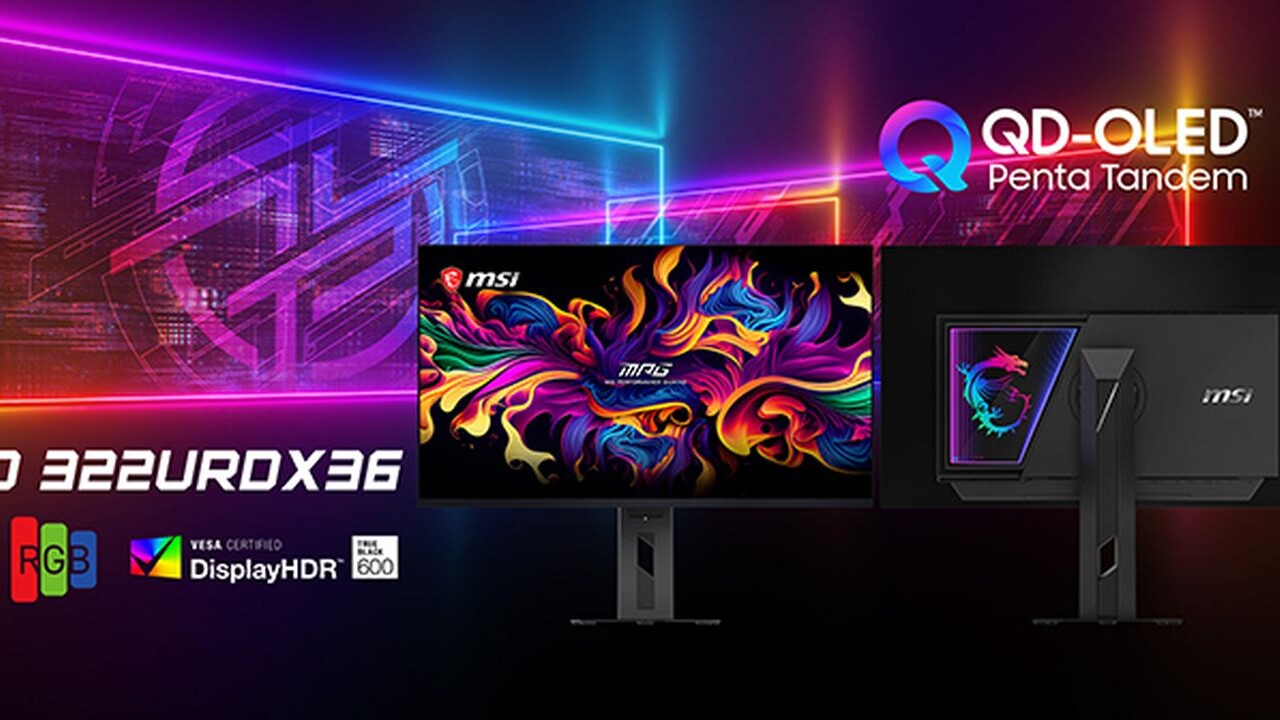
One of the most criticized aspects of early QD-OLED monitors was the subpixel layout, which often resulted in "color fringing" around text and fine lines. The 5th Generation panel features a refined RGB-Stripe pixel layout. By organizing subpixels in a linear, traditional fashion, the panel ensures that text rendering is crisp and artifact-free, making the monitor not only an elite gaming device but also a highly capable productivity tool for designers and office professionals.
QuantumBlack: Enhancing Contrast and Durability
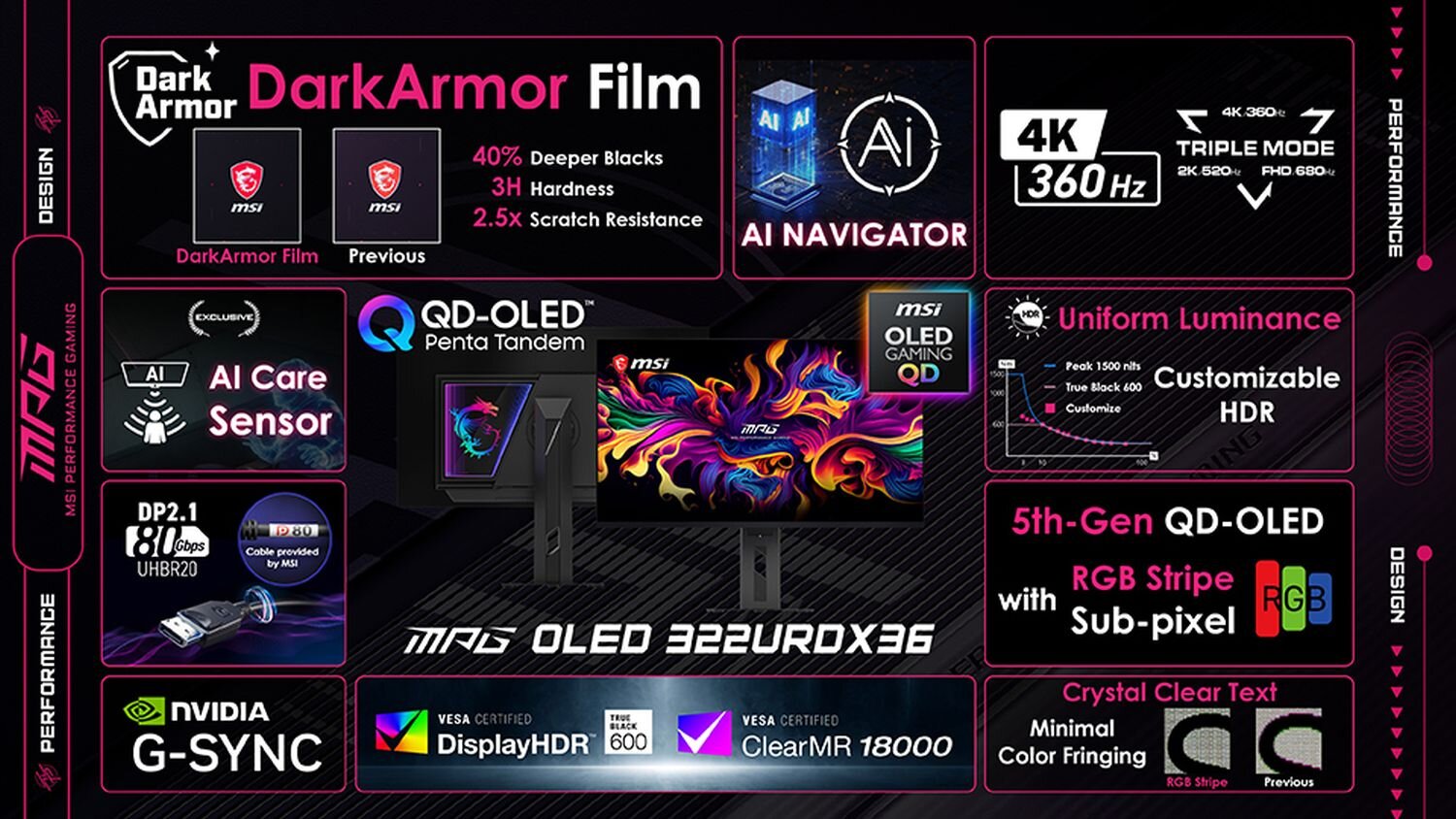
MSI has integrated the new QuantumBlack film (marketed by MSI as "DarkArmor") into the panel. This specialized optical coating serves two primary purposes:
- Reflective Mitigation: It significantly reduces glare and ambient light reflections, which is a common issue in OLED displays used in brightly lit rooms.
- Black Level Integrity: It enhances the depth of black levels, ensuring that the infinite contrast ratio of the OLED panel is preserved even under challenging lighting conditions.
This technology has already been validated in other high-end monitors, where it was shown to virtually eliminate the "purple tint" that often plagues OLED panels when exposed to ambient light.
Chronology of Display Development: From Dual to Triple
To understand why the Triple-Mode is such a significant advancement, we must look at the trajectory of the monitor market over the last three years.
- 2022-2023: The market was dominated by standard 4K/144Hz or 1440p/240Hz monitors. The limitations were rigid; if a gamer wanted to switch genres, they were stuck with the native capabilities of their hardware.
- Early 2024: The introduction of "Dual-Mode" technology allowed gamers to toggle between, for instance, 4K/240Hz and 1080p/480Hz. This was hailed as a breakthrough, allowing for a more versatile desktop setup.
- Late 2024 and Beyond: MSI’s announcement signals the transition toward "Adaptive Resolution/Refresh" profiles. By introducing a third, intermediate mode (the 2K/520Hz setting), manufacturers are acknowledging that the jump from 4K to 1080p is too steep for many gamers who still desire a sharp image.
Connectivity and Future-Proofing
High refresh rates at 4K resolution require massive bandwidth. To accommodate the 360 Hz throughput, MSI has equipped the MPG OLED 322URDX36 with DisplayPort 2.1, supporting the full 80 Gbit/s bandwidth (UHBR20 mode). This ensures that the monitor is future-proofed for the next generation of GPU architectures.
Additionally, the monitor includes a USB-C connection capable of 98W Power Delivery. This is a massive boon for users who switch between a high-end desktop and a laptop for work, as it allows for a "one-cable" solution for video, data, and power. While the full specifications sheet remains pending, industry insiders expect a comprehensive array of HDMI 2.1 and additional USB downstream ports to support the monitor’s "AI Care Sensor" and "Uniform Luminance" features.
Official Stances and Industry Implications
MSI has positioned this monitor as a flagship, emphasizing that while the technology is groundbreaking, it is also a commitment to the long-term health of the panel. The inclusion of an "AI Care Sensor" suggests that MSI is taking image retention and OLED burn-in mitigation seriously. By using AI to monitor static elements and adjust pixel brightness dynamically, MSI aims to maximize the lifespan of the Gen 5 panel.
However, a note of caution remains regarding the rollout. While the monitor will be showcased at the Computex trade show, the mass production of these specific 360Hz-capable panels is slated for the second half of 2026. This implies that the MSI MPG OLED 322URDX36 will likely have a long lead time before it hits store shelves in high volume.
The Broader Implications for the Gaming Ecosystem
The introduction of the Triple-Mode monitor suggests that the "Monitor Wars" are no longer just about who can provide the highest pixel count. Instead, the focus has shifted to versatility.
- Economic Efficiency: By buying one Triple-Mode monitor, a gamer effectively replaces the need for a secondary competitive display. This reduces the desk footprint and the total cost of ownership for a high-end setup.
- Standardization of DisplayPort 2.1: The integration of full-bandwidth DP 2.1 in this monitor puts pressure on GPU manufacturers to accelerate the adoption of these ports in mid-range cards, not just flagship ones.
- The End of the "Refresh Rate vs. Resolution" Compromise: For years, gamers had to choose between clarity and speed. The MPG OLED 322URDX36 suggests a future where the hardware is smart enough to remove the need for such compromises.
In conclusion, the MSI MPG OLED 322URDX36 is a harbinger of the next generation of visual technology. By marrying the latest in QD-OLED Gen 5 panel innovations with an aggressive, flexible triple-mode refresh rate system, MSI is setting a new standard for what a gaming monitor can and should be. While we await pricing and a firm launch date, the technological foundation laid by this display makes it a clear contender for the most significant monitor development of the year.










No comments yet. Be the first to join the conversation!