

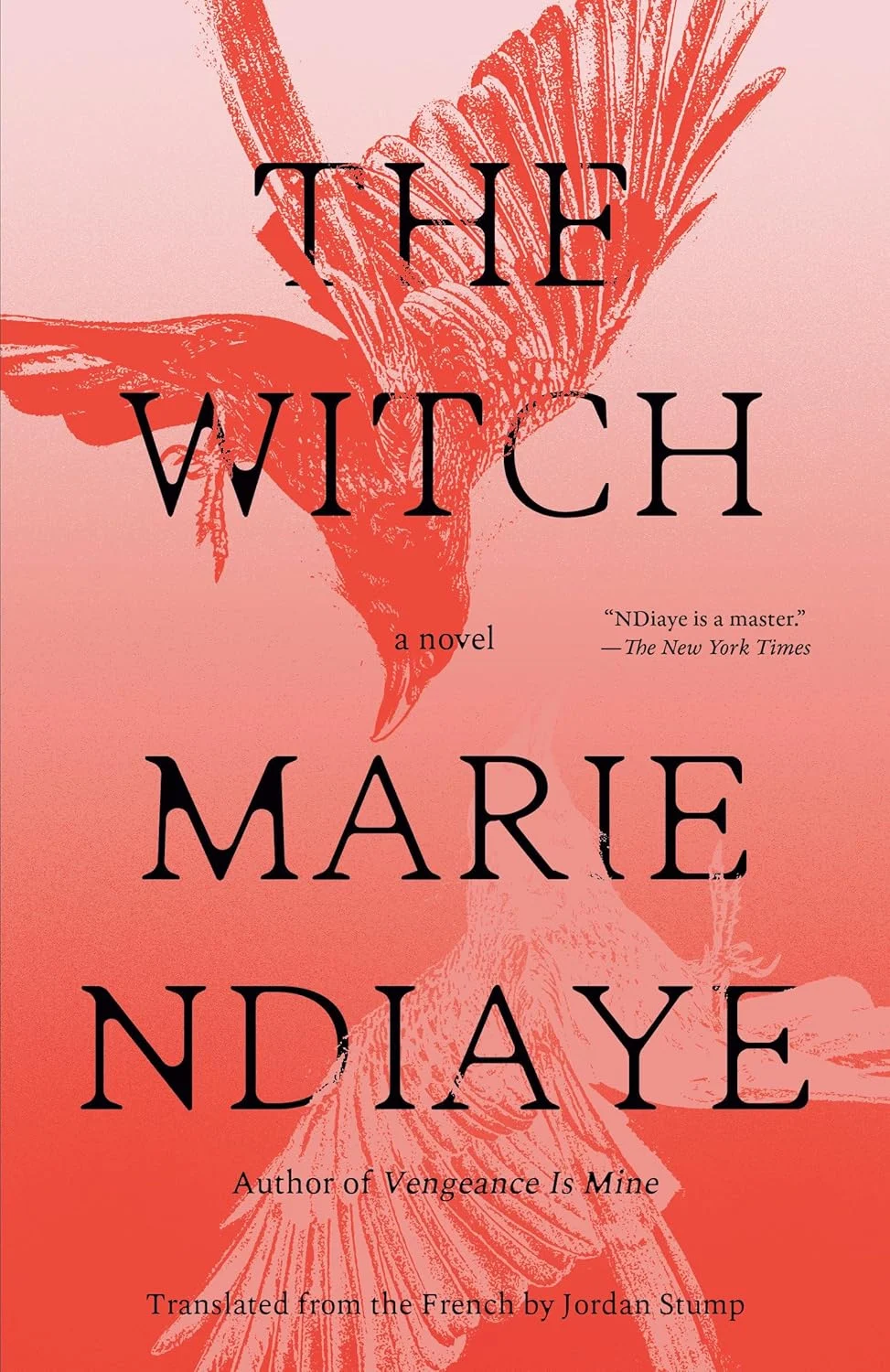
Reading The Witch by Marie NDiaye, rendered into English by translator Jordan Stump, is an exercise in disorientation. It is akin to the experience of being conscious within a fever dream—a sequence of events that feel jarringly logical in the moment, yet dissolve into incoherence the second one attempts to grasp their significance. Originally published in French in 1996, the novel has resurfaced with renewed critical urgency, earning a spot on the shortlist for the 2026 International Booker Prize. However, as the literary world reappraises this surrealist domestic tragedy, it invites a broader conversation about the nature of inherited trauma, the limitations of agency, and the persistent, often suffocating, intersections of motherhood and the supernatural.
The Narrative Architecture: A Chronicle of Domestic Unraveling
At its core, The Witch centers on Lucie, a protagonist whose life is defined by a profound, pervasive unhappiness. Lucie is a woman caught in the transition between generations, tasked with the involuntary inheritance of witchcraft—a matriarchal burden passed down through her maternal line. While the precise mechanics of this occult craft remain obscured from the reader, we learn that Lucie is tasked with initiating her twelve-year-old twins, Lise and Maud, into these powers, all while shielding the practice from her husband, Pierrot.
A Chronology of Disillusionment
The narrative trajectory of the novel is one of cascading failures. The timeline begins in the claustrophobic confines of a suburban home, where Lucie’s attempts at instruction are observed by her nosy neighbor, Isabelle. Isabelle, a woman who weaponizes her own occult curiosity to obsessively track the future of her "good-for-nothing" son, Steve, serves as a dark mirror to Lucie’s own lack of direction.
The stability of this domestic arrangement shatters when Pierrot—described by NDiaye as a "talented and permanently worn-out sales agent"—flees the family home. He does not merely leave; he absconds with the family’s financial inheritance to build a separate, sanitized life elsewhere. This act of betrayal serves as the catalyst for the remainder of the plot. As Lucie embarks on a desperate, labyrinthine quest to reclaim her financial stability, her daughters, Lise and Maud, discover their own capacity for shapeshifting. They choose not to use these powers for grand designs, but as a mechanism for escape, effectively abandoning their mother.
Lucie’s subsequent journey takes her from the isolation of an empty, haunted house to the absurd halls of "Isabelle O.’s Women’s University of Spiritual Health," where she eventually finds herself teaching. It is here that the facade of the "witch" completely collapses. Lucie, having spent her life feeling like a mediocre practitioner of an ancestral art, realizes she is merely a fraud.
Supporting Data: The Paradox of the "Weak" Witch
Lucie’s self-assessment is central to the novel’s thematic weight. She characterizes her magical talent as "slight," claiming it was "apparently just strong enough to keep the gift going, to pass it along" (p. 6). She views her abilities as laughable—tools that allow her to perceive only the most trivial, insignificant details of the world.
Yet, this internal narrative is paradoxical. It is precisely these "insignificant" perceptions that allow her to track her husband’s movements across the country. NDiaye challenges the reader to consider the nature of power: Is Lucie truly weak, or is her power so deeply integrated into her mundane, miserable reality that she fails to recognize its potential?
In the maternal lineage NDiaye constructs, witchcraft is not a source of pride or empowerment. Lucie’s own mother was a powerful figure who resented the gift and grudgingly passed it down like a biological contagion. When contrasted with the indifference of her daughters, who view the occult as "lame," the power dynamic becomes clear: witchcraft is a gendered burden, a weight that one either carries until death or discards through total rebellion.
Thematic Implications: Motherhood, Agency, and the Occult
The novel posits a difficult question: What constitutes freedom for a woman in a patriarchal framework? Throughout the text, NDiaye juxtaposes various women against one another, forming a spectrum of domestic entrapment.
- The Traditionalists: Lucie and her mother-in-law, "Mama," are characters who derive their entire sense of identity from their relationships with others. When they are abandoned or left behind, they have nothing. Their "witchcraft" or their domestic duties offer no refuge from their emotional ruin.
- The Rebels: Conversely, characters like Isabelle or the daughters, Lise and Maud, exert agency through departure. They leave their husbands, their children, and their pasts behind. They choose to exit the domestic sphere entirely.
The implication is stark: in NDiaye’s world, freedom is synonymous with abandonment. Those who remain—the mothers who define themselves through their children or spouses—are destined to drown in their own unhappiness. The "witch" becomes a metaphor for the woman who exists outside of the male gaze but is still fundamentally defined by the constraints of her heritage.
A Literary Comparison
When viewed alongside contemporary works like Han Kang’s The Vegetarian or Mieko Kawakami’s All the Lovers in the Night, The Witch occupies a similar niche of "existential malaise." These novels feature protagonists who are intentionally detached and distant, moving through their lives with a sense of fading relevance. However, where Kang and Kawakami utilize intense introspection to bridge the gap between the character and the reader, NDiaye remains committed to the dream-like, detached narrative style. The result is a novel that is technically brilliant but emotionally alienating.
Critical Reception and Interpretive Challenges
The critical consensus surrounding The Witch remains divided. Some critics point to the "sharpness" of the prose as evidence of NDiaye’s mastery of the psychological thriller genre. Others, however, argue that the novel’s lack of character development makes it difficult to empathize with Lucie. She is a woman who, throughout the entirety of her narrative, refuses to grow; she remains a victim of her circumstances until she eventually vanishes into the background of her own story.
The "well-performed scam" that Lucie eventually identifies as her life’s work—the idea that she is a "better professional fake than a real witch"—serves as a devastating indictment of her existence. When she remarks, "I began to doubt that I’d ever possessed any gift other than fabrication" (p. 116), she is acknowledging the ultimate failure of her inherited identity.
Conclusion: The Void of Interpretation
The Witch is not a novel designed to provide closure. It leaves the reader with a series of unresolved "loose strings" that resemble the remnants of a nightmare. It is a work that demands much of the reader while offering very little in the way of traditional satisfaction.
As the 2026 International Booker Prize jury considers the work, they are effectively evaluating a book that intentionally refuses to be liked. It is a portrait of mediocrity so total that it becomes its own form of horror. Whether this makes the novel a masterpiece of existential dread or a frustrating exercise in nihilism depends entirely on the reader’s own capacity to sit with a character who—like the magic she supposedly possesses—fades into oblivion the moment you try to look at her too closely.
Ultimately, NDiaye’s work stands as a haunting reminder that in a society where women are often labeled "witches" for the simple act of existing outside of convention, the most terrifying fate is not being a witch at all—but being a person who has never truly existed in the eyes of those they love. Stay open, expect nothing, and prepare to be haunted by the void of Lucie’s reality.









No comments yet. Be the first to join the conversation!