In his acclaimed bi-weekly series for Reactor Magazine, critic Alan Brown frequently navigates the rugged terrain of classic science fiction and fantasy. His focus is often directed toward the "alarums and excursions" of the genre—the soldiers, spacers, and engineers who populate stories defined by intense conflict and grand exploration. Recently, Brown turned his analytical lens toward a curious intersection of media: the classic movie tie-in. Prompted by his own recent experience with Michael Crichton’s Jurassic Park, Brown sought to bridge the gap between his childhood cinematic memories and the original literary works that birthed them. Among his first targets is the foundational text of a global franchise: Pierre Boulle’s 1963 novel, Planet of the Apes.
Main Facts: A Tale of Two Media
The cinematic iteration of Planet of the Apes (1968) stands as a monumental pillar of science fiction history. For a generation of filmgoers, the image of Charlton Heston standing before the ruins of the Statue of Liberty remains the definitive image of genre cinema. However, the source material—La Planète des singes by French author Pierre Boulle—offers a strikingly different, albeit equally cynical, vision of humanity’s potential demise.
While the film is famous for its visceral, action-oriented portrayal of a primitive, voiceless human race struggling against a technologically advanced ape society, the novel operates with a more cerebral, satirical edge. Boulle’s protagonist, Ulysse Mérou, is a journalist, not an astronaut-warrior, and his journey to the star system of Betelgeuse is a scientific expedition rather than a survival mission. The fundamental discrepancy between the two works lies in the nature of the "twist." In the film, the revelation that the planet is, in fact, Earth is a sudden, gut-wrenching final act. In the book, the narrative structure is more complex, utilizing a framing device involving a message in a bottle, which allows for a more layered, recursive ending that questions the very nature of human progress.
Chronology: From the Page to the Multiplex
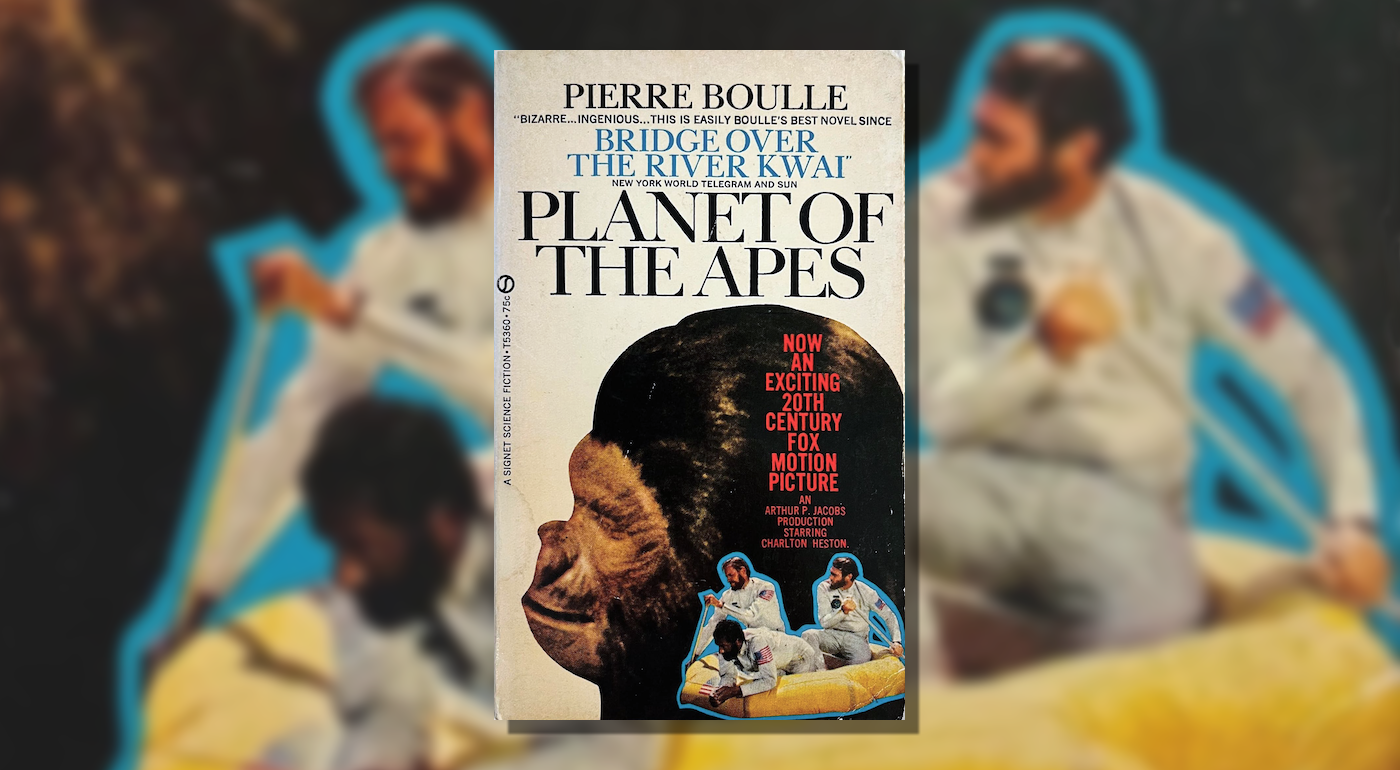
The lifecycle of the Planet of the Apes brand is a testament to the enduring power of high-concept science fiction. The journey began in 1963 with the Vanguard Press publication of Boulle’s novel, which followed the author’s success with The Bridge Over the River Kwai. By 1964, Signet had published the American paperback edition, which—in a move typical of the era—began utilizing stills from the 1968 film on its covers, effectively merging the two intellectual properties in the public consciousness.
The 1968 film’s massive commercial success triggered an immediate, if rapidly declining, series of sequels: Beneath the Planet of the Apes (1970), Escape from the Planet of the Apes (1971), Conquest of the Planet of the Apes (1972), and Battle for the Planet of the Apes (1973). This era also saw the expansion into television, with both live-action and animated series attempting to capitalize on the intellectual property’s cultural footprint.
After a dormant period, Tim Burton’s 2001 reimagining attempted to revive the franchise but failed to capture the zeitgeist. It was not until the 2011 reboot—beginning with Rise of the Planet of the Apes—that the franchise found a new, critically acclaimed voice. This modern sequence, continuing through Kingdom of the Planet of the Apes (2024), successfully modernized the socio-political themes of the original while utilizing cutting-edge motion-capture technology to ground the apes in a level of realism that was impossible in the 1960s.
Supporting Data: Examining the Author and the Environment
Pierre Boulle (1912–1994) was a man whose fiction was deeply colored by his lived experience. A secret agent for the Free French in Indochina during World War II, his time as a prisoner of war heavily influenced the themes of captivity, social hierarchy, and human cruelty found in his work. His literary style—often compared to the biting satire of Jonathan Swift—serves to expose the absurdity of human societal structures.
When comparing the film to the novel, the logistical differences are stark. The film’s "primitive" ape society was a direct result of the production’s budget constraints. In the novel, however, the apes possess a technological level comparable to mid-20th-century Earth. They have cars, televisions, and complex political bureaucracies. This shifts the thematic weight of the book: it is less about "monsters" and more about the existential dread of being replaced by a more successful, if equally flawed, species. The inclusion of brain surgery experiments in the book, where humans are dissected to understand the "racial memory" of their decline, adds a layer of dark, intellectual horror that the 1968 film largely bypassed in favor of a more adventurous, high-stakes tone.
Official Responses and Critical Reception
The critical response to the Planet of the Apes franchise has been varied, yet it has maintained a rare level of cultural ubiquity. Critics often note that while the original film is a triumph of pacing and visual storytelling, the novel is a triumph of philosophical inquiry.
Brown’s assessment highlights a common reaction among modern readers: the surprise at how much the film added to the lore, particularly the character of Taylor. In the book, Ulysse is a character who must adapt to a society that views him as a pet, a process that is as much about the loss of human dignity as it is about the physical survival. The film, conversely, turns the narrative into a character study of a misanthropic man forced to confront the wreckage of his own civilization.
Both the novel and the 1968 film have been cited as essential texts for understanding the "Golden Age" of science fiction. The consensus remains that while the movie is an aesthetic masterpiece, the book is an intellectual one. The franchise’s ability to sustain interest for over six decades is largely attributed to its malleability—the core concept of "the other" ruling over the self is a theme that remains relevant, regardless of whether the medium is a paperback, a film, or a digital game.
Implications: The Legacy of the "Ape"
The legacy of Planet of the Apes is a cautionary tale regarding the limitations of human civilization. The core implication of both the book and the films is the fragility of human achievement. In Boulle’s world, the decline is a result of stagnation; in the later film reboots, it is a result of scientific hubris.
By comparing these versions, one gains a deeper appreciation for how stories evolve through translation. The transition from the written word to the silver screen requires a compression of ideas and an expansion of visual spectacle. However, in the case of Planet of the Apes, the soul of the story remains intact. It asks us to look at the structures we build, the tools we use, and the species we dominate, and to wonder: if we were to lose our position at the top of the food chain, would we have earned the right to complain?
As Alan Brown concludes, the value of revisiting these classics lies in the dialogue they create between our past and our present. The Planet of the Apes is not merely a franchise of sequels and reboots; it is a mirrors-and-smoke show about what it means to be human. Whether you prefer the sharp, satirical ink of Pierre Boulle or the sweeping, cinematic vistas of the 1968 film, the story remains a mandatory reading for anyone interested in the boundaries of the human condition.
As we look toward the future of the franchise, the question is no longer whether we will see more apes on screen, but whether we will continue to find new ways to reflect our own societal failures within that framework. The original, and its many iterations, ensure that the conversation about humanity’s place in the universe will continue to endure—long after the curtain falls.