

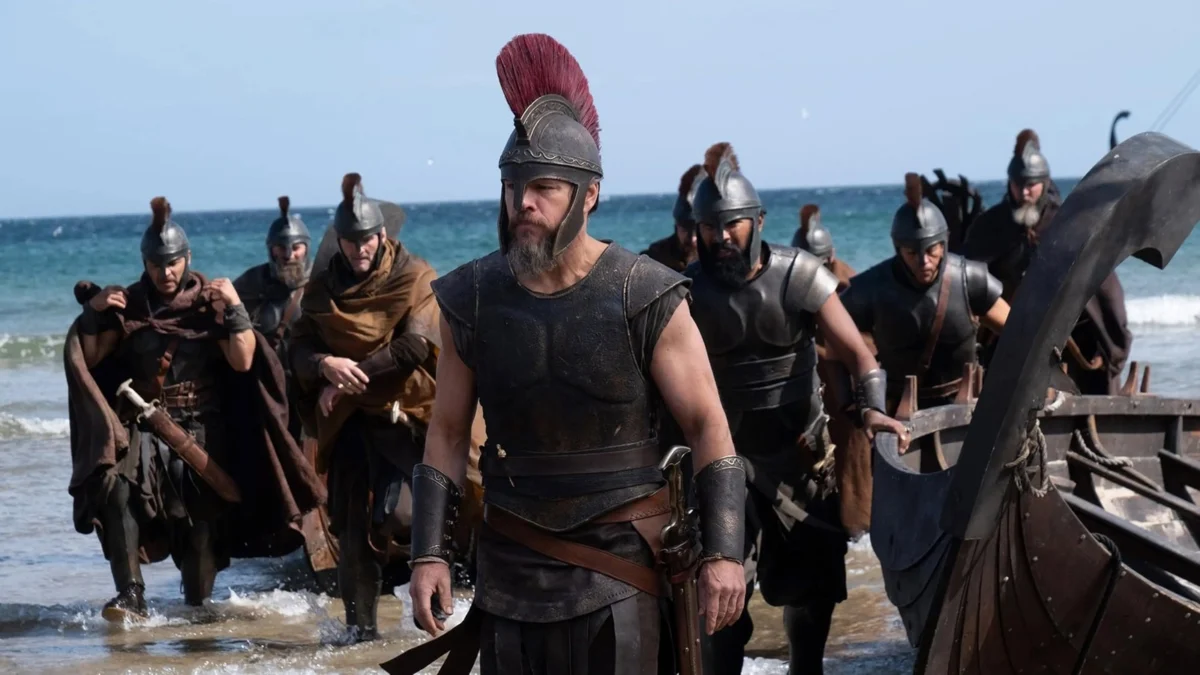
Christopher Nolan has long been obsessed with the mechanics of time, memory, and the grandiosity of the cinematic experience. With his 2026 epic, The Odyssey, the director has finally achieved a long-held ambition: a large-scale, IMAX-formatted reimagining of Homer’s foundational text that plays like a love letter to the stop-motion majesty of Ray Harryhausen. Yet, as the credits roll and the theater lights begin to dim, audiences are met with a jarring, distinctly modern soundscape that has become the latest flashpoint in the film’s complex reception.
The Sound of the Modern Epic: An Anachronistic Choice
The Odyssey is a film defined by its contradictions. On one hand, it is a faithful, visceral adaptation of the trials of Odysseus as he navigates the wrath of Poseidon and the allure of sirens. On the other, it is unmistakably a Nolan film, complete with the idiosyncratic narrative choices that have sparked debates across the internet. While the film has largely silenced critics who feared Nolan would strip away the supernatural—the gods remain, the creatures loom large, and the spectacle is undeniable—the end credits offer a stylistic curveball that has left some viewers bewildered.
As the screen fades to black, the orchestral swells of Ludwig Göransson’s score are abruptly joined by the unmistakable, trap-inflected cadence of Travis Scott. The track, titled "When I’m Home," marks the latest collaboration between the Oscar-winning composer and the multi-platinum rapper. For those familiar with Nolan’s recent filmography, the partnership is a callback to their work on Tenet (2020), where their collaboration "The Plan" served a similar function. However, placing such a contemporary sonic signature at the tail end of an ancient Greek myth is a bold, if not polarizing, editorial decision.
A History of Contention: Why The Odyssey Has Divided Critics
Before discussing the music, it is necessary to contextualize the environment into which this film was released. The Odyssey has been a lightning rod for discourse since the first trailer dropped. The primary points of contention—beyond the predictable, bad-faith critiques regarding casting—have centered on the director’s stylistic choices.
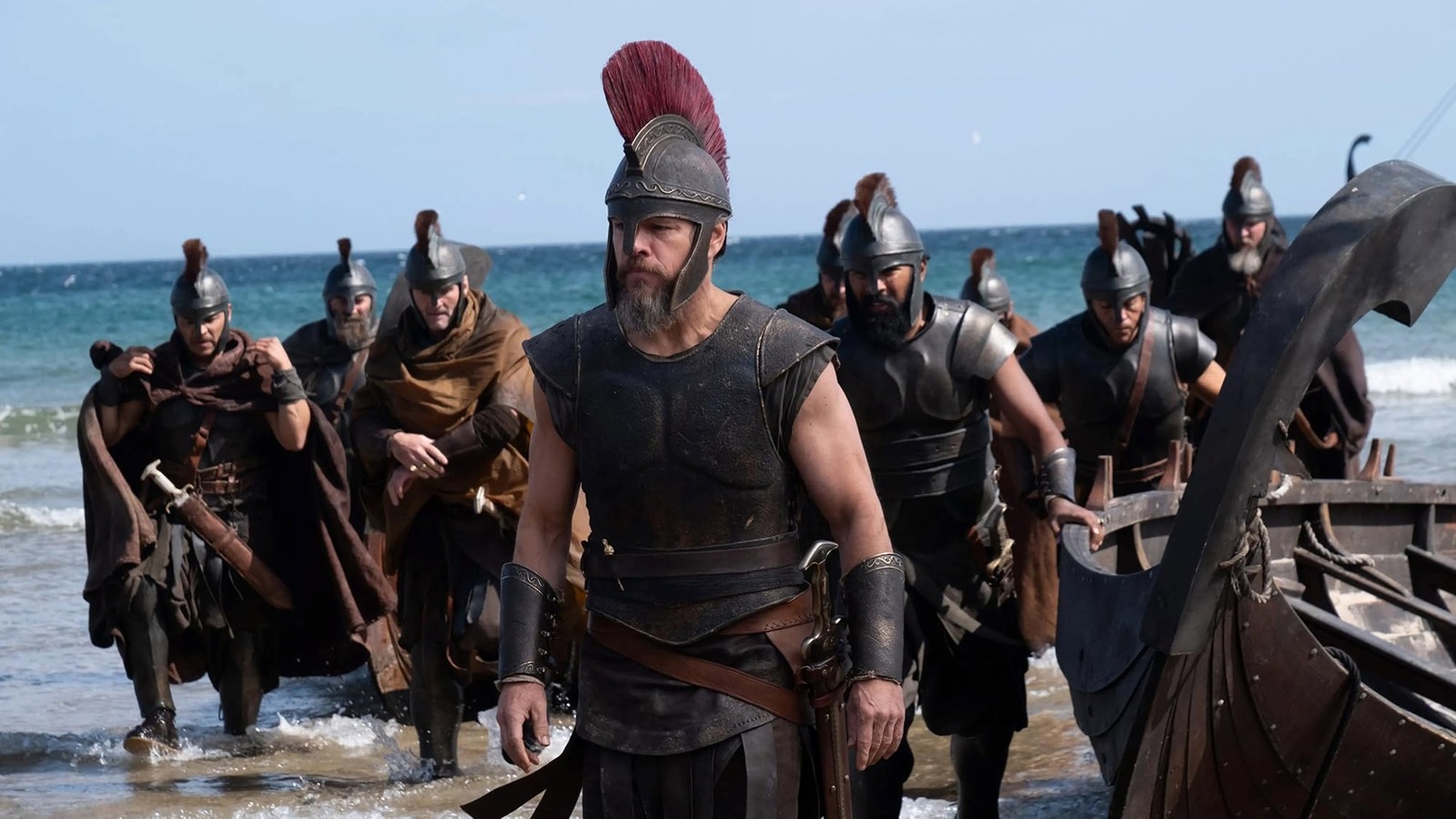
The most prominent debate among cinephiles has been the use of modern, colloquial American English. Critics argue that the vernacular strips the film of its "ancient" gravity, while proponents suggest it makes the dialogue feel more immediate and human, bridging the gap between a three-thousand-year-old poem and a contemporary audience. Similarly, the costume design for the Trojan War sequence has faced skepticism, with some historians and fans noting that the armor designs feel more grounded in a surrealist aesthetic than in archaeological accuracy.
However, these debates pale in comparison to the existential question that loomed over production: would Nolan ground the myth so firmly in reality that he would excise the gods? The verdict is in: he did not. The film thrives on the tension between the mortal and the divine, managing to balance the gritty, mud-caked reality of warfare with the ethereal, terrifying presence of the Olympian deities.
Travis Scott’s Multifaceted Role: More Than Just a Track
The inclusion of "When I’m Home" is not merely an afterthought for the credits; it is part of a larger thematic bridge that Travis Scott builds throughout the film. Scott’s involvement extends beyond the soundtrack; he appears on screen as a bard within the halls of Odysseus.
In the film’s opening act, Scott serves as the entertainer for the suitors who have occupied the king’s home in his absence. Through song, he recounts the triumphs of Odysseus, acting as a living repository of the king’s legacy. It is a role that functions on two levels: first, as a narrative device to establish the legend of Odysseus, and second, as a meta-textual nod to the origins of the story itself.
In an interview with Time magazine, Nolan explained the impetus for this casting: "I cast [Scott] because I wanted to nod towards the idea that this story has been handed down as oral poetry, which is analogous to rap." This statement provides the key to understanding the end-credits song. By framing the oral tradition of Homeric epics as the precursor to modern hip-hop, Nolan is making an argument about the endurance of the "bardic" form. He is suggesting that the rhythm, the storytelling, and the cultural weight of the bard are not confined to the lyre, but evolve alongside the medium of the storyteller.
The Evolution of Storytelling: From Homer to IMAX
The choice of Travis Scott is, at its heart, an argument for the elasticity of myth. For centuries, The Odyssey has been translated, adapted, and reinterpreted. From the written word to the stage, and from the radio play to the big screen, the story has survived by adapting to the cultural language of its time.
Nolan’s decision to pair the ancient struggle of a man trying to find his way home with a modern, synthesized soundscape is an attempt to collapse the distance between the viewer and the protagonist. When the audience leaves the theater, the sound of "When I’m Home" acts as a reminder that the themes of the epic—grief, displacement, and the yearning for return—are not relics of a dead civilization. They are universal, and they are still being told today, just in a different key.
Implications for the Box Office and Nolan’s Legacy
Whether this stylistic gamble will pay off in the long run remains to be seen. Historically, Nolan’s departures from conventional historical drama (such as the non-linear structure of Dunkirk or the scientific rigor of Interstellar) have often been met with initial skepticism before being canonized as essential viewing.
Current indicators suggest that The Odyssey is on track to be a massive financial success, potentially eclipsing the performance of Oppenheimer. The "Nolan brand" has become synonymous with an event-level cinema experience that demands to be seen in the largest possible format. By integrating a contemporary artist like Travis Scott, Nolan is arguably reaching for a younger, broader demographic that might otherwise be intimidated by the prospect of a three-hour epic based on a classical text.
However, the risk remains. By injecting modern sensibilities—whether through dialogue or musical choices—the director risks alienating purists who seek a more "period-accurate" immersion. Yet, it is precisely this tension that makes a Nolan film a "Nolan film." He is rarely interested in a museum-piece recreation of history; he is interested in the experience of the story.
Conclusion: A Myth for the Modern Era
The Odyssey is a film of immense ambition. It asks the audience to reconcile the ancient with the modern, the divine with the visceral, and the orchestral with the electronic. While the end-credits track may feel jarring to those expecting a traditional, sweeping score, it serves as the final, definitive statement on the film’s purpose: to prove that the stories we tell are never static.
Travis Scott’s presence, both as an actor and as a musician, acts as the connective tissue between the antiquity of Homer’s world and the IMAX reality of 2026. Whether or not one agrees with the choice, it is impossible to ignore the intent. Christopher Nolan has not just filmed an ancient poem; he has curated a conversation between the past and the present, ensuring that the song of the wanderer continues to resonate in the halls of our own time. As the box office numbers continue to climb and the critical debate rages on, one thing is certain: the journey of Odysseus, in all its updated, high-definition glory, has once again captured the world’s imagination.










