

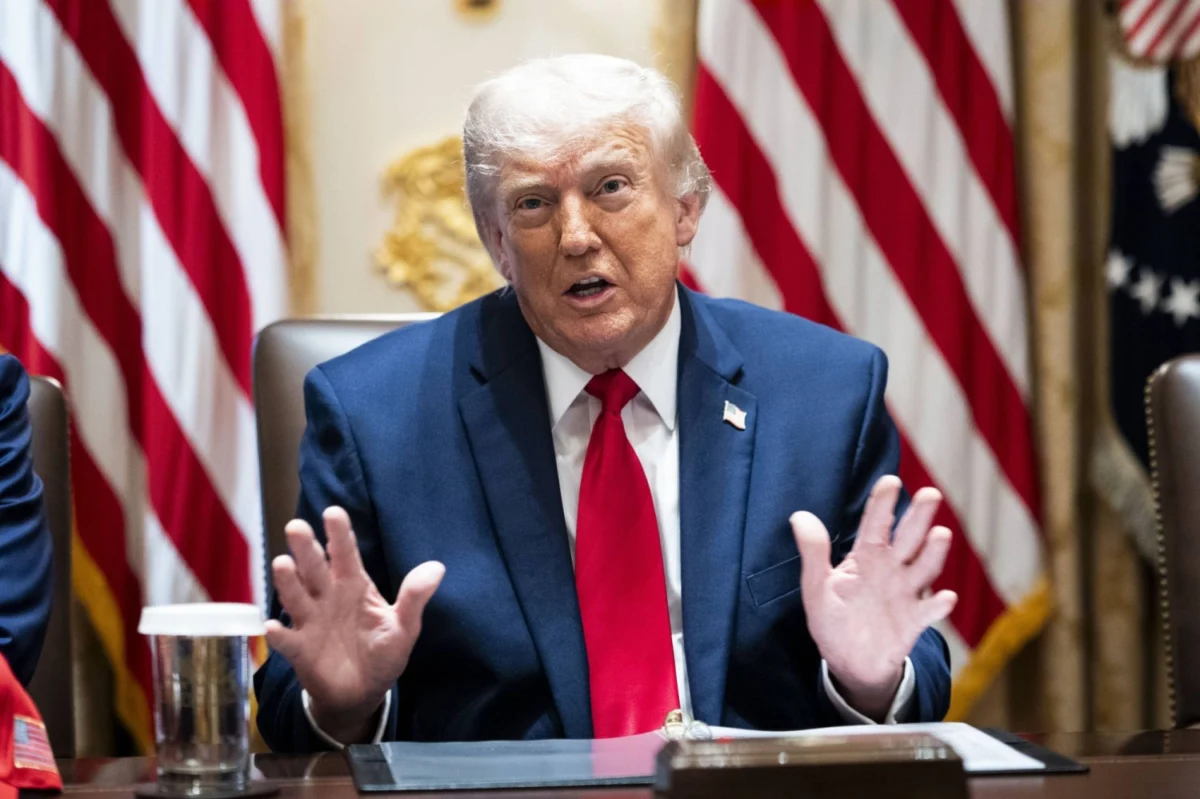
WASHINGTON — The prospect of a diplomatic breakthrough in the Middle East remains shrouded in uncertainty as the White House and Tehran engage in a high-stakes war of words. Following a Cabinet meeting at the White House on Wednesday, the administration of U.S. President Donald Trump reiterated its stance that any potential peace deal to end the ongoing conflict with Iran is contingent upon the total fulfillment of Washington’s strategic conditions.
As questions swirl regarding the state of behind-the-scenes negotiations, the discrepancy between the narratives emanating from the Oval Office and the Iranian leadership has widened, casting doubt on the likelihood of an imminent resolution.
The Core Conflict: A Clash of Narratives
The current diplomatic impasse centers on the definition of a "final agreement." While President Trump has signaled to his inner circle and the press that the administration is nearing a decision on a framework for peace, Iranian state media has aggressively pushed back against this characterization.
On Friday, a White House official, speaking on the condition of anonymity, clarified that the President is not prepared to compromise on the fundamental pillars of his Middle East policy. "The President has been clear," the official stated. "Any deal must address all of our concerns in full. There will be no piecemeal approach, and there will be no concessions made that do not align with our national security objectives."
Conversely, Tehran has dismissed the U.S. narrative as "a mixture of truth and lies." Iranian officials have maintained that while lines of communication remain open, the two nations are far from a consensus. The disconnect suggests that both parties are currently utilizing public messaging as a tool of negotiation, attempting to exert pressure on the other to concede ground before formal talks reach a critical juncture.
Chronology of Escalation and Engagement
The current state of affairs is the culmination of months of geopolitical friction. To understand the volatility of the current negotiations, one must examine the timeline of the recent escalation.
Phase 1: The Build-up (Early 2026)
Following months of regional instability, diplomatic backchannels were established in neutral territories. Both Washington and Tehran faced mounting domestic pressure to de-escalate, albeit for different reasons: the U.S. faced concerns over the economic fallout of prolonged involvement, while Iran grappled with the impact of sanctions and internal social pressures.
Phase 2: The "Framework" Talks (Spring 2026)
By late April, reports emerged that both sides had begun outlining a draft agreement. The U.S. push focused on long-term security guarantees and regional stability, while Iran sought an immediate easing of economic restrictions and international recognition of its regional influence.
Phase 3: The Public Standoff (Late May 2026)
The situation reached a fever pitch this week. During a Cabinet meeting on Wednesday, President Trump’s rhetoric suggested that a breakthrough was imminent. By Friday, however, the momentum appeared to stall as Tehran formally rejected several of the U.S. administration’s characterizations of the proposed deal, labeling them as misleading.
Supporting Data and Strategic Stakes
The complexity of these negotiations is underscored by the high stakes involved for both regional and global actors.
Economic Implications
Global markets have reacted with heightened sensitivity to every headline regarding the Iran-U.S. conflict. Fluctuations in oil prices have become a reliable indicator of investor confidence in the peace process. Analysts note that a failure to reach an agreement could lead to significant volatility in energy markets, affecting not only the U.S. and Iranian economies but also the stability of European and Asian markets heavily reliant on Middle Eastern energy flows.

Military Posture
While diplomatic channels remain open, military posturing has not ceased. Both sides continue to maintain a high state of readiness. Satellite imagery and intelligence reports indicate that neither nation has significantly altered its defensive deployments, suggesting that both parties are hedging their bets in the event that diplomacy fails.
Official Responses: A Divided Stage
The international community remains divided on the path forward.
- The U.S. Position: The White House maintains that its "maximum pressure" campaign—or its variants—has brought Iran to the table. Officials argue that by maintaining strict conditions, the U.S. can ensure a deal that is not only "final" but also "durable."
- The Iranian Position: Tehran views the U.S. demands as an infringement on its sovereignty. By publicly rebutting the White House’s claims, Iranian leaders are signaling to their domestic constituency that they are not capitulating to Western pressure, while simultaneously testing the U.S. administration’s resolve in the international arena.
- International Observers: Neutral observers, including various European diplomatic missions, have urged both sides to temper their public rhetoric. The concern is that by framing the negotiations as an "all-or-nothing" scenario, both leaders are boxing themselves into positions where any compromise could be viewed as a sign of weakness.
Implications for Future Regional Stability
If the current negotiations collapse, the implications for the Middle East are profound.
1. The Risk of Protracted Conflict
A failure to secure a deal would likely lead to an intensification of proxy conflicts throughout the region. Without a diplomatic framework to govern their interactions, the U.S. and Iran may find themselves in a direct, albeit localized, confrontation that could spiral into a broader regional war.
2. The Credibility of Diplomatic Channels
The reliance on public media to debate the contents of a private negotiation has severely damaged the trust required for high-stakes diplomacy. If the current talks fail, it may be years before both parties are willing to engage in a similar effort. The lack of transparency has created a vacuum of information that is currently being filled by speculation, further complicating the task for those involved in the negotiations.
3. The Domestic Political Calculus
For President Trump, a successful deal would represent a significant foreign policy achievement ahead of future electoral cycles. However, the political cost of a failed deal—or one perceived as too lenient—could be equally high. Similarly, the Iranian leadership must balance the economic necessity of a deal against the risk of appearing weak to hardline factions within their own government.
Conclusion: A Narrow Window for Peace
The path forward remains fraught with obstacles. For a deal to materialize, both Washington and Tehran must move beyond the current cycle of posturing and address the core issues that divide them.
The White House’s insistence on "all conditions being met" provides a clear, if rigid, framework for the negotiations. Whether this rigidity is a genuine requirement for a sustainable peace or merely a tactical maneuver remains to be seen. As the world watches, the question is not just whether a deal can be reached, but whether both nations can summon the political will to bridge the widening gap between their divergent realities.
As we look toward the coming weeks, the primary indicators of progress will not be the public statements from press briefings, but the quiet, behind-the-scenes movement of diplomats and the cooling of rhetoric in state-run media. Until then, the world remains in a state of anxious anticipation, waiting to see if the promise of peace can survive the pressures of politics.
Quality, objective journalism is more essential than ever in navigating these turbulent times. By staying informed through reliable sources, the public can better understand the nuances of these complex international developments. We remain committed to bringing you the facts as they unfold, ensuring that the stories that shape our world are told with the depth and accuracy they deserve.












No comments yet. Be the first to join the conversation!