Raul Delapena Setiawan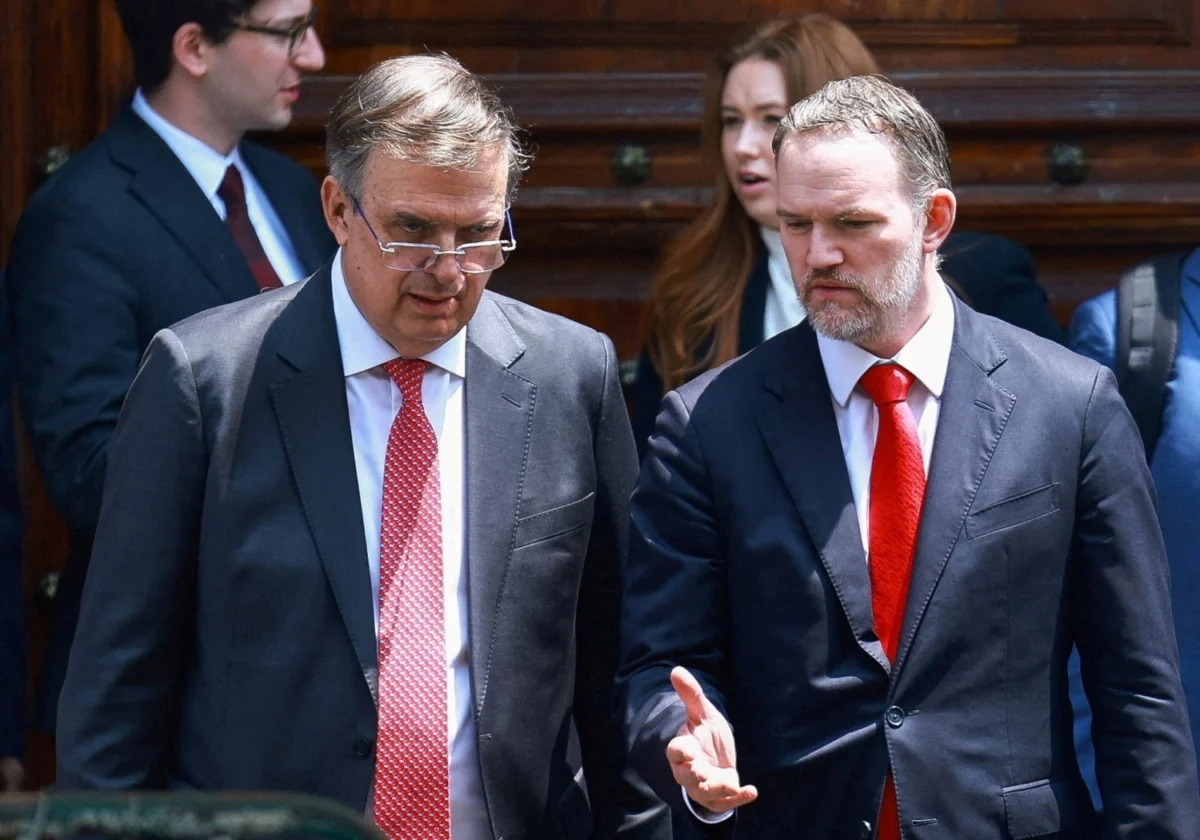
WASHINGTON/MEXICO CITY — In a move that has sent shockwaves through the North American automotive sector, the Trump administration has laid out a series of aggressive, protectionist demands aimed at fundamentally restructuring the U.S.-Mexico-Canada Agreement (USMCA). According to four individuals briefed on the confidential negotiations, U.S. Trade Representative Jamieson Greer has formally requested that Mexico increase the regional content threshold for automobiles to 82%, with a stringent mandate that 50% of a vehicle’s total value must be produced specifically within the United States.
The proposal, which emerged during bilateral talks held in Mexico City last week, represents a significant escalation in the administration’s "America First" trade strategy. By effectively sidelining Canada during these specific discussions and setting high-bar local content requirements, the U.S. is signaling a departure from the collaborative spirit that historically defined the trilateral trade bloc.
The Core Proposals: Reshaping North American Manufacturing
The automotive industry is the lifeblood of North American trade, characterized by complex, cross-border supply chains. Under the current USMCA framework, vehicles must contain at least 75% regional content to qualify for duty-free status. The Trump administration’s demand to elevate this to 82% is not merely a quantitative increase; it is a structural transformation that forces manufacturers to reconsider their global sourcing strategies.
The most controversial element, however, is the 50% "U.S.-only" value requirement. This provision seeks to decouple the North American supply chain, favoring domestic production over regional integration. For automakers, this creates a logistical nightmare: the need to re-certify supply chains, renegotiate contracts with tier-one and tier-two suppliers, and potentially relocate assembly or parts manufacturing to avoid the stiff tariffs that would apply if they fail to meet these new, higher benchmarks.
A Chronology of Escalating Tensions
The path to these negotiations has been paved with months of mounting friction over trade imbalances and the perceived erosion of the U.S. industrial base.
- Early 2026: The Trump administration signaled its intent to conduct a rigorous review of the USMCA, citing concerns that existing rules were not sufficiently benefiting U.S. workers.
- April 2026: Preparatory meetings were held in Washington, where U.S. officials expressed dissatisfaction with the current pace of domestic manufacturing growth, specifically in the electric vehicle (EV) sector.
- Late May 2026: U.S. Trade Representative Jamieson Greer traveled to Mexico City to meet with Mexican Economy Minister Marcelo Ebrard. The atmosphere was reportedly tense, with U.S. negotiators pushing for a "rebalancing" of the agreement.
- Friday, June 2026: The bilateral talks concluded with the formal disclosure of the 82% regional content requirement and the 50% U.S.-sourced mandate. Notably, Canadian officials were not invited to these specific sessions, raising questions about the future of the trilateral nature of the pact.
Supporting Data: The Economic Reality of the Auto Sector
To understand the magnitude of these demands, one must look at the current state of North American automotive production. In 2025, the regional supply chain was highly integrated, with parts crossing the U.S.-Mexico border multiple times before a final vehicle was assembled.
- Current Content Standards: The 75% rule allows for a degree of flexibility, permitting parts from diverse sources within the three countries to aggregate toward the goal.
- The Cost of Compliance: Industry analysts estimate that the cost to re-engineer supply chains to meet an 82% threshold could increase vehicle production costs by 4% to 7%. For consumers, this translates to higher MSRPs at a time when the industry is already grappling with the transition to expensive EV battery technologies.
- Employment Impacts: While the administration argues that these rules will lead to a "reshoring" of jobs, economists warn that the high cost of compliance could lead to lower total vehicle production in North America, as manufacturers might opt to produce cheaper models for international markets outside of the USMCA zone to avoid the regulatory burden.
Official Responses and Diplomatic Friction
The reaction from Mexico has been one of cautious diplomatic maneuvering. Minister Marcelo Ebrard, while publicly emphasizing the importance of the partnership, has privately expressed concerns that the U.S. demands are "incompatible with the reality of modern manufacturing."
"We are committed to a fair agreement," an aide to the Mexican Economy Ministry stated. "But we must ensure that any changes are viable for the integrated economy we have built over decades. Sudden, unilateral changes threaten the stability of the entire region."
Canada, currently excluded from these specific bilateral discussions, has issued a formal protest. Ottawa’s trade representatives have argued that any modifications to the USMCA must be negotiated trilaterally. The exclusion of Canada is being viewed by international observers as a tactical maneuver by the U.S. to force Mexico into a corner, effectively dividing its neighbors to conquer the negotiation process.

The U.S. Trade Representative’s office has defended the stance, framing it as a necessary step to protect American workers from "unfair competition" and to ensure that the benefits of the North American trade pact do not leak to external entities, particularly in the context of the evolving geopolitical climate regarding Asian manufacturing hubs.
Implications: The Future of the USMCA
The proposed changes carry profound implications for the future of North American economic integration.
1. Supply Chain Balkanization
If the U.S. successfully imposes these rules, the era of a unified "North American car" may be coming to an end. Manufacturers may be forced to build "U.S.-only" models and "Mexico/Canada-export" models, effectively doubling their regulatory and logistical costs.
2. The Risk of Retaliation
Mexico and Canada have the tools to retaliate. Should the U.S. unilaterally alter the terms of the treaty, Mexico may leverage its control over agricultural imports or energy sector access, while Canada could target U.S. service industries. The risk of a trade war within the bloc is at its highest point since the USMCA was ratified.
3. Investment Uncertainty
Capital investment relies on stability. The uncertainty surrounding the 82% content rule has already caused several major automakers to pause planned expansions in Mexico. Without a clear path forward, the entire North American automotive sector faces a period of stagnation.
4. Impact on the Global EV Race
As the global automotive industry races to dominate the electric vehicle market, these protectionist measures may inadvertently hinder North American competitiveness. By focusing on internal content percentages rather than global efficiency, North American automakers may find themselves losing market share to European and Chinese competitors who are not burdened by such restrictive intra-regional mandates.
Conclusion: A Delicate Balance
The negotiations in Mexico City serve as a stark reminder that trade agreements are never static. The Trump administration’s willingness to disrupt the status quo reflects a broader global trend toward economic nationalism. However, the path forward remains precarious.
As the deadline for the next round of talks approaches, the global business community will be watching closely. Whether the U.S. can successfully strong-arm its neighbors into accepting these new mandates remains to be seen. What is certain, however, is that the outcome will define the economic landscape of North America for the next decade. If these demands are pushed through, the USMCA will move from being a model of free trade to a monument of managed, highly regulated commerce—a change that will ripple through every dealership, factory floor, and household budget across the continent.


 Neng Nana
 Asro
Asro