Lina Hope
The cinematic landscape as we know it today—a world dominated by expansive space operas, interconnected mythologies, and the monolithic cultural footprint of the Star Wars franchise—would likely look radically different, if not entirely non-existent, without the incisive editorial hand of Marcia Lucas. It is with heavy hearts that the film community acknowledges the passing of the legendary editor at the age of 80 following a battle with cancer.
While the name "Lucas" is synonymous with the Star Wars saga, it is the contributions of Marcia Lucas that provided the emotional architecture, pacing, and narrative clarity required to transform a risky, high-concept space Western into a transcendent cultural phenomenon.
A Legacy of Precision: The Facts of a Career
Marcia Lucas was not merely an editor; she was a storyteller who understood that the soul of a film resided in the rhythm of the cut. Before her defining work on the original Star Wars trilogy, she had already established herself as a formidable force in New Hollywood cinema. Her resume includes vital contributions to Martin Scorsese’s gritty masterpieces, such as Taxi Driver and Alice Doesn’t Live Here Anymore, as well as work on American Graffiti.
Her death marks the end of an era. As an Oscar-winning editor, her technical prowess was matched only by her narrative intuition. She was one of three editors credited on the 1977 Star Wars (alongside Paul Hirsch and Richard Chew), and their collective work remains a benchmark for action-oriented, character-driven storytelling.
Chronology: From the Cutting Room to Galactic Legend
To understand the impact of Marcia Lucas, one must look at the chaotic production history of the original 1977 film.
- 1973–1976: Marcia Lucas works alongside her then-husband, George Lucas, as he navigates the arduous process of conceptualizing and filming Star Wars. During this period, she acts as a primary sounding board, helping to strip away the more convoluted elements of early drafts.
- 1977: The release of A New Hope. The film becomes an unprecedented success. Marcia Lucas, Hirsch, and Chew win the Academy Award for Best Film Editing.
- 1977–1983: Marcia continues her influence through The Empire Strikes Back and Return of the Jedi. Her editorial touch helps balance the darker, more mature tone of the sequel with the swashbuckling energy of the original.
- 1983: The marriage between George and Marcia Lucas ends in divorce. Following this, she steps away from the Star Wars production machine, though her influence on the franchise’s DNA remains etched into every frame of the original trilogy.
- 2026: Marcia Lucas passes away at 80, leaving behind a body of work that continues to influence the modern language of film.
The "Secret" Saves: How She Shaped the Narrative
The mythos of Star Wars is often attributed to George Lucas’s singular vision, but historical accounts—most notably Michael Kaminski’s The Secret History of Star Wars—reveal that Marcia was the primary architect of the film’s emotional stakes.
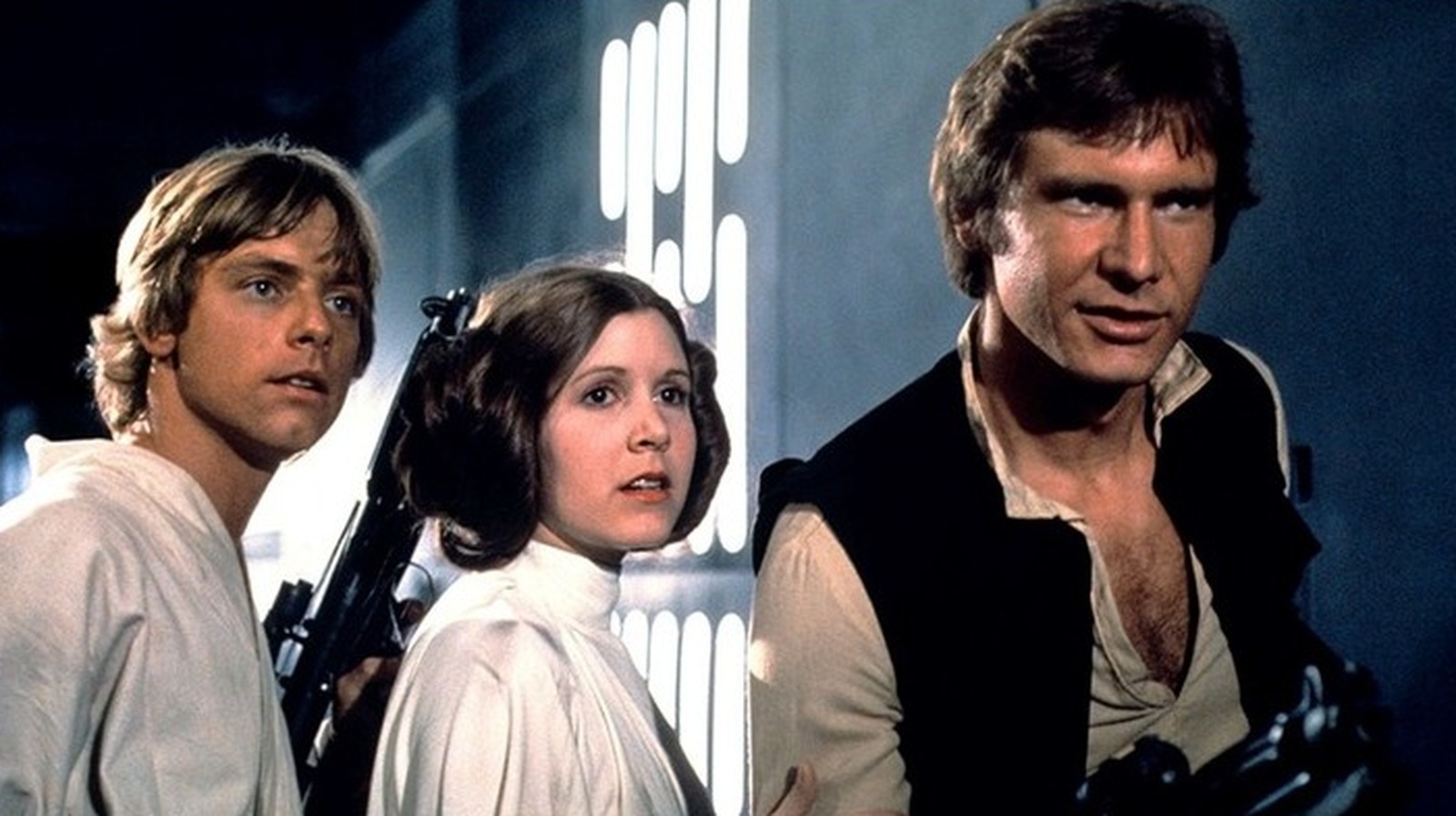
The Death of Obi-Wan Kenobi
In early drafts, the narrative beats were vastly different. It was Marcia Lucas who recognized that the film lacked a profound emotional anchor in its third act. She famously pushed for the death of Obi-Wan Kenobi at the hands of Darth Vader. By removing the mentor figure, she forced Luke Skywalker to grow, providing the necessary emotional weight to propel the audience toward the finale.
The Trench Run: A Ticking Clock
Perhaps her most technically impressive feat was the construction of the Death Star trench run. In the original script, the threat to the Rebel base on Yavin IV was significantly less immediate. Marcia realized that without a "ticking clock," the audience would not feel the desperate urgency of the mission. She painstakingly restructured the sequence, weaving together 40,000 feet of dialogue and dogfight footage into a cohesive, high-octane narrative. George Lucas himself credited her with the brilliance of that sequence, noting in a 1977 interview with Rolling Stone that she spent eight weeks cutting the battle to ensure the plot never lost its way amid the chaos of the aerial maneuvers.
Defending the Force
Her influence extended to the conceptual level. When director Brian De Palma reviewed an early cut of Star Wars, he suggested that the "Force" was too abstract and should be cut from the film. It was Marcia Lucas who stood her ground, convincing her husband that the spirituality of the Force was the heart of the movie. Without her intervention, the franchise would have been a standard sci-fi action flick, lacking the mythological depth that allowed it to survive for nearly five decades.
Official Responses and Industry Impact
The industry has responded to her passing with an outpouring of respect, acknowledging that her career paved the way for generations of women in the film industry. Her family released a poignant statement via the San Francisco Chronicle:
"Marcia was a force. A true trailblazer for women in film and one of the most influential editors in cinematic history; she helped redefine what film editing could be and paved the way for generations of women who followed."
Her legacy is not just in the Oscars she won, but in the editorial standards she set. She was a master of "invisible editing," where the cuts are so seamless that the audience forgets they are watching a constructed piece of media, becoming entirely immersed in the narrative flow.
The Implications: A Franchise Without Its Heart
The tragedy of Marcia Lucas’s departure from the franchise after 1983 is a point of significant analysis for film historians. She was notably vocal about her distaste for the prequel and sequel trilogies, often expressing a sense of disappointment that the later films lost the "soul" of the originals.
Her passing invites a re-evaluation of the "auteur theory." While George Lucas was the creator, Marcia was the curator. The implications of her absence in later years suggest that the franchise struggled to find its balance without her particular brand of editorial pragmatism. She had a unique ability to tell George when his ideas were becoming too detached from human emotion, acting as the bridge between his abstract imagination and the audience’s capacity for empathy.
As we reflect on her life, we are reminded that films are collaborative miracles. Marcia Lucas proved that an editor doesn’t just assemble a movie; they assemble the meaning of the movie.
"Luminous beings are we, not this crude matter," Yoda once told Luke. Today, those words feel particularly apt. Marcia Lucas has moved on from the physical world, but the luminous legacy she left—the rhythm of the trench run, the poignancy of Obi-Wan’s final stand, and the very existence of the galaxy far, far away—remains a permanent fixture in our cultural history. She didn’t just help edit a movie; she edited the course of cinema history.

 Raul Delapena Setiawan
 Nana
Nana