

The global filmmaking community is in mourning following the announcement that Marcia Lucas, a pioneering film editor whose rhythmic precision and emotional intuition helped define the cinematic landscape of the 1970s and 80s, has passed away. She was 80.
Lucasfilm confirmed on Wednesday that the legendary editor died in Rancho Mirage, California, following a battle with metastatic cancer. A titan of the cutting room, Lucas’s career spanned some of the most influential works in American cinema history, most notably the original Star Wars trilogy. Her contributions, characterized by a rare ability to synthesize chaotic footage into coherent, emotionally resonant narratives, helped elevate the craft of editing to an art form that sits at the very heart of storytelling.
A Legacy Forged in the Cutting Room
Marcia Lucas was more than a technician; she was a narrative architect. Her work on films such as Taxi Driver (1976), American Graffiti (1973), and the original Star Wars (1977) helped cement her reputation as one of the most vital editors of her generation.
Her career was defined by a signature philosophy that she once articulated with trademark humility: "I love film editing. I have an innate ability to take good material and make it better, and to take bad material and make it fair." This philosophy became the bedrock of her success, allowing her to work alongside some of the most demanding directors in the industry, including her former husband, George Lucas, and the master of modern American cinema, Martin Scorsese.
Chronology: A Career of Cinematic Milestones
The trajectory of Marcia Lucas’s career is inextricably linked to the seismic shifts in Hollywood during the "New Hollywood" era.
The Early Years and ‘American Graffiti’
After the establishment of Lucasfilm in 1971, the company embarked on what would become a generational touchstone: American Graffiti. Working under the tutelage of her mentor, the esteemed Verna Fields, Marcia Lucas helped shape the film’s unique, sprawling narrative. The resulting acclaim—which included an Academy Award nomination—placed her squarely at the forefront of the industry’s burgeoning independent scene.
The Scorsese Connection
Between her collaborations with Lucas, she lent her talents to the gritty, psychological depths of Martin Scorsese’s filmography. Her work on Alice Doesn’t Live Here Anymore (1974) and Taxi Driver (1976) showcased a different facet of her skill set: the ability to find rhythm in urban isolation and high-tension character drama. These films proved that her editing prowess was not limited to the spectacle of space operas, but extended to the nuance of the human condition.
The ‘Star Wars’ Phenomenon
Perhaps her most profound impact was felt during the arduous post-production process of 1977’s Star Wars: A New Hope. As the film entered its final stages, the production faced a crisis of identity. A near-total restart of the edit was required to save the film’s pacing and emotional stakes.
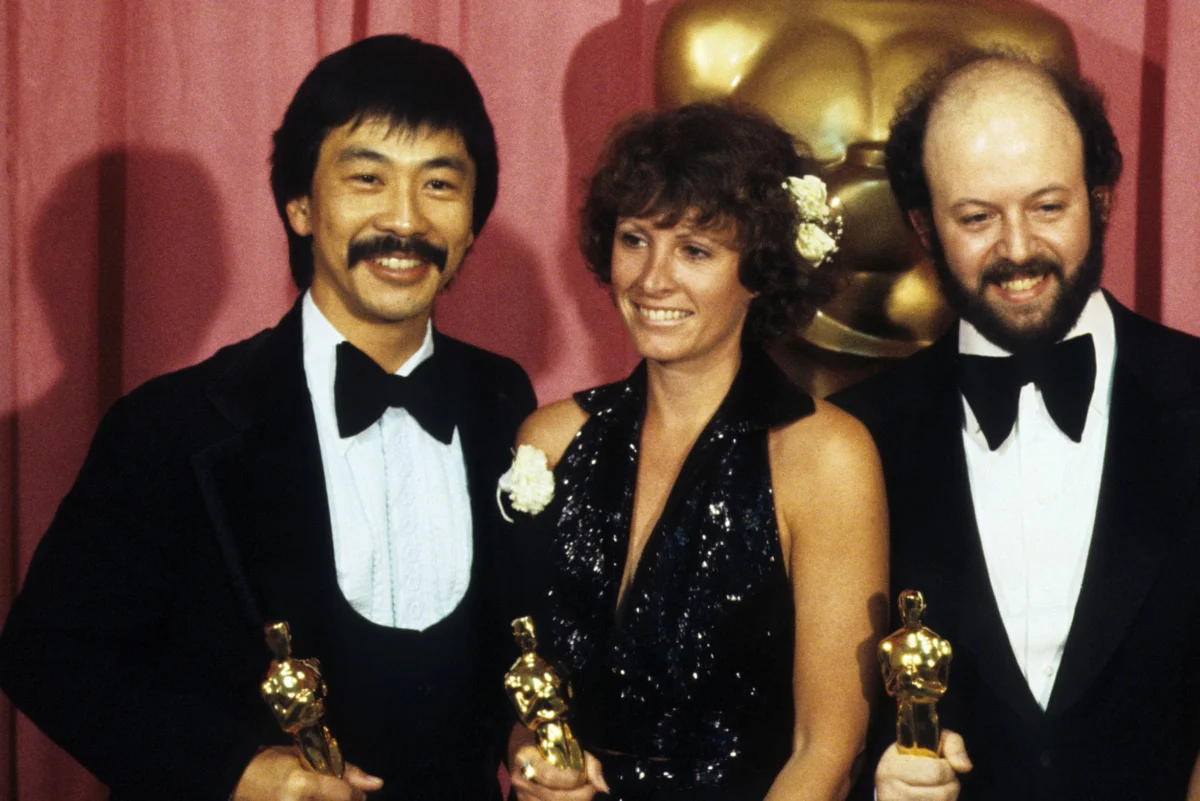
Joining forces with Richard Chew and Paul Hirsch, Marcia Lucas worked tirelessly to transform hours of disparate, experimental footage into the coherent space opera that would capture the global imagination. Their collective effort was rewarded in 1978 with the Academy Award for Best Film Editing. She would go on to provide critical editorial oversight for The Empire Strikes Back (1980) and Return of the Jedi (1983), ensuring that the emotional core of the Skywalker saga remained consistent through its most ambitious installments.
Supporting Data: The Craft of the Edit
To understand the significance of Marcia Lucas, one must look at the technical and emotional demands of the era. Before the advent of digital non-linear editing systems, cutting film was a tactile, mechanical, and exhausting process. It required physical manipulation of celluloid strips, a process where "rhythm" was not merely an abstract concept but a physical reality.
Colleagues and historians often point to the "Death Star Trench Run" in A New Hope as a primary example of her influence. While the visual effects were groundbreaking, it was the editing—the way the cuts between the Rebel pilots, the Imperial officers, and the ticking clock of the countdown were timed—that created the unbearable tension audiences experienced.
Her family’s statement provides further insight into her process: "Her work was known for its emotional intelligence, rhythm, and humanity—a rare ability to find the truth of a scene and bring heart, momentum, and clarity to the screen." This "humanity" was the secret ingredient in her collaborations, preventing the technical spectacle of Star Wars from overshadowing the personal stakes of the characters.
Official Responses and Tributes
The industry has responded to her passing with an outpouring of grief and respect. Lucasfilm, in a formal statement, honored her memory by highlighting her central role in the company’s early success:
"Lucasfilm was deeply saddened to learn of the passing of Marcia Lucas. The 80-year-old was one of the three editors to take home an Oscar for 1977’s Star Wars: A New Hope. Lucasfilm joins the global filmmaking community in mourning the loss of Marcia Lucas."
The sentiment was echoed by peers and collaborators across Hollywood, many of whom noted that her influence on the pacing of modern blockbuster cinema cannot be overstated. By successfully bridging the gap between the intimate character-driven dramas of the 70s and the large-scale myth-making of the 80s, she created a blueprint that modern editors still study today.
Implications: The End of an Era
The death of Marcia Lucas marks the closing of a significant chapter in film history. As one of the architects of the "New Hollywood" aesthetic, her departure serves as a reminder of the foundational work done by editors who often labored in the shadows of directors and stars.
The Institutional Memory of Lucasfilm
For Lucasfilm, her passing is a loss of a foundational voice. As the company continues to navigate the expansion of the Star Wars universe, the principles of editing that Lucas championed—clarity, pacing, and an unwavering focus on the emotional truth of the scene—remain the standards against which new entries are judged. Her influence is embedded in the DNA of the franchise.
A Call for Recognition
In recent years, there has been a growing movement to better recognize the vital role that editors play in the success of major motion pictures. Marcia Lucas’s career is the definitive case study for this argument. Without her specific editorial interventions, it is widely accepted by film historians that Star Wars might not have achieved the cultural ubiquity it enjoys today. She proved that a film is truly "written" in the editing room.
Conclusion: A Lasting Rhythm
Marcia Lucas leaves behind a body of work that is not merely a collection of films, but a masterclass in narrative momentum. From the lonely, rain-slicked streets of New York in Taxi Driver to the star-dusted corridors of the Death Star, her fingerprints are found in the pauses, the transitions, and the climaxes of cinema’s most memorable moments.
While she has left the physical editing suite, her rhythm remains in the films she touched. She taught a generation of filmmakers that the power of a scene lies not just in what is shown, but in how it is connected to the next. As the global filmmaking community pays its respects, it does so knowing that the "heart, momentum, and clarity" she brought to the screen will continue to influence audiences for decades to come.
Marcia Lucas did more than edit film; she crafted the heartbeat of modern cinema. Her legacy is etched in every frame she cut, a testament to a career defined by brilliance, hard work, and an unyielding commitment to the truth of the story.











No comments yet. Be the first to join the conversation!