

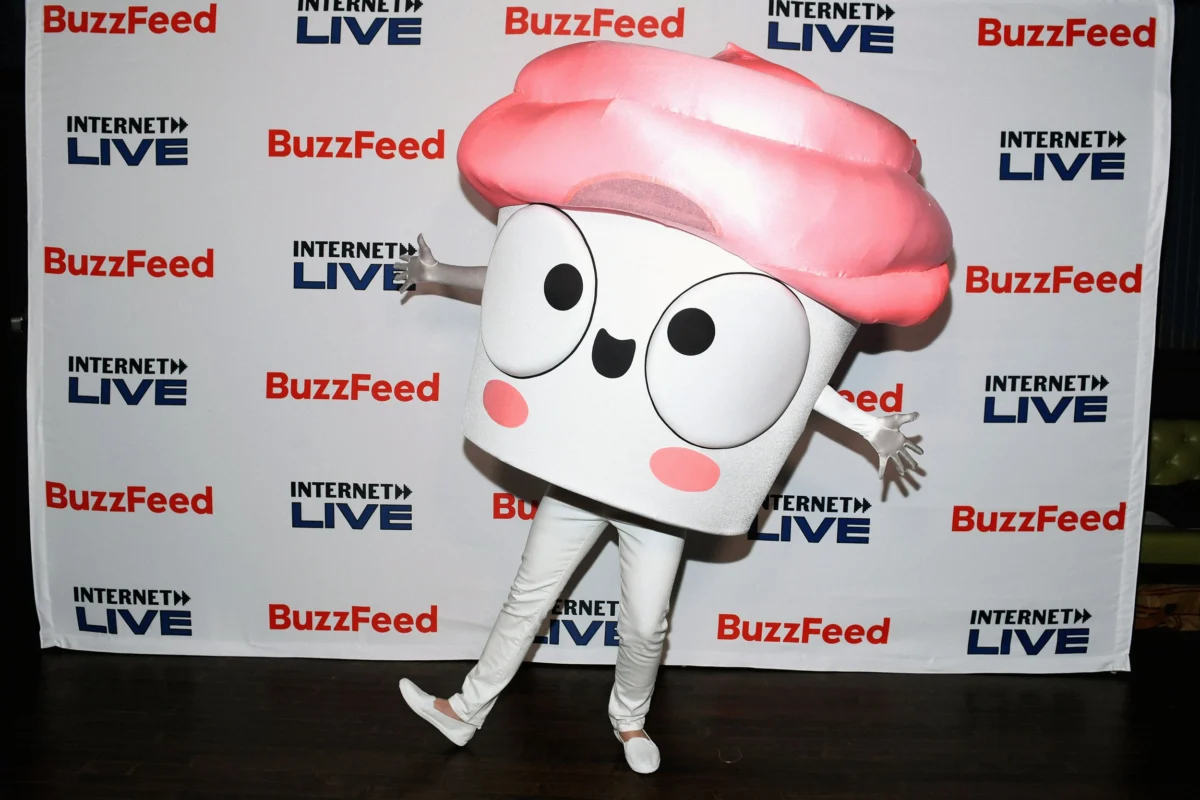
In the rapidly evolving landscape of digital media, the line between creative legacy and corporate intellectual property has never been thinner. For Loryn Brantz, an accomplished author and illustrator, that line has been crossed in a way that feels both personal and industrial. A decade ago, Brantz birthed "Good Advice Cupcake"—a character characterized by aggressive optimism and a penchant for profanity-laced, life-affirming motivation. Today, that character is at the center of a high-stakes intellectual property dispute involving a legacy media brand, a tech giant, and the polarizing rise of generative artificial intelligence.
The controversy erupted this week when Brantz utilized her Instagram platform to publicly call out her former employer, BuzzFeed, over its decision to license the character to Amazon Prime Video. The platform plans to launch a new animated series, Cupcake & Friends, developed using generative AI tools. The project is one of three initiatives greenlit through the "GenAI Creators Fund," a strategic partnership between Amazon Web Services (AWS) and Amazon MGM Studios. For Brantz, this is not just a business disagreement; it is, in her words, "an assault on artists everywhere."
The Genesis of a Cultural Icon
To understand the weight of this dispute, one must look at the character’s origins. Brantz created "Cuppy" in 2014, long before the current AI boom. Originally envisioned as part of a children’s book pitch that was ultimately rejected by a major publishing house, the character found a second life in Brantz’s internet comics.
"The character is 100 percent based on my own personality as being someone who is aggressively optimistic and nearly pathologically positive," Brantz told WIRED. "It was a way for me to yell motivational advice at people in a cute and humorous way."
The character’s breakout moment arrived in 2017 when a comic featuring Cuppy offering blunt, vulgar advice went viral. The juxtaposition of a cute, anthropomorphic cupcake with the hard-edged command to "grab life by the balls" struck a chord with millions. BuzzFeed, recognizing the cultural footprint of the character, moved quickly to bring Brantz into the fold.
Between 2017 and 2019, BuzzFeed produced eight episodes of a Good Advice Cupcake web series. Brantz worked in good faith, believing that the relationship was built on mutual respect. When she eventually departed the company in 2023 to join the team behind the wildly successful YouTube educator Ms. Rachel, she left the IP with BuzzFeed—a decision she now describes as naive.
A Chronology of Conflict
The path to the current litigation-adjacent standoff was paved with broken expectations.
- 2014–2017: Loryn Brantz develops the "Good Advice Cupcake" character. The character achieves massive organic growth on social media, garnering a fan base that currently exceeds 2 million on Instagram alone.
- 2017–2019: BuzzFeed produces a web series based on the character. Brantz participates in the production, operating under the assumption that the character’s integrity would be preserved.
- 2023: Brantz leaves BuzzFeed to pursue other creative endeavors, including her work with Ms. Rachel.
- Early 2026: Rumors circulate that BuzzFeed is shopping a new animated iteration of Cuppy to major streamers. Brantz reaches out to former CEO Jonah Peretti to seek clarity.
- Mid-2026: The deal with Amazon Prime Video is solidified, with the project being announced as a recipient of the GenAI Creators Fund.
- Present Day: Brantz goes public on Instagram, urging fans to boycott the series and any AI-generated animation.
The Corporate Stance: Innovation or Exploitation?
BuzzFeed’s position remains firm: they own the IP, and they intend to monetize it. A spokesperson for the company stated, "BuzzFeed owns the Cuppy IP, not Loryn, who is a former employee. BuzzFeed Studios is excited to use new technology to bring a dormant library series off the shelf and to give it new life."
Jonah Peretti, now leading the company’s AI initiatives, attempted to frame the use of artificial intelligence as a modern evolution of traditional animation techniques. In a statement provided to the press, Peretti drew a controversial comparison between generative AI and the introduction of Xerox technology in mid-century animation.
"We shared with her that human creativity would remain at the core of this project, with writing, storytelling, and animation being developed by humans and AI being used as a creation tool to help facilitate that," Peretti argued. He maintained that while he respected Brantz’s personal stance against AI, her opposition could not dictate the company’s internal development of assets they hold the rights to.
Brantz, however, rejects this analogy as disingenuous. In a follow-up social media post, she challenged Peretti to a public debate on the history of animation, noting that the "vagueness" of BuzzFeed’s description of their AI implementation suggests they are obscuring the extent to which the software replaces human labor.
Industry Implications and the "Creativity" Crisis
The dispute highlights a growing, existential dread among creative professionals. As media companies like BuzzFeed face continued financial restructuring—highlighted by the recent $120 million acquisition of a majority stake by Byron Allen—the pressure to slash production costs using AI has reached a fever pitch.
The Erosion of Authorship
The core of the issue is not just about copyright law, but about the "soul" of a character. When a creator like Brantz develops a character based on her own personality, the character becomes an extension of her identity. When that character is then subjected to algorithmic generation, the result is what Brantz calls a "soulless AI puppet." For many observers in the creative arts, this represents a fundamental shift: the decoupling of a creator from their creation, facilitated by software that can replicate stylistic tropes without the lived experience that informed them.
The Legal Landscape
Brantz is currently exploring legal options, though she has expressed a lack of optimism regarding the outcome. Current intellectual property law in the United States generally favors the employer in "work-for-hire" scenarios. Unless a contract specifically stipulates restrictions on the method of production—a clause that was essentially non-existent in the pre-AI era of 2017—creators have little recourse to stop companies from utilizing new technologies to iterate on existing IP.
Public Sentiment and the Future of Content
The reaction from the creative community has been one of solidarity. Thousands of fans have flooded Brantz’s social media channels, praising her for the "courage and transparency" required to challenge a massive corporate entity.
However, the reality of the entertainment industry remains cold. Amazon and BuzzFeed are betting that the average consumer will not distinguish between human-animated and AI-assisted content, provided the "vibe" of the character remains consistent. If Cupcake & Friends succeeds, it will likely set a precedent for other media houses to scour their back catalogs, reviving "dormant" characters with AI to create low-cost, high-frequency content for streaming platforms.
For Loryn Brantz, the battle is a warning. It is a clarion call to artists to interrogate their contracts, to demand clauses that protect the human element of their work, and to understand that in the age of AI, the ownership of one’s creative output is not just about the final product—it is about the integrity of the process itself. As she continues to stand her ground, she is not just fighting for a cupcake; she is fighting for the right of artists to remain the authors of their own legacies.












No comments yet. Be the first to join the conversation!