

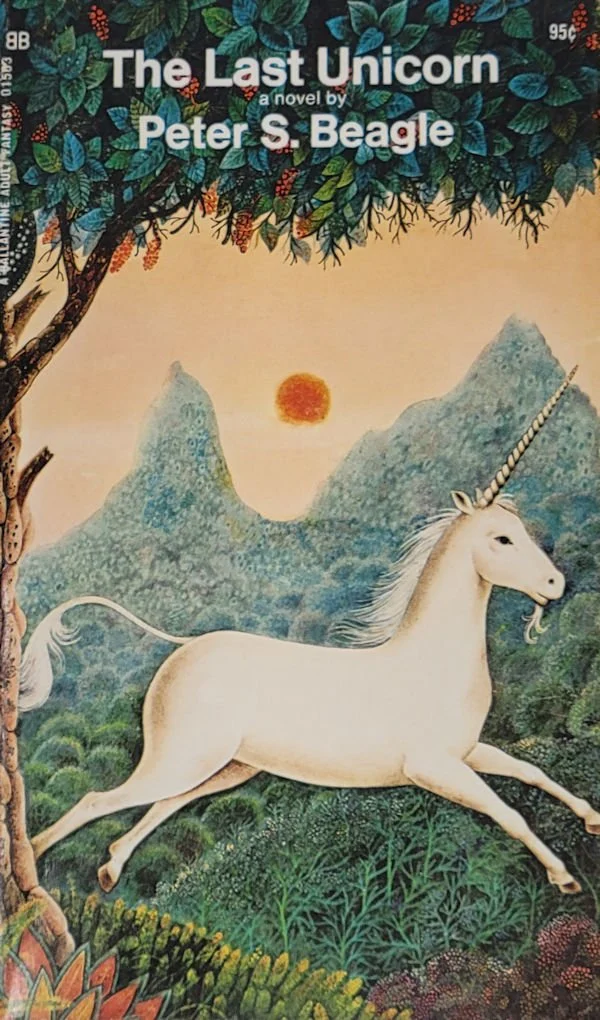
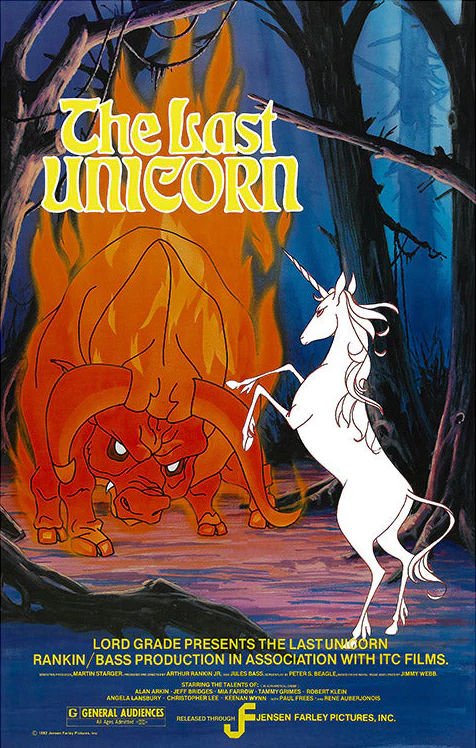
For many, the first encounter with The Last Unicorn arrives via the flickering, melancholic animation of the 1982 film adaptation. Yet, to view the story solely through the lens of childhood nostalgia is to miss the profound, often harrowing depth of Peter S. Beagle’s original 1968 novel. Much like Beowulf or the works of Jane Austen, the narrative possesses a deceptive simplicity; it is a fantasy quest, yes, but one that functions as a sophisticated mirror for the human condition.
After revisiting the text as an adult, one cannot help but arrive at a firm conclusion: The Last Unicorn is not merely a genre staple, but a universal touchstone. It is a work that demands a place on every bookshelf, regardless of one’s affinity for high fantasy, because it addresses the core anxieties of existence with an elegance that few other works have ever matched.
The Chronology of a Classic
Peter S. Beagle published The Last Unicorn in 1968, a period of transition for the fantasy genre. While Tolkien had cemented the "epic" structure, Beagle chose a different path, blending the whimsical traditions of folklore with a biting, existentialist wit.
The story follows a nameless unicorn who learns she may be the last of her kind. She embarks on a journey to find her kin, accompanied by Schmendrick, a magician whose incompetence is a source of both comedy and deep tragedy, and Molly Grue, a woman who joins the quest as a way to confront the regrets of her own wasted youth. Their journey eventually brings them to the court of King Haggard and his adopted son, Prince Lír, where the thematic stakes shift from a simple search to a meditation on mortality, possession, and the definition of heroism.
The Anatomy of Human Frailty: Supporting Themes
At the heart of the novel lies a central tension: the juxtaposition of an immortal, static creature—the unicorn—against the chaotic, finite nature of human life. Beagle uses his cast of characters to explore the various ways people grapple with the passage of time.
Schmendrick and the Futility of Potential
Schmendrick the Magician serves as the embodiment of potential unfulfilled. Gifted with enough magical energy to be formidable, he remains perpetually inept because he cannot harmonize his will with his power. As the narrative observes, his incompetence is so profound it suggests a deeper, more tragic cosmic joke: he is cursed with immortality to practice his failures until he can finally "come to himself." He represents the reader’s fear of living a life of "eternal inefficiency," where one has all the time in the world but lacks the clarity to use it for anything meaningful.
Molly Grue: The Weight of Regret
If Schmendrick represents the aimless passage of time, Molly Grue represents the sting of time already spent. When she finally encounters the unicorn, her reaction is not joy, but a piercing, defensive bitterness: "Where were you twenty years ago, ten years ago? How dare you, how dare you come to me now, when I am this?" Molly’s confrontation with the unicorn is arguably one of the most poignant moments in fantasy literature. It articulates the universal fear that life has passed us by, leaving us with a "barren face" and a "yellowing heart." She reminds us that our primary conflict is often not with the world, but with our own perceived inadequacy in the face of lost opportunities.
The Duality of Ambition: Haggard vs. Lír
Beagle masterfully juxtaposes King Haggard and Prince Lír to explore how humans choose to fill the void of their mortality. King Haggard, the antagonist, attempts to conquer his emptiness by hoarding beauty—capturing unicorns in the sea. Yet, his possession of them brings him no joy; it only breeds paranoia and despondency. He is the cautionary tale of the consumer, the individual who believes that accumulating "things" can substitute for living a purposeful life.
In contrast, Prince Lír finds fulfillment through service. His growth from a aimless youth to a man who defines himself by what he protects—specifically, his love for Lady Amalthea—illustrates the transition from a life of selfish acquisition to one of altruistic contribution.
The Necessary Cruelty of Mortality
The most significant thematic pivot in the novel is the unicorn’s transformation. To survive the existential threat posed by the Red Bull, the unicorn must become human. This allows her, for the first time, to understand the beauty of death.
Beagle’s prose captures this shift in two defining reflections. Initially, the unicorn is horrified by the sensation of a dying body: "How can anything that is going to die be real?" By the end of the journey, she arrives at the profound realization: "Whatever can die is beautiful—more beautiful than a unicorn, who lives forever."
This suggests that mortality is not a curse, but the very catalyst that allows for the existence of love, courage, and true beauty. Time, in Beagle’s universe, is a harsh master, yet it is the necessary friction that gives our lives their texture and value.
Critical Implications: Why It Matters Today
The enduring relevance of The Last Unicorn lies in its ability to speak to the modern individual. We live in an age of hyper-consumption and existential anxiety, where the pressure to "achieve" can mirror King Haggard’s frantic search for fulfillment, and the fear of "missing out" resonates with Molly Grue’s sense of loss.
Furthermore, the novel’s stylistic brilliance ensures that it remains immune to the degradation of age. Beagle’s prose is a blend of fairy-tale lyricism and sharp, postmodern wit. He can move from the haunting description of a "lilac wood" to the dry, cynical humor of a talking cat with effortless grace.
Linguistic Craftsmanship
Beagle’s ability to weave profound truths into casual dialogue is a hallmark of his genius. Consider the nonchalant wisdom of his secondary characters:
- "A lord who cheats an ugly old witch will cheat his own folk by and by. Stop him while you can, before you grow used to him."
- "I always say perseverance is nine-tenths of any art—not that it’s much help to be nine-tenths an artist, of course."
These lines are not just clever; they are distillations of human experience. They remind the reader that the "heroic" path is often found in the quiet, mundane acts of integrity, not just in grand battles.
Conclusion: A Call to Re-read
While not every reader will connect with the whimsical, fable-like structure of the book, The Last Unicorn remains a cornerstone of the literary canon. It is a rare work that manages to be simultaneously gentle and devastating.
For the reader who has never picked it up, or for the adult returning to it after decades, the book offers a mirror. It asks us if we are content with our own illusions, or if we are willing to risk the vulnerability of being mortal to experience the true beauty of existence. In a world that often demands we be efficient, productive, and permanent, Peter S. Beagle’s masterpiece reminds us that our beauty lies in our transience. It is a story that should be returned to year after year, as its truths shift and sharpen alongside the reader’s own journey through time.











No comments yet. Be the first to join the conversation!