

Published May 30, 2026, 8:01 PM EDT
By Tasha Robinson
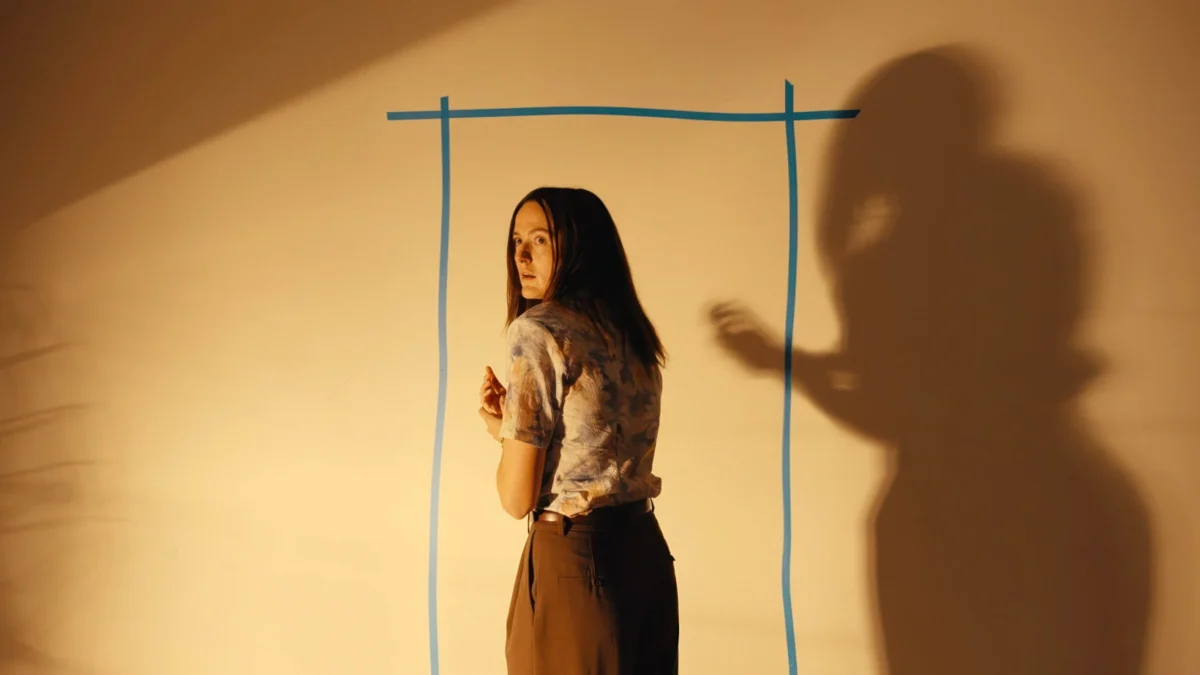
The ethereal, unsettling expanse of the Backrooms, a phenomenon born from internet lore and brought to chilling life by director Kane Parsons, has finally made its cinematic debut courtesy of A24. With its release, the film has plunged audiences into a disorienting world of endless yellow-walled corridors and a profound sense of existential dread. Parsons, the visionary behind the viral YouTube series that captivated millions, now fields questions on the specific creative choices that define his feature-length adaptation, diving into the enigmatic presence of dead birds, the intricate balance of practical and digital sets, and the unique nature of its interdimensional portal.
Main Facts: A Journey into the Unknown
"Backrooms," the highly anticipated feature film from A24 and director Kane Parsons, premiered to significant critical and audience intrigue. The movie expands upon the internet-famous lore, translating the uncanny dread of liminal spaces onto the big screen. At its core, the story follows Clark (Chiwetel Ejiofor), a furniture-store owner who stumbles upon a stable, yet invisible, portal in his basement, leading him into the titular Backrooms—a sprawling, irrational labyrinth of yellow walls and unsettling anomalies. As Clark, and later his therapist Mary (Renate Reinsve), navigate this disorienting realm, the film delves into themes of isolation, perception, and the nature of reality itself.
In a recent interview, Parsons offered rare insights into some of the film’s most perplexing elements, addressing fan queries and artistic decisions that shape the "Backrooms" universe. From the choice of specific fauna found within its unsettling confines to the meticulous construction of its otherworldly environments, and the philosophical underpinnings of its stable gateway, Parsons provides a deeper understanding of the meticulous thought process behind bringing this digital legend to cinematic reality. His responses reveal a director keenly aware of the source material’s legacy while forging a distinct, thought-provoking narrative path for the film.
Chronology: From Digital Shorts to Silver Screen Spectacle
The Ascent of a Digital Auteur: Kane Parsons’ Path to A24
Kane Parsons’ journey from a high school student creating captivating horror shorts in Blender to helming a major A24 feature film is a testament to the power of grassroots creativity in the digital age. It began in January 2022, when Parsons, then just 16, uploaded "The Backrooms (Found Footage)" to YouTube. This short film, depicting a man accidentally falling into a seemingly infinite maze of yellow-wallpapered rooms and fluorescent lights, instantly went viral. Its unsettling atmosphere, reminiscent of the "liminal spaces" internet aesthetic, tapped into a collective subconscious fear of the mundane distorted into the horrifying. The success of this initial video spurred Parsons to create a series of follow-ups, meticulously building a complex lore around the Async Research Institute, entities, and the various levels of the Backrooms, all rendered with impressive realism using Blender.
His distinct visual style, characterized by a blend of found footage aesthetics and meticulously crafted CGI, caught the attention of both horror fans and industry professionals. The shorts weren’t just scary; they were technically sophisticated, demonstrating Parsons’ innate talent for world-building and visual storytelling. This organic growth and critical acclaim eventually led to the highly coveted partnership with A24, a studio renowned for its distinctive and often unsettling horror and arthouse productions, and horror maestro James Wan (known for "Saw," "The Conjuring") who came on board as a producer.
Evolution of the Backrooms Concept: Adapting the Infinite
The transition from a series of short, atmospheric YouTube videos to a feature-length cinematic narrative presented unique challenges and opportunities for Parsons and his team. The original Backrooms concept, a collaborative creepypasta, thrives on ambiguity and the vast, unsettling implications of an infinite, non-Euclidean space. Parsons’ YouTube series had begun to give it more structure, introducing specific factions and objectives, but a feature film demanded a more focused storyline and character development.
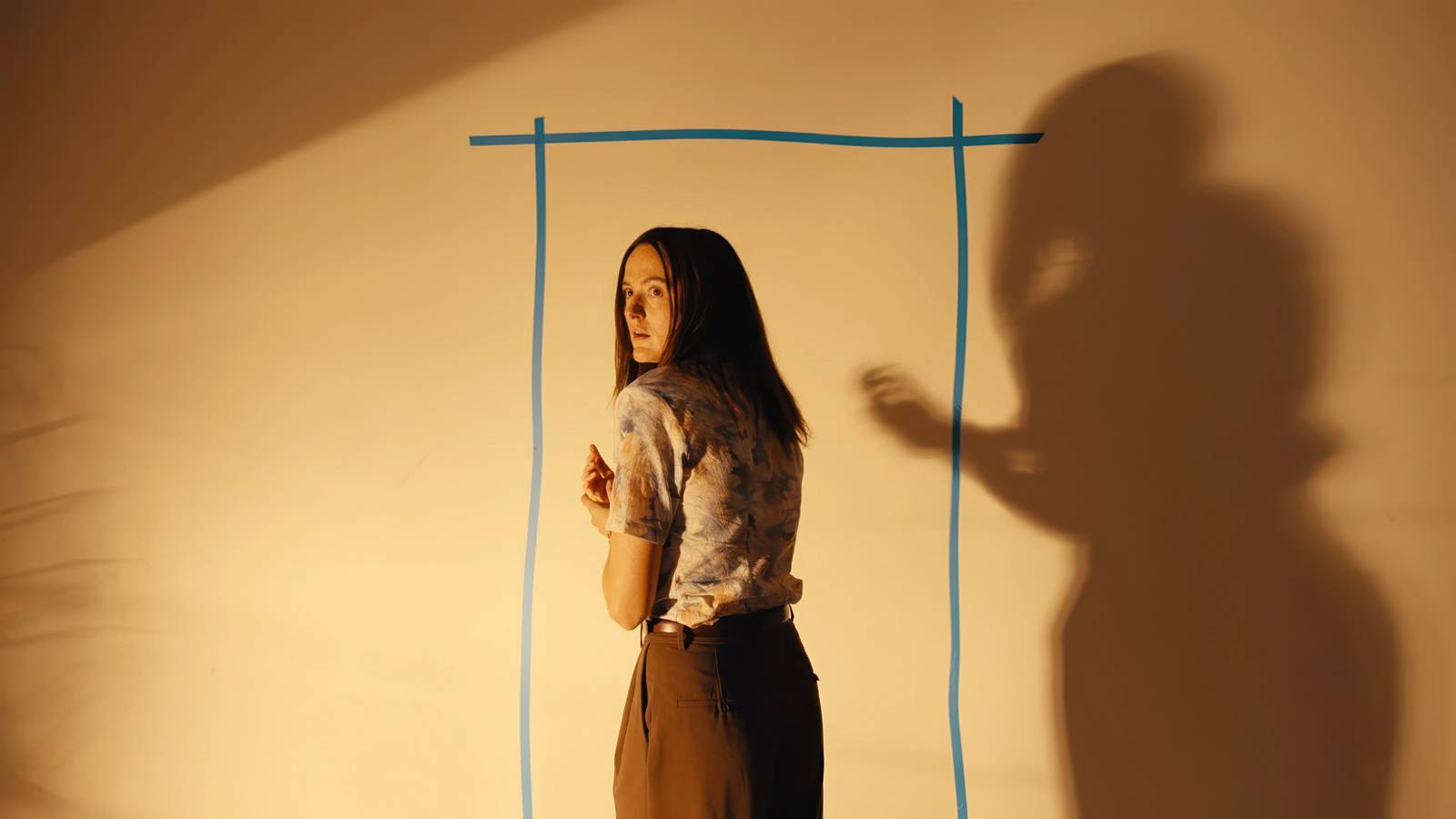
The cinematic adaptation required a careful balance: retaining the core elements of dread, isolation, and uncanny familiarity that defined the internet phenomenon, while also crafting a compelling plot arc for characters like Clark and Mary. This meant evolving the "portal" concept from the often-arbitrary glitching and "noclip" entries of the original lore to a more defined, albeit still mysterious, point of entry. It also necessitated a more controlled environment for character interaction, moving beyond purely environmental horror to incorporate human drama and psychological exploration within the Backrooms’ confines. The film acts as a significant expansion, taking Parsons’ established visual language and applying it to a broader, more intricate narrative canvas, pushing the boundaries of how internet-born horror can translate to traditional cinema.
Filming and Production Timeline: Scaling the Liminal
The production of "Backrooms" under the A24 banner represented a monumental leap in scale and resources for Parsons. After the initial conceptualization and script development, which likely involved a period of intense collaboration between Parsons, screenwriter Roberto Patino (who co-wrote the script with Parsons), and the production team, filming would have commenced. Given the film’s release in May 2026, a production window in late 2024 to mid-2025 seems plausible, allowing for extensive post-production, particularly for visual effects.
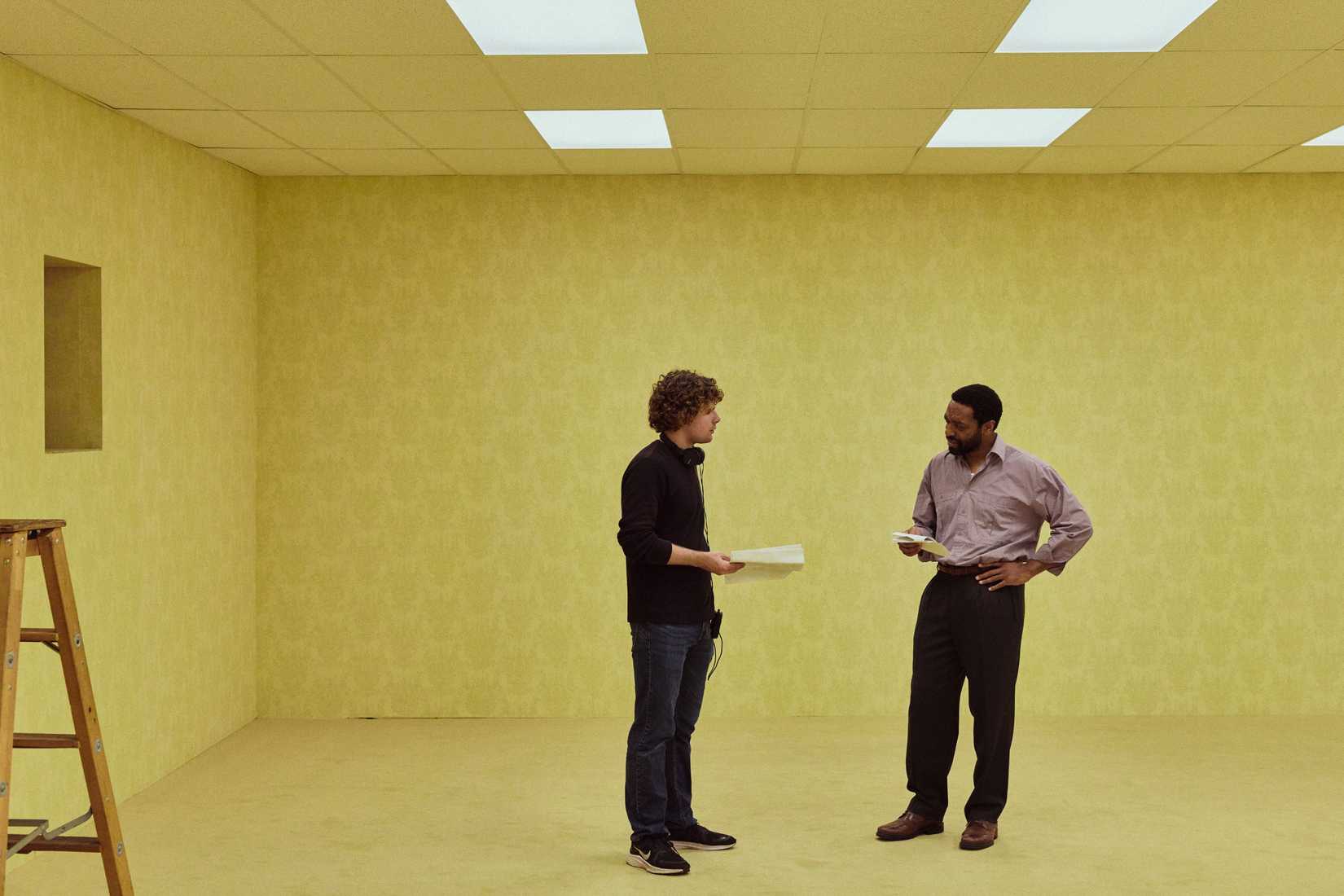
A key aspect of the production, as Parsons himself highlights, was the deliberate choice to prioritize practical sets over purely digital environments for much of the film. This involved constructing vast, intricate sets across four stages, encompassing a staggering 30,000 square feet. This commitment to tangible environments was crucial for immersing the actors, Chiwetel Ejiofor and Renate Reinsve, in the disorienting reality of the Backrooms, allowing their interactions with the strange spaces to feel authentic. While Parsons, a master of Blender, naturally integrated digital effects for elements like the "giant chasm," the emphasis on practical construction underscores a dedication to grounding the film’s uncanny premise in a physical reality, a significant undertaking for a concept often associated with purely digital creation. This hybrid approach allowed for both immersive realism and the expansive, impossible visuals necessary to truly capture the essence of the Backrooms.
Supporting Data: Contextualizing the Phenomenon
The Enduring Allure of the Backrooms Lore
The "Backrooms" phenomenon originated from a creepypasta on 4chan in 2019, describing a bizarre, unsettling "level 0" characterized by moist carpets, monochromatic yellow wallpaper, and buzzing fluorescent lights. It quickly evolved into a collaborative storytelling project, with users creating various "levels," entities, and elaborate lore. Its appeal lies in its exploration of liminal spaces – transitional areas like empty malls, deserted playgrounds, or, in this case, endless office-like rooms – that evoke a sense of uncanny familiarity and profound isolation. This aesthetic taps into a universal feeling of being lost in a place that should be ordinary but isn’t, triggering an existential dread that resonated deeply across the internet. Parsons’ YouTube series provided a definitive visual language for this phenomenon, solidifying its place in internet culture and setting the stage for its cinematic adaptation.
A24’s Midas Touch: Elevating Indie Horror
A24 has carved out a unique niche in Hollywood, becoming synonymous with critically acclaimed, artistically daring films, particularly within the horror genre. Their track record includes genre-bending hits like "Hereditary," "Midsommar," "The Witch," and "Talk to Me," which often prioritize atmospheric tension, psychological depth, and original storytelling over conventional jump scares. The studio’s involvement with "Backrooms" immediately signaled that Parsons’ film would likely follow a similar path, aiming for a more thoughtful, art-house horror experience rather than a straightforward genre flick. This partnership validates the project’s artistic merit and aligns it with a legacy of films that challenge and redefine the horror landscape. A24’s support provides not just funding but also a platform for creative freedom, allowing Parsons to fully realize his vision without significant commercial compromise.
James Wan’s Guiding Hand: A Horror Maestro’s Influence
The involvement of James Wan as a producer for "Backrooms" adds another layer of intrigue and credibility to the project. Wan is a titan in contemporary horror, celebrated for directing blockbuster franchises like "Saw," "The Conjuring," and "Insidious," as well as producing numerous other successful genre films. His expertise lies in crafting effective scares, building intricate horror universes, and understanding the mechanics of audience engagement. While Parsons’ aesthetic is distinct, Wan’s experience undoubtedly offered invaluable guidance in translating a digital concept into a cinematic narrative, particularly concerning pacing, tension building, and managing the unique challenges of horror filmmaking. His presence suggests a blend of indie artistic vision with seasoned genre craftsmanship, promising a film that is both intellectually stimulating and genuinely frightening.
Official Responses: Unpacking the Director’s Vision
Parsons on the Enigmatic Avian Presence
One of the more unsettling and perplexing details in "Backrooms" is the presence of dead or struggling seagulls, juxtaposed against the absence of other animals within the Backrooms. Clark and Mary encounter these birds in dire straits, prompting questions about their origin and significance.
"I would say there’s a significance to picking seagulls," Parsons tells Polygon. "Birds evoke a certain kind of imagery that we wanted to be evoking. But without explaining the thought process fully — logically, there’s nothing that would prevent anything from getting in there. Logically, literally anything that could walk through a wall could end up in that place. Birds and flies and humans just so happened to be some of the more unfortunate ones in this film."

Parsons’ choice of seagulls is deliberate, hinting at symbolic weight without explicit exposition. Birds, in various cultures, can represent freedom, transcendence, or even omens. Their presence, particularly in a state of decay or distress within the Backrooms, could symbolize lost hope, a corruption of the natural world, or the ultimate futility of escaping the dimension’s grasp. Their vulnerability highlights the Backrooms’ indiscriminate nature; it doesn’t just trap humans but any living thing unfortunate enough to "noclip" into its reality.
The director maintains an intriguing ambiguity regarding the birds’ origin. When pressed on whether all the seagulls are interdimensional travelers or if some might be native creations of the Backrooms, Parsons cautions against definitive assumptions. "We don’t know that for sure," he states. "But yeah, the implication inside the film — I’m not going to be cute about that for a second — the implication when we see the birds is yes, they came from outside. But I appreciate the way of thinking, because it very well could be [a Backrooms bird]." This subtle refusal to entirely rule out indigenous Backrooms life adds another layer to the mystery, suggesting that the dimension might not just be a passive copy of reality but an active, evolving ecosystem of its own, however warped. The dead birds thus serve not just as a visual motif but as a constant, unsettling reminder of the Backrooms’ deadly potential for all life forms.
The Tangibility of the Liminal: Sets and Visual Effects
Parsons’ YouTube series famously utilized Blender to craft the infinite, yellow-walled mazes of the Backrooms. For the feature film, however, the approach shifted dramatically towards practical effects and physical sets, a decision discussed by Parsons in an A24 podcast with producer James Wan. The director emphasized prioritizing real, tangible environments for the film.
"A good majority of it’s physical," Parsons affirms regarding the film’s environments. "Anytime the actor touches or interacts with something, it’s physical. A good portion of the sets — like the basement leading into where he passes through the wall, the furniture pile, the stop-sign room where he finds the bird, when he goes through the door — all of that’s on a single stage. We filled four stages with sets. It’s 30,000 square feet. So it’s most of it."
This commitment to practical filmmaking is significant, especially for a concept so deeply rooted in digital creation. By building 30,000 square feet of physical sets across four stages, the production created an immersive, tactile experience for the actors, enhancing the realism of their performances within the surreal environment. The tangible nature of the sets, from the grimy basement to the iconic yellow rooms and furniture piles, grounds the film’s fantastical elements in a palpable reality, making the horror feel more immediate and inescapable.
However, Parsons, ever the digital artist, also embraced the strategic use of Blender for specific, larger-scale effects. He acknowledges its use for some "obvious" elements, "like the giant chasm," finding comfort in its familiarity. "It’s a ripe opportunity, I felt. I think there’s a skepticism around effects, historically, with film. Obviously, we appreciate when things are done practically. But I can’t help but feel, given that by necessity, I’ve been doing this stuff in Blender for so long, that it was a healthy, nice homage to [use] the exact same method for the film. Given how I really appreciate what The Blender Foundation does with their program — I’m pro-VFX in that regard. I can appreciate why you would want to go practical for the whole thing, but I think it was a pretty nice tactile blend of the two. Everything felt pretty built up from the ground."
This "tactile blend" is key to the film’s aesthetic success. It marries the visceral impact of physical sets with the boundless possibilities of digital effects, allowing the Backrooms to be both intimately oppressive and impossibly vast. Parsons’ reverence for Blender, the tool that launched his career, shines through, transforming what could be perceived as a limitation into a deliberate artistic choice and a homage to his origins. This approach ensures that while the film feels grounded, it never loses the sense of infinite, inexplicable scale that defines the Backrooms.
Redefining the Interdimensional Gateway
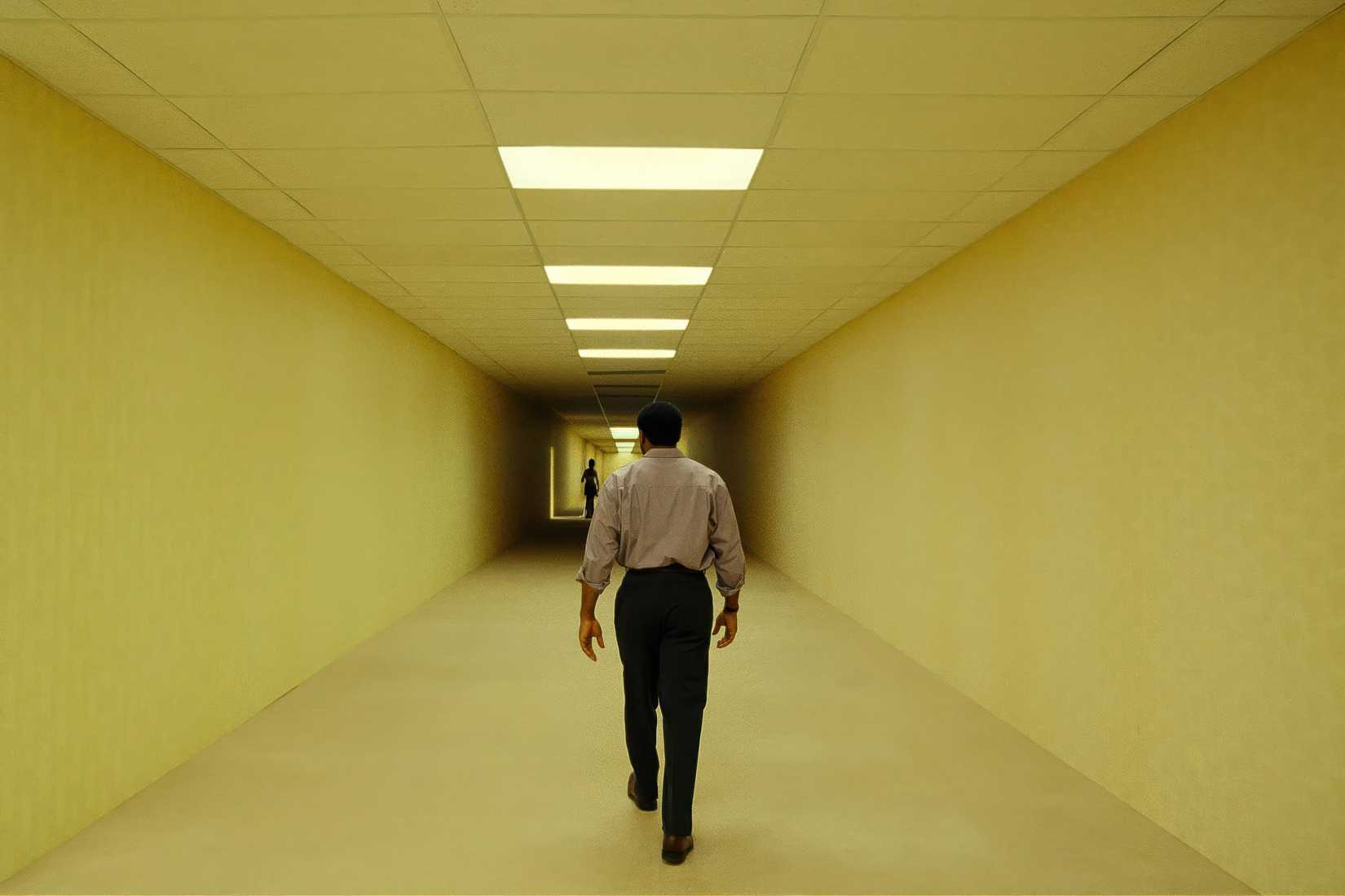
The concept of the portal into the Backrooms is central to its lore. In Parsons’ YouTube series, portals often manifest as technologically created gateways by the Async Research Institute or as spontaneous, crackling, and often transient phenomena. The movie, however, presents a different kind of entry point: one that is spontaneously generated, completely stable, and invisible until someone passes through it, appearing simply as a wall.
This cinematic reinterpretation deftly sidesteps common horror-thriller clichés. As Parsons explains, the initial expectation of many, including this interviewer, might be for the portal to close, trapping Clark, or for it to be inconsistent, leading others to doubt his sanity. "Yeah, we certainly thought about [having Clark’s portal close and leave him stranded]," Parsons admits. "It’s kind of dictated in most of the early forms of Backrooms [stories]."
However, the film deliberately deviates from these tropes. Parsons clarifies the distinction between the movie’s portal and those in his YouTube series: "The YouTube series has this open doorway to the Backrooms. It’s very fixated on [Async], this group of people in San Jose, California — same setting as the film, in the same year pretty much. The YouTube series focuses on their relationship with the Backrooms. They have an open, consistently accessible entrance, [but] they know very little about what’s happening outside of that area. Meanwhile, there’s a less consistent, less visible crackling presence all around, where things open and close abruptly and arbitrarily. Clark has an opening, but we don’t know how long it will be open. I think there’s this feeling that it just is inherently a little unstable. Maybe it’s not fair to expect people who aren’t familiar with Backrooms to have that in their head, but I think given how esoteric and generally unexplained that entrance is, there’s not a lot of confidence that it’s going to just stay fine."
Despite this inherent, implicit instability, the portal remains reliably open for Clark and those he brings through. This narrative choice serves multiple purposes. Firstly, it allows the film to avoid predictable genre beats, keeping the audience engaged with fresh storytelling. Secondly, and more profoundly, it facilitates the film’s deeper metaphorical explorations. Parsons connects the portal’s stability to the "overall metaphor of the Backrooms — a space that copies and re-copies real-world objects and rooms until they lose all fidelity and rationality — references the current state of self-referential popular culture, which is a constant." In this sense, constant access to the Backrooms mirrors the constant, inescapable nature of modern cultural trends.
Furthermore, the portal’s dependable openness is crucial for character development. "He could leave at any point," Parsons stresses. "We will leave the door open for him. But for Clark especially, it’s that he’s making the deliberate choice to be in there. This place has pulled on a sort of manipulated, twisted version of nostalgia, or hope for being able to re-enlighten some lost core self or something. I think the Backrooms manipulates the idea that there is something profound and meaningful to be discovered in that chaotic random noise, without implying it’s a conscious being that wants that. It just so happens that people find it, and they let it pull them too far down, out of a human desire to interact safely with the world. And if there’s a gaping hole in their understanding like that, it really does not work well for people." By allowing Clark the agency to leave, the film transforms his continued presence in the Backrooms from a forced predicament into a profound, and tragic, personal choice driven by a warped sense of hope and discovery.
Implications: Echoes of the Void
The Backrooms as a Societal Mirror: A Philosophical Abyss
Kane Parsons’ "Backrooms" is more than just a horror film; it’s a profound, if unsettling, commentary on the contemporary human condition and the state of global culture. Parsons articulates this vision clearly, positioning the Backrooms as a potent metaphor for societal trends.
"Generally speaking, I think it had to have been maintained that way, for all the deeper societal messaging we might be doing about where we’re at with some industrial trends, and with this level of atomized society that is looking for a way out by the species role-playing as itself, and becoming very derivative," he explains. This interpretation frames the Backrooms as a physical manifestation of cultural decay, where authenticity is lost in an endless loop of imitation. The "derivative spirals of self-referencing" perfectly describe a media landscape saturated with sequels, reboots, and content that constantly echoes itself, losing its original meaning.
Parsons further extends this metaphor to the digital age: "Culture is continuously falling into these derivative spirals of self-referencing. You can experience the whole world from a single room on a device. None of these things are novel, but they’re all happening at once. It’s not being dictated by any specific people, really — even though you can point to individual parties that are involved with the propagation of these systems, they didn’t build the world. It’s more of an evolutionary drift." This speaks to the passive consumption of information and entertainment, where individuals are bombarded by content, much of it repetitive or recycled, from the confines of their personal devices. The Backrooms, with its endless, generic rooms, becomes a physical representation of this digital echo chamber – a place where individuality and purpose are diluted by an overwhelming, yet ultimately meaningless, sameness.
For Parsons, the portal’s persistent openness and its existence beyond human control are crucial to this societal allegory. Just as cultural shifts and the proliferation of endlessly repeating franchises operate outside individual consumer control, the Backrooms’ entrance remains an unyielding, almost natural, part of the landscape. It represents the "gaping hole in understanding" that people try to fill, often by succumbing to a "manipulated, twisted version of nostalgia, or hope" that the Backrooms itself exploits. It suggests that in a world devoid of clear meaning, the chaotic noise of the Backrooms can deceptively appear profound, pulling individuals into its void out of a desperate human desire for interaction and understanding, even if it leads to their ultimate undoing.
The Future of the Franchise: Expanding the Liminal Universe
The cinematic release of "Backrooms" marks a pivotal moment for the internet phenomenon, transitioning it from a collection of online narratives to a potential multi-film franchise. Parsons’ meticulous world-building and philosophical depth laid out in the film open numerous avenues for future exploration. Sequels could delve deeper into the origins of the Backrooms, explore other "levels" and entities hinted at in the lore, or follow different characters who stumble into its terrifying embrace. The stable, yet inherently unstable, nature of Clark’s portal also suggests that other, perhaps more volatile, entry points could emerge, providing fresh narrative hooks.
The film’s success, particularly its unique blend of practical and digital effects and its intellectual approach to horror, could set a precedent for how internet-born content is adapted for the big screen. It demonstrates that viral concepts, when handled with artistic integrity and a clear directorial vision, can transcend their origins and achieve cinematic significance. The philosophical underpinnings discussed by Parsons ensure that any future installments would likely continue to be thought-provoking, grounding the scares in deeper existential questions rather than relying solely on surface-level horror.
Impact on Indie Filmmaking and YouTube Creators
Kane Parsons’ trajectory is a beacon for a new generation of filmmakers. His success underscores the increasing democratization of content creation and the power of platforms like YouTube and tools like Blender. He exemplifies how a compelling vision, combined with technical skill, can bypass traditional industry gatekeepers and garner a massive audience, eventually leading to mainstream recognition. This film is a testament to the viability of "creator economy" talents transitioning into established Hollywood structures without compromising their artistic integrity.
Parsons’ emphasis on a "tactile blend" of practical and digital effects also offers a valuable lesson: that the most effective filmmaking often combines the best of both worlds. For aspiring indie filmmakers and digital artists, his journey proves that a strong concept and mastery of accessible tools can lead to collaborations with major studios and industry veterans like James Wan, ultimately changing the landscape of how cinematic talent is discovered and nurtured. "Backrooms" is not just a film; it’s a landmark achievement for digital artists everywhere, signaling a powerful shift in the creative pipeline of modern cinema.
Backrooms is in theaters now.












No comments yet. Be the first to join the conversation!