Suro Senen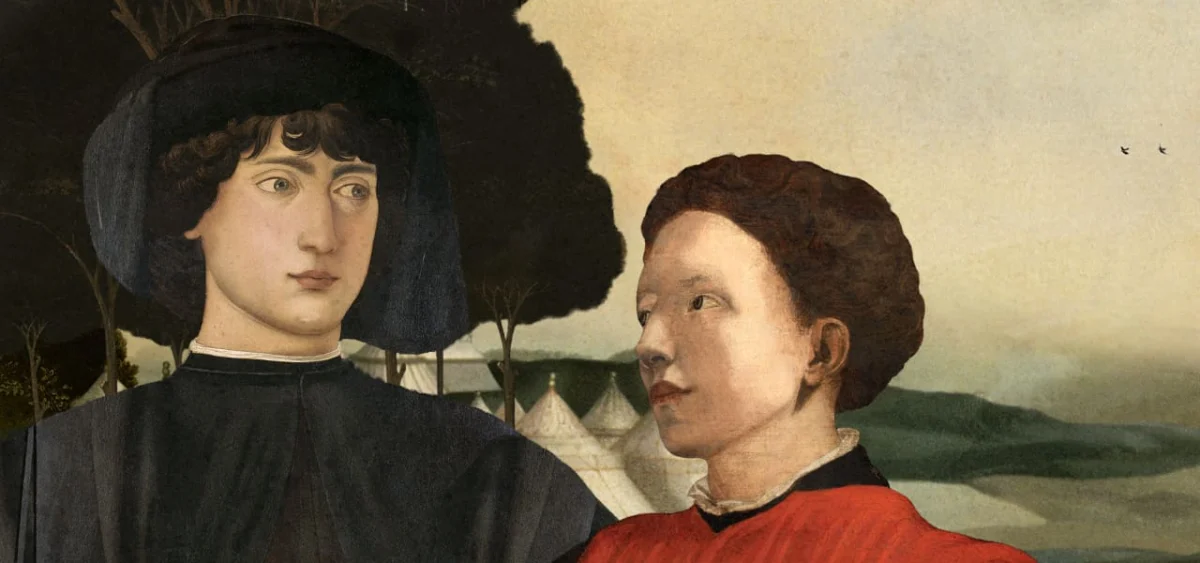
By Kévin Giraud
May 27, 2026
In the landscape of contemporary independent cinema, few directors have charted a trajectory as unorthodox—or as compelling—as Vergine Keaton. Having arrived at animation not through traditional academic channels, but via the serendipitous discovery of graphic design and the raw potential of digital tools, Keaton has evolved from an experimental tinkerer into one of the most visionary voices in French animation. Fifteen years after her debut short, I Was Crying Out at Life. Or For It., turned heads at the Cannes Film Festival’s ACID selection, Keaton is returning to the global stage with an ambitious, sprawling feature film: Bataille.
The Genesis of a Singular Vision
Keaton’s early career was defined by a self-taught, almost artisanal approach to the medium. With no formal background in animation, she famously began her journey by utilizing little more than a home scanner and Adobe Photoshop, animating at a sparse four frames per second. Her debut in 2009, which famously constructed a narrative from a corpus of one hundred 19th-century engravings, signaled an artist obsessed with the "archaeology" of imagery.
Taking her surname as a deliberate homage to silent film titan Buster Keaton, the director has spent the better part of two decades refining a language that blends classical iconography with rhythmic, kinetic experimentation. Her work is rarely about character arcs in the traditional sense; rather, it is about the "sculpting of time."
Chronology: From Engravings to Renaissance Warfare
The development of Bataille marks a pivot in both scale and subject matter for Keaton. While her previous work often occupied a "mineral" space—focused on nature, flora, and the quiet interactions of the physical world—Bataille dives headfirst into the chaotic turbulence of human history.
- 2009: Keaton premieres I Was Crying Out at Life. Or For It. at Cannes, establishing her signature style of recontextualizing historical imagery.
- 2010–2024: A period of experimentation where Keaton developed her technique, moving from simple frame-by-frame manipulation to complex, choreographic animation systems.
- 2025: Conceptualization of Bataille begins, inspired by Jean Giono’s The Disaster of Pavia.
- 2026 (May): Bataille is featured as a standout project at the prestigious Cannes-Annecy Animation Showcase, signaling a major shift in industry support for her feature debut.
Thematic Depth: Why the 1525 Battle of Pavia?
When asked what compelled her to step away from her nature-driven narratives to tackle a violent, historical epic, Keaton points to the structural fascination of the human collective.
"I came across Jean Giono’s The Disaster of Pavia," Keaton explains. "I was swept away by this epic political tale. It isn’t far removed from my more nature-driven subjects, where I try to understand how elements interact and how the world unfolds. Here, it’s about observing a human group composed of different social strata that, during an exceptional event, must organize itself. That’s what interests me: the mechanisms, the interactions, the choices each individual makes, and the central question of power."
The film aims to dissect the mechanics of a single day of warfare. By analyzing the Battle of Pavia—alongside other historical clashes like Agincourt and Marignano—Keaton intends to map the hierarchy of human conflict, from the nobility dictating orders to the mercenaries and foot soldiers caught in the gears of a war they cannot comprehend.
Artistic Methodology: The Renaissance Collage
Keaton’s visual style relies on what she describes as "the collective memory." She does not animate from scratch; she harvests history. By curating a corpus of Renaissance paintings and historical artifacts, she creates a visual lexicon that feels both "familiar and strange."
"I like working with pre-existing images that carry a classic, universal quality," she notes. "These are images that seem to contain the whole history of humankind. When I have a project in mind, I search for images and look within them for narrative possibilities. For example, it was after discovering a portrait at the Louvre that one of the film’s characters, the Black Knight, was born."
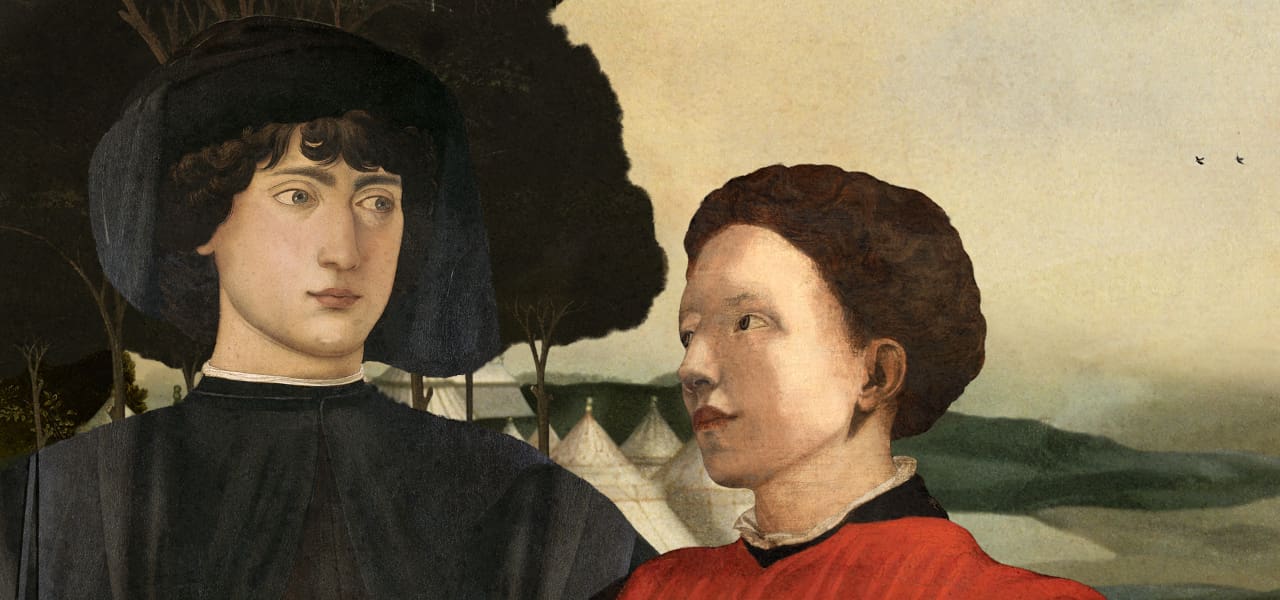
This method—treating animation as a form of curatorial sculpture—allows Keaton to impose a rigid, rhythmic control over the chaos of her battle scenes. She works with a metronome, treating every frame as a beat in a grand, visual symphony.
Production Status and Industry Partnerships
The road to production has been bolstered by a robust network of international co-producers and the French funding body, the CNC. Producers Vanessa Buttin Labarthe (Les Astronautes) and Manon Messiant (Iliade Films) are currently finalizing the animatic, working in tandem with editor Heloïse Pelloquet.
"The priority is locking the film’s narrative, staging, and editing," the producers state. "We are working closely with Heloïse Pelloquet, the live-action editor who recently worked on the Cannes 2025 opener Partir un Jour. She is helping Vergine finalize this crucial step."
A notable development in the production is the shift in audio direction. Originally conceived as a silent musical piece, the film will now feature voice performances from actors, including a preliminary agreement with French musician Pomme, though the film will remain strictly dialogue-free. This creates an intriguing niche for the film: a high-budget, dialogue-free musical epic.
The production has already secured international backing from:
- Embuscade Films (Canada): Félix and Nicolas Dufour-Laperrière.
- Umedia (Belgium): Julia Gabreau.
- Altara Films (Italy): Giovanni Donfrancesco.
Furthermore, French distributor UFO—fresh off the critical and commercial success of Flow—has signed on, lending the project significant credibility in the specialized animation market.
Implications: Animation as Pure Cinema
The selection of Bataille for the Cannes-Annecy Animation Showcase serves as a broader statement on the state of the medium. For decades, animation was frequently siloed away from "serious" live-action cinema. Keaton’s project, which bridges the gap between historical drama, experimental art installation, and mainstream feature film, challenges that segregation.
"It’s wonderful because it aligns with what we stand for in all of our productions," Messiant and Buttin Labarthe note. "Animated cinema is, first and foremost, cinema."
For Keaton, the medium remains a tool for deconstructing reality. "Animation is extremely precise because you dissect movement frame by frame," she says. "But my initial impulse is always intuitive. Whether I’m working on feature films or installations, I think about movement, variations in rhythm, and how those rhythms shape emotion. My stories are very simple, but I love animation immensely for the trust it places in images to carry narrative."
As Bataille moves toward the completion of its development phase this summer, the industry is watching closely. By refusing to compromise on her experimental roots while embracing the scale of a feature, Vergine Keaton is poised to deliver a film that is as much a treatise on the nature of history as it is an evolution of the animated art form. In the coming years, Bataille may well be remembered as the moment the "sculptor of time" finally captured the entire history of the world within a single frame.


 Asep Darmawan
 Basiran