Rifan Muazin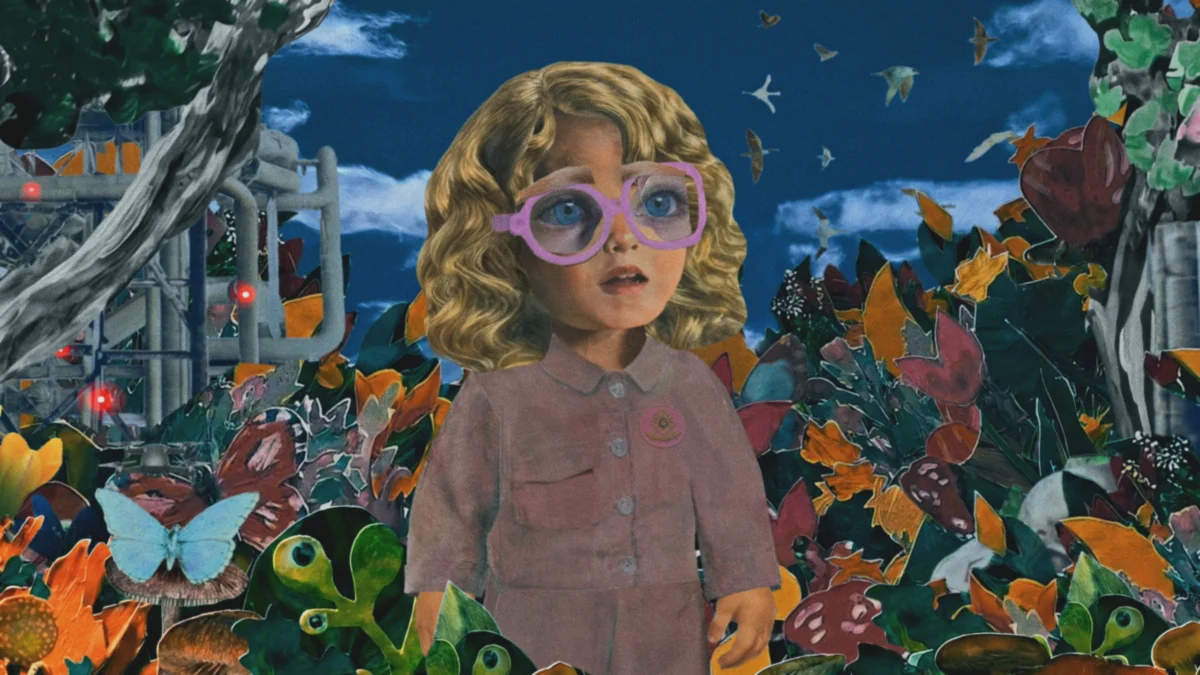
The 2026 Cannes Film Festival has long been the global stage for the preservation of cinematic history, a bastion where the golden age of film is celebrated through meticulously curated 4K restorations. Yet, this year’s Cannes Classics lineup offered something strikingly anomalous: a bridge between the analog past and the algorithmic future. Amidst the reverence for Guillermo del Toro’s Pan’s Labyrinth and the restoration of Ken Russell’s controversial The Devils, there sat a 15-minute short film that has sparked as much curiosity as it has debate.
Goodnight Lamby, a whimsical, visually dense, and technically ambitious short from Brooklyn-based mixed media artist Dustin Yellin, marks a significant departure from traditional filmmaking. Produced by Darren Aronofsky’s creative studio, Primordial Soup, the project features cinematography by Oscar nominee Matthew Libatique, the on-screen presence of Paul Rudd, and the distinct vocal performance of Chris Rock. It is a work that exists at the intersection of fine art and generative AI, signaling a shift in how we might define the future of storytelling.
The Genesis of an Idea: From "Frozen Cinema" to the Moving Image
To understand Goodnight Lamby, one must first understand the "frozen cinema" of Dustin Yellin. Known for his monumental, multi-layered glass sculptures, Yellin has spent years creating works that feel like sprawling, allegorical maps of human existence. His most famous installation, Politics of Eternity, is not merely a sculpture; it is a narrative container, a multimodal device where hundreds of small, intricate stories occur simultaneously within layers of transparent glass.
For years, Yellin has spoken about the desire to liberate these characters from their glass prisons. "I make these sculptures that are very narrative, allegorical, with multimodal story devices with many narratives happening simultaneously," Yellin explained. "I’ve always wanted to bring them to life. I describe the sculptures as ‘frozen cinema,’ and so it’s a natural progression. It’s something I’ve been thinking about for years."
The opportunity to realize this vision arrived through a collaboration with Darren Aronofsky, a filmmaker increasingly fascinated by the potential of generative AI. Along with producing partner Justin A. Gonçalves, Aronofsky pushed Yellin to transition from a visual artist into a cinematic one. The resulting short film, Goodnight Lamby, follows Yellin’s daughter, Zia, as she navigates a dreamlike version of her father’s sculptures to find a lost stuffed animal.

Chronology: A Multi-Year Collaborative Journey
The road to Cannes was not a simple one. The collaboration began several years ago, rooted in a series of conversations between Yellin and Aronofsky about the limits of traditional production.
- Conceptualization (2023–2024): Yellin and Aronofsky began discussing the "world-building" aspects of Yellin’s sculptures. While Aronofsky provided the "story, story, story" coaching familiar to veteran directors, Yellin focused on the "world, world, world" of the visual landscape.
- Production and Technology Integration (2025): The production team, including Ricardo Villavicencio as head animator, began the laborious process of translating Yellin’s complex, high-density analog art into a digital, cinematic format. This phase utilized Google Veo 3, a generative AI tool, to animate elements of the sculpture.
- Refining the Aesthetic (Early 2026): The team spent months rotoscoping and composing digital elements to ensure that the AI-generated imagery maintained the textural integrity of Yellin’s physical work.
- Cannes Selection (May 2026): The film was finalized and accepted into the Cannes Classics section, a high-profile platform that invited both acclaim and scrutiny regarding the usage of Gen-AI in a historical context.
Supporting Data: The Anatomy of a Hybrid Production
Goodnight Lamby is not a film created by a single prompt; it is an industrial hybrid. The production methodology involved a painstaking synthesis of disparate mediums:
- Live Action: The presence of Paul Rudd provides an emotional tether for the audience, grounding the abstract visuals in human performance.
- Voice Talent: Chris Rock provides the voice of a talking octopus, a guide figure that serves as the moral compass of the film’s aquatic topography.
- Generative AI (Google Veo 3): This was the engine behind the film’s "kaleidoscope of aesthetics." According to Ricardo Villavicencio, the process involved prompting elements to be animated, isolating them on green backgrounds, and then rotoscoping and composing them into a cohesive digital landscape.
- The Soundtrack: The film features an acoustic end-credits song by Maggie Rogers, adding a layer of contemporary emotional resonance to the avant-garde visuals.
The efficiency of this workflow was, according to Yellin, a matter of necessity. "These new tools helped me because I couldn’t really afford it otherwise," he noted. "The imagery is very, very dense and very, very analog… it would just take me 10 years to make."
Official Responses and the "Bad Art" Defense
The reception of Goodnight Lamby at Cannes has been polarized, reflecting the broader anxiety surrounding artificial intelligence in the creative industries. Critics have questioned whether a festival dedicated to the history of cinema should be platforming works that rely on automated generative processes, especially following the backlash against other AI-assisted projects like On This Day…1776.
However, both Yellin and his producers maintain a firm stance on the medium-agnostic nature of art. Yellin, in particular, dismissed the fear surrounding AI with a blunt assessment of the art world:

"Generally, you walk into an art fair, you see mostly bad art, right? Good art might be made with stone or metal or acrylic or oil or whatever medium, but really it’s the idea and the vision that’s gonna make it good. So I think that with these tools, you’re gonna see so much garbage, but you also see so much garbage in the analog world. It’s not the what you’re seeing, but the how you’re seeing."
Justin A. Gonçalves echoed this, emphasizing the importance of the human eye behind the machine. "One of the things that I’m most grateful for about this experience is working with an artist like Dustin, who has such a refined eye. In a lot of ways, it’s a first-time director, so there’s an active discovery alongside his experience that has made the process really unique."
Implications: A New Era for Museum and Festival Spaces
The inclusion of Goodnight Lamby in Cannes Classics is a watershed moment. By placing an AI-forward short film alongside 100-year-old restored masterpieces, the festival is making an implicit statement: the "classics" of the future may be defined by their ability to synthesize technology with human intent.
1. Expanding the Definition of Film
The film challenges the traditional boundary between "fine art" and "cinema." By touring the film through museums, the team hopes to bring audiences who usually engage with art in static galleries into the cinematic fold. It posits that film can be a direct extension of sculptural practice, rather than just a narrative medium.
2. The Normalization of AI as a Tool
The collaboration between Aronofsky—a director known for his rigorous, often intense, human-centric narratives—and Yellin suggests that AI is being viewed not as a replacement for the auteur, but as a shortcut for the visionary. If an artist has a complex world inside their head that takes decades to paint, the use of generative tools to manifest that vision in 15 minutes is, to Yellin, simply an evolution of the brush.

3. The Challenge to Intellectual Property and Craft
Despite the artistic defense, the project raises long-term questions. If AI can recreate the "aesthetic" of an artist’s personal work, what are the implications for style and copyright? While Yellin used his own work as the prompt, the precedent set by using such powerful tools could lead to debates over the definition of authorship in the digital age.
Conclusion
As the lights went down at the Cannes screening, the audience was presented with a work that felt both familiar and alien. Goodnight Lamby is not just a 15-minute diversion; it is an experiment in the limits of human imagination. Whether this represents a "new wave" of cinematic art or a controversial footnote in the history of the festival, it is clear that Dustin Yellin and Darren Aronofsky have succeeded in one regard: they have forced a conversation about the soul of the image in an era where the image can be generated at the click of a button.
For now, the film will continue its festival run, aiming for a broader museum exhibition. As the industry grapples with the ethics of AI, the success of Goodnight Lamby will likely hinge not on the software used to create it, but on whether it truly captures the "frozen cinema" that Yellin has been dreaming of for all these years. In the world of art, as Yellin suggests, it is the vision that survives, regardless of the tools used to construct it.

 Nana Wu
 Jia Lissa