Suro Senen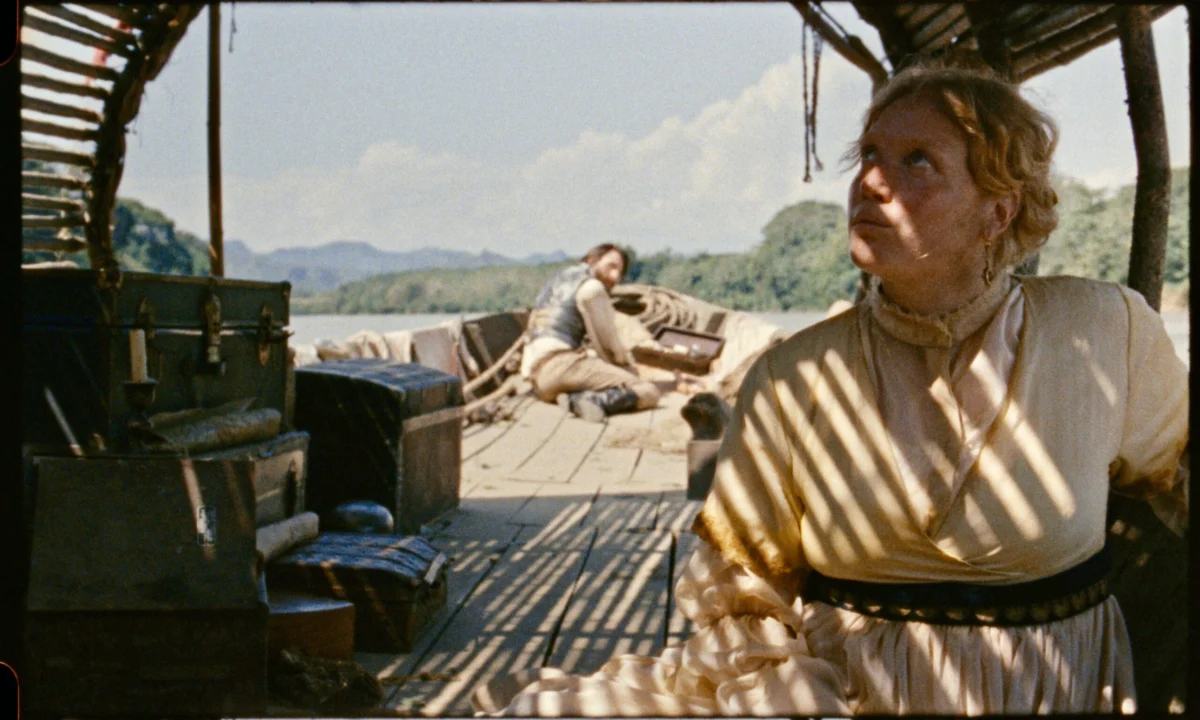
As the global film industry turns its eyes toward Switzerland for the 79th Locarno Film Festival, one of the most anticipated entries in the "Filmmakers of the Present" competition is the debut feature from Colombian director Manuel Ponce de León, In All My Journeys I Am Returning (Todos mis viajes son viajes de regreso).
Ahead of its world premiere at the prestigious festival, the boutique Italian sales agency Lights On has acquired the international rights to the film. This acquisition marks the fifth consecutive year that Lights On has secured a project for the Locarno program, signaling a sustained commitment to arthouse cinema that challenges the boundaries of traditional narrative.
A Visionary Debut: The Premise and Poetics
Set against the backdrop of 19th-century Colombia, the film follows a young Swedish couple navigating the treacherous, winding waters of the Magdalena River. Their stated objective is the pursuit of a legendary gold mine, but as the film progresses, the physical journey dissolves into something far more abstract and existential.
As the couple drifts through a landscape scarred by the remnants of historical conflict, the rigid structure of time begins to fracture. Memory overtakes the immediate reality, and the narrative flow becomes as fluid and unpredictable as the river itself. The film evolves into a meditative, haunting exploration of the human condition, touching on profound themes of exile, the ache of longing, and the often-elusive quest to find a sense of belonging in a world that feels increasingly fragmented.
The project is deeply informed by Ponce de León’s multidisciplinary background. A student of art history and philosophy, he brings a rigorous intellectual lens to his filmmaking. Perhaps most significantly, the film is an homage to the work of 20th-century Colombian poet León de Greiff. The title itself is a direct reference to a line that has captivated the director since childhood: "All journeys are journeys of return."
Chronology: From Philosophical Roots to the Magdalena River
The genesis of In All My Journeys I Am Returning is not merely a tale of scriptwriting, but one of serendipity, geography, and historical convergence.
For Ponce de León, the river has always functioned as a silent protagonist. His previous short films, including Beyond the Night, were also rooted in the geography of the Magdalena River, specifically in the colonial-era town of Honda. Known as the "City of Bridges," Honda served as the primary base for the production.
"The figure of the river is an element that, at first, I wasn’t even consciously aware of," Ponce de León shared in an interview. "It was very intuitive, until one day a colleague asked me, ‘Why is there always a river? What’s the story with the river?’ And I realized that the river acts as a space of memory, a place where different times converge—a vehicle through time itself."
The production timeline saw the director embedding himself in the landscape of Honda, utilizing the town’s rich, colonial architecture to frame a narrative that feels both historical and timeless. Working closely with cinematographer Angello Faccini, the team opted for an evocative sepia-toned palette, intended to evoke the textures of the early 19th century while grounding the film in the sensory reality of the river banks.
The casting process, which took place across multiple continents, became a story in its own right. The discovery of lead actress Camila Bejarano Wagner was particularly extraordinary. A Swedish resident with Colombian heritage, Wagner was visiting her grandmother in Colombia when she auditioned for the role. In a twist of fate that mirrored the film’s own preoccupation with history, she discovered that her grandmother had once been the lover of the very poet whose work inspired the film—León de Greiff. She uncovered personal keepsakes, including handwritten letters and a Scrabble set used by the poet and her grandmother, effectively bridging the gap between the film’s narrative and the director’s own creative source material.
To find his male lead, Fredrik Lundin, Ponce de León traveled to the remote Swedish village of Gunnarskog, north of the Arctic Circle. The village has a strange and storied connection to Colombia, as it hosts an annual festival celebrating the life and work of León de Greiff and his fictional alter ego, Gaspar de la Noche. This trans-continental cultural exchange is reflected in the film’s dialogue, which traverses Spanish, Swedish, French, and Polish.
Supporting Data: The Production Framework
The production of In All My Journeys I Am Returning was a collaborative effort spearheaded by Ponce de León’s production company, Los Niños Films. Key producers included Daniela Rocha Giraldo, Ana Winograd, and Héctor Ulloque, all of whom shared a vision for a film that prioritized atmospheric storytelling over conventional pacing.
The technical specifications of the production reflect a commitment to high-level, independent filmmaking:
- Production Company: Los Niños Films
- Key Producers: Manuel Ponce de León, Daniela Rocha Giraldo, Ana Winograd, Héctor Ulloque
- Cinematography: Angello Faccini
- Language Palette: Spanish, Swedish, French, Polish
- Key Locations: Honda, Colombia; Stockholm, Sweden; Gunnarskog, Sweden
- Key Cast: Camila Bejarano Wagner, Fredrik Lundin, Denis Lavant
The inclusion of renowned French actor Denis Lavant, known for his work with Leos Carax, adds a layer of international pedigree to the film, helping to anchor its surrealist and philosophical leanings with a performance that promises to be as haunting as the environment itself.
Official Responses and Industry Reception
The acquisition of the film by Lights On has been met with enthusiasm from the international distribution community. Flavio Armone, co-founder and managing director at Lights On, praised the film for its stylistic audacity.
"It’s an exceptionally bold and distinctive first feature film that we’re confident will resonate with audiences around the world," Armone stated. "Returning to the Locarno Filmmakers of the Present competition for the fifth consecutive year is a point of pride for us, and we believe this film perfectly encapsulates the type of cinema we aim to champion."
Ponce de León, reflecting on the journey from the banks of the Magdalena to the screens of Locarno, expressed his gratitude for the partnership. "This film has been a long and deeply personal journey, and I am very happy to have found a team that understands its sensibility and the spirit in which it was made," he remarked. "Poetry and literature have always been part of my creative universe. They continue to be a source of inspiration and a way of approaching the language of cinema."
Implications: The Future of Latin American Arthouse
The selection of In All My Journeys I Am Returning for the Locarno Film Festival is indicative of a broader trend in global cinema: the rise of highly personal, geographically specific, yet universally resonant narratives coming out of Colombia.
By deconstructing the historical narrative of the Magdalena River—a commercial lifeline for the country for centuries—and replacing it with a dreamlike, poetic exploration of exile, Ponce de León is signaling a shift away from traditional "social realism" often associated with regional cinema.
The film’s success at the festival could pave the way for a new generation of Colombian filmmakers who are increasingly looking toward the intersection of philosophy, poetry, and history to inform their work. As the industry looks for fresh, distinctive voices, the synthesis of European and Latin American perspectives displayed in this film suggests that the most compelling stories of the coming years will be those that embrace the fluidity of time and the lingering echoes of the past.
The 79th Locarno Film Festival, which runs from August 5–15, will provide the first public litmus test for this ambitious debut. If the reception matches the anticipation of its distributors, Ponce de León may well find himself at the vanguard of a new wave of poetic, meditative cinema that seeks not to explain history, but to inhabit its ghosts.


 Jia Lissa
 Iffa Jayyana