Evan Lee Salim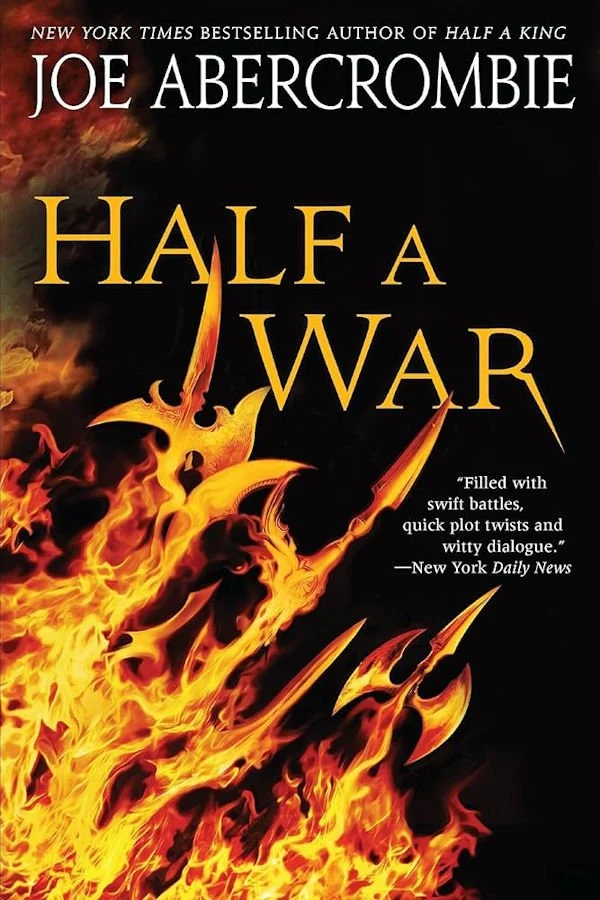
Imagine, for a moment, that Half a King—the 2014 debut of Joe Abercrombie’s Shattered Sea trilogy—had arrived on bookshelves without the "Young Adult" (YA) sticker plastered onto its marketing collateral. Picture it simply as a new novel by the man who redefined modern grimdark fantasy: a lean, brutal tale of a maimed prince, treacherous seas, and the heavy, unforgiving burden of sovereignty.
Would the critical reception have been fundamentally different? This question, which has simmered in the background of fantasy fandom for over a decade, is more than a mere hypothetical. It strikes at the heart of how we categorize literature and how those categories inevitably color our perceptions before we even turn the first page.
The Weight of a Label: A Chronology of Expectation
When Half a King was released in 2014, Joe Abercrombie was already a titan of the genre. His The First Law trilogy had established him as the high priest of "Lord Grimdark," a writer whose prose was defined by cynical humor, morally bankrupt protagonists, and a refusal to provide the reader with a comforting moral compass.
The announcement that his next project would be marketed as YA caused an immediate, visceral reaction within the community. For some, it was an intriguing pivot—a chance to see how the master of the bleak would handle the constraints of a younger demographic. For others, it was a red flag. The "YA" tag, in the eyes of many adult fantasy purists, carries a distinct set of baggage: linear plots, binary morality, romance-heavy subplots, and the dreaded "safe" narrative arc where the protagonist is protected by the inherent optimism of the genre.
The Evolution of the "Shattered Sea"
- 2014: Half a King is published, garnering both commercial success and a lingering confusion from fans of The Blade Itself regarding its genre placement.
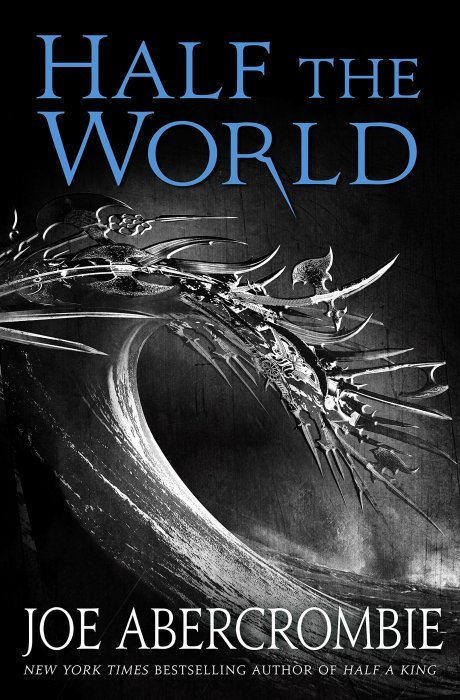
- 2015: Half the World continues the series, expanding the scope while maintaining the tight, focused narrative voice that differentiated it from Abercrombie’s sprawling adult epics.
- 2016: Half a War concludes the trilogy, solidifying the series as a distinct, character-driven sub-arc in the author’s bibliography.
- 2017–Present: As Abercrombie returns to the sprawling, dense politics of his Age of Madness trilogy, Shattered Sea occupies an increasingly isolated space in critical discussions, often cited as his "accessible" work rather than his "essential" work.
The Anatomy of the Misunderstanding
To understand why Half a King remains a point of contention, one must analyze the divergence between reader expectation and authorial intent. The typical YA trope structure centers on the "coming-of-age" journey, where a hero learns, grows, and eventually overcomes the darkness of their world.
Abercrombie, however, is constitutionally incapable of writing a "hero" in the traditional sense. Prince Yarvi, the protagonist of Half a King, is born with a crippled hand, rendering him physically unfit for the throne of a culture that prizes martial strength above all else. In a traditional YA novel, Yarvi might overcome his disability through a magical destiny or a sudden burst of physical prowess.
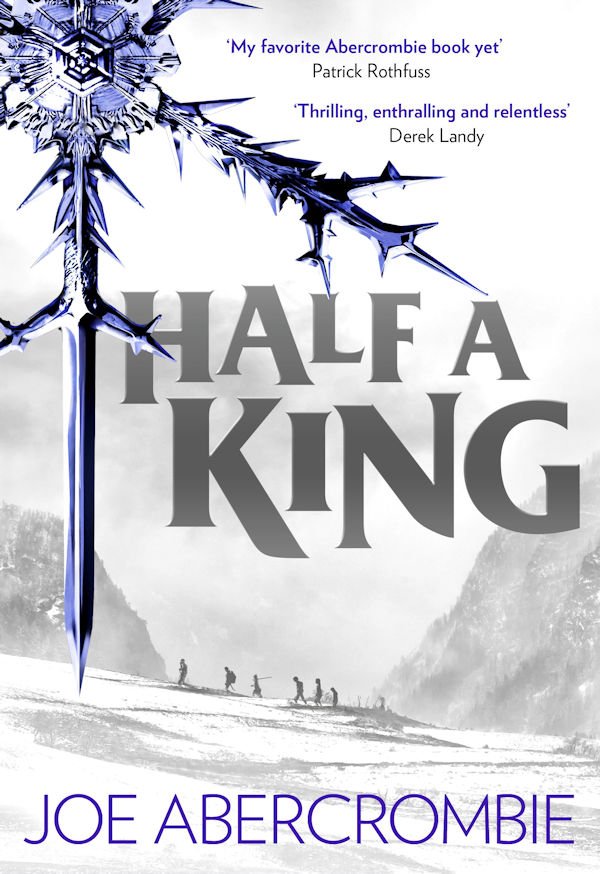
Abercrombie does the opposite. He forces Yarvi to lean into his limitations. Yarvi’s survival is not a product of heroics; it is a product of cold, hard, and often ruthless intellect. He is a character defined by his ability to observe, calculate, and betray. His journey is not a transition from innocence to wisdom, but a descent into the reality that to lead is to sacrifice one’s own humanity.
Supporting Data: The Stylistic Fingerprint
Despite the "YA" branding, the DNA of the narrative remains unmistakably Abercrombie. If one were to perform a stylistic audit of Half a King, the markers of his "adult" work are present in abundance:
- The Cynical Voice: The prose is peppered with the dry, biting wit that characterizes Logan Ninefingers or Sand dan Glokta. The dialogue is snappy, cynical, and grounded in a world where every character has an angle.
- The "Unlikely Misfits" Dynamic: Abercrombie loves a troupe of broken people. Whether it is the fellowship in The First Law or the crew in The Devils, he excels at forcing incompatible personalities into a pressure-cooker environment. Half a King follows this blueprint perfectly, featuring a band of outcasts whose alliance is as tenuous as the ships they sail on.
- Moral Ambiguity: In the Shattered Sea, as in the First Law, good intentions lead to catastrophic results. There is no triumph that isn’t stained with blood, and there is no power that isn’t bought at the cost of one’s soul.
When these elements are compared to the standard output of the YA market in 2014, the discrepancy becomes clear. Half a King is not a "lite" version of Abercrombie; it is a distilled version. It is Abercrombie with the fat trimmed away, focusing entirely on the character study of a boy who becomes a monster to protect his people.
Official Responses and Critical Shifts
While Abercrombie himself has frequently noted that he writes for "anyone who likes a good story," the publishing machine dictated the label. In interviews, the author has often deflected the "genre" question, choosing instead to focus on the themes of the book.
Critics have gradually come to recognize this as well. Where early reviews focused on the "YA" nature of the book, retrospective criticism has shifted toward the idea that Shattered Sea is a "contained epic."
"The tragedy of the YA label," notes one prominent genre analyst, "is that it creates a wall. For the younger reader, the complexity and cynicism of Abercrombie might be a shock. For the adult reader, the label creates a bias that prevents them from engaging with the prose. It effectively alienated two different demographics for the sake of a marketing shortcut."
Implications: The Death of the "Genre" Wall
The enduring legacy of Half a King is the light it sheds on the absurdity of our literary labeling system. We tend to judge a book by the shelf it is placed on, rather than the content within its covers.
What This Means for Future Fantasy
The success—and subsequent pigeonholing—of Half a King suggests several implications for the publishing industry:
- The "Crossover" Trap: Marketing books as YA in hopes of capturing a broader audience can actually serve to shrink the audience by deterring adult readers who fear "simplistic" writing.
- The Complexity of "Young" Narratives: By assuming that young protagonists require simple themes, publishers often underestimate the capacity of the YA audience to engage with truly dark, complex, and morally ambiguous storytelling.
- The Author’s Voice as the Constant: Readers are beginning to realize that an author’s voice is the primary factor in the reading experience, not the target age demographic of the book. Fans of The Blade Itself have found, upon reading Half a King, that they are receiving the same "Abercrombie experience," simply compressed into a tighter frame.
Conclusion: Looking Beyond the Label
Perhaps the greatest irony of Half a King is that it serves as a perfect entry point for new readers, yet remains the most under-discussed entry in Abercrombie’s library. By trying to fit a square peg of dark, cynical, and gritty storytelling into the round hole of the YA category, the publishing world created a unique, if slightly confused, literary artifact.
If we strip away the marketing, the stickers, and the preconceived notions of what "YA" means, we are left with a fundamental truth: Joe Abercrombie is a writer of consistency. Whether he is writing a 900-page epic or a 300-page "young adult" novel, his focus remains on the fragility of power, the necessity of survival, and the dark, inevitable humor of human failure.
Readers who have avoided Half a King because of its label are missing out on one of the most concentrated expressions of Abercrombie’s worldview. It is a story that proves, quite effectively, that the distance between "YA" and "Grimdark" is not a chasm, but a mere suggestion—a line drawn in the sand that, much like the world of the Shattered Sea, is easily washed away by the tide.

 Nana Muazin
 Raul Delapena Setiawan